
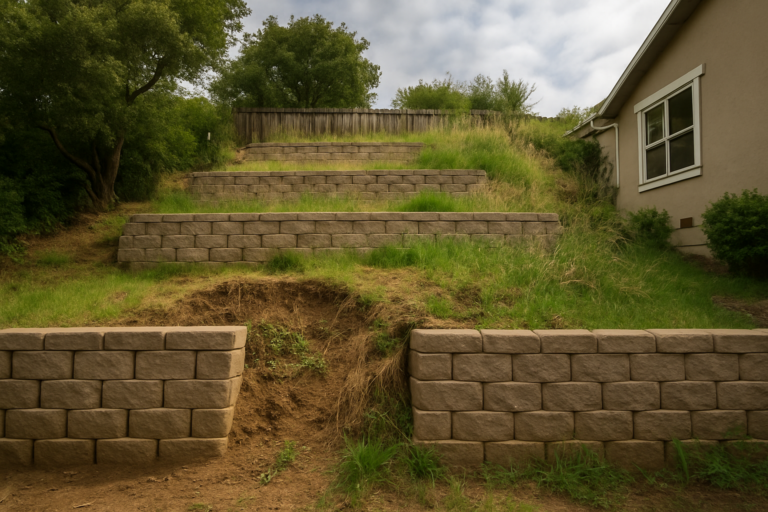
Unpermitted Retaining Walls: How the Legalization Process Works in Sonoma County
Direct Answer: Sonoma County can require you to retroactively permit old retaining walls and grading through an as-built permit process, which typically involves engineering reports,
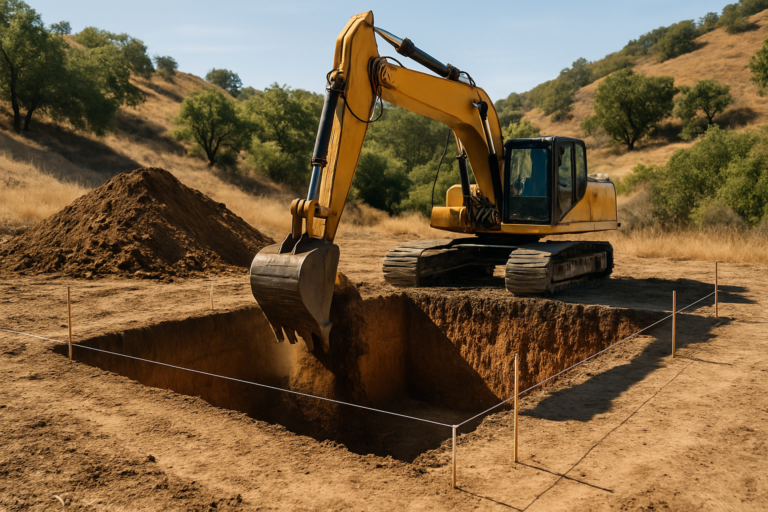
Foundation Contractor or General Contractor: Who Digs Your Foundation?
Direct Answer: An excavation contractor opens and prepares the earth. A foundation contractor pours the concrete. They are two separate trades, and the excavation always
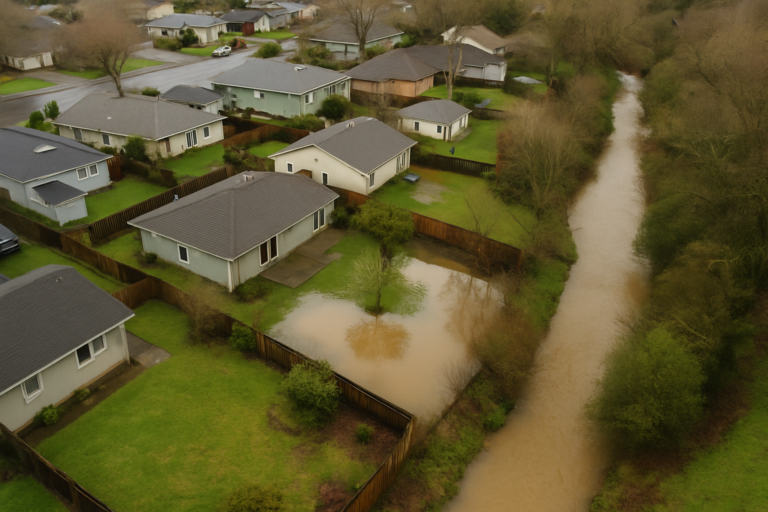
FEMA Just Remapped 2,500 Santa Rosa Properties, Here’s What It Means for Your Site
Direct Answer: FEMA’s January 2026 flood map update places roughly 2,500 Santa Rosa properties in high-risk flood zones, triggering new drainage, grading, and foundation elevation

What a Site Plan Actually Controls, and Why Getting One Wrong Delays Everything
Direct Answer: A site plan coordinates grading, drainage, setbacks, and cut-fill volumes for permit review. Get the contours wrong in Sonoma County and your permit
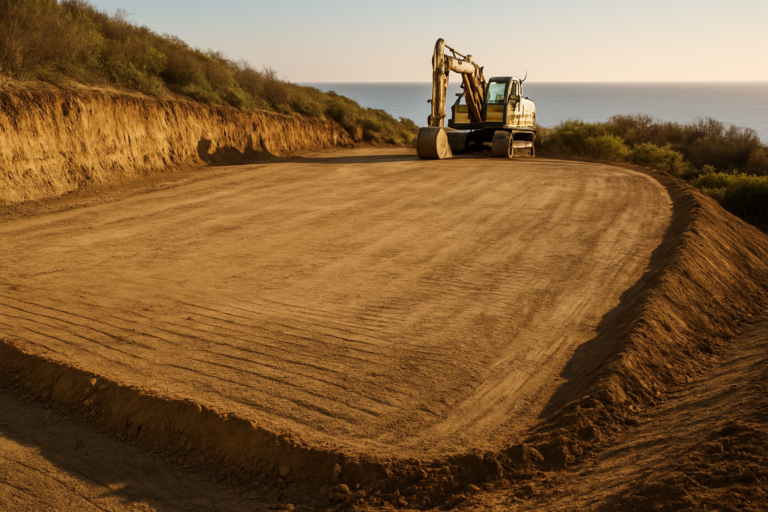
What a Building Pad Actually Is — and Why Getting It Wrong Is Expensive
Direct Answer: A building pad is a precisely graded and compacted earth platform that supports a foundation or slab. It requires engineered soil preparation, proper

Sonoma County Just Changed How Grading Permits Work
Direct Answer: Permit Sonoma launched a Grading Self-Certification Program in April 2026, allowing approved licensed professionals to certify qualifying grading work themselves — potentially cutting
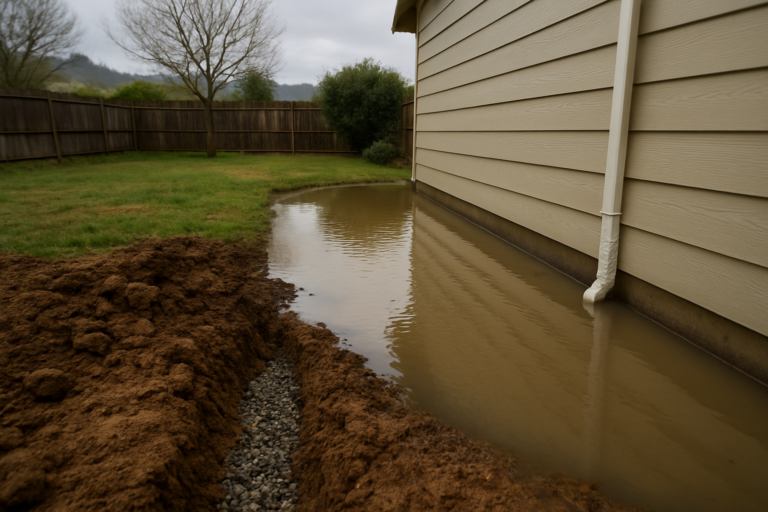
Why Drainage Trenching Fails — and What a Proper Install Actually Requires
Direct Answer: Most drainage trenching fails because of design errors, not bad materials. If the outlet location, pipe diameter, and soil permeability aren’t matched to

Residential Excavation in Sonoma County: The Limits Most Homeowners Don’t Know About
Direct Answer: Yes, residential excavation in Sonoma County has several hard limits — permit thresholds at 50 cubic yards, required utility notifications, property line setbacks,
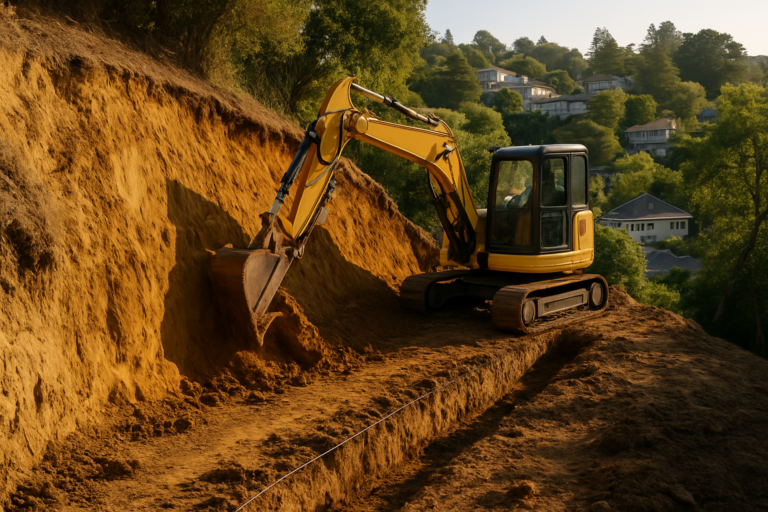
Retaining Walls Built on Slopes: What the Excavation Has to Get Right First
Direct Answer: A retaining wall on a slope fails or succeeds based on what happens before the wall goes in — specifically how the slope
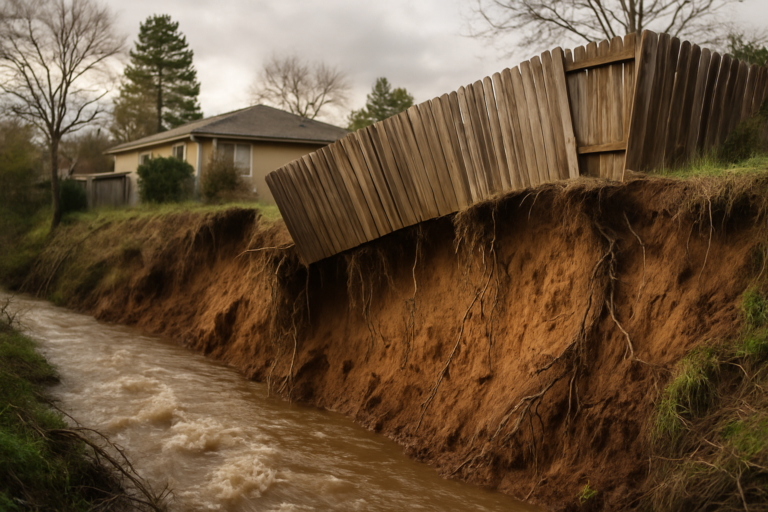
When a Creek Eats Your Property: What Erosion Control on a Riparian Lot Actually Takes
Direct Answer: Creek bank erosion on a riparian lot requires a site-specific solution — rip-rap, bioengineering, or a structural wall — plus permits from multiple

Do You Need a Civil Site Plan Before You Can Pull a Grading Permit?
Direct Answer: In most cases, yes. Sonoma County requires an engineered grading plan for cuts or fills over 50 cubic yards. Monterey County’s threshold is

Replacing a Septic System in Monterey County: What the Permit Process Actually Looks Like
Direct Answer: Replacing a septic system in Monterey County requires permits from Environmental Health under the county’s LAMP framework — not just the building department.