
Ponds & Road Construction
Custom pond excavation and private road construction for rural properties across Sonoma County, Monterey County, and the California Central Coast. From initial land clearing through lining, grading, and compaction — built to last on terrain that demands it.
Homepage Short Form
Custom Pond Construction and Private Road Building for Properties Across the California Central Coast
Rural properties on the California Central Coast cover an enormous range of terrain — rolling hillside vineyards in Sonoma County, flat valley farmland in the Salinas Valley, coastal slopes in Monterey County, and everything in between. Ponds and private roads are common features on these properties, and both require excavation work that's adapted to the specific conditions on the ground. A pond built in the wrong location or without proper lining for the soil type will leak, fill with sediment, or become a maintenance burden. A road built without adequate base preparation and drainage management will deteriorate rapidly under the weight of equipment and the stress of seasonal water movement.
DW Excavation approaches pond and road projects the same way we approach all earthwork: with a site assessment first, a clear plan before equipment starts moving, and attention to the conditions that will determine whether the finished product holds up over time. We have worked on wine country estates, working ranches, agricultural parcels, and rural residential properties across this region. That range of experience translates into an understanding of how different soil types, slopes, and seasonal conditions affect what gets built and how it needs to be built.
Our Pond Construction Services Include
- Site Assessment & Pond Siting — Before any excavation begins, we evaluate topography, natural drainage patterns, soil permeability, and seasonal water flow to identify the best location and configuration for a pond. Getting the siting right determines how well the pond holds water and how much maintenance it will require.
- Land & Brush Clearing — Clearing the pond footprint and access routes of vegetation, debris, and root systems before excavation begins.
- Pond Excavation & Shaping — Excavating to design depth and shape, creating appropriate bank slopes for stability, and establishing inlet and outlet configurations. Pond depth and bank geometry vary based on the intended use — irrigation storage, livestock water, wildlife habitat, or aesthetic water features each have different requirements.
- Dam & Overflow System Construction — For stock ponds and irrigation ponds, dam construction and properly engineered overflow systems are essential to manage water levels safely and prevent washout during heavy rain events. We size and construct overflow structures appropriate to the watershed area draining into the pond.
- Pond Lining Installation — In soils with high permeability (common in decomposed granite and coarse-grained soils found across parts of Sonoma and Monterey Counties), liner installation prevents water loss and maintains pond levels through dry seasons. We install flexible membrane liners appropriate to each project's water retention requirements.
- Dredging & Restoration — Existing ponds accumulate sediment over time, reducing depth and water capacity. Dredging restores original depth and improves water quality and ecosystem health. We also address bank erosion and failing overflow structures on existing ponds.
Our Road Construction Services Include
- Road Alignment & Site Clearing — Establishing the road alignment, clearing vegetation and debris from the road corridor, and removing obstacles before grading work begins.
- Cut & Fill Grading — On hillside terrain, roads require cutting into the slope on the uphill side and filling on the downhill side to create a stable roadbed. Proper cut-and-fill balance and slope management are critical to long-term road stability.
- Sub-base Preparation & Compaction — The foundation of any durable road is a properly prepared and compacted sub-base. In clay-heavy soils common across Sonoma and Monterey Counties, sub-base preparation is particularly important — clay expands when wet and shrinks when dry, creating instability for unprepared roadbeds. We compact in lifts to achieve appropriate density throughout the sub-base.
- Road Surfacing — Aggregate base course, crushed rock, decomposed granite, and other surfacing materials appropriate to the road's intended use and traffic levels. We can also prepare road surfaces for asphalt or concrete application by others.
- Drainage Installation — Culverts, French drains, water bars, and roadside drainage ditches to manage seasonal water movement across and along road surfaces. Roads without proper drainage deteriorate rapidly — water is the primary cause of road failure on rural properties in this region.
- Road Maintenance & Repair — Re-grading, pothole repair, drainage clearing, and surface restoration for existing private roads that have deteriorated through use or seasonal damage.
Why Pond and Road Work Requires Local Knowledge
The California Central Coast's climate pattern — dry summers followed by concentrated winter rainfall — creates conditions that challenge both ponds and roads in ways that differ from most of the country. Roads need to handle heavy equipment during dry months and survive significant water flow during wet months, sometimes without being used for weeks at a time. Ponds need to hold water through a long dry season when there's no natural replenishment, then handle incoming flow from winter rain without the bank erosion that undermines structural integrity.
Clay soils, common in Sonoma County's rolling terrain and parts of Monterey County, behave differently than the sandy or loamy soils found elsewhere. They drain poorly, expand significantly when wet, and compact in ways that require specific equipment and techniques. Decomposed granite soils, common in drier inland areas, drain well but provide poor structural support for roads and poor water retention for ponds without liner. Understanding these soil characteristics — and knowing which conditions to expect on different parts of a property — is the kind of regional knowledge that translates directly into work that holds up.
Ponds and Roads Built for California Central Coast Conditions
What works for pond and road construction in flat, well-drained terrain elsewhere in the country often needs significant adaptation for the California Central Coast. The combination of clay-heavy soils, steep terrain, concentrated seasonal rainfall, and long dry seasons creates conditions that require specific approaches to everything from pond siting to road drainage design. Properties in Sonoma County's wine country deal with particularly expansive clay soils that challenge road sub-base stability. Properties in Monterey County's hillside areas deal with steep slopes and erosion-prone terrain where road drainage management is critical. Coastal properties face moisture conditions that affect both soil behavior and long-term surface durability.
DW Excavation has been working on ponds and private roads across this region for over a decade. That means we've seen what holds up and what doesn't across a full range of soil types, slopes, and seasonal cycles. We apply that knowledge to every project — whether it's a small stock pond on a working ranch or a private road system across a larger agricultural or residential parcel.
Northern Region — Sonoma County & Wine Country
Sonoma County's rolling terrain and clay-dominated soils create specific challenges for both pond and road work. Clay soils retain water well — which is an asset for unlined ponds but a challenge for road sub-base stability. Roads in clay-heavy areas require thorough sub-base preparation, often including aggregate import to create a stable working surface above the native clay. Ponds in clay soil can hold water without lining but need careful bank slope design to prevent slumping. Wine country properties often have specific aesthetic requirements alongside functional ones, and access road design has to accommodate heavy equipment during construction season while handling the traffic demands of a working vineyard year-round.
- Clay-heavy soils — specific sub-base requirements for durable roads
- Rolling terrain — cut-and-fill road alignment and bank stability design
- Seasonal rainfall — drainage management is critical for road longevity
- Vineyard access roads — built for equipment loads year-round
Southern Region — Monterey County & Salinas Valley
Monterey County's agricultural properties in the Salinas Valley typically involve flatter terrain with different soil profiles than Sonoma County. Road work here often focuses on compaction and drainage management on low-lying ground that can become saturated during wet winters. Hillside properties in the Carmel Valley and eastern Monterey County present steeper road alignment challenges with erosion-prone soils. Pond work in the Salinas Valley is often tied to agricultural water storage — irrigation ponds that need to hold significant volume through the dry growing season. These ponds frequently require liner installation due to the coarser, more permeable soils common in parts of the valley.
- Salinas Valley flat terrain — compaction and drainage management
- Agricultural irrigation ponds — liner typically required for retention
- Hillside road alignment — erosion control and slope management
- Seasonal saturation — road sub-base designed for wet-season loads
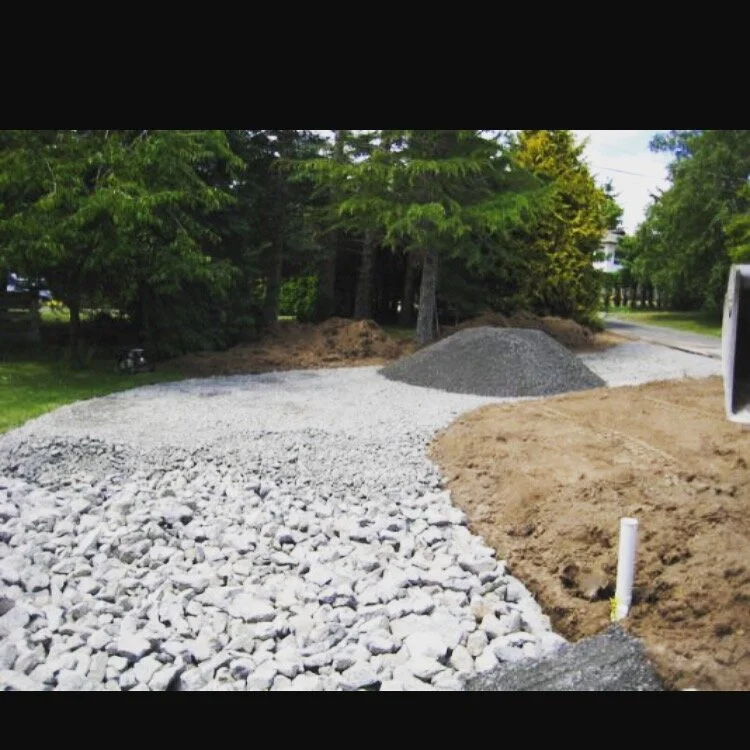
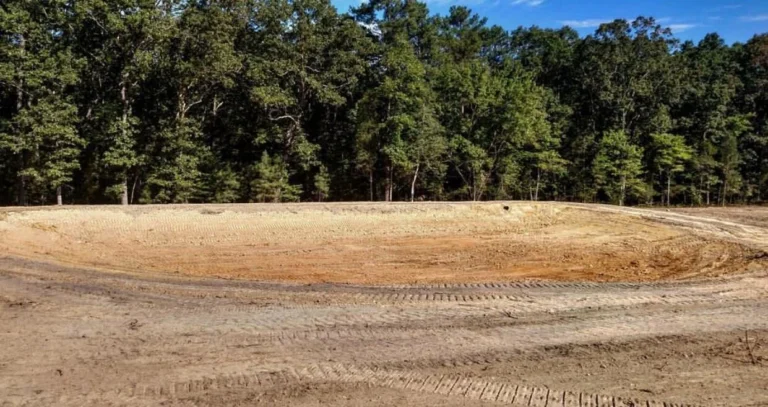
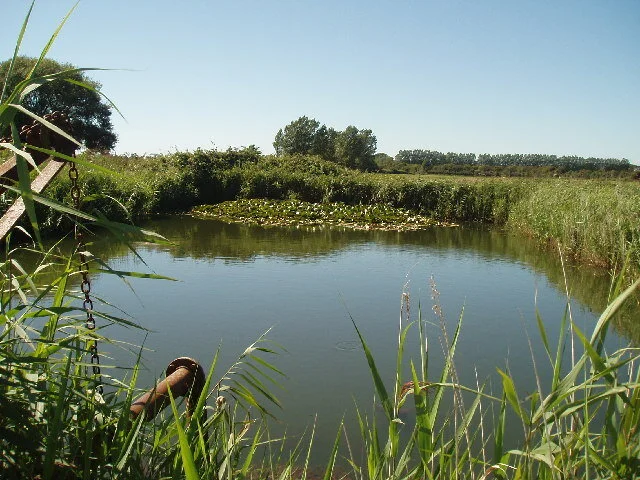
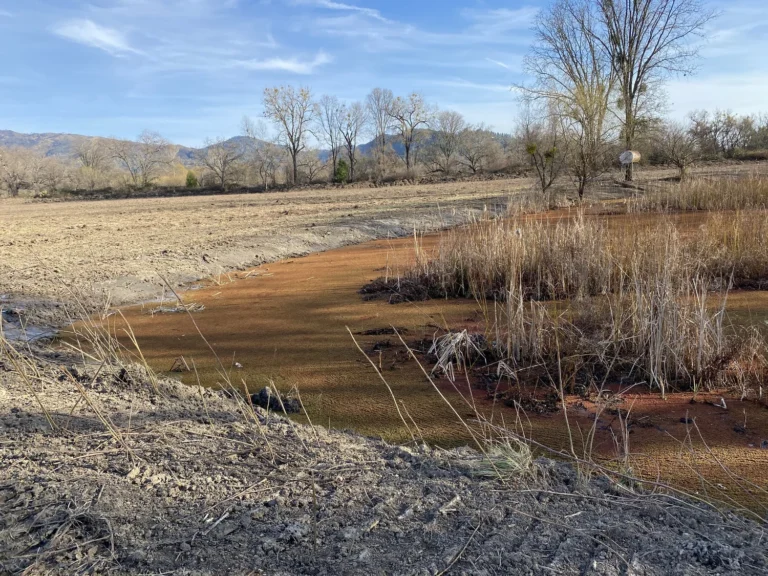
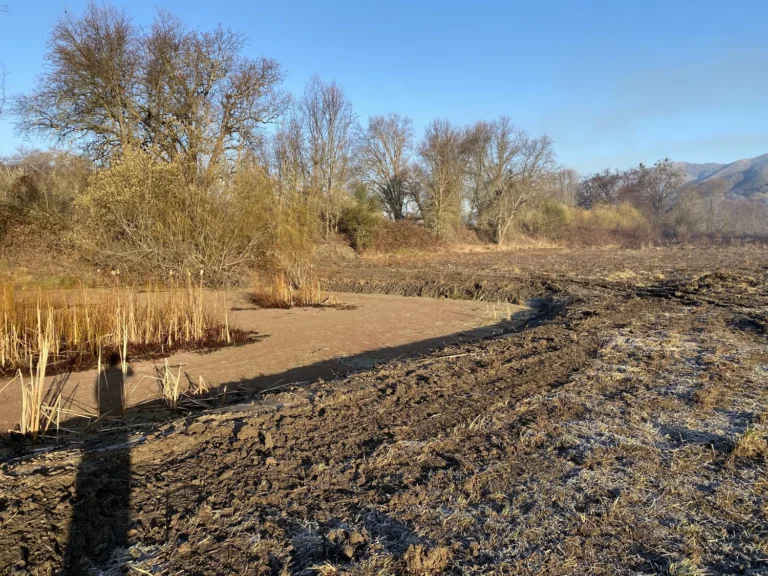
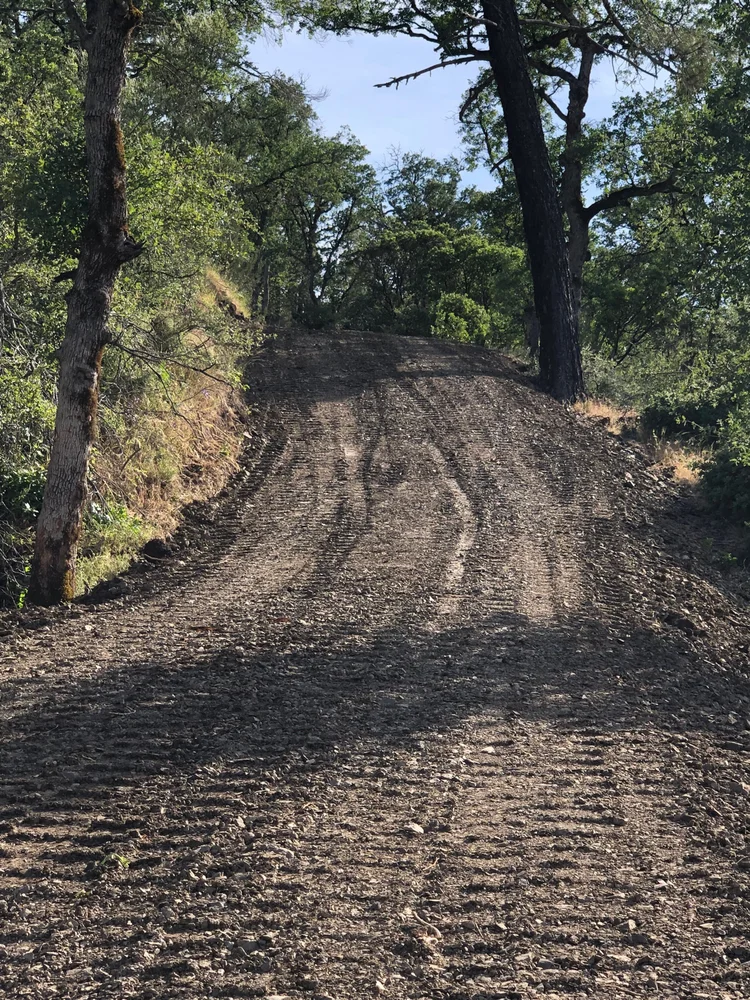
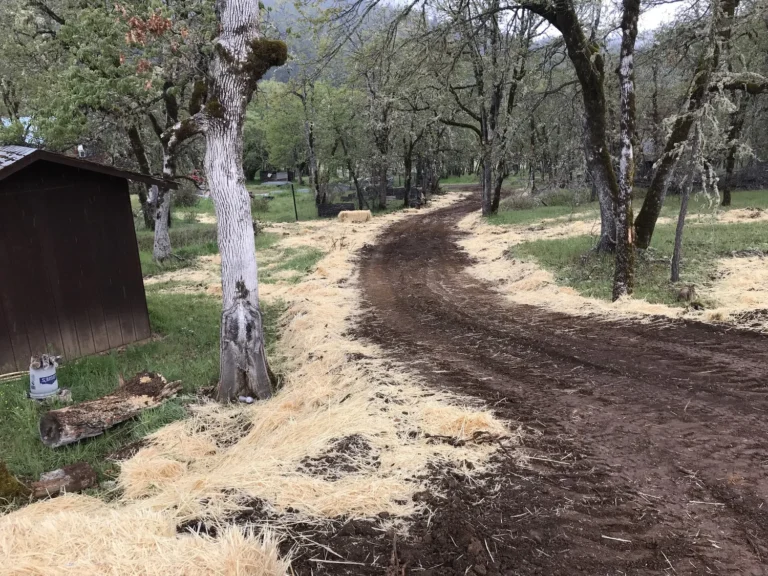
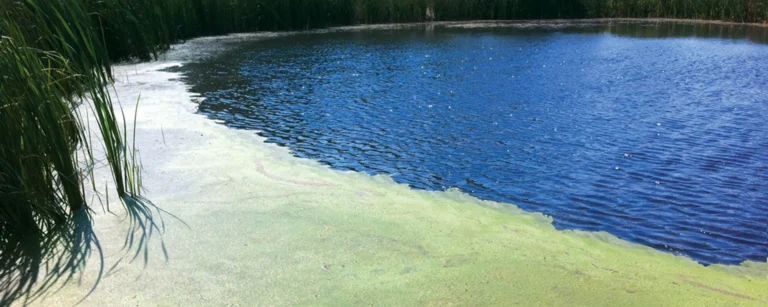
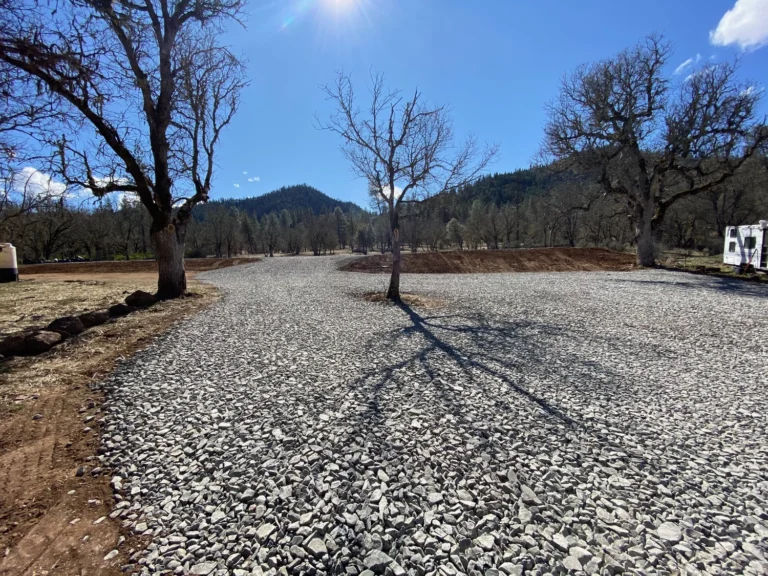
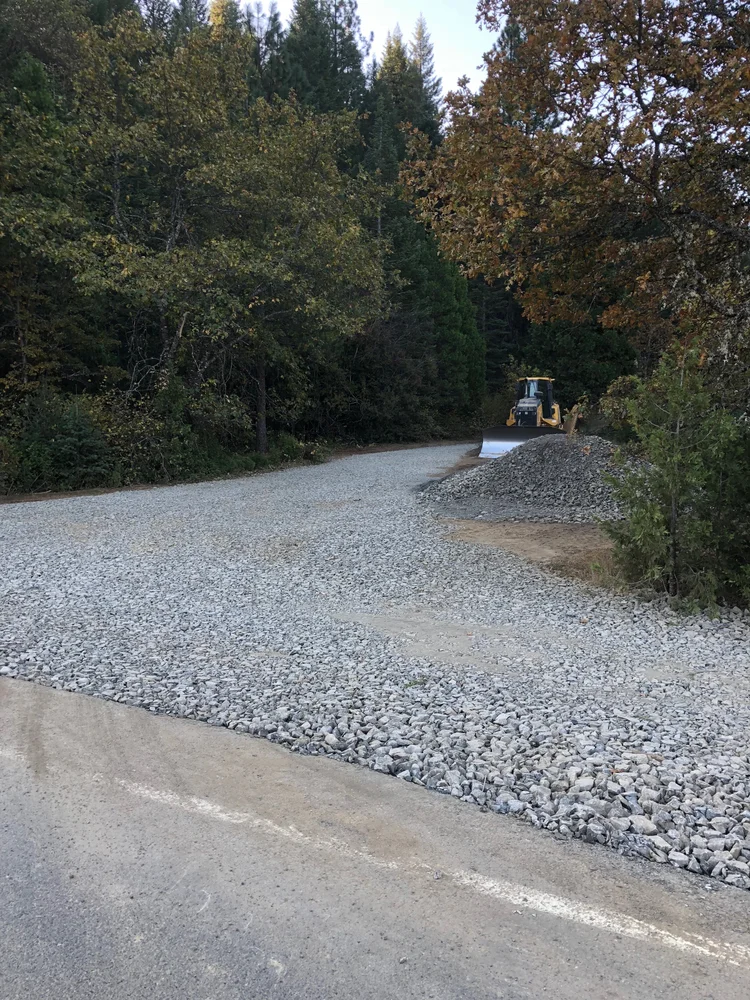
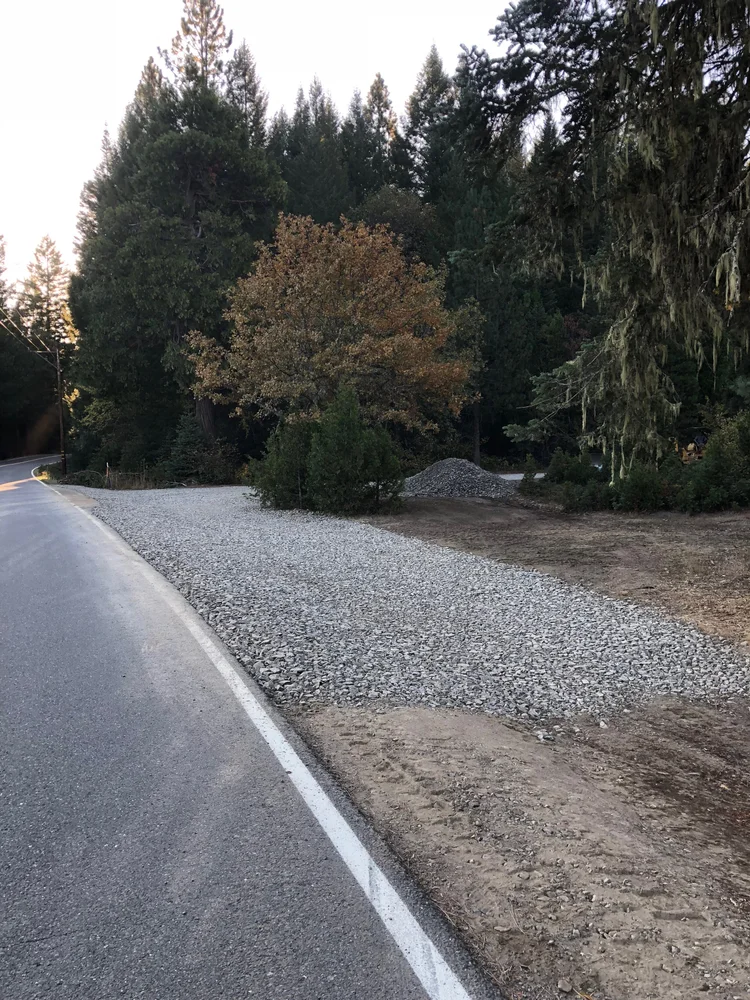
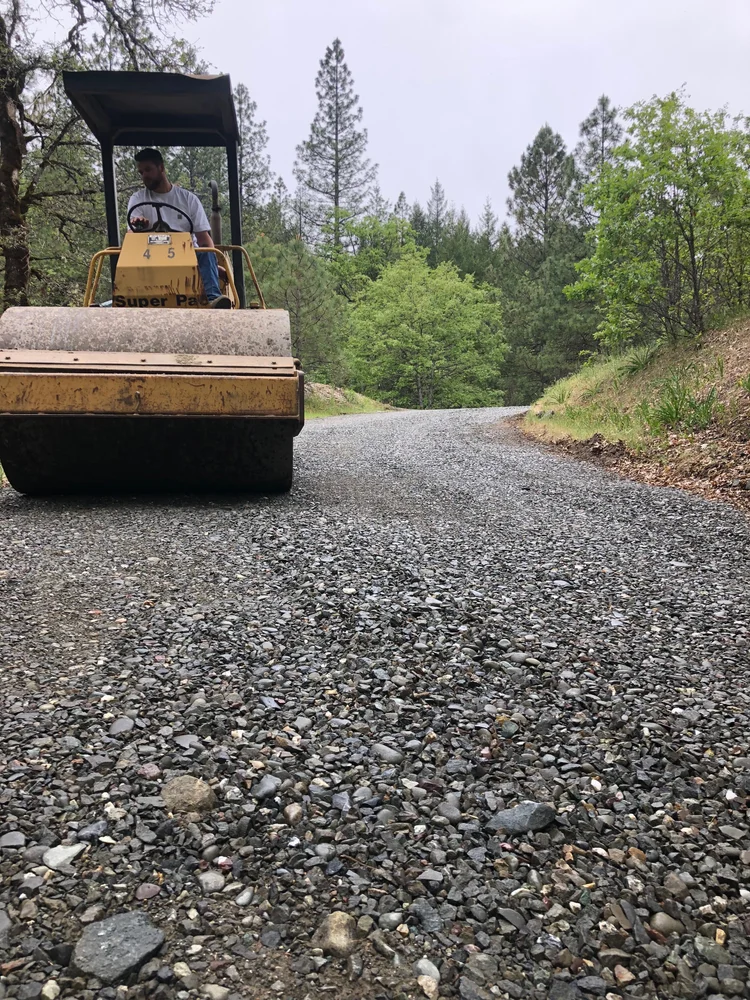
Pond & Road Construction Project Work
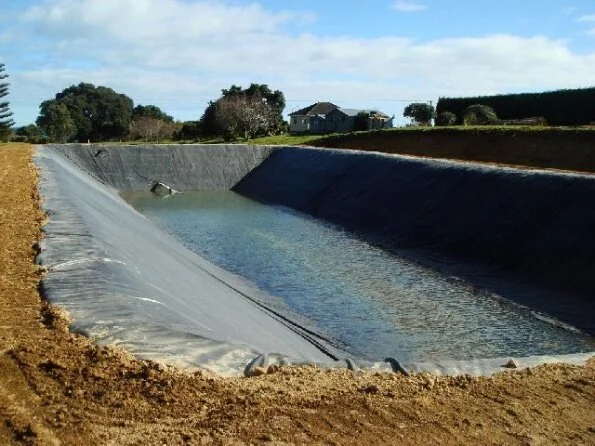
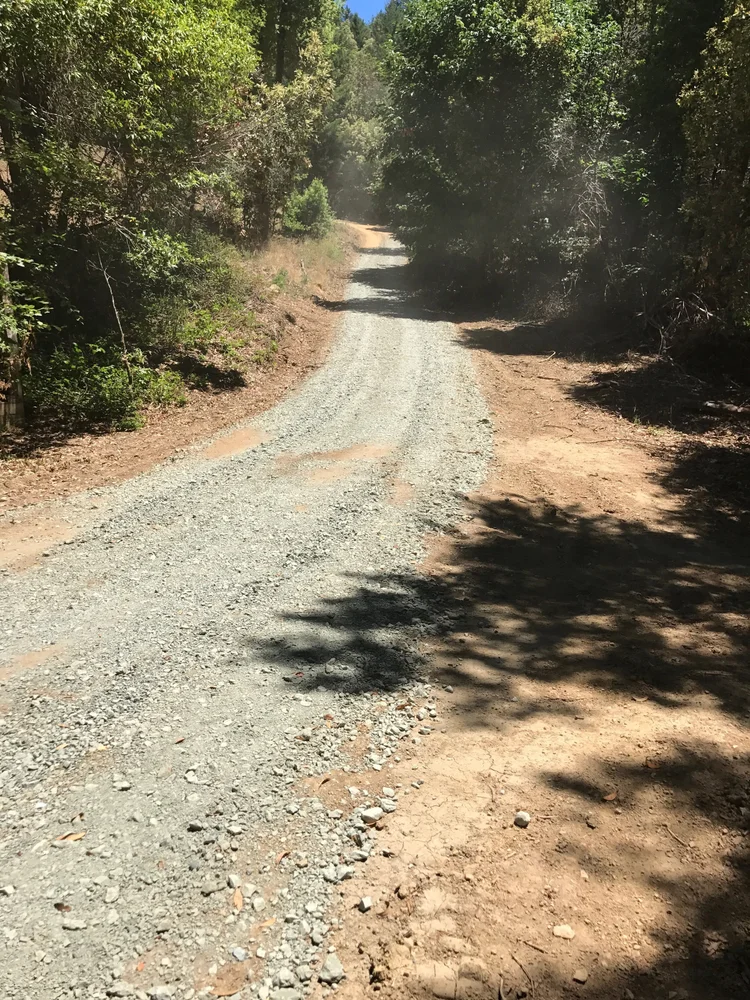
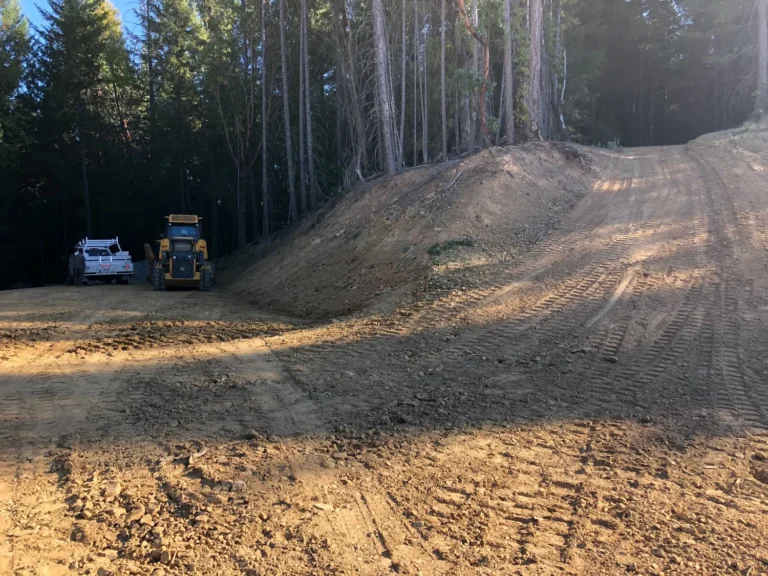
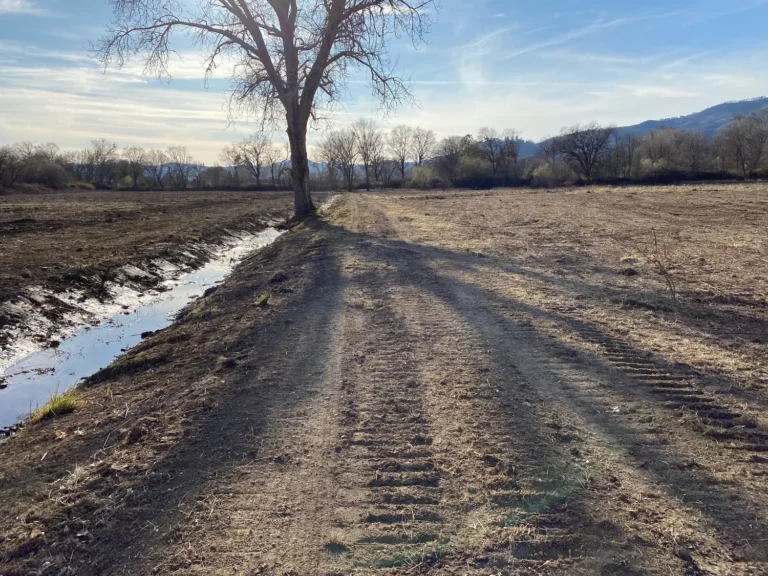
Common Questions
Questions we hear from property owners planning pond and road projects across Sonoma County, Monterey County, and the California Central Coast.
Call Us DirectlyDoes pond construction require a permit in California? +
It depends on the pond's size, location, and relationship to waterways. In California, ponds that intercept or divert surface water may require a water right from the State Water Resources Control Board. Ponds near streams or in areas with sensitive habitat may trigger review under the California Department of Fish and Wildlife's Streambed Alteration Agreement program. In Sonoma County, grading permits are required for excavation exceeding certain thresholds — Sonoma's Land Use Code mandates a permit for cuts or fills greater than 50 cubic yards or 3 feet depth. Monterey County has similar requirements. For most pond projects, at minimum a grading permit and a review of any waterway proximity is required before work begins. Call us at (707) 601-9091 — we can walk through what your specific project will need based on the property location and pond size.
Does my pond need a liner? +
Whether a pond needs liner depends primarily on the soil type. Clay-heavy soils naturally seal over time and can hold water without liner in many cases — this is why stock ponds and farm ponds have been built without liner for generations in clay country. Sandy, gravelly, or decomposed granite soils drain well and will lose water rapidly without liner. A permeability test or soil profile assessment during site evaluation can determine whether liner is necessary. There are also middle-ground approaches — compacted clay blanket installation using imported clay material — that can work in some soil conditions. We'll give you a clear assessment of what's needed based on what's actually in the ground at your site.
How deep should a pond be? +
Recommended pond depth depends on its purpose. Stock ponds and irrigation ponds typically benefit from a minimum depth of 8–10 feet in the deepest section — enough depth to maintain water through a dry summer with evaporation losses. Shallower ponds (under 4–5 feet) tend to have problems with excessive algae growth and sediment buildup that reduce water quality and capacity over time. Wildlife habitat ponds can function well at shallower depths in some areas. Whatever depth is targeted, the pond needs adequate volume relative to the watershed area draining into it — a small pond fed by a large watershed will overflow and erode; a large pond fed by insufficient drainage area won't fill reliably. We assess these relationships during the site evaluation.
What does a private road project actually involve? +
A private road project starts with establishing the road alignment — the route the road will take across the property. On hillside or rolling terrain, alignment choices significantly affect the amount of cut-and-fill work required and the long-term drainage management needs. Once alignment is set, we clear the road corridor, then do any required cut-and-fill grading to establish the roadbed. Sub-base preparation follows — this is where the compaction and base material work happens that determines whether the road holds up under load. Drainage structures go in — culverts, water bars, and roadside ditches to route water off the road surface and prevent erosion. Finally, road surfacing material is applied and compacted. The total scope and cost vary significantly based on road length, terrain, soil type, and intended use (foot and light vehicle traffic versus farm equipment versus heavy construction equipment).
Why do private roads fail so quickly on rural properties? +
The most common cause of rapid road failure is inadequate drainage. Water running along or across a road surface erodes the surfacing material and eventually undermines the sub-base. Roads built in clay-heavy soils without adequate sub-base preparation are particularly susceptible — clay softens and loses bearing capacity when saturated, causing the road surface to rut under vehicle loads. Roads built without proper compaction develop potholes and surface irregularities quickly. In short: most private road failures come down to drainage design or sub-base preparation that wasn't done properly the first time. On hillside terrain in Sonoma County and Monterey County, the combination of steep slopes and concentrated winter rainfall puts significant stress on roads that weren't built with drainage as a primary design consideration.
Can you repair or rehabilitate an existing pond or road? +
Yes, both. Existing ponds that have lost depth through sediment accumulation can be dredged and restored. Ponds with failing banks or damaged overflow structures can be repaired and reconstructed. Ponds that were originally built without liner but have consistently lost water can have liner installed after re-shaping. For existing roads, we provide re-grading, pothole repair, drainage system repair or installation, and surface restoration. In some cases a road that has repeatedly failed needs more substantial rehabilitation — rebuilding the sub-base rather than just resurfacing. A site visit usually makes clear what the right scope of work is for an existing road or pond that's having problems.
How long does pond construction typically take? +
A straightforward rural pond excavation — site clearing, excavation, bank shaping, and overflow structure — typically takes one to two weeks of active work depending on size and conditions. Liner installation adds time depending on the liner type and pond surface area. Permitting can extend the overall timeline significantly depending on the applicable permits required — a simple grading permit may take a few weeks; water rights review or agency consultation can take longer. We generally recommend planning for the permitting process before scheduling equipment. For a better sense of what your specific project would look like timeline-wise, call us at (707) 601-9091 or reach out through the contact form.
What time of year is best for pond and road work? +
Late spring through early fall — roughly May through October — is the optimal window for most pond and road work in Sonoma County, Monterey County, and the California Central Coast. Dry conditions mean better equipment access, more predictable soil behavior, and less risk of erosion or site damage during active work. Road work done in dry conditions allows proper compaction without the interference of saturated soils. Ponds excavated and shaped in summer are positioned to capture the first winter rains and begin filling naturally. Permitting timelines often mean starting the process in fall or winter for work planned the following spring or summer.
Do you handle both pond and road work on the same project? +
Yes. Many rural property projects involve both — a property owner building a pond also needs improved access roads to reach it, or a working ranch wants both a new water storage pond and a rehabilitated access road done in the same mobilization. Handling both scopes in a single project is more efficient than scheduling separate contractors, and coordinating the grading and drainage work across both elements often produces better results. Call us to discuss what you're planning — we can give you a clear picture of how a combined scope would work and what it would involve.
How do I get started? +
Call us at (707) 601-9091 or use the contact form. Pond and road projects require a site visit before we can provide a meaningful estimate — the terrain, soil conditions, and access situation all significantly affect scope and approach in ways that can't be assessed remotely. A site visit is a short investment that gives both you and us the information needed to plan accurately. Have the property address, a general description of what you want to build, and any information about water sources or drainage patterns on the site ready when you call.
Ready to Build on Your Property?
DW Excavation builds ponds and private roads for rural properties across Sonoma County, Monterey County, and the California Central Coast. Licensed since 2013, with field experience in the soil conditions, terrain, and seasonal patterns that determine whether work holds up long-term. Call to schedule a site visit or submit the contact form to get started.
Sources
- California State Water Resources Control Board — Small Domestic Use & Livestock Stockpond Registration — waterboards.ca.gov
- California Department of Fish and Wildlife — Streambed Alteration Agreements — wildlife.ca.gov
- Sonoma County PRMD — Grading Permits — permitsonoma.org
- County of Monterey — Grading Permits — countyofmonterey.gov