
Sonoma County to Monterey County · CA LIC #1060838
Foundation Contractor
Sonoma to Monterey County
DW Excavation provides foundation contractor services throughout Sonoma County — including Santa Rosa, Windsor, Petaluma, Healdsburg, Rohnert Park, and Sebastopol — and across Monterey County including Salinas, Marina, Seaside, Carmel, and Pacific Grove.
Available Mon–Fri, 7am–5pm · Emergency consultations available.
Start Your Project
Homepage Short Form
DW Excavation provides foundation contractor services throughout Sonoma County, Monterey County, and the California Central Coast. Services include site evaluation, foundation excavation, forming, concrete work, waterproofing, drainage systems, and foundation repair. Licensed in California (CA LIC #1060838) and operating since 2013.
Foundation Contractor on the California Central Coast
Every structure built in Sonoma or Monterey County starts underground. The foundation is the single most critical component of any building — and the one most influenced by local soil conditions, drainage patterns, and site-specific geology. Get it right, and the structure performs for generations. Get it wrong, and the problems compound over time in ways that are expensive and sometimes impossible to fully fix.
DW Excavation has been doing foundation work on the California Central Coast since 2013. We understand how Sonoma's clay soils behave under load, how Monterey's coastal terrain affects drainage and bearing capacity, and what it takes to build a foundation that performs reliably in both counties. We don't just dig a hole — we evaluate the site, plan the excavation, and work with precision throughout forming and concrete to give the structure underneath it the foundation it deserves.
We work with homeowners building new homes, contractors who need a reliable foundation subcontractor, and property owners dealing with existing foundation issues that need assessment or repair. Whatever the project scope, our approach is the same: thorough evaluation up front, clean execution, and clear communication throughout.
What Our Foundation Services Include
- Site Evaluation — Soil assessment, topography review, and drainage analysis to determine the right foundation type and approach for your specific site.
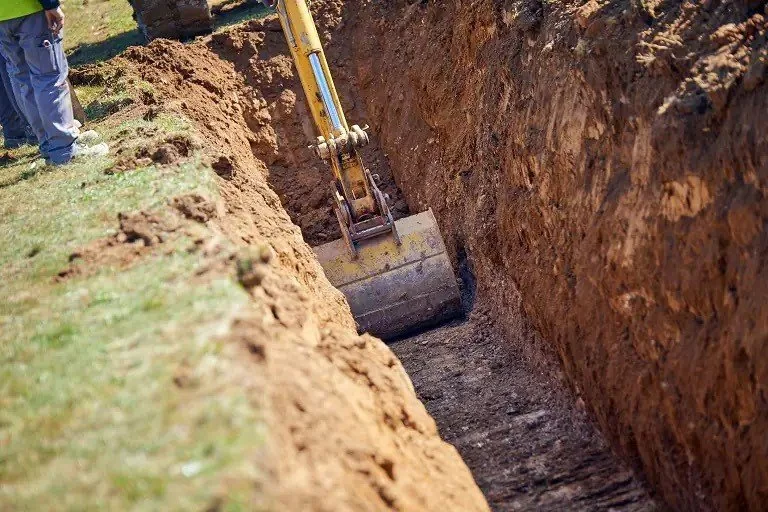
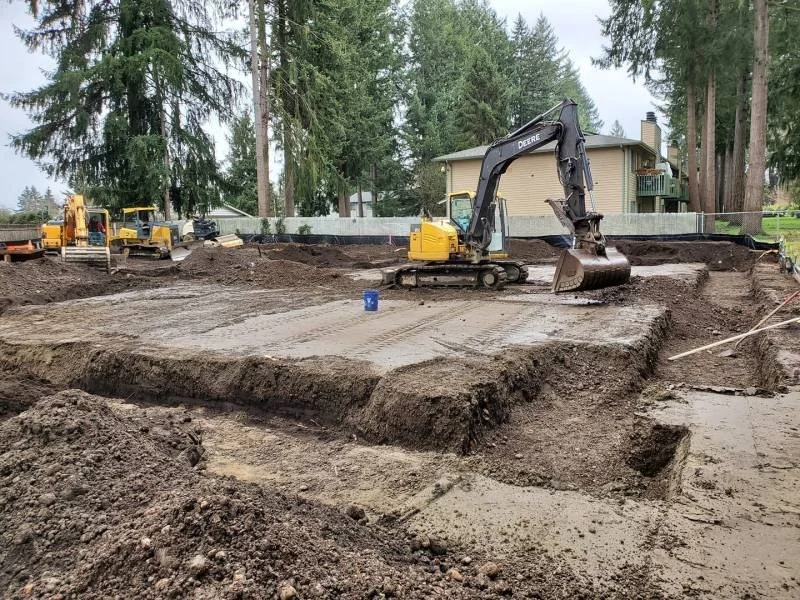
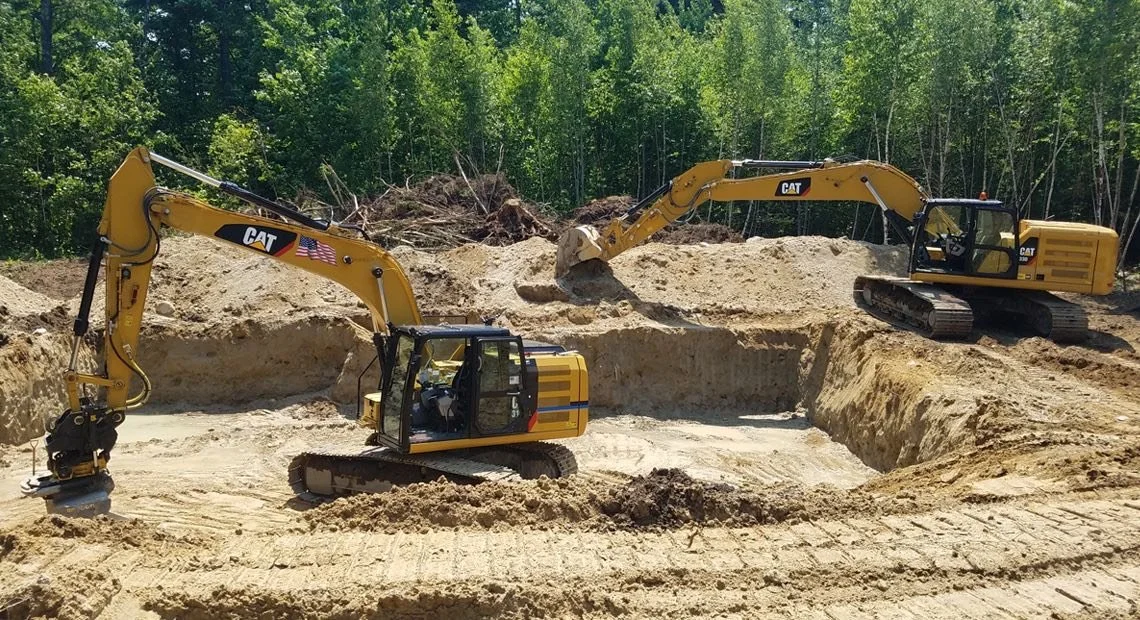
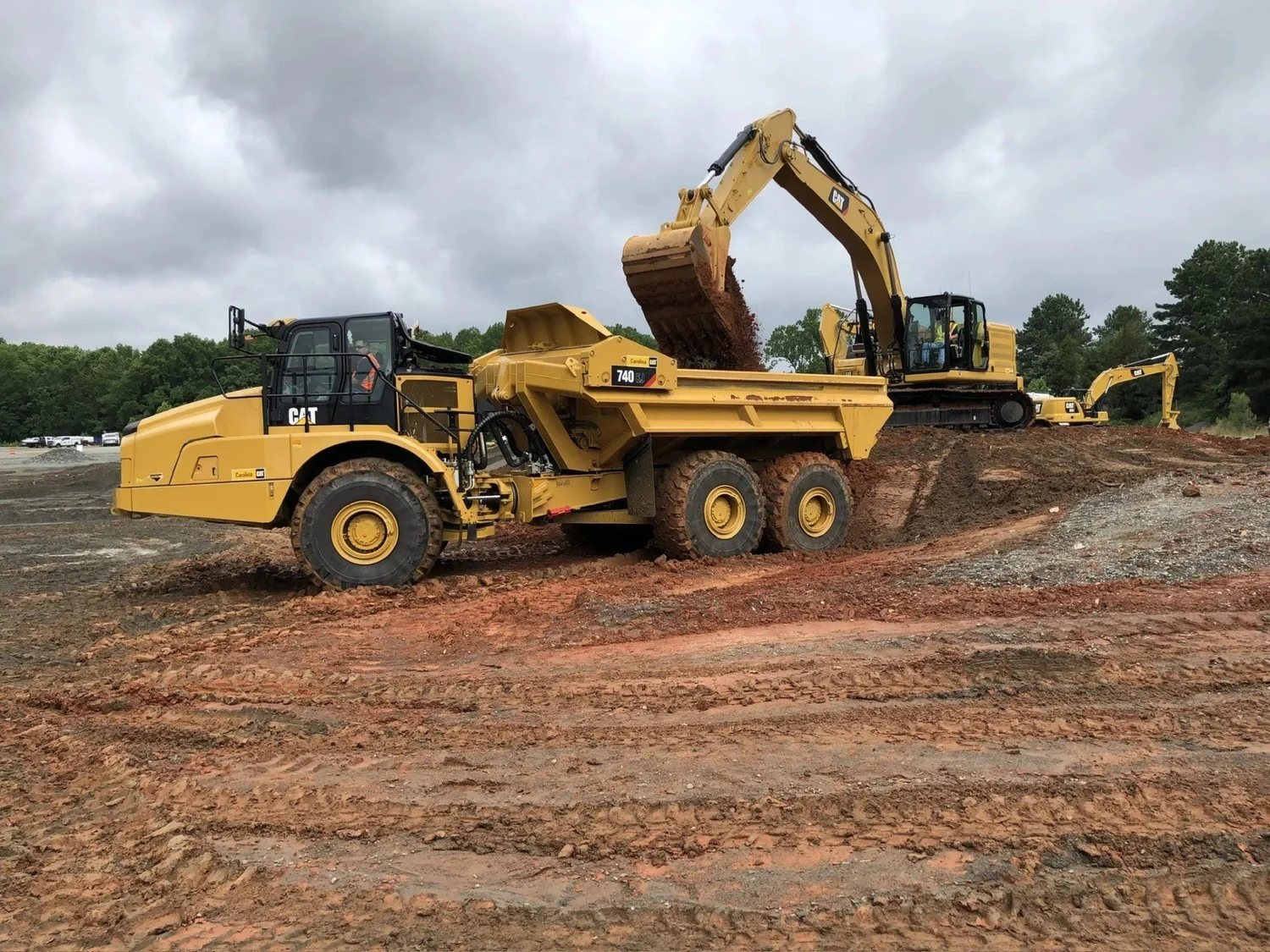
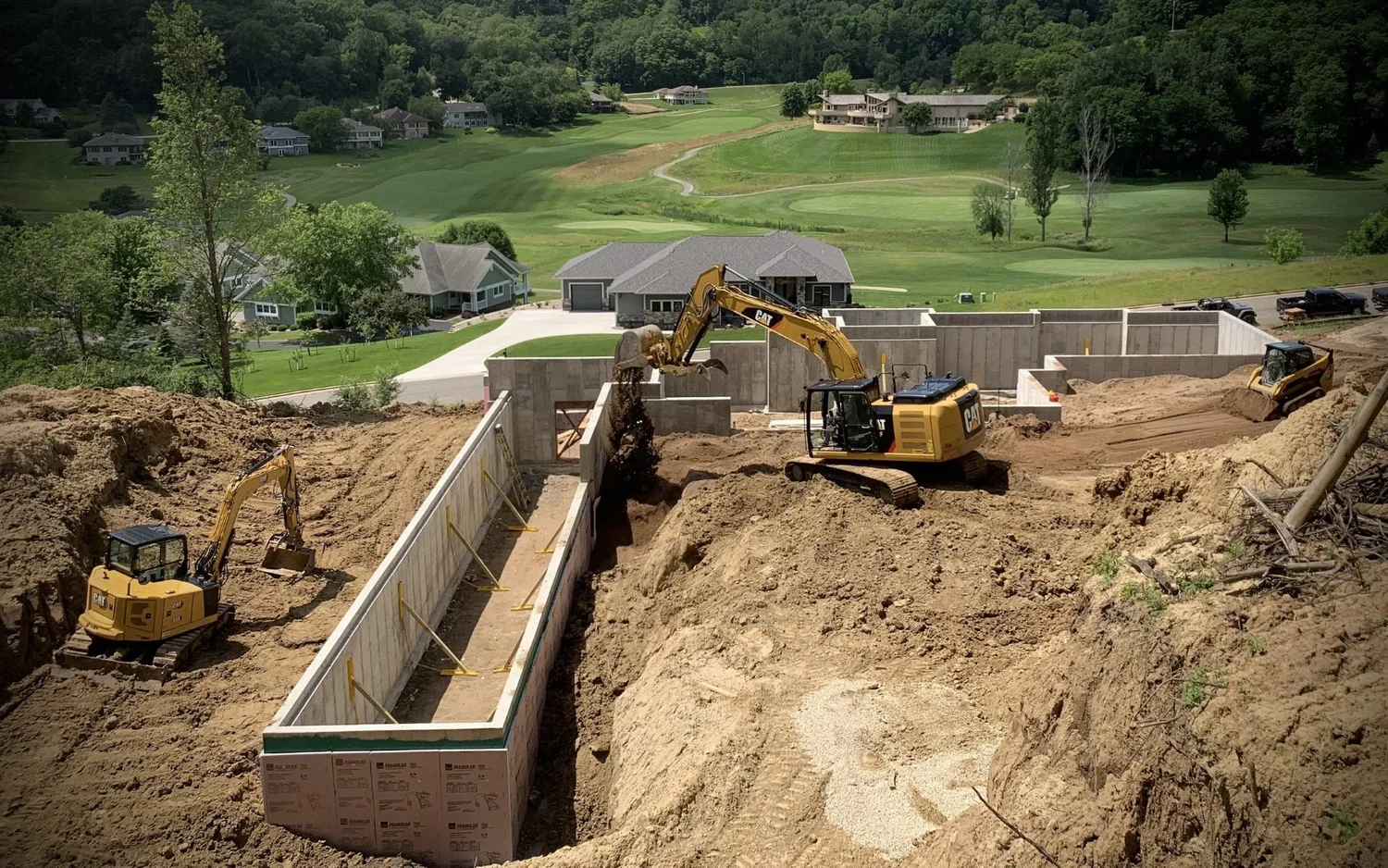
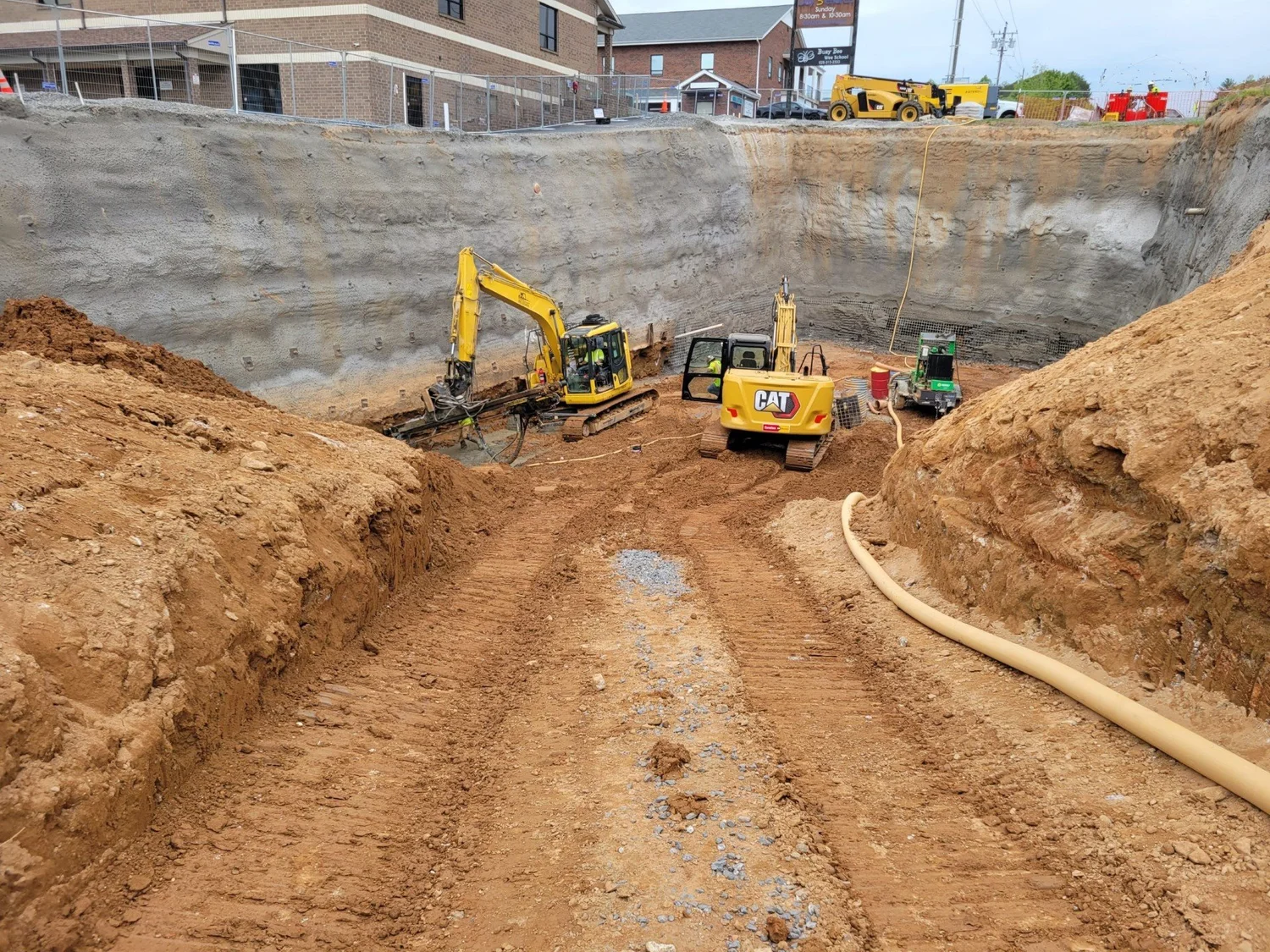
- Foundation Excavation — Precise digging for slab, crawl space, and basement foundations, sized, sloped, and graded to structural specifications.
- Forming — Setting forms accurately so that concrete placement produces a foundation that meets dimensional tolerances and structural requirements.
- Concrete Work — Foundation concrete placement for footings, slabs, stem walls, and grade beams using quality materials and controlled placement methods.
- Waterproofing & Drainage — Integrated waterproofing membranes and drainage systems designed to keep water away from the foundation envelope long-term.
- Foundation Repair & Reinforcement — Assessment and repair of existing foundations including underpinning, crack repair, and structural reinforcement for compromised structures.
- Grading for Foundation Drainage — Final grading around the foundation perimeter to direct water away from the structure and reduce hydrostatic pressure.
Why Foundation Work Requires Local Expertise
Foundation engineering isn't a one-size-fits-all discipline. What works in one part of California may be entirely wrong for another. The clay soils common throughout Sonoma County are expansive — they swell when wet and shrink when dry, creating cyclical movement that puts stress on foundations not designed to handle it. Monterey County's varied terrain, from coastal flats to steep hillside lots, presents its own set of drainage and bearing capacity challenges.
Local experience means we're not learning your site conditions on your job. We've worked in these counties long enough to anticipate what we'll find and design the excavation and foundation approach accordingly. That reduces surprises, keeps projects on schedule, and produces foundations built to perform in the actual conditions they'll live in.
Our Process
Every foundation project begins with a site visit. We review the soils report if one exists, assess drainage and access, and discuss the structure's requirements before we develop a plan. From there, we handle permitting coordination, excavation, forming, concrete, and site restoration — keeping you informed throughout and cleaning up after ourselves when the work is done.
Request a Site EvaluationFoundation Work That Understands Local Conditions
Foundation engineering isn't transferable from one part of California to another. The soil behavior, drainage patterns, and regulatory requirements in Sonoma and Monterey Counties are specific — and they shape how every foundation project here needs to be planned and built.
We've been working in both counties since 2013. That experience is reflected in how we evaluate sites, how we design drainage, and how we sequence work around the seasonal constraints of the Central Coast. We're not learning on your project.
Sonoma County
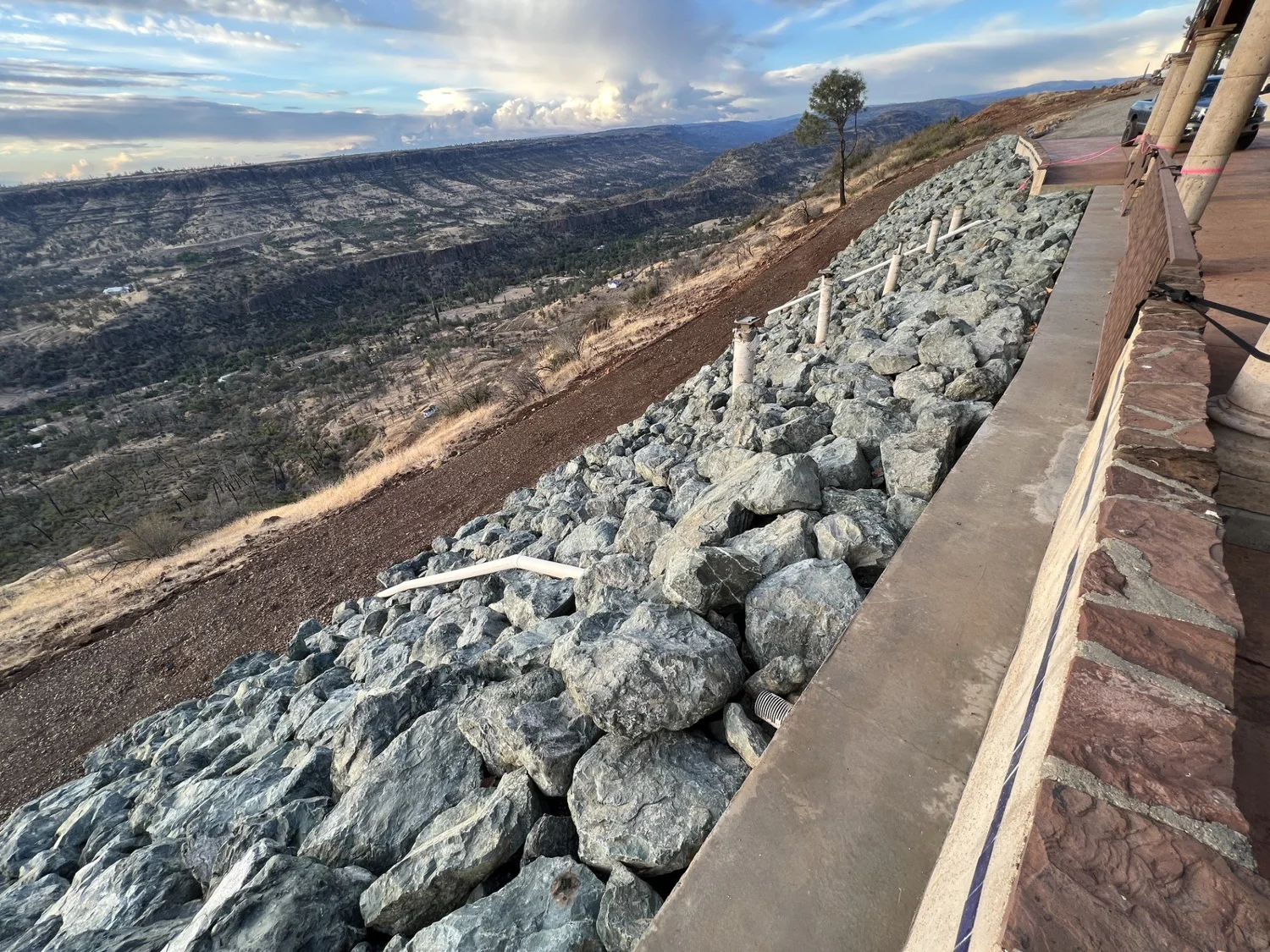
Much of Sonoma County sits on expansive clay — soils that swell during wet winters and shrink through summer, creating cyclical movement that cracks and shifts foundations not designed to handle it. We account for this in excavation depth, drainage integration, and concrete specification on every Sonoma project. For hillside lots in areas like Glen Ellen, Geyserville, or the Sonoma Valley, slope stability and drainage routing are factored in from the start.
- Expansive clay soils — seasonal movement accounted for by design
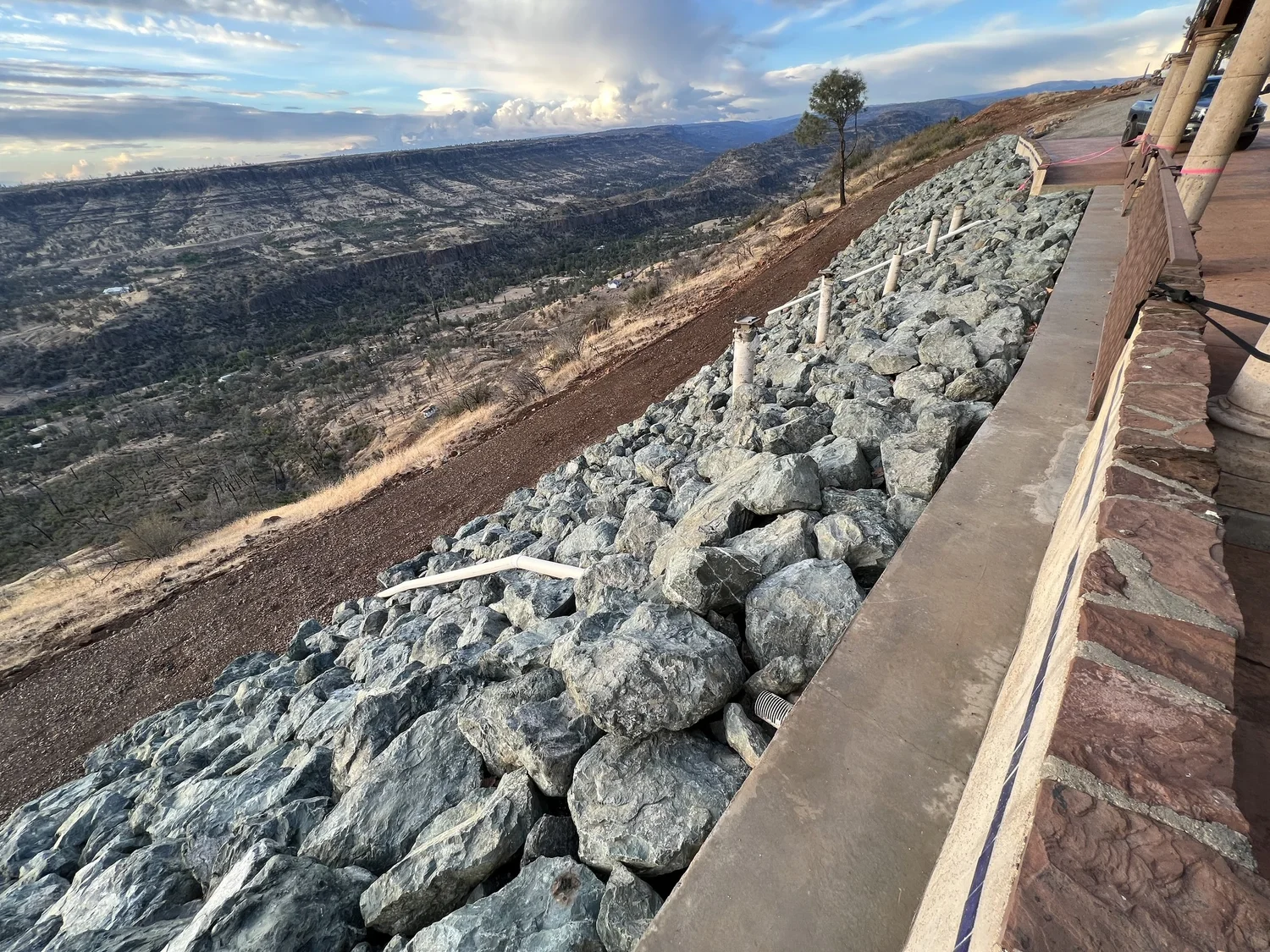
- Hillside lots — slope drainage and lateral pressure management
- Wildfire rebuild projects — foundation replacement and new construction
- Sonoma County permit coordination — grading and building permits
Monterey County
Monterey County presents a wider range of site conditions than almost any other county in California — coastal sandy soils near the bay, rich agricultural bottomland in the Salinas Valley, and steep hillside terrain in Carmel Valley and the Santa Lucia Range. Each zone requires a different foundation approach. We work throughout the county including Salinas, Seaside, Carmel Valley, King City, and surrounding communities.
- Coastal and hillside terrain — varied soil and bearing conditions
- Agricultural foundations — outbuildings, barns, processing facilities
- Salinas Valley flats — drainage planning in high water table areas
- Monterey County permit coordination — grading and building permits
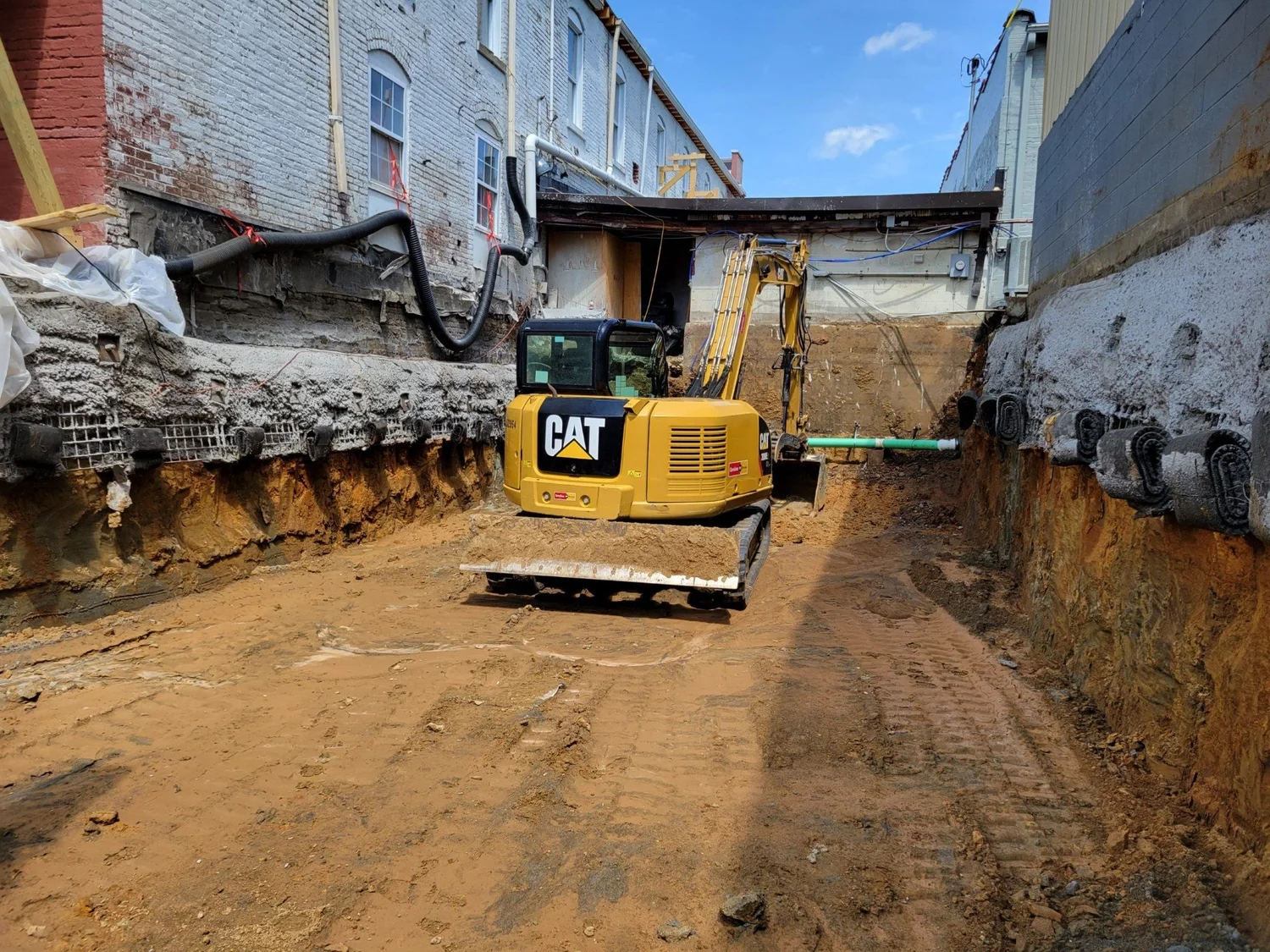
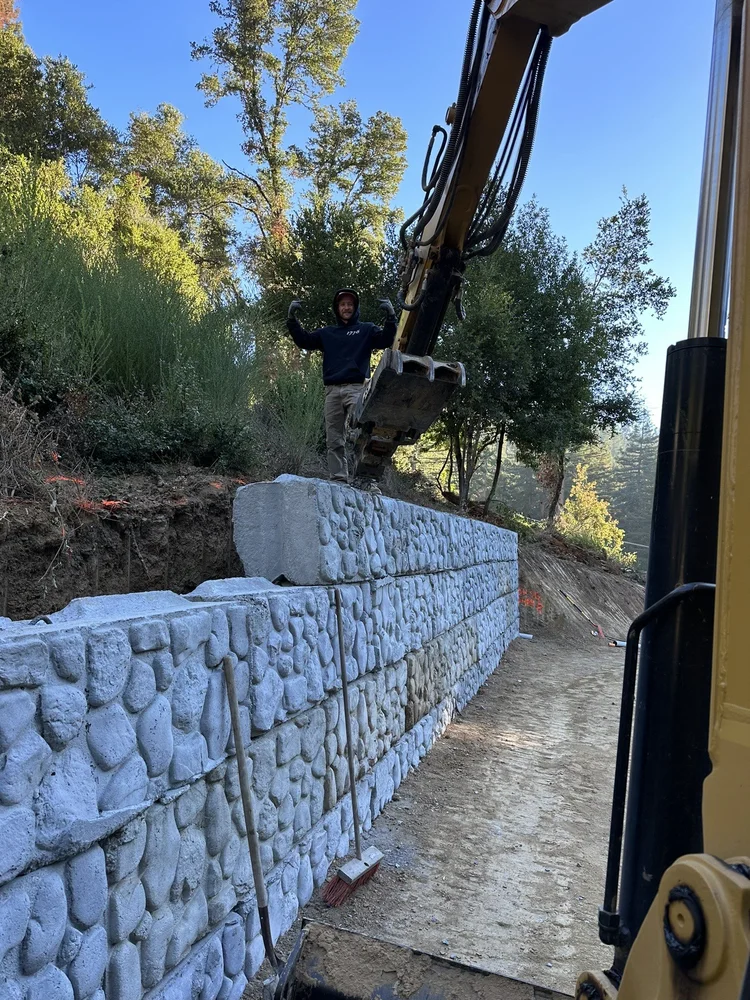
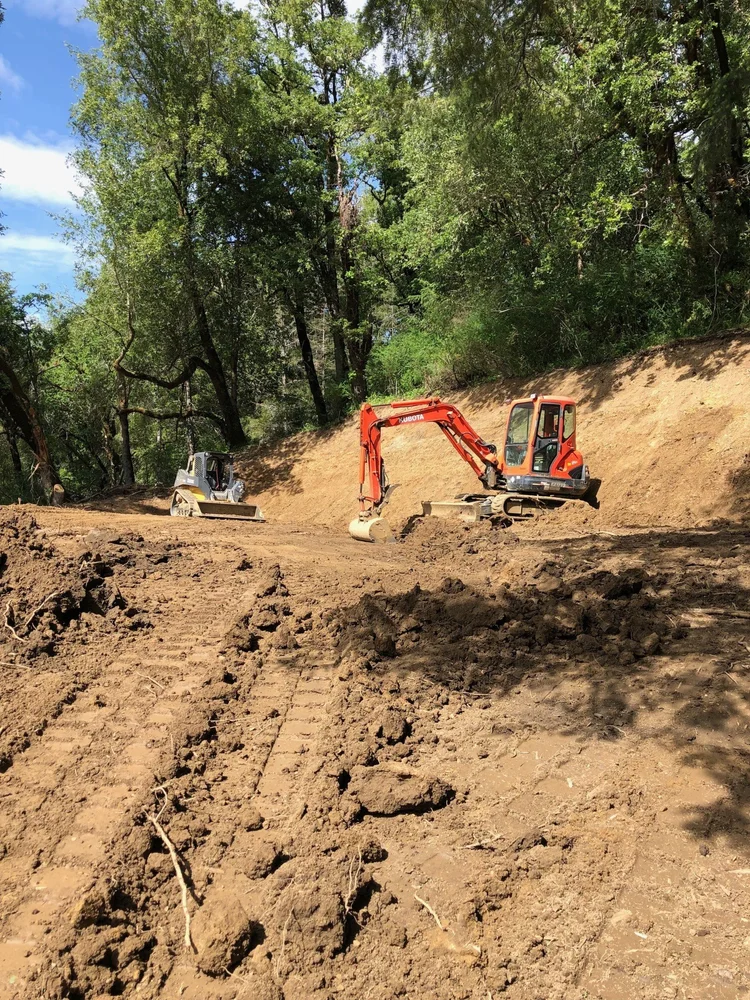
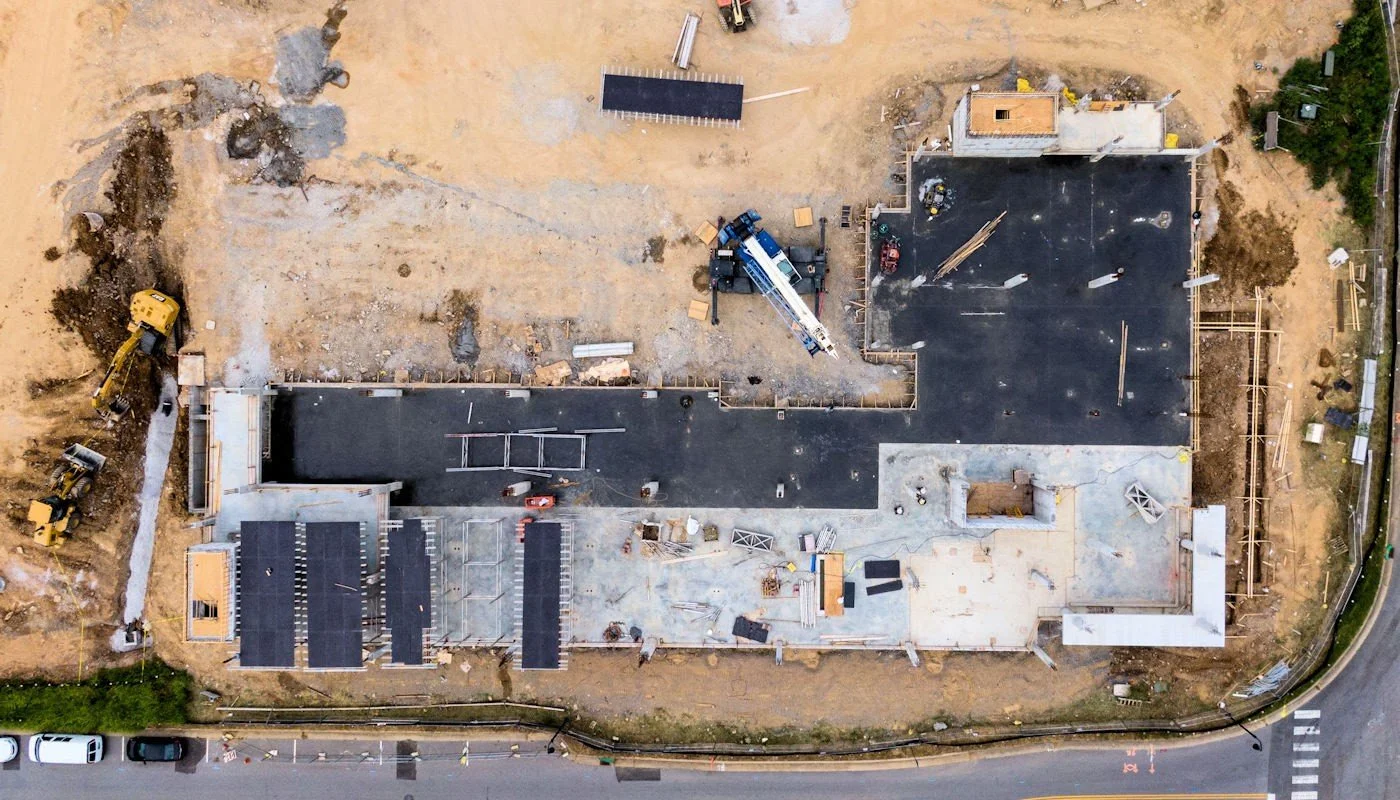
Foundation Work Across the Central Coast
Foundation FAQ
Answers to the questions we hear most often from homeowners and builders planning foundation work in Sonoma and Monterey Counties.
📞 Still have questions?Call us directly
What does a foundation contractor actually do? +
A foundation contractor handles the excavation, forming, and concrete work that creates the structural base of a building. This starts with evaluating the site — soil conditions, drainage, and topography — then excavating to the required depth and dimensions, setting forms, and placing concrete for footings, slabs, stem walls, or grade beams depending on the foundation type.
A good foundation contractor also integrates waterproofing and drainage systems during the build, not as an afterthought. And in cases where an existing foundation has developed problems, they assess the cause and perform repair work to stabilize the structure.
How do Sonoma County's clay soils affect foundations? +
Sonoma County has significant deposits of expansive clay soil — particularly in the valley floors and lower hillside areas. Expansive clay absorbs moisture and swells during the wet season, then dries and shrinks in summer. This repeated cycle creates movement that can crack concrete, shift stem walls, and cause foundations to heave or settle unevenly over time.
The solution isn't to avoid these soils — they're everywhere — but to design and build foundations that account for them. That means appropriate excavation depth, proper drainage to minimize moisture variation, and concrete mixes and reinforcement suited to expansive soil conditions. A soils report from a geotechnical engineer is often required and always helpful for foundation work in Sonoma County.
What types of foundations do you work with? +
We work with all residential and commercial foundation types common on the Central Coast, including slab-on-grade foundations, raised foundations with crawl spaces, stem wall foundations, continuous footings, spread footings, and grade beams. The right type for a given project depends on the soil conditions, the structure's load requirements, drainage characteristics of the site, and local building code requirements.
We discuss foundation type selection during our initial site evaluation — it's one of the first decisions that shapes everything downstream.
Do I need a permit for foundation work in California? +
Yes, in virtually all cases. Foundation work for new construction requires a building permit, and significant foundation repair or replacement typically requires one as well. In Sonoma County, any grading exceeding 50 cubic yards or 3 feet in depth also requires a separate grading permit. Monterey County's threshold is 100 cubic yards.
We coordinate permit applications as part of our service. If a soils report is required — which it often is for hillside lots or sites with known soil issues — we'll identify that early so it doesn't become a scheduling problem later.
How important is drainage to a foundation's long-term performance? +
Drainage is one of the most critical factors in long-term foundation performance, and it's consistently underinvested in on projects where cost pressure is high. Water is the primary enemy of foundations — it contributes to expansive soil movement, creates hydrostatic pressure against walls, promotes concrete degradation, and in high water table areas can cause uplift forces that compromise the structure from below.
We design drainage into every foundation project from the start: perimeter drains, subdrain systems where needed, waterproofing membranes, and final site grading that moves water away from the structure. These aren't optional add-ons — they're part of building a foundation that actually lasts.
What are the signs that an existing foundation has problems? +
Common indicators include diagonal cracks at the corners of doors or windows, doors or windows that stick or no longer close properly, visible cracks in the foundation itself (especially horizontal or stair-step cracks in block foundations), floors that feel unlevel or springy, gaps between walls and ceilings, and in more serious cases, visible bowing or bulging of foundation walls.
Not all foundation cracks are structural — hairline shrinkage cracks in concrete are normal — but cracks that are widening, horizontal, or accompanied by movement are worth having evaluated. We can assess whether a foundation issue requires repair and what the appropriate approach would be.
Can you repair an existing foundation, or only build new ones? +
We do both. Foundation repair work includes crack injection and sealing, underpinning to stabilize a settling foundation, adding drainage systems to relieve hydrostatic pressure on existing walls, reinforcing deteriorated sections, and in some cases partial or full foundation replacement.
The right repair approach depends on what's causing the problem. Before we propose any repair, we evaluate the site to understand the root cause — whether it's drainage, soil movement, inadequate original construction, or something else. Treating the symptom without addressing the cause usually means the problem returns.
How long does foundation work typically take? +
Timeline varies significantly by scope. A straightforward residential slab foundation — excavation, forming, and concrete pour — might be completed in one to two weeks excluding concrete cure time. A full crawl space or basement foundation with forming, waterproofing, and drainage integration could take three to four weeks or longer depending on site access and complexity.
Concrete cure time is a fixed constraint that affects scheduling regardless of how quickly the preceding work moves. Standard concrete achieves working strength in about seven days and full design strength at 28 days, though framing can typically begin before that point in most residential projects. We discuss realistic timelines during the planning phase so you can schedule downstream work accordingly.
Do I need a geotechnical soils report before foundation work begins? +
It depends on the project and location. In Sonoma County, soils reports are often required by the building department for new foundations on hillside lots or in areas with known expansive or unstable soil conditions. In Monterey County, similar requirements apply on sloped parcels and in areas subject to liquefaction or erosion.
Even when not required, a soils report is valuable — it tells us what we're actually working with before we dig, which allows us to design the foundation appropriately rather than discovering problems mid-project. We can help you determine whether a report is needed for your specific site and project type.
Are you licensed to perform foundation work in California? +
Yes. DW Excavation, LLC holds California Contractor's License #1060838 as a General Engineering Contractor. This license covers foundation excavation, grading, earthmoving, and related site preparation and concrete work throughout California.
We carry appropriate general liability insurance and workers' compensation coverage for all work we perform. You can verify our license status at any time through the California Contractors State License Board at cslb.ca.gov.
Build on a Solid Foundation
Contact DW Excavation to discuss your foundation project, request a quote, or schedule a site evaluation anywhere in Sonoma County, Monterey County, or the California Central Coast.
Sources
- Sonoma County Grading Permits — permitsonoma.org (2024)
- Monterey County Grading Requirements — countyofmonterey.gov (2024)
- ASCE Infrastructure Report — Foundation structural issues, American Society of Civil Engineers
- California Building Standards Code (Title 24) — dgs.ca.gov (2025, effective 2026)
- California Contractors State License Board — cslb.ca.gov