Direct Answer: Machine-based land clearing removes root systems, rhizomes, and compacted vegetation below the surface. Hand crews and weed whackers only cut what’s visible above ground, the root structure stays intact and regrows.
We got a call last May from a property owner asking about discing two acres of overgrown land. When we gave him the per-acre rate, he paused and said he’d just stick with weed whacking. I understand that reaction completely. On the surface, a weed whacker costs almost nothing and a tractor costs real money.
But those two tools do entirely different jobs. A weed whacker cuts stems. A disc, a grubber, or an excavator removes what’s underneath, root crowns, rhizomes, compacted thatch, and the structural material that drives regrowth season after season. If you skip that step, you’re not clearing land. You’re mowing it.
This article focuses on two situations where machine clearing is the only approach that actually works: invasive root systems like bamboo, and wildfire defensible space compliance in Sonoma County. Both are common calls we get. Both are situations where a hand crew gets you maybe one season of results before the problem comes back.
What Surface Cutting Leaves Behind, and Why It Matters
When you cut bamboo at the stem, you’ve removed the part you can see. But bamboo spreads through rhizomes, horizontal underground stems that can extend 10 to 15 feet laterally from the visible plant. Those rhizomes stay alive in the ground and push up new shoots, sometimes within a few weeks of cutting.
We received a form submission from a homeowner in the Aptos area with a clearing job that illustrated this exactly. The scope included cutting and hauling bamboo from a strip along the road, but the part that actually required machine work was the rhizome removal, 10 to 12 inches deep across roughly a 15-by-20-foot area. That’s not a job a hand crew completes with loppers and a wheelbarrow. It requires an excavator or trackhoe working methodically through the root mat, pulling the lateral structure out in sections.
What an excavator does in that situation:
- Excavates to the full rhizome depth, typically 10 to 14 inches in coastal California soils
- Lifts and separates root masses from surrounding soil
- Exposes secondary runners that weren’t visible from the surface
- Allows complete debris removal rather than leaving cut fragments that re-root
This is why residential excavation in Sonoma County often involves conversations that surprise homeowners, the scope goes deeper than it looks from the surface. Leaving rhizome fragments behind means the bamboo returns. The machine work isn’t more expensive than a hand crew because it’s fancier. It’s because it’s actually solving the problem at the right depth.
Defensible Space Clearing Is Not Landscaping
In Sonoma County, Cal Fire requires vegetation removal within 100 feet of a structure, and the wildfire history in the Santa Rosa and Healdsburg foothills means inspectors are looking closely. But a lot of property owners treat defensible space as a cosmetic job: trim the hedges, mow the grass, call it done.
That approach fails inspection for a simple reason. Defensible space compliance requires removing dead wood, brush, and ladder fuels at specific height and density standards, not just making the yard look tidy. Ladder fuels are the low-growing vegetation and dead material that allows fire to climb from ground level up into the tree canopy. A weed whacker addresses grass height. It doesn’t clear the dead chaparral, dense brush piles, or woody debris that actually drives fire spread.
Machine clearing for defensible space typically involves:
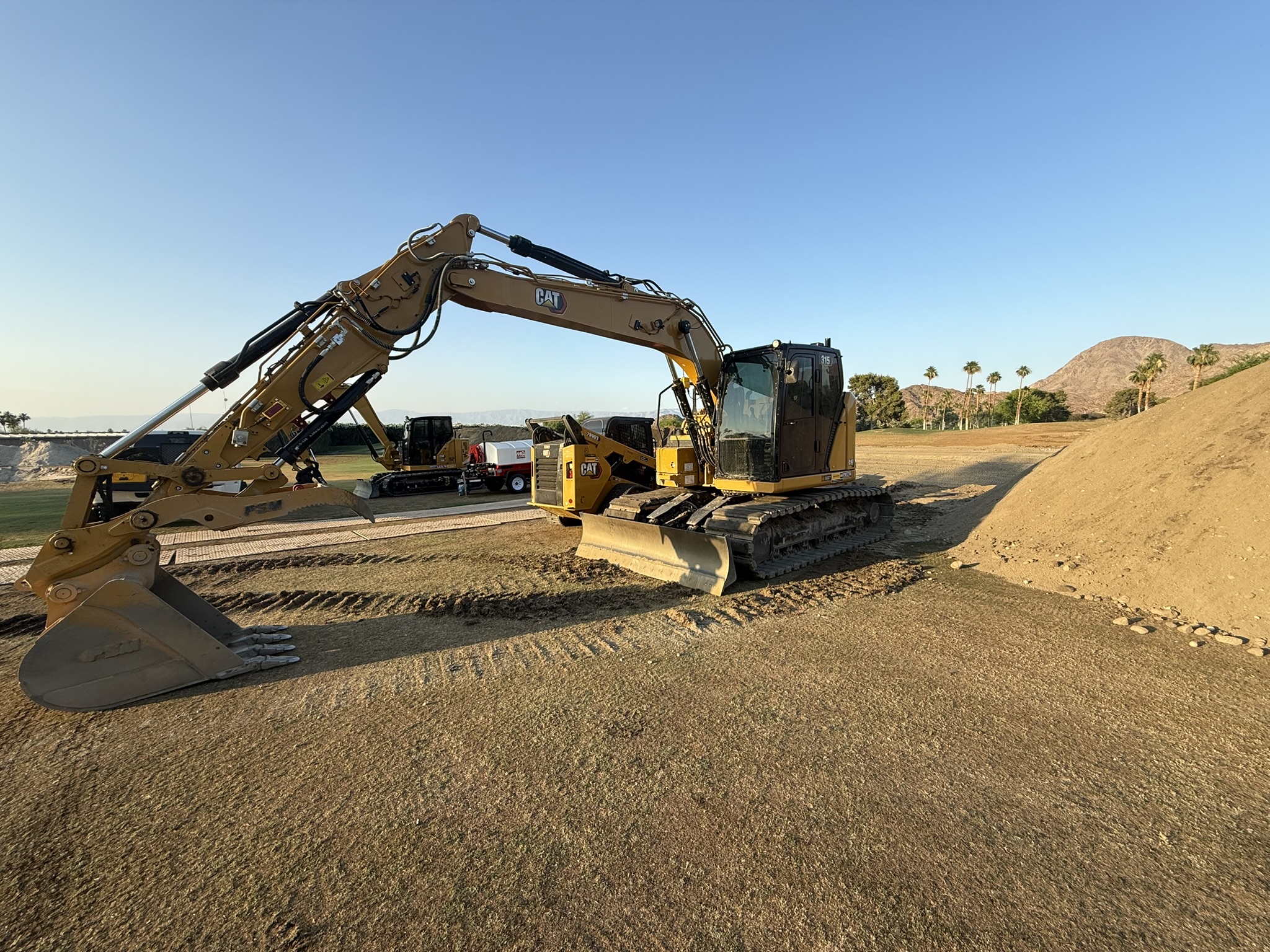
- Brush grinding or masticating, a forestry mulcher or brush cutter on a tractor processes dense shrub material in a single pass, reducing it to mulch at ground level
- Root crown removal on woody plants that would resprout if only cut at the stem
- Debris haul-away for dead wood volume that hand crews cannot move efficiently at scale
- Slope access, tracked equipment reaches grades where hand crews work slowly and often can’t clear sufficient volume in one season
For context on what grading and clearing permits look like in Sonoma County, cuts or fills over 50 cubic yards require a grading permit, see how grading permits work in Sonoma County. Large clearing projects that alter the soil profile can cross that threshold, and it’s better to know before the work starts than after.
The Cal Fire defensible space guidelines explain the specific zone requirements in plain language if you want to review the standards before an inspection.
Machine Clearing vs. Hand Clearing: What Each Method Actually Handles
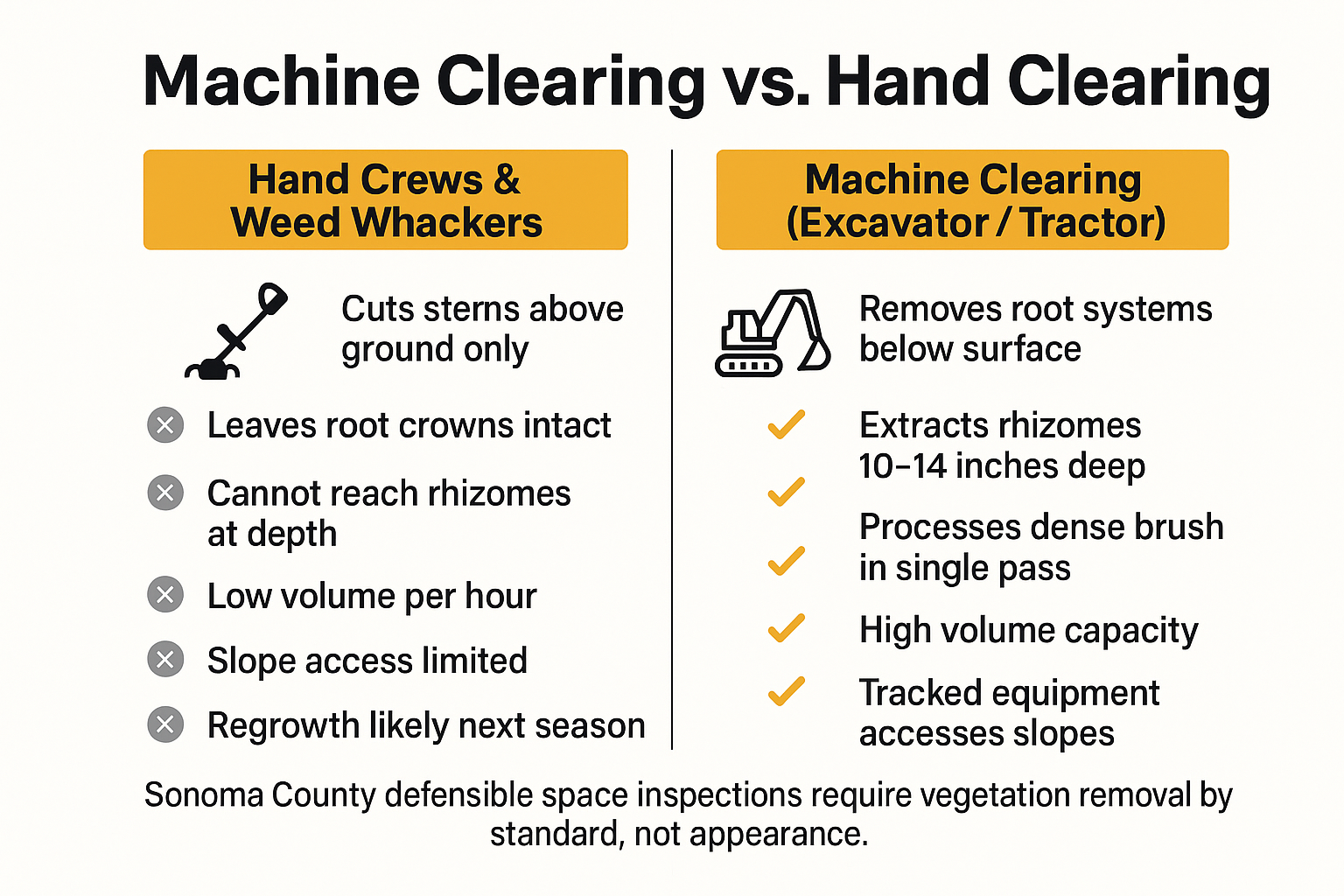
This comparison shows what machine-based land clearing addresses versus what hand crews and standard tools can realistically accomplish.
When Machine Work Is Required vs. Optional
Not every clearing job needs heavy equipment. This table helps clarify which situations almost always require machine work versus where hand crews may be sufficient.
| Situation | Hand Crew Sufficient? | Why Machine Work Is Needed |
|---|---|---|
| Bamboo rhizome removal, 10+ inches deep | No | Root mat requires excavation to full depth or it regrows |
| Defensible space on 1+ acre with heavy brush | Rarely | Volume and density exceed practical hand-crew output |
| Mulch scrape-off across large area | Sometimes for small areas | Machine scraping is faster and more consistent at scale |
| Stump and root ball removal | No | Stump grinders or excavators required, hand crews cannot extract root balls |
| Grass and light annual weeds on flat ground | Yes | Hand tools or light equipment adequate for surface vegetation |
| Slope clearing with dense chaparral | No | Tracked equipment needed for safe access and fuel volume removal |
Why Summer Is the Right Time to Schedule This Work
Timing matters more than most people realize on clearing projects, and summer is the best window in Sonoma County for most of this work.
Dry soil allows machine access on slopes without the ruts and compaction damage that wet-season work creates. Vegetation is fully leafed out, which actually makes invasive species identification easier, you can see what’s bamboo, what’s blackberry, and what’s worth keeping. And this is important from a permit standpoint: Sonoma County’s rainy-season best management practice requirements restrict how much bare, erodible soil can be exposed at one time once the wet season starts, typically around October.
Clearing work completed in summer can be finished and stabilized with erosion control before fall rains arrive. That matters after what we saw in November 2024, when atmospheric river storms dropped over 12 inches of rain on Santa Rosa in three days. Disturbed soil that wasn’t stabilized before that event became an erosion problem almost overnight. Understanding when and how erosion control connects to clearing work is part of planning the job right from the start.
If you’re planning a new build or development project, clearing and site planning in early summer gives you the best chance of hitting a fall construction start without rainy-season complications.
Frequently Asked Questions About Machine Land Clearing
Why does machine clearing cost so much more than hiring a hand crew?
You’re paying for equipment time, operator skill, and actual depth of work, not just the appearance of clearing. A tracked excavator or tractor with a brush cutter processes in an hour what a hand crew might take days to reach, and it removes the root structure that drives regrowth. Over two or three seasons, hand-crew costs on a recurring regrowth problem often exceed the machine rate for doing it right once.
Can I clear bamboo myself with a rental tool?
You can cut the canes, but removing the rhizomes at 10 to 12 inches of depth is a different operation. Consumer rental equipment isn’t typically designed for root mat extraction at that depth, especially across any meaningful area. Partial removal often stimulates more aggressive lateral spreading in bamboo, it’s one of those situations where incomplete work can make the problem worse.
Does land clearing in Sonoma County require a permit?
It depends on scope. Grading permits are required for cuts or fills over 50 cubic yards in Sonoma County. Large clearing jobs that move significant soil volume can cross that threshold. Projects near waterways or on slopes may also trigger erosion control plan requirements. We handle permit coordination as part of the job, it’s not something you should be figuring out after equipment is already on site.
How does machine clearing connect to defensible space inspections?
Cal Fire inspectors are checking fuel load, ladder fuel height, and vegetation density, not just whether the grass looks mowed. Machine clearing can process the volume of brush and dead wood that a hand crew simply can’t clear in the same timeframe, and it can reach slopes where ground-level fuels accumulate fastest. If you’ve received a notice of violation or have an inspection scheduled, get the clearing done before the date, not after.
What happens to the debris after machine clearing?
Depending on the material and local regulations, debris can be chipped and left as mulch on site, hauled to a certified disposal facility, or in some cases burned under a county burn permit during the appropriate season. We handle haul-away as part of the clearing scope when that’s the right call for the project.
Ready to Get the Clearing Done Right This Summer?
If you have invasive vegetation, a defensible space inspection coming up, or raw land that needs to be ready for construction before fall rains arrive, we’re glad to take a look at what the job actually involves. DW Excavation serves Sonoma County, Monterey County, and the broader California Central Coast, call us at 707-601-9091 or reach out through the contact page at dw-excavation.com to talk through your project.