
Direct Answer: Yes — in many cases. Trenchless pipe repair can fix a broken pipe with minimal digging. But not every pipe qualifies, and a camera inspection first tells you which method actually applies to your situation.
You’ve got a broken sewer or water line somewhere under your yard, and the contractor is talking about digging a trench the length of your driveway to get to it. That’s a gut-punch — especially if you just had the landscaping done or you’re looking at a paved surface that costs real money to replace.
In Monterey County, this situation comes up more than people expect. The combination of coastal soil movement, aging clay pipes in older Salinas and Seaside neighborhoods, and the kind of ground saturation that follows a heavy rain season means pipe failures aren’t rare. After the atmospheric rivers of late 2024 dropped water through already compromised soil across the region, we got calls from homeowners who hadn’t heard of trenchless repair and assumed they were facing a full excavation no matter what.
Sometimes full excavation is the right answer. But often it isn’t. This article explains how to tell the difference — what trenchless pipe repair actually involves, where it falls short, and when traditional open-cut excavation is still the smarter call.
What Trenchless Pipe Repair Actually Means
Trenchless repair is an umbrella term for fixing underground pipes without opening a long trench along the pipe’s full run. There are two methods you’ll hear about most:
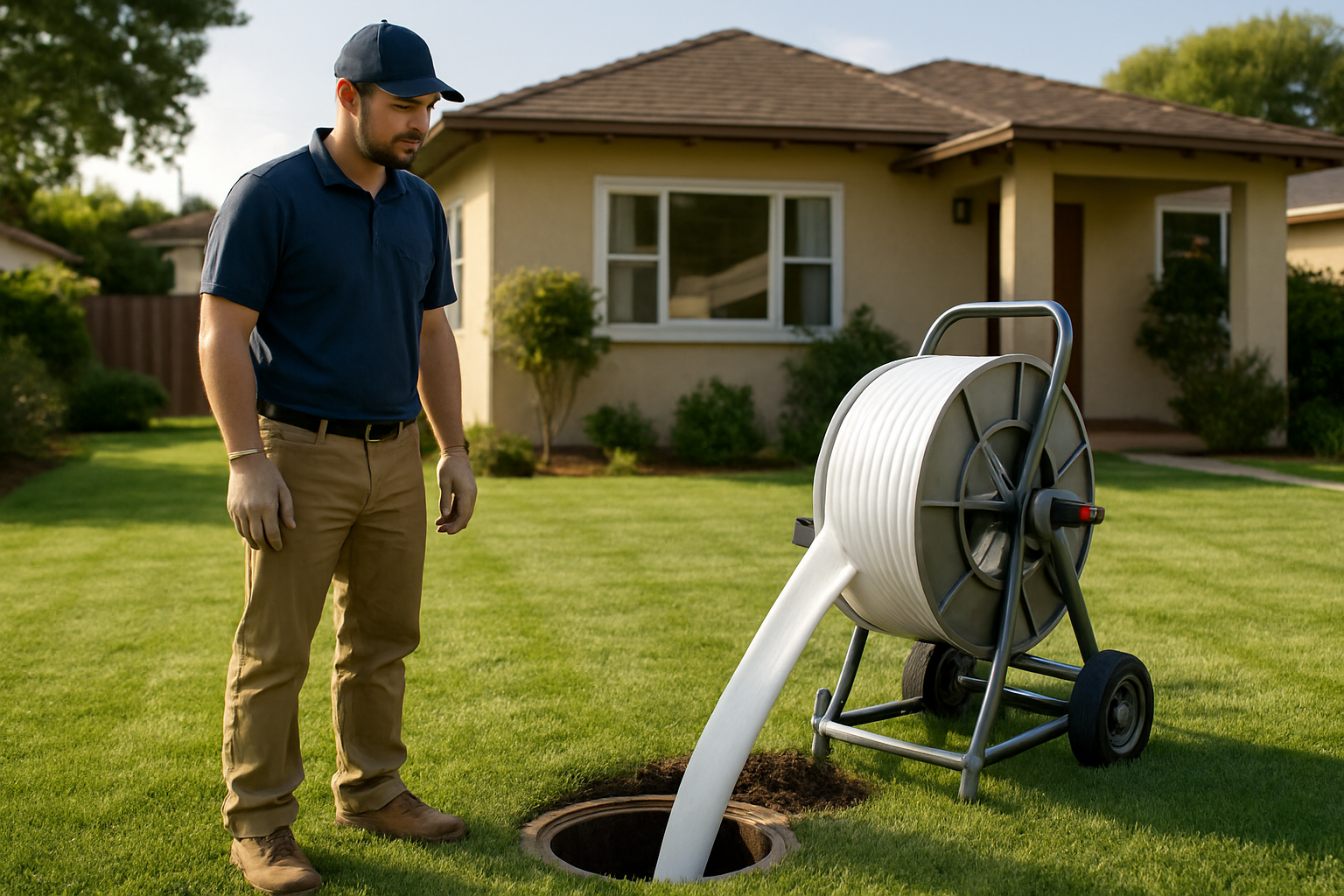
- Pipe lining (CIPP) — A flexible liner coated in resin is pulled or inverted into the damaged pipe, then inflated and cured in place. The result is essentially a new pipe inside the old one.
- Pipe bursting — A bursting head is pulled through the old pipe, fracturing it outward while simultaneously pulling a new pipe into place behind it.
Both methods require small access pits — usually one or two holes roughly 2 to 4 feet wide — rather than an open trench the length of the pipe run. That’s the core advantage. Your yard, driveway, or landscaping stays mostly intact.
The critical first step before any of this is a sewer camera inspection. A camera gets fed through a cleanout to show the pipe’s actual condition — where it’s cracked, whether it’s offset, how much root intrusion is present, and whether the pipe’s shape is still intact enough to accept a liner. Without that, no reputable contractor can tell you which method applies. If you’re not sure what’s going on underground yet, understanding how to know if your property needs a new sewer line is a good place to start.
When Trenchless Works — and When It Doesn’t
Trenchless repair isn’t a universal fix. It works well in specific conditions and fails in others. Knowing the difference saves you from spending money on the wrong approach.
Trenchless repair is generally a good fit when:
– The pipe has cracks, fractures, or small gaps but is still basically round in shape
– Root intrusion is present but hasn’t fully collapsed the line
– The pipe is at least 4 inches in diameter (most residential sewer lines are 4–6 inches)
– The damage is along a mostly straight run without severe bends
– Access points like a cleanout or small excavation pit can be made at each end
Trenchless repair often isn’t the right answer when:
– The pipe has belly sections — low spots where water pools instead of flowing — because lining won’t fix the grade
– The pipe is severely offset or has sections that have fully collapsed
– The original pipe material is corroded to the point where there’s nothing stable to line against
– You’re dealing with a complete blockage from years of grease or scale buildup that can’t be cleared
In Salinas and Seaside, we see a lot of older homes with Orangeburg pipe — a tar-paper composite used from the 1940s through the 1970s that has a tendency to deform and collapse entirely rather than crack cleanly. Lining a pipe that’s already deformed into an oval shape isn’t possible. That’s when open excavation becomes the only real option.
For Monterey County properties on hillside lots, there’s an added complication: pipe grade matters enormously for drainage function. Lining a pipe preserves the existing grade. If the grade was wrong to begin with — or soil movement has shifted it — the liner won’t solve the underlying problem. We’ve covered how soil conditions in this region create complications that aren’t always obvious from the surface in our breakdown of what soil conditions make foundation work harder in Monterey County, and those same soil dynamics affect buried pipes.
Trenchless Repair vs. Open-Cut Excavation: Side-by-Side
This comparison covers the most practical differences between the two approaches for a typical residential pipe repair in Monterey County.
| Factor | Trenchless Repair | Open-Cut Excavation |
|---|---|---|
| Surface disruption | Minimal — 1-2 small access pits | Full trench along pipe run |
| Yard/driveway restoration | Little to no restoration needed | Significant restoration required |
| Works on collapsed pipe? | No | Yes |
| Works on belly/grade issues? | No | Yes — grade can be corrected |
| Typical project timeline | 1–2 days | 2–5 days depending on length |
| Requires camera inspection first? | Yes, always | Recommended, not always required |
| Pipe materials it handles | Clay, ABS, PVC, cast iron (intact shape) | Any material, any condition |
| Long-term pipe life after repair | 50+ years (CIPP liner) | 50+ years (new pipe) |
How Trenchless Pipe Lining Works: Step by Step
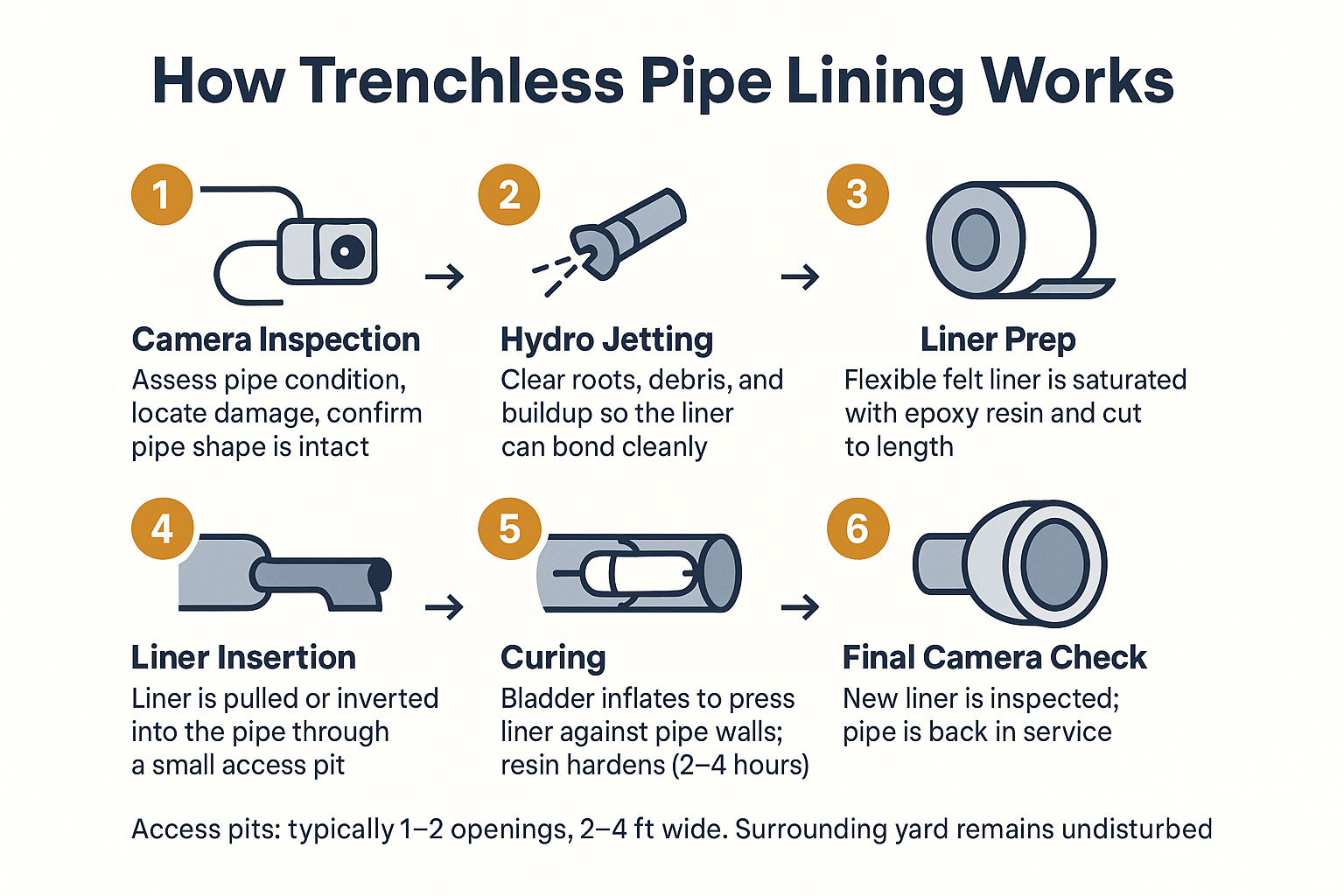
This infographic walks through the pipe lining process from inspection to completion — what happens underground and in what order.
What the Excavation Side of This Work Actually Looks Like
Even trenchless repairs involve some digging. Someone still has to expose the pipe at both ends to feed in the liner or bursting head. Those access pits are small — usually 2 to 4 feet wide and 3 to 6 feet deep — but they’re real excavation work that needs to be done carefully, especially near structures or in soil with poor bearing strength.
In Monterey County’s coastal areas, we often encounter sandy or loamy soil near the surface that transitions to denser clay or hardpan at depth. That matters because loose soil around an open pit can shift, and the last thing anyone wants is a pit wall collapsing during a repair. Proper shoring and safe dig technique matter even on a small access hole.
When open-cut excavation is the right call, the process is more involved but also more complete. We trench along the pipe run, remove the damaged section, set new pipe at the correct grade, and backfill in compacted lifts so the ground doesn’t settle unevenly over time. Done correctly, installation of a new sewer pipe is a lasting fix — not a patch. The disruption is real, but the result is a pipe that performs the way it should and grade that actually drains.
One thing to watch for: surface patching after excavation. If a contractor digs through your driveway and just throws gravel in the trench before repaving, that backfill will settle. The pavement above it will crack. We’ve seen this pattern in Seaside and Marina neighborhoods where prior work was done on the cheap. Proper compaction in layers — not a single dump and drive-on — is what keeps the surface stable long-term.
Permits and Inspections in Monterey County
Pipe repair work in Monterey County isn’t always permit-free, even when it’s trenchless. Whether you need a permit depends on the scope of work, the pipe type, and whether the repair connects to a public sewer main.
For most sewer lateral repairs — the pipe running from your house to the city main — Monterey County and municipal jurisdictions like the City of Salinas typically require notification and inspection by the local public works or utility district. Some repairs also require a encroachment permit if any work happens within the public right-of-way near the street.
Montgomery County’s threshold for grading permits is 100 cubic yards of cut or fill, so most residential pipe excavations fall below that trigger. But utility work has its own permit track separate from grading, and skipping it can create problems when you go to sell the property or pull a future building permit.
A contractor who knows the local process handles this coordination without making it your problem. If you’re also dealing with surface drainage issues that contributed to the pipe failure — which is more common than people expect — understanding why water pools in the same spot every time it rains can help you address the full picture, not just the pipe.
Frequently Asked Questions About Fixing Broken Pipes Without Excavation
How do I know if my pipe is broken or just clogged?
A persistent clog that keeps coming back, slow drains in multiple fixtures at once, or sewage odors in the yard are all signs of a structural pipe problem rather than a simple blockage. A sewer camera inspection is the only way to know for certain — it shows exactly what’s happening inside the pipe.
Can trenchless repair fix a pipe under a concrete driveway?
Yes, and this is one of the best use cases for it. If the pipe runs under a concrete or asphalt driveway, accessing it through small pits at each end — rather than cutting the entire surface — saves significant money on surface restoration. That said, the pipe still has to qualify for lining based on its condition.
How long does a pipe liner actually last?
A properly installed CIPP (cured-in-place pipe) liner is generally rated for 50 years or more. The resin-hardened liner is smooth, resistant to root intrusion, and typically stronger than the original host pipe. Longevity depends on correct installation and proper curing time — rushing the cure is one of the ways cheaper jobs fail early.
Does homeowner’s insurance cover broken sewer lines?
Standard homeowner’s policies in California generally do not cover sewer line repair or replacement unless you’ve added a service line endorsement. It’s worth checking your policy before assuming you have coverage — most people are surprised to find out they don’t.
What if I have a septic system instead of a city sewer connection?
The pipe from your house to the septic tank is called a septic lateral, and it can be repaired with trenchless methods in the right conditions, just like a sewer lateral. The bigger concern with septic systems is usually the condition of the tank and drain field, not just the inlet pipe. A camera inspection shows the lateral condition; a septic inspection covers the rest.
Can I get an estimate before the camera inspection?
Any number you get before a camera inspection is a rough guess. The pipe’s actual condition — material, depth, damage type, access points — determines the right method and the real cost. Inspecting first is how you avoid paying for the wrong repair.
Have a Pipe Problem in Monterey County and Not Sure Where to Start?
DW Excavation works with homeowners and property owners across Monterey County — from Salinas and Seaside to Marina and the Pajaro Valley — on sewer line repairs, trenchless work, and full excavation when that’s what the job calls for. If you’re dealing with a slow drain, sewage smell in the yard, or a spot that keeps settling after past repairs, give us a call at 707-601-9091 or reach out through the contact page at dw-excavation.com to talk through what you’re seeing. We’ll tell you honestly what we find.