
Direct Answer: Demolishing a septic tank requires a separate abandonment permit from your county Environmental Health or Building Department. Photos, pumping records, and contractor documentation must be submitted before the inspection closes.
One of the most stressful calls we get is from a homeowner who has already connected to city sewer, already had the septic tank punctured and filled, and is now hearing from a county inspector that a demolition permit was required before any of that work legally happened. The physical work is done. The inspector is waiting. And there is no permit in the file.
This situation comes up more often than most people expect, especially on older Sonoma County parcels where septic-to-sewer conversions happened fast after a connection became available. We’ve seen it in Monterey County too, on properties where a plumber or septic service company handled the hookup side and the excavation piece fell through the cracks in terms of permit responsibility.
This article walks through what proper abandonment documentation looks like, which permits cover which piece of the work, and what options exist when the tank is already filled but the county inspection is still open.
Why the Septic Demolition Permit Gets Missed
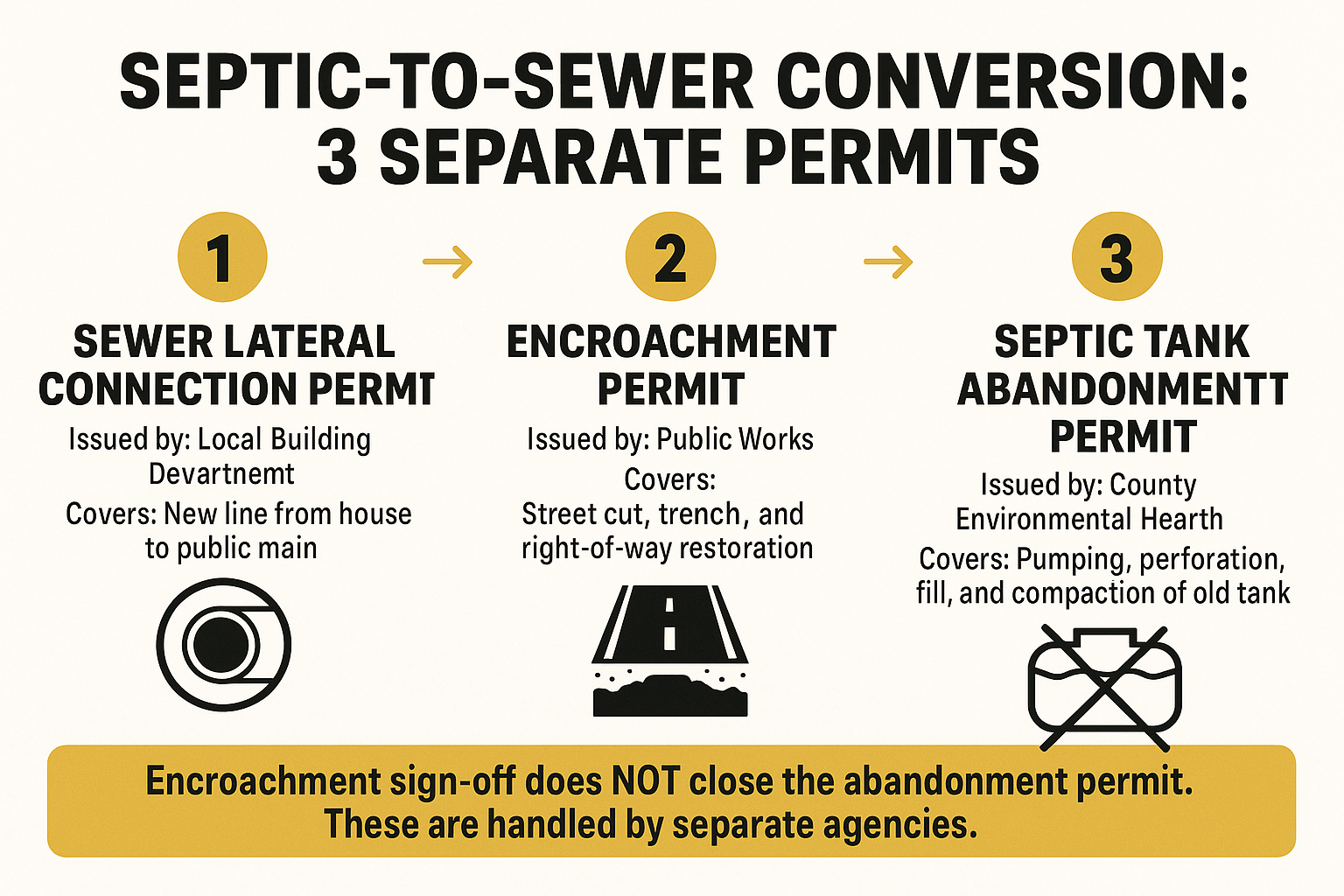
When a homeowner converts from septic to sewer, there are usually at least three separate permits involved. Most people only track two of them.
The first is the sewer lateral connection permit, which covers running the new line from the house to the public main. The second is the encroachment permit, which authorizes work in the public right-of-way, the street cut, trench, and restoration. Many homeowners think once they have an encroachment sign-off, they are done with the county.
But the septic tank abandonment permit is a third, separate document. It is issued by the county Environmental Health Department, not the Building Department, and it specifically governs what happens to the old tank after you disconnect it. In Sonoma County, Environmental Health reviews permit applications for septic system repair, upgrade, and abandonment as part of its groundwater protection mandate. A signed encroachment permit does not satisfy that requirement, and inspectors know the difference.
The confusion is understandable. The plumber connects the sewer lateral. The septic pumping company empties the tank. The excavation contractor fills and compacts it. Each contractor is responsible for their own piece, and nobody always coordinates who pulled the demolition permit. That gap is where homeowners get stuck.
If you want a deeper look at the full scope of what the excavation side of a septic-to-sewer conversion involves, this breakdown of what the excavation side of a septic-to-sewer conversion covers is a good starting point.
What Proper Abandonment Actually Looks Like in the Field
Counties have specific expectations for what qualifies as a properly abandoned septic tank. The physical steps are relatively straightforward, but they have to be done in the right order and documented at each stage.
A standard proper abandonment typically involves:
- Pumping the tank completely empty and disposing of the contents through a licensed hauler
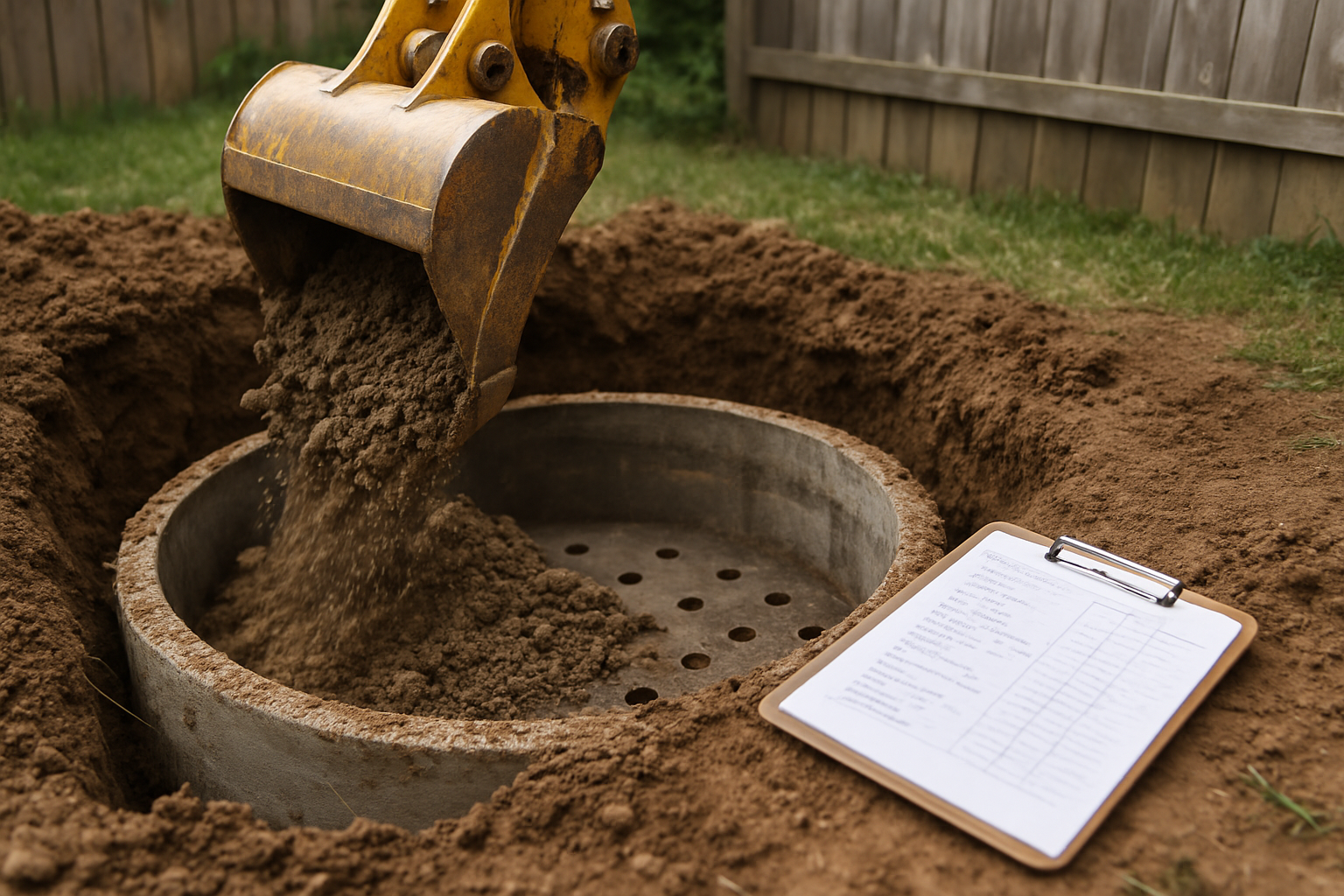
- Perforating the bottom of the tank, usually by making holes with excavation equipment, so groundwater cannot pool inside a sealed void
- Filling the tank with approved material, typically sand, gravel, or compacted native soil depending on county requirements
- Compacting the fill in lifts so the ground above it remains stable long-term
The California State Water Resources Control Board sets baseline groundwater protection standards that county-level abandonment requirements build on, which is part of why the documentation requirement exists at all.
Where most after-the-fact situations run into trouble is not the physical work, it is the absence of documentation taken during the process. County reviewers cannot inspect a tank that has already been filled. What they are looking for instead is a record that the work was done correctly: photos of the empty tank, photos of the perforations being made, photos of fill material going in, a pumping receipt from a licensed hauler, and a record of who performed the excavation work and when.
If you have those photos and receipts, you have the foundation of an after-the-fact submission. That is not nothing.
The Three Permits Most Homeowners Confuse
This infographic breaks down the three separate permits involved in a septic-to-sewer conversion and which agency handles each one.
After-the-Fact Documentation: What Carries Weight With County Reviewers
We’ve been contacted by homeowners in exactly this position, photos in hand, contractor receipt attached, but no permit in the file and an inspection still open with the county. The question they always ask is some version of: can a licensed contractor help prepare documentation that satisfies the county?
The short answer is yes, there are ways a licensed general engineering contractor can support an after-the-fact submission. But it is important to be clear about what that means.
A licensed contractor can review the site records you have, assess whether the documented work appears to meet the county’s abandonment standards, and prepare or support a professional documentation letter that describes the work performed, the methods used, and the materials involved. That kind of letter, from a licensed CA General Engineering Contractor, carries more weight with a county reviewer than a homeowner self-reporting the same information, because the contractor’s license is on the line and reviewers know it.
What a documentation letter cannot do is create records that do not exist. If you have no photos from the time of the work, the submission is harder. If the tank was filled without perforation, the county may require remediation, not just documentation. A licensed contractor can tell you honestly which situation you are in before you submit anything.
The permit process for abandonment in Monterey County follows a similar path. If you are dealing with a related situation there, such as a replacement rather than an abandonment, this overview of the septic system replacement permit process in Monterey County covers what that review typically involves.
What to Gather Before Contacting the County
Having this documentation ready before you call the county or submit an after-the-fact permit application will significantly speed up the review process.
| Document | What It Proves | Who Typically Provides It |
|---|---|---|
| Pumping receipt from licensed hauler | Tank was emptied before filling, required for groundwater compliance | Septic pumping company |
| Photos of empty tank interior | Visual confirmation tank was properly pumped | Homeowner or contractor at time of work |
| Photos of perforations in tank bottom | Void prevention step was completed | Excavation contractor at time of work |
| Photos of fill material and compaction | Tank was filled and stabilized correctly | Excavation contractor at time of work |
| Contractor receipt or invoice | Licensed party performed the work, with date | Septic service or excavation contractor |
| Professional documentation letter | Licensed contractor attests to methods used and compliance with standard practice | Licensed General Engineering Contractor |
Frequently Asked Questions About Septic Tank Demolition Permits
Can I get the abandonment inspection closed after the tank has already been filled?
Yes, in many cases. Counties understand that work sometimes happens before permits are pulled, especially on older properties going through septic-to-sewer conversions. The path forward usually involves submitting photos taken during the work, a pumping receipt, and a professional documentation letter from a licensed contractor. The county reviewer will determine whether the documentation is sufficient or whether any additional steps are needed. Do not assume the case is closed against you before you submit.
My plumber connected the sewer and my septic company pumped the tank. Who is responsible for the abandonment permit?
This is the question at the center of most after-the-fact situations. The abandonment permit is typically the responsibility of whoever performs the physical demolition work, pumping, perforation, and fill. That is usually an excavation contractor, not a plumber or septic pumping service. But responsibility can vary by contract. If it was never explicitly assigned, it often falls through. The homeowner is ultimately the permit holder and the one who faces the open inspection.
What does Sonoma County specifically require for a septic tank abandonment?
Sonoma County Environmental Health reviews septic abandonment permits to protect groundwater quality. Standard requirements include pumping the tank through a licensed hauler, perforating the bottom to prevent a void, and filling and compacting with approved material. Photographic documentation at each stage is expected. Requirements can vary slightly by parcel and location, so confirming current standards with the county directly before submitting is worth the call.
I already have my encroachment permit signed off. Does that mean the septic demolition is cleared too?
No. The encroachment permit covers work in the public right-of-way, the street trench and restoration. The septic abandonment permit is handled separately by county Environmental Health. A signed encroachment permit does not close the abandonment file. These are issued by different agencies for different scopes of work.
How much does a professional documentation letter typically cost?
Costs vary depending on what records exist, how much site review is needed, and the complexity of the submission. There is no fixed rate we can quote here, the scope of what a contractor needs to do to support your submission drives the price. Contact us directly for a clear picture of what your specific situation involves and what it would take to prepare.
Need Help With Septic Demolition Documentation?
If you’re in Sonoma or Monterey County with an open abandonment inspection and a filled tank, we can look at what you have and tell you honestly what a documentation submission would involve. Call DW Excavation at 707-601-9091 or reach out through the contact page at dw-excavation.com to describe your situation and get a straight answer on next steps.