Quick Answer
Land clearing services prepare a property for construction by removing trees, brush, rocks, and debris. This professional work involves a full site assessment, obtaining permits, clearing vegetation, managing debris, and grading the land to create a stable, buildable area. It's the essential first step before any foundation or site development can begin.
When you have a piece of land in Sonoma or Monterey County and a vision for what it could be, you often see the obstacles first: overgrown brush, unwanted trees, and uneven ground. That’s where land clearing services come in. It’s the critical step that transforms a raw, unusable property into a clean, buildable site.
What Are Land Clearing Services?
Land clearing is the process of preparing a canvas for construction. Before you can build, you need a clean, stable surface. Land clearing services involve the professional removal of trees, brush, large rocks, and other debris standing in the way of your project. The goal is to create a safe, accessible, and properly graded area for whatever comes next, whether it’s a new home, a commercial building, or agricultural development.
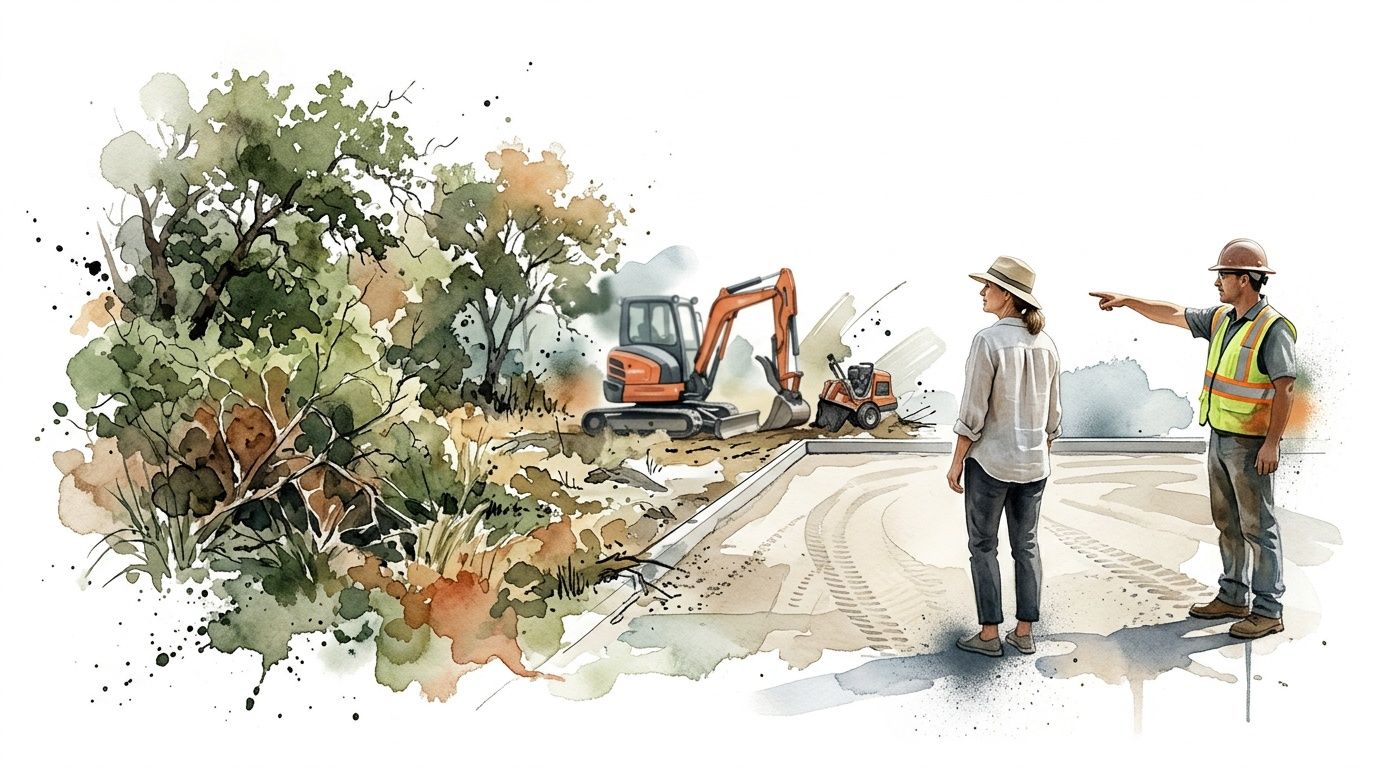
From Overgrown Lot to Buildable Site
A proper land clearing job is a multi-step process. Each phase is designed to systematically prepare your property for the next stage of construction. This is the essential groundwork that precedes just about everything else. To see how this fits into the bigger picture, you can learn more about what excavation in construction entails.
Here are the key activities involved:
- Vegetation and Tree Removal: We clear away all unwanted trees, shrubs, and dense undergrowth from the project area.
- Stump Grinding and Removal: Cutting a tree isn’t enough. Stumps and their root systems must be removed or ground down to prevent the ground from sinking or shifting later, ensuring a stable base for your foundation.
- Rock and Debris Clearing: Any large boulders, buried rocks, or old debris are excavated and hauled away. You can’t build a level foundation on hidden obstacles.
- Initial Grading: Once the site is cleared, we perform a rough grading. This involves shaping the terrain to establish basic drainage and create a level area for heavy equipment to move safely.
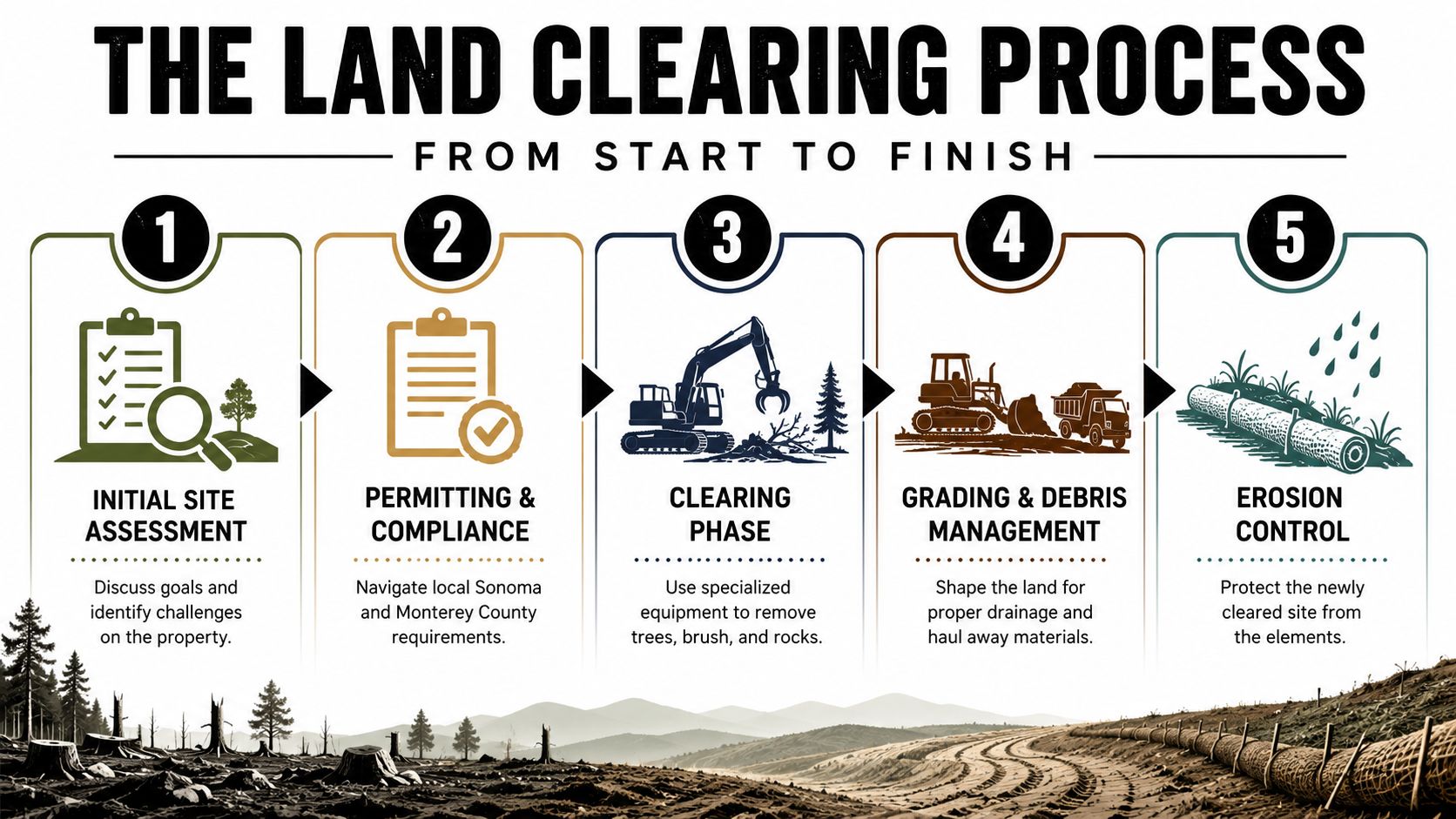
The Land Clearing Process from Start to Finish
Hiring a team to clear your land is more than just knocking down trees. At DW Excavation, we follow a clear, step-by-step process that turns an overgrown or unusable lot into a solid, development-ready site. Each step builds on the last to ensure a safe, compliant, and stable outcome.
Step 1: Initial Site Assessment and Planning
Every project starts with a conversation and a walk-through of your property. This initial site assessment is where we get our boots on the ground to see the terrain, identify challenges like steep slopes or tricky access, and listen to what you want to achieve. This hands-on approach allows us to create a practical plan that matches your vision with the realities of the land. For many projects, professional land surveying is a key part of this stage; this Survey Merchant construction surveying guide is a great resource.
Step 2: Permit Assistance and Regulatory Compliance
Before any dirt moves, we handle the paperwork. Navigating the permitting requirements in places like Sonoma County and Monterey County can be complex. We offer permit assistance and site planning support to help get your project fully approved, ensuring your job is compliant and avoids fines or stop-work orders. If you're curious about project documentation, check out our guide on how to read construction blueprints.
Step 3: Clearing, Grading, and Debris Management
Once permits are in hand, our crews bring in specialized equipment to systematically remove trees, stumps, brush, and rocks. We then move into two crucial follow-up stages.
- Debris Management: All cleared material is either processed on-site (like turning it into mulch) or hauled away for responsible disposal, leaving your site clean.
- Grading and Leveling: We meticulously grade the site to create proper drainage and build a level, compacted pad that's ready for a foundation.
Step 4: Final Site Protection and Erosion Control
The final step is protecting the newly exposed soil. We implement erosion control measures, such as installing silt fences or applying protective ground cover, to shield your land from wind and rain. This stabilizes the site and protects your investment, leaving you with a secure and truly construction-ready lot.
Key Factors That Determine Land Clearing Costs
While the total acreage is a major factor in any land clearing quote, it’s not the only one. Understanding what goes into an accurate estimate helps you see exactly what you’re paying for. Clearing a flat, one-acre lot with light brush is a completely different job than clearing a steep one-acre hillside covered in mature trees.
Site Conditions and Accessibility
The specific character of your property plays a massive role in the final price. A steep, remote lot—common along the California Central Coast—presents logistical challenges that a flat, easily accessible parcel does not.
Key site conditions that affect the cost include:
- Slope and Grade: Working on hillsides requires specialized equipment and techniques for safety and erosion prevention.
- Soil Type: It is much faster to excavate soft loam than it is to work through rocky ground or dense clay.
- Site Access: Narrow roads, low-hanging power lines, or a tight entry point can affect the project's timeline and efficiency.
Method, Permits, and Regional Pricing
The clearing method also impacts the budget. Traditional "cut and haul" clearing is different from forestry mulching, where vegetation is ground up and left on-site. Permits also come with their own fees and wait times. You can learn more about this in our guide on how to get permits approved faster in Sonoma County.
While national land clearing costs average between $1,400 to $6,200 per acre, California is different. Stricter regulations, higher labor rates, and serious erosion control requirements mean you can expect to pay a 30-45% premium over national averages, according to 2026 cost data from KitchingCo.com. This is why a custom, on-site estimate is the only way to get a real number.
Common Land Clearing Methods and Equipment
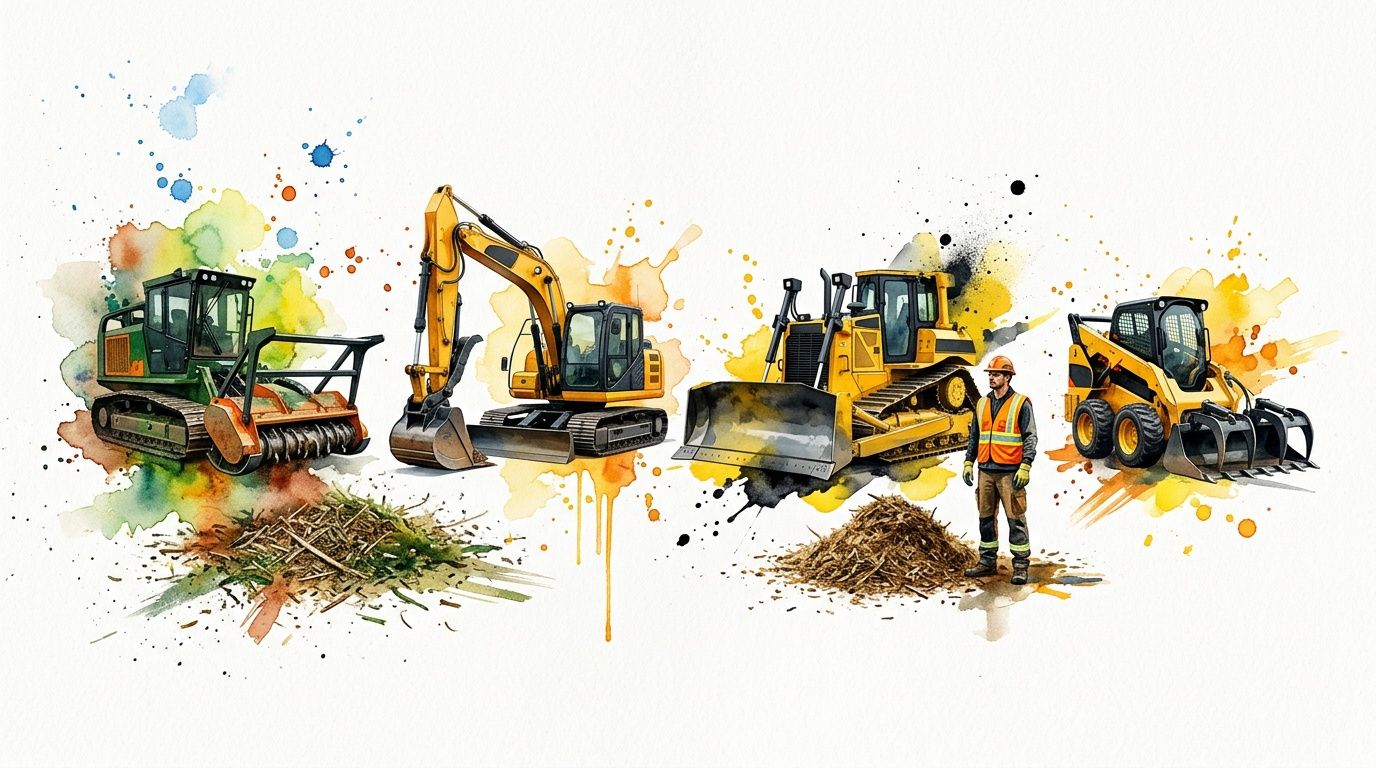
The right land clearing method depends on your end goal, the terrain, and local environmental rules. We help you decide between the two main approaches: traditional clearing and forestry mulching. Choosing the right machinery is one of the biggest decisions, as it dictates the project's efficiency, cost, and final result.
Traditional Cut and Haul Clearing
This is the classic approach. It involves cutting down trees and brush, gathering it, and hauling it off-site for disposal. This method is best when you need a perfectly clean slate for a new home foundation, commercial building pad, or driveway. It leaves the ground bare and ready for fine grading and utility installation.
Forestry Mulching
Forestry mulching uses a machine with a specialized head to grind trees and brush on the spot. This turns unwanted overgrowth into a natural, protective blanket of mulch. This mulch layer acts as a barrier against soil erosion, helps suppress weeds, and slowly breaks down to return nutrients to the ground. It is an excellent low-impact method for fuel reduction, creating trails, or clearing underbrush without major soil disturbance.
The Right Tools for Your Project
Our fleet includes everything from large bulldozers and excavators for big jobs to nimble skid steers for tight spaces. For mulching, we use dedicated forestry mulchers built for the tough vegetation common on the California Central Coast. Having access to the right equipment is a huge part of a project’s success, and it directly affects the bottom line. It's one reason why professional contractors often compare construction machinery lease programs to manage costs. To get a better sense of what goes on behind the scenes, you can read about what most contractors don't tell you about excavation projects.
Preparing Your Site After Land Clearing
Once the trees and brush are gone, there is a crucial intermediate step before construction begins. This site preparation phase is about precision earthwork, bridging the gap between a cleared lot and a buildable pad.
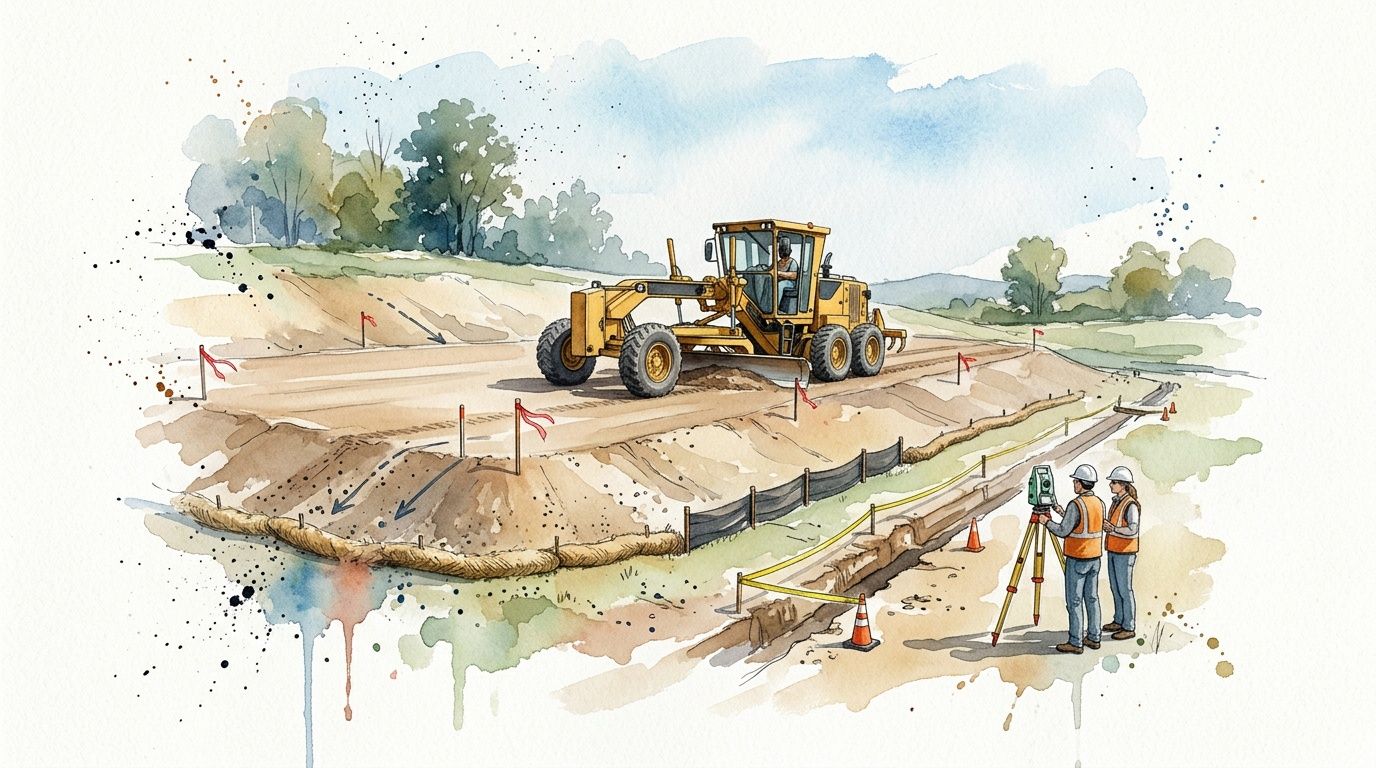
From Cleared Land to a Stable Foundation
The goal of post-clearing site prep is to create a secure, stable, and properly drained surface. As part of our comprehensive land clearing services, we handle several key steps.
Here’s what that looks like:
- Final Grading and Leveling: We shape the terrain to guide water away from your future foundation. We then build and compact a perfectly flat pad to serve as a solid base.
- Soil Stabilization: We stabilize the ground to prevent erosion, which is a critical step on the hillside properties common across Sonoma County. You can dive deeper into our guide on methods to prevent soil erosion to see why this is so important.
- Infrastructure Preparation: This is the perfect time to think ahead. We can dig trenches for underground utilities or build a subgrade for a new driveway, getting everything ready for the next phase.
Our expertise in site development ensures a smooth handoff to the builders. With a skilled crew clearing between 0.5 to 2 acres per day depending on vegetation density, professional site prep is critical for efficiency. You can discover more insights about the potential revenue of land clearing businesses at RiseOnlineAds.com.
How to Choose the Right Land Clearing Contractor
Picking the right contractor for your land clearing services is the most important decision for your project. The right team gets the job done correctly, safely, and in compliance with all local rules on the Central Coast.

First, confirm they are fully licensed and insured in California. This is non-negotiable, as it protects you from liability. Ask to see their license and proof of insurance.
Verifying Experience and Equipment
Next, look into their local experience. Ask for references from recent projects in Sonoma County or Monterey County that are similar to yours. A contractor who is proud of their work will be happy to show it to you.
A professional contractor will also own and maintain their own equipment. This indicates an established business with the right tools for your specific job, whether it requires a heavy-duty dozer or a nimble forestry mulcher.
Communication and Transparency
Finally, pay attention to how they communicate. A good contractor provides a detailed, written estimate that outlines the full scope of work, the timeline, and the total cost. This document should leave no room for surprises and serve as a clear roadmap. These criteria are the hallmarks of a trustworthy professional who can deliver the results you need.
Frequently Asked Questions About Land Clearing Services
How long does a typical land clearing project take?
This depends on your property. A small, flat lot with light brush might take only a day or two. A large, steep, and heavily wooded property in Sonoma County could take a week or more. We provide a realistic timeline after our initial site assessment.
Will I need a permit to clear my land?
Almost always, yes. Most cities and counties along the Central Coast require permits for significant tree removal or earthmoving. At DW Excavation, we provide permit assistance and site planning support to handle this process for you.
What happens to all the trees and brush you clear?
This depends on your goals. We can haul all materials off-site for disposal. Alternatively, with forestry mulching, we can grind the vegetation on-site, leaving a protective layer of natural mulch that prevents erosion and enriches the soil.
Do I need to be on-site during the clearing process?
You don’t need to be there the whole time. We ask that you join us for the initial site walk-through to discuss your goals. Once the plan is set, our crew can handle everything, and we will provide you with regular progress updates.
What is the best time of year to clear land?
In Northern California, the dry season from late spring through early fall is ideal. Drier ground is easier for heavy equipment to operate on and reduces the risk of soil compaction and erosion. However, we are equipped to work year-round and will adjust our methods to suit the conditions.
Ready to prepare your property for its next chapter? Contact DW Excavation, LLC for a free site consultation and estimate. Let’s talk through your goals and how our land clearing services can help you achieve them.
Call us today: (707) 601-9091 | 470a Caletti Avenue, Windsor, CA 95492 | dw-excavation.com