Quick Answer
An excavation and engineering contractor is a licensed professional who manages both the planning (engineering) and the physical earthwork (excavation) for a construction project. They don’t just dig; they analyze soil, design drainage systems, plan for utility lines, and ensure the ground is properly prepared to support a structure for decades. This integrated approach prevents costly mistakes by ensuring the building plans work with the actual conditions of the land from day one.
If you’re looking at plans for a house, ADU, driveway, drainage fix, or utility work, the big question usually isn’t the drawing. It’s whether the ground on your property will support what those plans call for.
That’s where what does an excavation and engineering contractor do? becomes a practical question, not just a definition. The job is to connect paper plans to real site conditions so you don’t find out too late that the slope drains the wrong way, the trench can’t be cut as drawn, or the soil under the foundation needs more work than anyone expected.
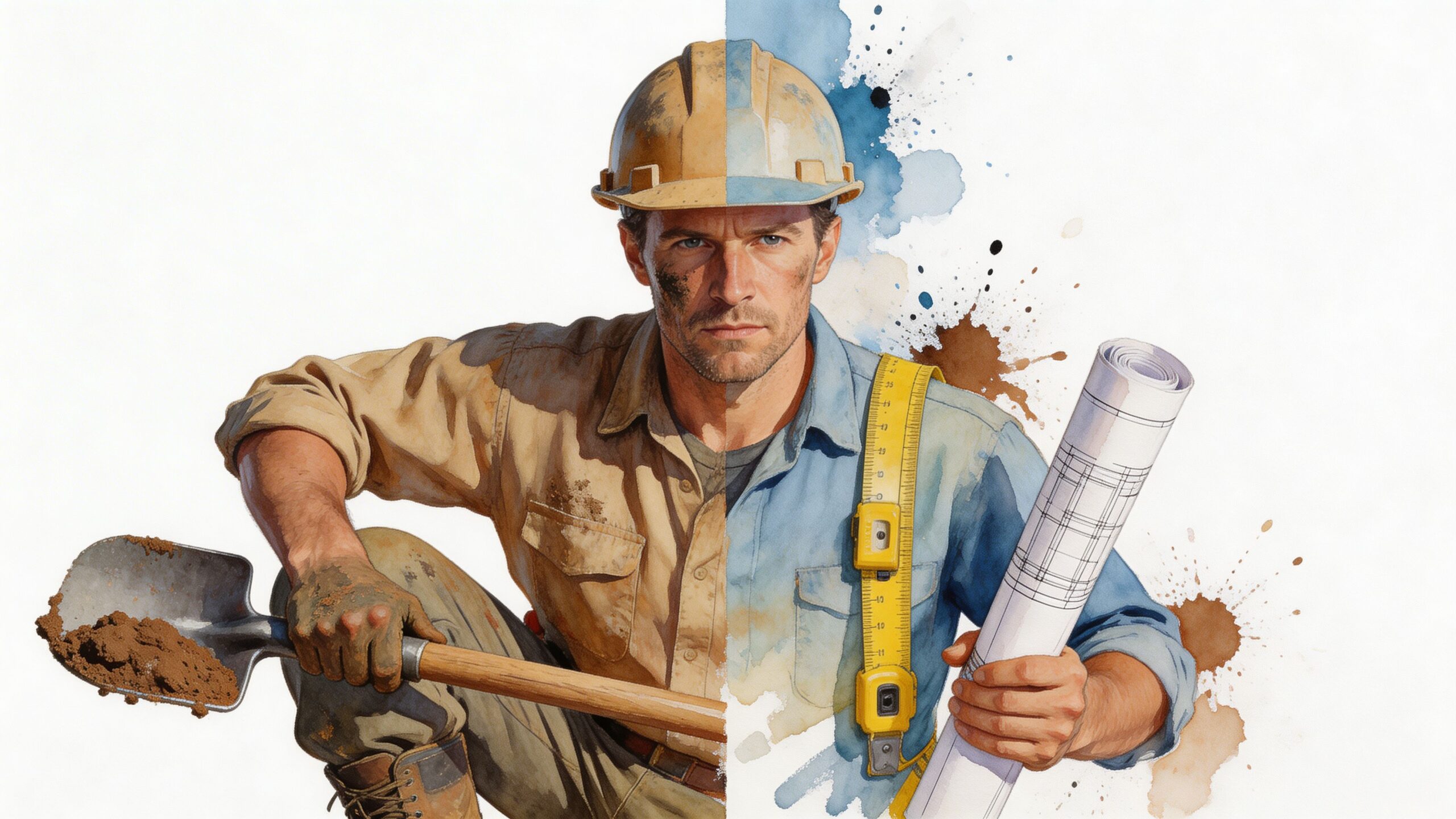
More Than Just Digging The Two Halves of the Job
A project can look straightforward on paper and still turn expensive once equipment hits the site. The pad may need to shift, the trench may not hold safely at the planned depth, or runoff may head straight toward the future foundation instead of away from it. That gap between design and field conditions is where money gets burned.
An excavation and engineering contractor closes that gap by handling two connected jobs at once. One part is the physical earthwork. The other is the technical judgment behind it, including grades, drainage, soil behavior, utility conflicts, and code requirements. On sites in Sonoma County and across the California Central Coast, those decisions affect schedule, cost, and long-term performance far more than the average client expects.
The excavation side
This is the field work people can see taking shape day by day:
- Clearing and stripping so the site can be built on safely
- Cutting building pads to the required elevation and footprint
- Digging foundations to match both the structural plans and the actual ground
- Trenching for utilities such as water, sewer, and electrical
- Shaping grades so drainage, access, and finish surfaces work together
Good operators move dirt efficiently. Good contractor-engineers know when the site is signaling a problem before it turns into rework. That difference matters.
The engineering side
Engineering answers the questions that heavy equipment alone cannot. Can the native soil support the load? Will water drain where it should after the grade is cut? Do the trench depths, slopes, and clearances still work once real utilities and real soil conditions are exposed? If the answer changes in the field, the plan has to change with it.
That is why integrated contractors do more than follow stakes and elevations. They check assumptions against the ground, adjust details before the mistake gets buried, and make sure compaction, slope, and drainage support the structure that comes next.
Practical rule: If the ground is wrong, every trade above it inherits the problem.
Why splitting the work often causes trouble
Hiring one firm to design and another to dig can work on simple jobs, but it often breaks down when the site has slope, drainage constraints, poor soils, tight access, or utility conflicts.
The usual pattern is predictable. The designer finishes the plans based on limited site information. The excavation crew starts work and finds conditions that do not match the assumptions. Then everyone stops while revisions, approvals, and change orders catch up to reality.
The owner pays for that disconnect in three ways. Time gets lost. Extra work gets added. Responsibility gets harder to pin down.
When engineering and excavation are integrated from the start, those field decisions happen faster and with fewer handoffs. The crew doing the work understands why the grade, trench, or pad was designed a certain way, and the engineering side can respond immediately when site conditions call for an adjustment. That is how projects avoid the common and costly mismatch between paper plans and dirt.
A Look at Core Services What an Integrated Contractor Provides
A lot of owners hear “excavation contractor” and picture a crew with iron moving dirt. On a real job, the scope is broader than that. The contractor is shaping the site so the foundation, utilities, paving, drainage, and inspections all line up with what can be built.
If you want a plain-language primer, this overview of what excavation in construction means covers the basics. On an integrated project, the work usually falls into a few core service areas.
Site preparation and grading
Site prep starts before the first full cut. It includes clearing, haul routes, equipment access, rough grading, and confirming where the usable building area really sits once the crew exposes the ground.
That matters because a lot can look workable on paper and still fight the job in the field. A steep corner may need a retaining solution. A driveway grade may be fine for plans review but too aggressive for actual use. Drainage may need to shift a few feet to keep water away from the pad instead of trapping it against it.
Cut-and-fill work is a good example. Moving soil from high areas to low areas can create a buildable surface, but only if the fill is placed in lifts and compacted to the project requirement. Many projects call for 90 to 95 percent of maximum dry density (U.S. Army Corps of Engineers, Laboratory Soils Testing). If that target is ignored, the owner usually finds out later through settlement, cracked flatwork, drainage issues, or slab problems.
Foundation excavation and building pads
Foundation excavation is where the disconnect between design and field reality gets expensive fast. The crew has to reach the right depth, protect bearing surfaces, and keep the pad consistent across the footprint.
On a simple flat lot, that may sound routine. On a hillside site or an older parcel with mixed soils, it takes tighter coordination. The excavation has to match the structural intent, the drainage plan, and the elevations that other trades will build from. If one of those pieces shifts, the rest of the job can drift with it.
I tell clients to pay attention to the pad, not just the pour. Concrete only performs as well as the ground under it.
Utility trenching and underground work
Utility trenching covers sewer, water, storm lines, electrical conduit, and other buried infrastructure. Accuracy matters here because small layout errors turn into bad slopes, crossing conflicts, failed inspections, and rework.
Integrated teams have an advantage because trench depth, pipe route, bedding, and backfill are coordinated with the same group that understands the grading and structural needs of the site. That cuts down on the usual handoff problem where one firm draws a route and another discovers it does not work once trench walls open up, existing utilities show up in the wrong place, or groundwater changes the plan.
Drainage, erosion control, and stormwater management
Water control is part of excavation work, not an add-on. The grades have to send runoff where it belongs, slopes need stabilization, and drainage structures have to fit the site instead of being forced into a plan that looked clean in the office.
Integrated work leads to substantial cost savings for owners. If the same contractor is responsible for both the earthwork and the engineering coordination, drainage problems get addressed while the site is still open and adjustable. That is much cheaper than trying to fix ponding, washouts, or slope failure after hardscape, landscaping, or foundations are already in place.
Repair work and trenchless options
A lot of excavation work happens on existing properties. Sewer failures, broken water lines, poor drainage, sink areas, and flood damage all require the contractor to choose the method that fits the site.
Sometimes open excavation is the right call because access is good and the repair area is clear. Sometimes trenchless methods make more sense because they reduce surface disruption and avoid tearing through finished improvements. The right answer depends on depth, soil conditions, access, existing utilities, and how much of the surrounding property needs to stay intact.
Good contractors do not sell one method first. They match the method to the conditions.
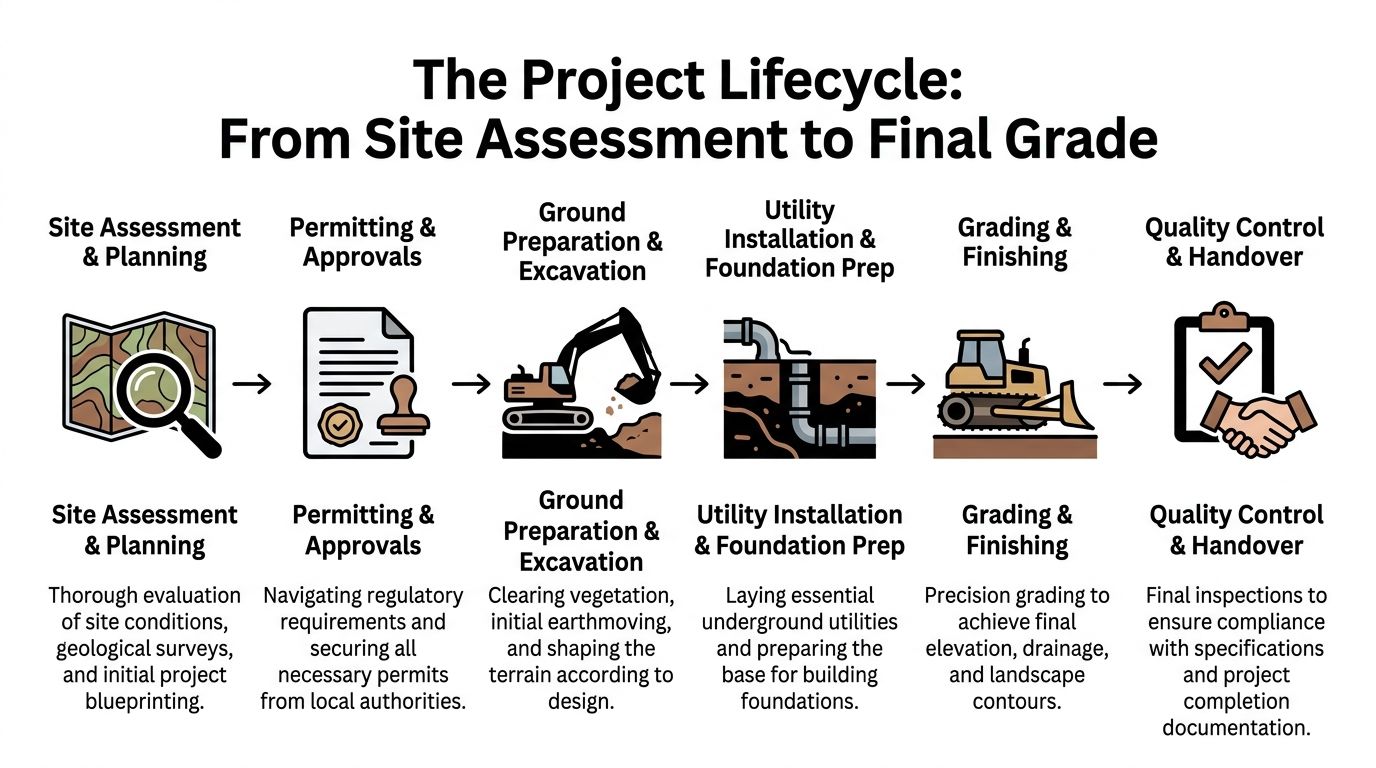
The Project Lifecycle From Site Assessment to Final Grade
Most problems on excavation jobs don’t begin in the middle. They begin at the start, when someone assumes the site will behave exactly like the plans say it should.
A better process follows the ground from first look to finished grade.
Step one through three
-
Site assessment
The contractor walks the property, studies access, slope, drainage patterns, and likely problem areas. Field realities begin to shape the plan. -
Engineering coordination and layout
Grades, utility paths, foundation locations, and drainage are reviewed together. If the lot is tight in Santa Rosa or steep in Carmel, making smart adjustments now saves time later. -
Permitting and approvals
Permits aren’t just paperwork. They affect sequencing, erosion control, inspections, and what can happen when.
Step four through six
-
Excavation and earthmoving
Clearing, trenching, grading, and foundation digging take place. If surprises show up, integrated teams can redesign in real time instead of freezing the whole job. -
Backfill, compaction, and utility support
Backfill has to be placed and compacted correctly. Utility trenches, pads, and repaired areas need to be stable before the next trade comes in. -
Final grade and handoff
The site gets shaped to the required finish elevations, drainage paths are verified, and the project is left ready for the next phase.
Paper plans are important. Field conditions get the final vote.
When clients split design from excavation, this lifecycle tends to break apart. The engineer finishes a plan. The excavator prices the plan. Then the land disagrees with both of them.
That’s why disjointed planning often creates change orders and delay. An integrated team can revise details while the project is moving, which keeps momentum and cuts down on finger-pointing.
The Technology That Ensures Precision and Safety

Modern excavation is technical work. The machine still matters, but the tools guiding the machine matter just as much.
Precision tools in the field
Laser-guided grading helps operators hit target elevations and slopes with much tighter control than rough eyeballing ever could. That matters when you’re building a pad, setting drainage fall, or preparing a road base.
Drone mapping and digital topography also help teams see the whole site before major work begins. On larger or more irregular parcels, that kind of overview helps catch grading conflicts early.
For fleet and equipment coordination, some contractors also look at broader field logistics tools such as vehicle GPS tracker solutions. The point isn’t the gadget itself. It’s having better visibility into where crews and equipment are when scheduling and response time matter.
Safety systems are not optional
Trenching is one of the clearest examples of why excavation and engineering have to work together. Contractors must comply with OSHA Subpart P, which requires protective systems to prevent trench collapse, and a designated competent person has to assess soil type and conditions to select the right shoring approach (RW Excavation on commercial excavation safety and trenching).
Soil type changes the protective system. Water conditions change it too. Existing utilities change the whole approach again.
That’s why trenching for sewer or water repair isn’t just digging a slot in the ground. It’s code compliance, soil evaluation, utility coordination, and safe execution all at once.
Technology should answer practical questions
When you hire a contractor, ask questions like these:
- How are grades verified once excavation starts?
- Who evaluates trench safety and soil conditions in the field?
- What happens if site conditions differ from plan assumptions?
- Do you offer trenchless options when access or disruption makes open excavation a poor fit?
For homeowners comparing repair methods, this article on whether trenchless pipe repair is always better is a good example of the kind of trade-off discussion you want. A serious contractor should be able to explain where precision technology helps, where it doesn’t, and when old-fashioned open excavation is still the right call.
Avoiding Costly Mistakes Why Design and Dirt Must Connect
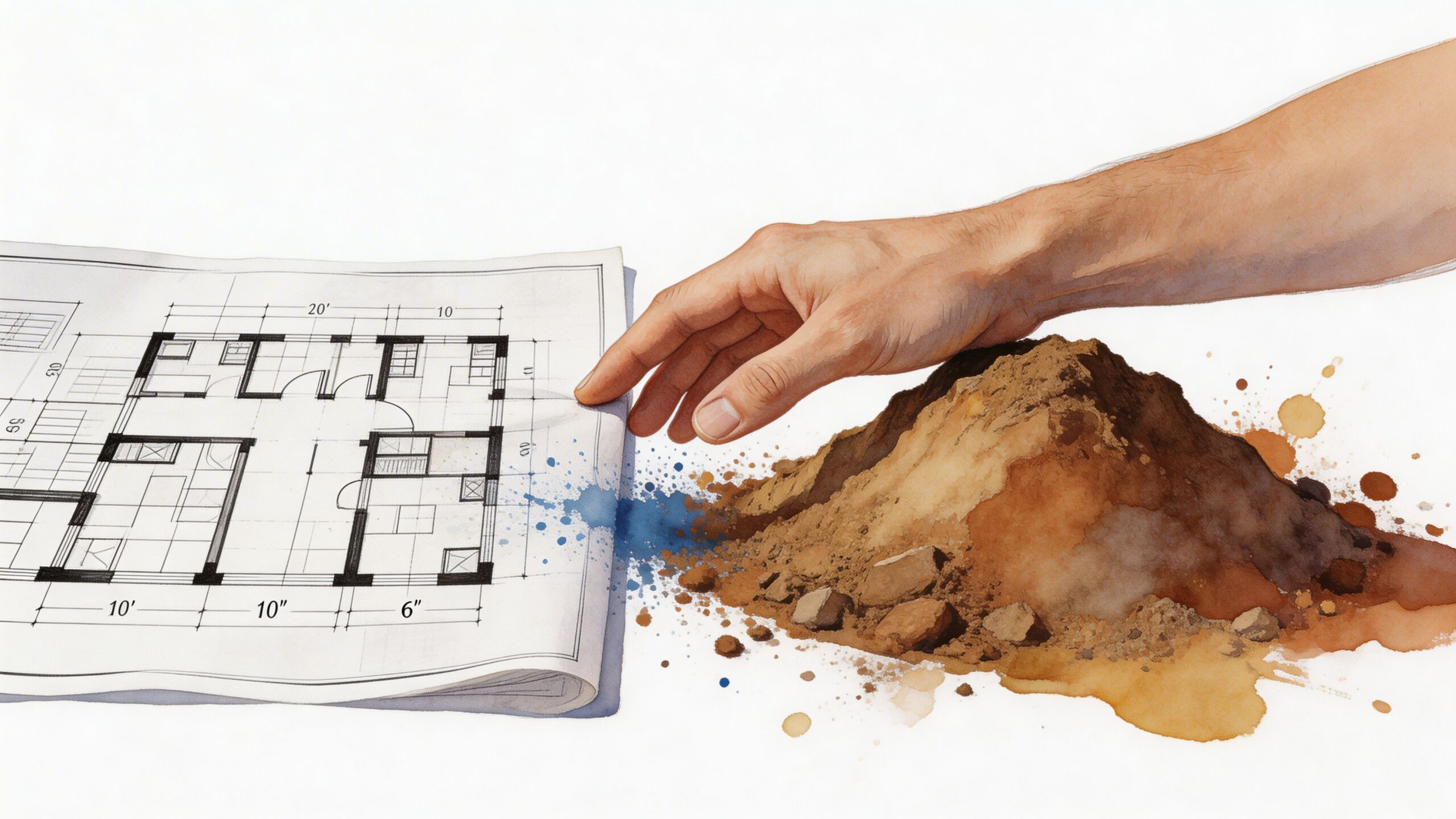
A common mistake is paying for design first, then shopping excavation as if it’s a simple commodity. On paper, that feels efficient. In the field, it often gets expensive.
The cheapest excavator may bid exactly what’s drawn. Then the slope is steeper than expected, drainage outfall is tighter than shown, existing utilities are in the way, or the foundation area needs more correction than the plan assumed.
Where jobs go sideways
These are the trouble points seen over and over:
- Plans that don’t fully match the site because nobody with field excavation experience shaped them early
- Low bids that exclude reality and turn into change orders later
- Unclear responsibility when conditions shift after work starts
- Delayed decisions because the engineer and excavator aren’t solving problems together
For property owners, this doesn’t just cost money. It costs time, momentum, and trust.
What works better
Start with a contractor who understands both design and dirt. That doesn’t mean one person does every discipline alone. It means the excavation side and the engineering side are coordinated from the beginning.
When field conditions change, an integrated team can adapt the plan, confirm the impact, and keep the job moving. That’s a very different situation from having separate firms debate whose assumption failed.
If your site surprises the team, the team should be able to respond the same day. That’s where integrated work earns its keep.
This matters on all kinds of jobs. Tight infill lots in Santa Rosa have one set of constraints. Hillside work in Monterey County or Carmel has another. In both cases, the disconnect between design and field execution is where headaches usually begin.
If you’re trying to understand the planning side before work starts, this page on what a site plan is and who can help make one is worth reviewing. A useful site plan doesn’t just satisfy paperwork. It has to reflect how the land will be excavated, drained, and built.
What to Expect Timelines Costs and Finding the Right Partner
Clients usually want a firm number and a clean schedule right away. Real excavation work doesn’t always allow that on day one because the site itself drives both cost and timing.
A straightforward lot with good access and stable soils moves differently than a steep parcel, a tight urban infill site, or a property with drainage problems and buried utility conflicts.
What affects the timeline
A few factors move almost every schedule:
| Factor | Why it matters |
|---|---|
| Site access | Equipment size, haul routes, and staging can speed up or slow down the job |
| Soil conditions | Soft ground, wet areas, rock, or unstable fill can change methods |
| Permits and inspections | Approval timing often controls when work can begin or continue |
| Scope changes | Revisions in drainage, utility routing, or pad layout can affect sequencing |
What affects the estimate
Cost usually follows complexity, not just excavation volume.
Strategic drainage design, erosion control, and stormwater management are also part of the value on many projects because excavation contractors play an essential role in climate resilience and flood prevention, especially for properties in flood-prone areas such as Sonoma County (Klumm Bros on what excavation contractors do).
That means a lower initial price isn’t always the lower real cost if drainage, slope stability, or stormwater handling are underdesigned.
Questions worth asking before you hire
Ask any contractor these questions and listen carefully to how they answer:
- Who handles grading and drainage decisions if the site differs from the plan?
- How do you deal with unexpected soil or utility conditions?
- Do you coordinate permit support and inspections?
- What is your process for protecting the site from erosion and runoff during work?
- How do you keep the project moving if redesign is needed?
For a plainspoken look at where excavation jobs often get misunderstood, this page on the truth about excavation projects most contractors don’t tell you helps frame the conversation well.
Frequently Asked Questions
Q: Do I always need an engineer for a small excavation job like a new driveway?
A: Not always. Some smaller jobs can be handled without formal engineering, but drainage, slope, and sub-base preparation still matter. If the driveway is on a slope, near structures, or tied into stormwater flow, engineering input can prevent cracking, washouts, and edge failure.
Q: What is the biggest cause of delays in an excavation project?
A: Unexpected site conditions are a major one. Poor soil, hidden utilities, access limitations, or changes required by permitting can all slow work down. The smoother jobs are usually the ones where planning and field execution are already tied together.
Q: Can excavation start before the plans are fully worked out?
A: Sometimes limited preliminary work can happen, but full excavation shouldn’t run ahead of decisions that affect grade, drainage, and utility placement. Starting too early often creates rework. It’s faster to begin with a coordinated plan than to redo the ground twice.
Q: How do I know if a contractor understands hillside or slope work?
A: Ask how they approach drainage, erosion control, pad layout, and access on uneven terrain. A contractor who really knows hillside work will talk about stability, runoff, and sequencing, not just machine size. That matters on many properties in Monterey County and the California Central Coast.
Q: Is the lowest excavation bid usually the best value?
A: Not if the bid leaves out likely site realities. A low number can turn into change orders when the contractor hits soil issues, drainage conflicts, or utility problems that should have been addressed earlier. Value comes from accurate planning and fewer surprises.
Q: Who is responsible for utility locating before digging?
A: The contractor should coordinate the locating process before excavation begins, and that’s often required by law. Existing water, gas, sewer, and electrical lines need to be identified and protected before trenching starts. Skipping that step risks service interruptions, damage, and safety problems.
Q: Can an excavation contractor help with flood and drainage issues on an existing property?
A: Yes, if drainage and grading are part of their scope. Excavation work can reshape runoff paths, support erosion control, and improve stormwater handling so water stops collecting where it shouldn’t. That kind of planning is especially important on older sites and flood-prone lots.
Your Project’s Foundation Starts with the Right Partner
When excavation and engineering stay connected, the job runs cleaner. If the site reveals something unexpected, the people shaping the ground and the people making the technical calls can solve it together instead of pointing at each other. For clients trying to understand build-ready site prep, this overview of what a building pad is is a useful starting point.
DW Excavation, LLC works in that integrated model, combining site preparation, grading, drainage, utility excavation, and engineering-aware field execution so the plan and the dirt stay aligned. That matters on hillside sites, infill lots, and repair work where real conditions rarely match assumptions perfectly.
Local knowledge matters too. Soil behavior, drainage patterns, permit expectations, and access challenges vary across Sonoma County, Monterey County, and the Central Coast. If you’re researching contractors and how they present that kind of work, even something as simple as effective website design for excavators shows how important clear communication is before a client ever makes the first call.
Call to Action
If you want to talk through your site, get a free estimate, or schedule a consultation, DW Excavation, LLC is available at 707-601-9091. You can also visit https://dw-excavation.com or stop by 470a Caletti Avenue, Windsor, CA 95492.
Sources
Sneads Outdoor Services. “What’s the Role of an Excavation Contractor in a Construction Project?” Year not provided. https://sneadsoutdoorservices.com/grading-and-excavating-services-blog/whats-the-role-of-an-excavation-contractor-in-a-construction-project/
RW Excavation. “Commercial Excavation Contractors.” Year not provided. https://rwexcavation.com/commercial-excavation-contractors/
Klumm Bros. “What Do Excavation Contractors Do?” 2022. https://klummbros.com/2022/09/what-do-excavation-contractors-do/
For property owners who want fewer surprises and better coordination, DW Excavation, LLC is a practical place to start. If you’re planning site work in Sonoma County, Monterey County, Santa Rosa, or the California Central Coast, reach out for a conversation about the project, the ground conditions, and the next right step.