
Quick Answer
Your pavement usually isn’t failing because the asphalt is bad. It keeps failing because the support system underneath it is weak, wet, or poorly built. If drainage, grading, base prep, and soil stability aren’t fixed first, surface repairs won't last. For a deeper look at that system, see https://dw-excavation.com/excavation/beyond-asphalt-what-really-makes-pavement-last/
If you've been told you just need fresh asphalt, take a step back. In a lot of cases, the blacktop is only the visible part of the problem.
Around Sonoma County, Monterey County, and the California Central Coast, pavement failure usually starts below the surface. Water, weak soil, poor grading, and bad compaction do the damage long before the top layer breaks apart.
The Real Culprit Isn't Your Asphalt
People like to blame the finish layer because that's what they can see. Cracks, potholes, and low spots look like an asphalt problem. Most of the time, they’re a foundation problem.
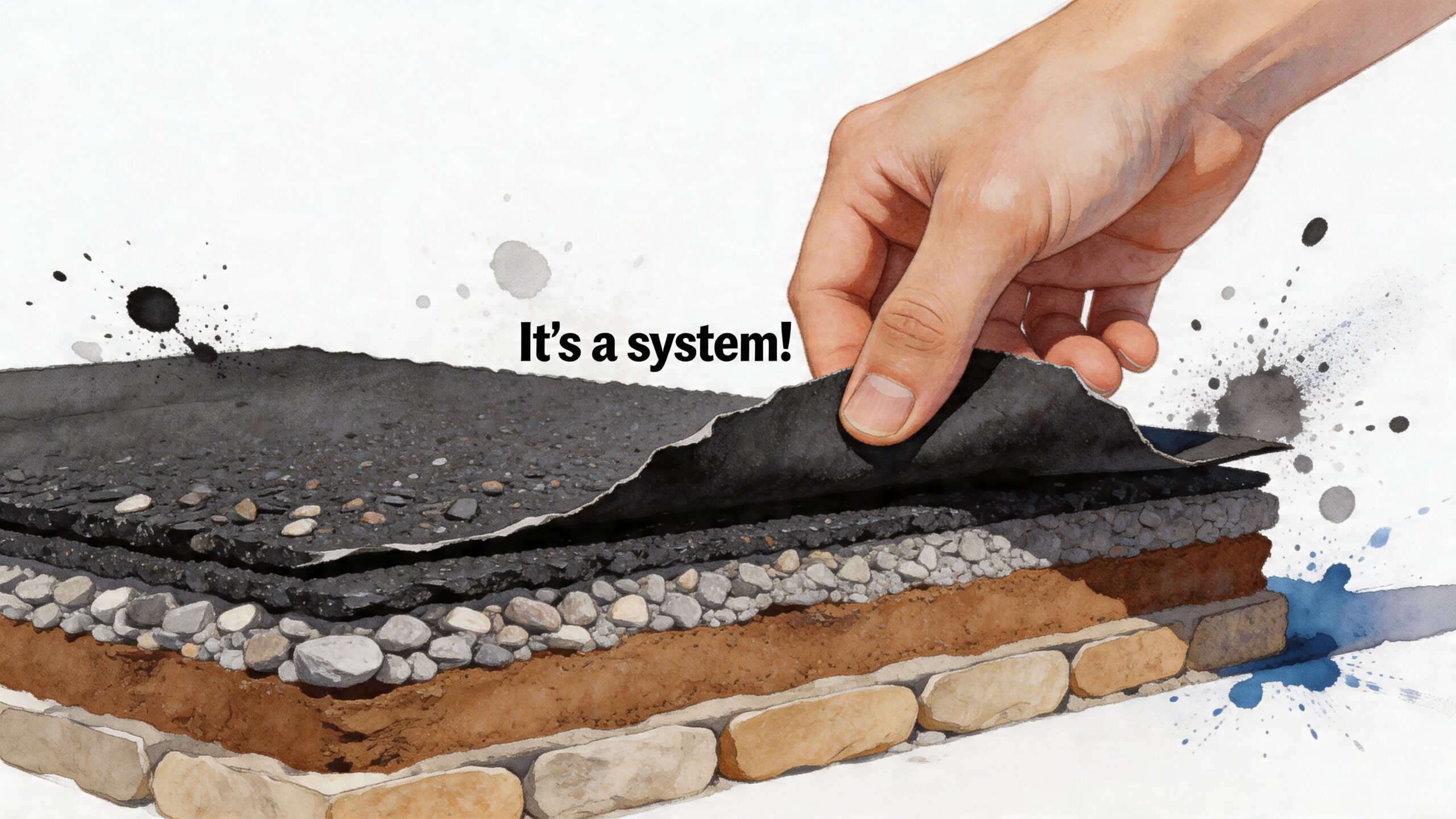
A pavement section works as a stack. The subgrade is the native soil. The base course sits above that and spreads the load. The asphalt on top protects the structure and gives you a usable surface. When the lower layers move, soften, or settle, the top layer follows them.
That’s why a driveway can look decent right after a patch or overlay, then start breaking up again. The repair covered the symptom, but the support underneath never changed. This is the same issue behind a lot of failures tied to poor grading, which is why work like https://dw-excavation.com/excavation/how-poor-grading-wrecks-driveways-before-the-asphalt-even-cracks/ matters before paving starts.
What the surface is trying to tell you
Different failures point to different problems underneath.
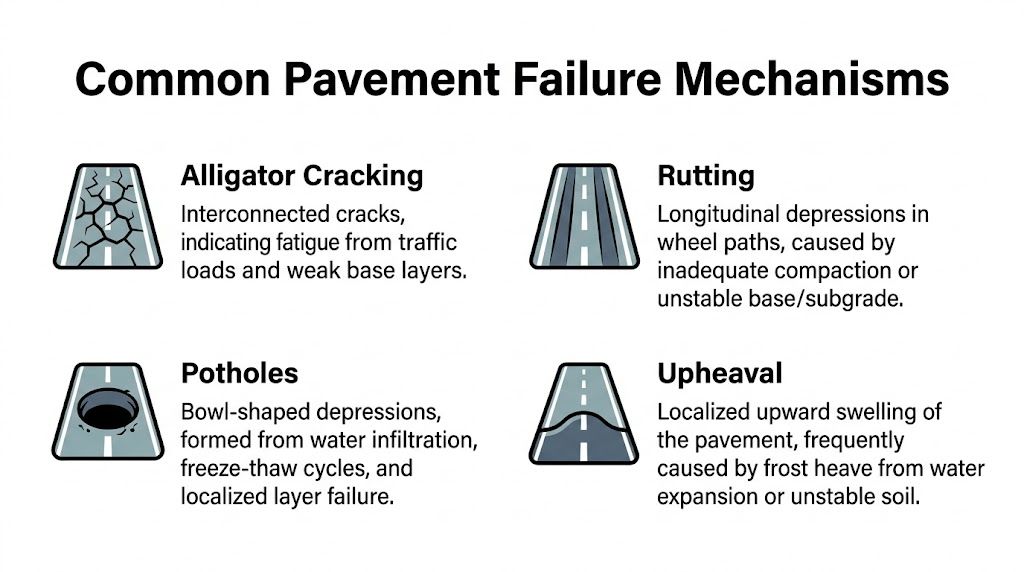
- Interconnected cracking usually means the pavement flexed too much because the base or subgrade lost support.
- Wheel path depressions often mean the base wasn’t compacted well enough, or the soil underneath can’t carry the load.
- Potholes usually form after water gets in, weakens the lower layers, and traffic breaks the surface apart.
- Raised or uneven spots can point to unstable soil, trapped moisture, or movement below the finished grade.
Practical rule: If the pavement is moving, sinking, or cracking in patterns, don’t assume the fix belongs on the surface.
Thickness alone doesn't solve it
A thicker asphalt layer can help in the right design, but it won't rescue a bad foundation. If the soil is unstable or the drainage is wrong, extra asphalt just rides on top of the same failure.
That’s the part a lot of property owners don’t hear early enough. Fast paving and a clean finish look good on day one. Long-term performance depends on excavation, grading, compaction, and drainage done right before the truck ever shows up.
Common Failure Mechanisms and What They Look Like
The surface usually gives you clues if you know what to look for. Good diagnosis starts by matching the visible damage to the failure happening below it.
Alligator cracking
This is the webbed cracking pattern that looks like reptile skin. It’s one of the clearest signs that the pavement structure is bending under load because the lower layers aren’t doing their job.
Once this starts, sealing the cracks might slow water entry for a short time, but it won't restore support. If you want a simple outside explanation of why your driveway might be cracking, that guide is useful, but the key point on the ground is this. Repeated cracking patterns usually mean the problem is deeper than the finish layer. For a closer look at this specific failure pattern, see https://dw-excavation.com/excavation/alligator-cracks-in-asphalt/
Rutting
Rutting shows up as long depressions in the wheel paths. This is one of the most common signs of a structural problem, especially where vehicles follow the same track every day.
In some studies, rutting affects over 85% of distressed pavement areas, often because of inadequate compaction or a weak structural base that can’t handle repeated traffic loads (NCDOT, Texas A&M Transportation Institute). When you see channels where tires run, the pavement is telling you the load is being carried by material that’s shifting instead of staying locked in place.
Potholes
Potholes don’t just appear because the top gets old. They usually form after moisture enters through cracks or failed joints, weakens the material below, and traffic breaks through the surface.
That’s why cold patch repairs often fail quickly in the same spot. If the lower layer stays wet or loose, the hole comes back because the bowl-shaped failure underneath is still there.
If a pothole returns in the same area, stop thinking patch. Start thinking drainage, base failure, or soil loss.
Upheaval and localized movement
Sometimes pavement doesn’t sink. It pushes upward, heaves, or bulges in one section. That points to unstable soil, trapped water, or movement from below.
This kind of failure often shows up near utility trenches, old repairs, slope transitions, or places where different soil conditions meet. It can also happen where the support under one section changes and the pavement bridge starts to break.
A quick field check
When I look at a failing driveway or private road, I pay attention to pattern more than appearance. Random surface wear is one thing. Repeated distress in specific locations usually points to a cause below.
| Surface sign | What it often means |
|---|---|
| Alligator cracking | Weak base or failing subgrade |
| Wheel path rutting | Poor compaction or overload on weak structure |
| Recurring potholes | Water infiltration and localized structural failure |
| Heaved section | Unstable soil, trapped moisture, or movement below |
A clean-looking overlay can hide every one of these for a while. It can’t fix them.
Why Water and Drainage Are Everything
Water does more damage to pavement than most owners realize. It doesn’t need a dramatic flood event to cause trouble. A bad slope, clogged outlet, broken pipe, or low spot that holds water is enough.
Poor drainage is a primary global cause of pavement failure. Water infiltration weakens the subgrade and can accelerate cracks, potholes, and other deterioration. Field studies also show that areas with insufficient or absent side drainage structures exhibit the most severe pavement failures (International Journal of Research and Applied Science & Engineering Technology, 2023).
What water does under the surface
Water moves through cracks, edges, and joints. Once it gets below the asphalt, it starts softening the support layers.
The base loses strength. The native soil loses bearing support. Fine material can move, wash, or pump out of place. Then traffic loads start bending the surface, and the visible failure begins.
In Sonoma and Monterey County, winter rain exposes weak preparation fast. A driveway that looked passable through dry weather can start showing puddles, edge breakdown, settlement, or cracking after a wet season.
Drainage has to be built into the site
Good drainage isn't just a trench at the edge. It starts with grading the site so water has somewhere to go.
That can include:
- Correct surface slope so runoff leaves the pavement instead of sitting on it
- Side drainage and swales where water needs a collection path
- Underground pipe repair if leaking storm or sewer lines are feeding moisture into the base
- Subsurface drainage measures in areas where soil stays wet or groundwater is an issue
If you’re dealing with runoff around a home, driveway, or building pad, https://dw-excavation.com/excavation/drainage-solutions-for-homes/ covers the kind of drainage work that protects pavement from below, not just at the surface.
Water doesn't care how new the asphalt is. If it can stay under the pavement, the pavement will weaken.
Drainage mistakes that keep showing up
A few repeat offenders cause a lot of premature failure:
- Low spots left in grading
- Driveway edges with no support
- Outlets that discharge back toward the pavement
- Old underground lines leaking into the subgrade
- Paving over wet or soft material
These aren’t cosmetic issues. They’re structural problems waiting for traffic and weather to expose them.
The Unseen Problem The Truth About Why Your Pavement Keeps Failing
The truth about why your pavement keeps failing usually comes down to what happened before paving day. If the base wasn’t compacted right, if the soil wasn’t stable, or if hidden water was left in play, the top layer never had a fair chance.
Compaction isn't a formality
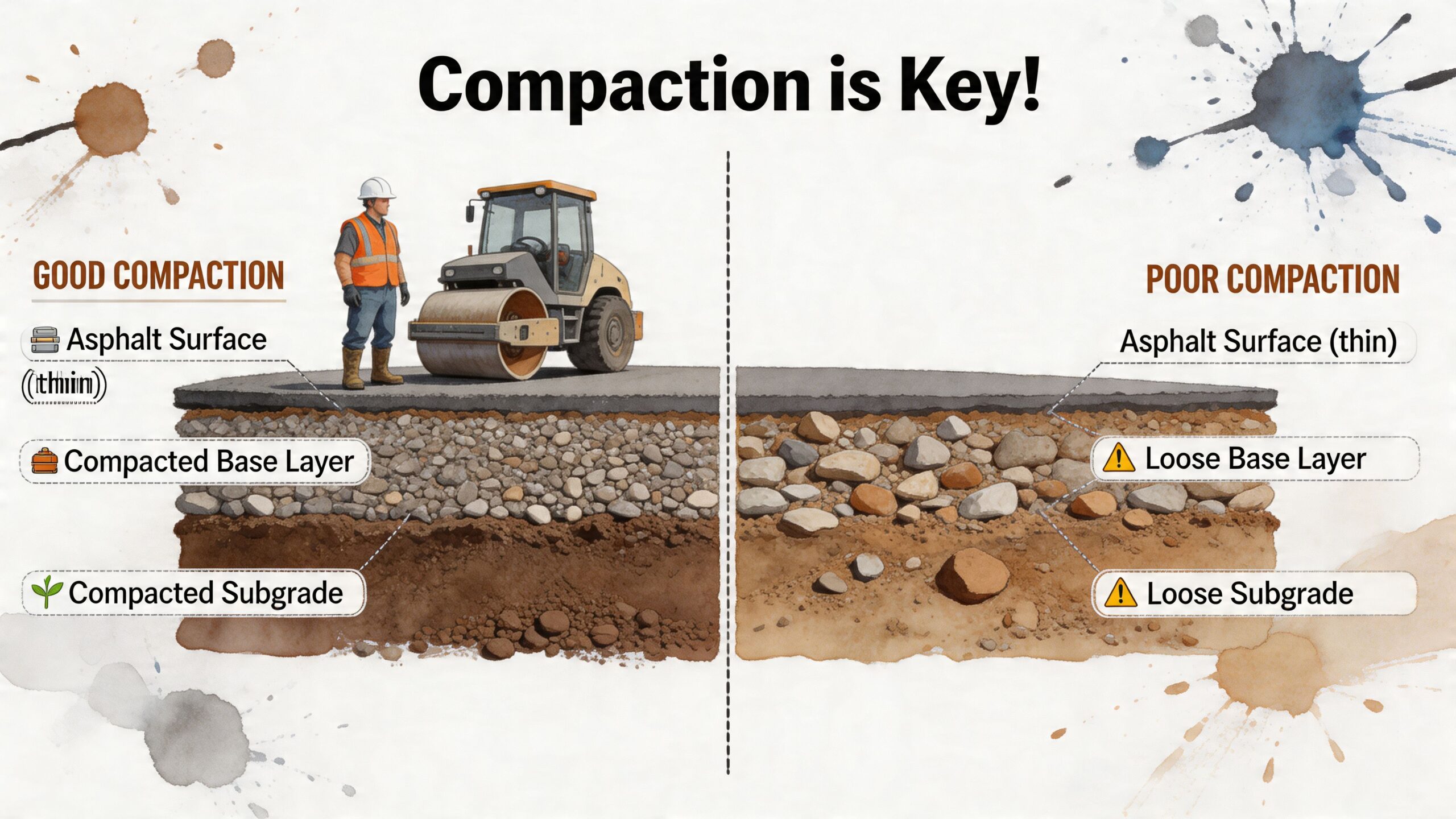
Compaction is what turns loose soil and aggregate into a load-bearing platform. Without it, the material keeps settling under traffic instead of before traffic.
Pavement failure often originates from the subgrade, where inadequate soil compaction or a high water table can reduce soil shear strength by up to 50%. A poorly compacted base with more than 7% air voids can amplify failure rates by 40% in wet climates. Properly engineered bases can yield a 25-year service life, compared to 7-10 years for deficient ones (GLE Associates, Action Asphalt).
That’s the difference between building a surface that carries weight and building one that only looks finished.
If you want a plain-language outside reference on the importance of soil compaction, that overview is useful. In field conditions, the point is simple. Loose ground always settles somewhere, and pavement pays for it.
Patch the symptom or fix the structure
A lot of pavement work falls into one of these two categories.
| Short-term patch | Long-term structural fix |
|---|---|
| Fill the crack | Identify why the pavement is flexing |
| Patch the pothole | Remove failed material and rebuild support |
| Overlay the surface | Correct drainage, grade, and compaction first |
| Smooth the dip | Investigate settlement, moisture, or pipe issues |
Patching can make sense as a stopgap. It can buy time. It can improve safety. It can't rebuild a failed base.
Surface repairs are like taking a painkiller for a broken bone. You may feel better for a while, but the structure is still broken.
Some failures start with hidden utility problems
Not every failure is caused by traffic or weather alone. Leaking underground storm or sewer lines can feed water into the subgrade, wash out fines, and create localized voids. The pavement above those voids starts cracking, dipping, or collapsing.
That’s why recurring sink areas near utility alignments deserve investigation before more asphalt goes down. In cases like that, work such as trenchless pipe repair or targeted underground correction can be part of a lasting solution. One local option for that type of site work is DW Excavation, and this kind of issue is also discussed at https://dw-excavation.com/excavation/5-signs-you-need-underground-pipe-repair-before-it-gets-worse-in-2026/
Long-Term Fixes Versus Short-Term Patches
Not every failing driveway needs a full rebuild. Not every crack can be ignored either. The right answer depends on whether the issue is surface wear or structural failure.
When a patch is reasonable
A limited repair can make sense when the pavement is still structurally sound and the damage is isolated.
That usually means:
- Hairline cracking with no movement, no pumping water, and no sinking
- Small surface defects that haven’t spread into patterned cracking
- Minor edge cleanup before erosion gets worse
- Short-term holdover work when a larger reconstruction is planned later
For a homeowner, sealing a small crack before rain season or cleaning out drainage paths can be worthwhile. Those tasks can slow deterioration if the base underneath is still stable.
When patching wastes money
You’re usually wasting money when the same area fails again and again. Repeated potholes, wheel-path depressions, broad cracking, standing water, and settlement all point to something deeper.
At that point, the durable fix usually involves removing failed sections, correcting grade, replacing weak material, recompacting the base, and solving drainage before the surface goes back on. That’s more work up front, but it addresses the cause instead of paying for the same repair more than once.
What actually works
The jobs that last usually have the same traits in common:
- Site drainage is handled first
- Soft or unsuitable material is removed
- Base rock is placed in proper lifts and compacted
- Transitions and edges are supported
- Water from surrounding slopes, roofs, and utilities is accounted for
Owners sometimes get frustrated because this work isn’t the part they see. I understand that. But hidden work is what keeps the visible surface from falling apart.
When to DIY and When to Call an Expert
Some pavement maintenance is reasonable for a property owner. Structural correction usually isn’t.
Work you can usually handle
If the issue is minor and the pavement is otherwise stable, DIY can make sense for basic upkeep.
- Clear drainage paths so runoff can leave the area
- Watch for pooling water after storms and note where it starts
- Seal small, early cracks before water gets in
- Keep vehicles off unsupported edges that break down easily
Those tasks help because they slow water entry and reduce edge damage. They don't solve support failure below the surface.
Work that needs equipment and diagnosis
If the pavement is sinking, rutting, alligator cracking, or breaking apart in the same locations, you’re beyond surface maintenance. That usually means a problem with grade, compaction, drainage, underground utilities, or soil condition.
Those issues call for excavation equipment, grading control, compaction equipment, and field judgment. You need to know what material can stay, what has to come out, where water is moving, and how to rebuild the section so it carries the load.
If the fix requires changing slope, rebuilding base, or chasing hidden water, call someone who does earthwork and drainage, not just paving.
That’s especially true on hillside lots, older properties, and sites with previous trenching or drainage trouble. A wrong repair there can trap more water and make the next failure worse.
Frequently Asked Questions About Pavement Failure
Why does my new pavement already have cracks?
Early cracking usually points to movement underneath the asphalt, not simple age. Poor drainage, weak subgrade, bad compaction, or settlement around trenches can show up quickly even when the surface is new.
Can I just resurface over the old pavement?
Sometimes, but only if the existing structure is still sound. If the old pavement has rutting, broad cracking, soft spots, or drainage problems, an overlay usually hides the issue for a short time and then reflects the same failure back through.
How do I know if my problem is drainage or bad base work?
You look at the pattern. Standing water, edge washout, recurring potholes, or failure after heavy rain often point toward drainage. Wheel-path depressions, settlement, and patterned cracking often point to base or subgrade problems. On many sites, both are involved.
Why does the same pothole keep coming back?
Because the hole isn't the root problem. Water, loose base material, or a void underneath keeps undermining that area, so every patch loses support and breaks apart again.
Do I need full replacement or just repair?
That depends on how widespread the failure is. Isolated surface wear may only need repair. Structural distress across multiple areas usually means the failed section needs to be removed and rebuilt from the ground up.
Can poor grading really ruin a driveway?
Yes. If the slope holds water on the surface or sends runoff into the pavement edges and base, the structure weakens over time. Good paving on bad grading is still bad work.
How long does a proper fix take?
It depends on the size of the area, access, weather, drainage needs, and whether underground issues are involved. A straightforward repair moves much faster than a job that needs excavation, base replacement, pipe correction, and regrading. The right timeline comes from the actual site, not a generic promise.
What affects the cost of fixing pavement failure?
The big factors are how deep the failure goes, whether drainage or pipe work is involved, how much material has to be removed and replaced, and site access. The only honest way to price it is to look at the actual conditions and define the scope.
Get Pavement That Lasts from the Ground Up
If you remember one thing, make it this. Lasting pavement depends on the ground under it, the water around it, and the preparation before it.
That’s the truth about why your pavement keeps failing. It usually isn’t a surface problem first. It’s a grading, drainage, soil, or base problem that finally showed itself on top.
Sources
International Journal of Research and Applied Science & Engineering Technology. "Investigation on Causes of Pavement Failure and Its Remedial Measures." 2023. https://www.ijraset.com/research-paper/investigation-on-causes-of-pavement-failure-and-its-remedial-measures
NCDOT, Texas A&M Transportation Institute. "Traffic overloading and structural deficiencies can cause rapid pavement distress." https://pdfs.semanticscholar.org/c8fe/a1c126d0e406f61459a4626950b096a46d15.pdf
GLE Associates. "Three Common Causes of Pavement Failure and Their Solutions." https://www.gleassociates.com/three-common-causes-of-pavement-failure-and-their-solutions/
Action Asphalt. "5 Kinds of Pavement Failures and How to Cure Them." https://actionasphalt.com/5-kinds-of-pavement-failures-and-how-to-cure-them/
If you want a clear answer about what’s really causing the failure on your site, contact DW Excavation, LLC for a free estimate or site consultation. Call (707) 601-9091, visit 470a Caletti Avenue, Windsor, CA 95492, or go to dw-excavation.com to talk through the project.