
That slow drain or mysterious soggy patch in your yard might seem like a minor annoyance, but it could be an early warning from your property’s underground pipes. With infrastructure aging across California, the rate of water main breaks has surged by 27% in the last decade [GlobeNewswire, 2025]. For homeowners in Monterey, Sonoma County, and along the Central Coast, this isn't just a statistic; it’s a ticking clock on potential property damage. Ignoring these subtle signals can escalate into catastrophic failures, including severe foundation damage, hazardous sinkholes, and emergency repairs that disrupt your life and drain your finances.
This guide is designed to empower you with knowledge. We will break down the 5 signs you need underground pipe repair before it gets worse in 2026, helping you identify problems early. Understanding these critical indicators will allow you to act proactively, saving you significant money, protecting your property’s structural integrity, and providing peace of mind. By learning to spot these warnings now, you can avoid a small, manageable issue from becoming a major disaster. Let’s explore what your property might be trying to tell you from beneath the surface.
1. Aging Pipes Are Failing Faster Than You Think
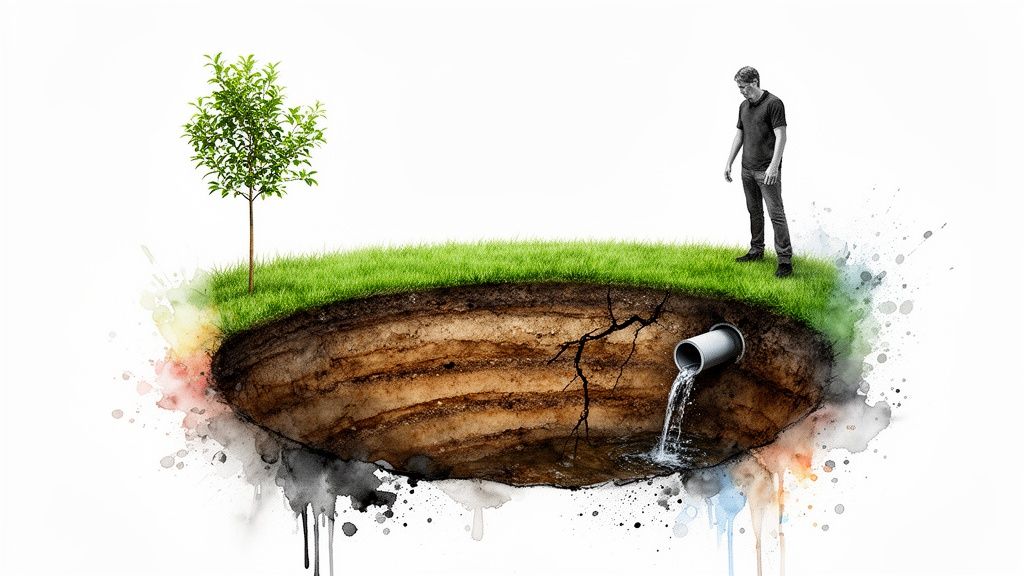
Even newer-looking homes in areas like Monterey or Salinas may be hiding major plumbing risks underground. A staggering 27% increase in water main breaks shows that aging infrastructure is a growing problem [GlobeNewswire, 2025].
For homeowners, this means small issues like slow drains or soggy spots in the yard shouldn’t be ignored. They may signal a deeper failure in your underground system that requires immediate attention.
Why is this a critical sign for 2026?
Ignoring the early signs of pipe degradation is a gamble against time. A small crack today can become a full-blown burst tomorrow, leading to flooding, foundation damage, or sinkholes.
Proactive assessment is key. Addressing these subtle warnings now prevents a minor inconvenience from turning into an emergency excavation project that disrupts your entire property.
What should homeowners on the Central Coast do?
If you notice recurring drain issues or wet spots in your yard, it's time to take action.
- Document the Problem: Keep a log of slow drains, gurgling noises, or soggy ground. Note when and where they occur.
- Schedule a Professional Inspection: Contact an expert who can perform a camera inspection to assess the internal condition of your pipes. This is the only way to know what’s really happening underground.
- Don't Wait for a Catastrophe: If the inspection reveals significant wear, corrosion, or cracks, it's better to plan a repair than to wait for an emergency. You can learn more about emergency stormwater trenching on dw-excavation.com.
2. Every Day You Wait Costs You Water (and Money)
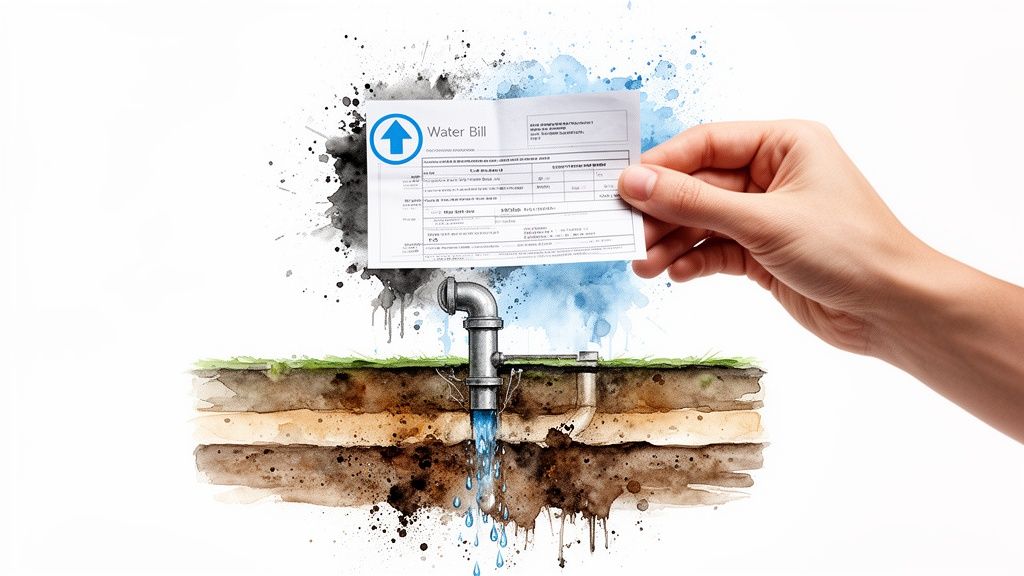
Leaks in aging underground pipes waste nearly 6 billion gallons of treated water daily across the U.S. [EPA, 2024]. That waste isn't just an environmental concern—it’s a direct financial drain on homeowners.
If you’re noticing unexplained spikes in your water bill, it's a strong signal that you are paying for water that never even reaches your home. It's time to investigate what’s happening beneath the surface.
How can a small leak impact my bill so much?
Even a pinhole-sized leak in a main water line can waste thousands of gallons of water per month. This constant water loss is recorded by your meter, leading to a bill that can double or triple without any change in your household's usage.
In drought-prone areas like Sonoma and Monterey Counties, this water waste is particularly concerning. It’s one of the clearest signs you need underground pipe repair before it gets worse in 2026.
Actionable Steps for Homeowners
If your water bill seems unusually high, follow these steps to diagnose the issue.
- Perform a Meter Test: Turn off all water inside and outside your home. Check your water meter’s leak indicator; if it’s moving, you have an active leak.
- Rule Out Indoor Issues: Check for running toilets or dripping faucets, as these are common culprits.
- Consult an Expert: If indoor sources are clear, the leak is likely underground. A professional can use acoustic leak detection to pinpoint the problem without digging up your yard.
3. Trenchless Repairs Can Save Your Yard (When Used Correctly)
The market for trenchless pipe repair is booming, projected to exceed $6 billion, and for good reason [Grand View Research, 2024]. It offers a less disruptive, faster solution than traditional dig-and-replace methods.
For homeowners in California who dread a torn-up lawn, driveway, or garden, this modern option is worth exploring. When the situation is right, it can save your landscape and your peace of mind.
What is trenchless pipe repair?
Trenchless methods repair or replace underground pipes with minimal excavation. Two common techniques include:
- Cured-In-Place Pipe (CIPP) Lining: A flexible, resin-coated liner is inserted into the damaged pipe and inflated. The resin hardens, creating a new, seamless pipe within the old one.
- Pipe Bursting: A new pipe is pulled through the old, fractured pipe, breaking the old one apart while simultaneously laying the new line.
Why is this relevant for 2026 and beyond?
As properties mature, the need for pipe repair will only increase. Trenchless technology offers an efficient way to upgrade aging infrastructure without the collateral damage of traditional excavation.
It's a key solution for preserving established landscapes and minimizing disruption to your daily life. It’s also often faster, reducing labor costs and project timelines.
4. Not Every Fix Is One-Size-Fits-All
While trenchless methods are popular, they're not always the best fit. Real homeowners on forums have warned about paying for liners that later failed due to aggressive tree roots, grade issues, or completely collapsed pipes.
A skilled excavation contractor like DW Excavation can help assess whether your repair needs full access or a subtler solution. This diagnosis is based on your actual property layout and the specific nature of the pipe failure.
When is trenchless repair NOT the right answer?
Trenchless solutions are not a silver bullet. A traditional excavation may be necessary if:
- The Pipe Is Collapsed: A liner needs a host pipe to cure against. If the pipe has caved in, there is nothing to line.
- There Are Severe Grade Issues: If a pipe has a "belly" or sag, a liner will simply conform to that sag, which won't solve the drainage problem.
- The Pipe Is Severely Offset: If joints are misaligned beyond a certain point, a liner may not be able to bridge the gap effectively.
This is why an honest, expert opinion matters. You can learn more about the truth about trenchless pipe repair that most homeowners don''t hear on dw-excavation.com.
5. Trustworthy Repairs Start with Honest Advice
At DW Excavation, we don’t just dig—we diagnose. That means we’ll walk you through your options, explain the pros and cons of trenchless versus traditional methods, and use our experience to recommend what’s best for you.
Homeowners deserve straight answers, not hard sells. Our goal is to provide a lasting solution that protects your property, whether that involves a modern liner or a conventional, targeted excavation.
What should you expect from an expert consultation?
A trustworthy contractor will never recommend a solution without a thorough diagnosis.
- Camera Inspection: They should insist on a video camera inspection to see the exact condition inside your pipes.
- Transparent Options: They will explain why one method is better than another for your specific situation.
- Clear Explanation: They will answer your questions about soil stability, grading, and potential risks. See how this relates to foundation issues by reading about how poor grading and drainage can damage your foundation on dw-excavation.com.
The DW Excavation Difference
Our engineering-integrated approach ensures that we consider every factor, from soil type in Monterey County to the slope of your property in Sonoma. We provide solutions designed for long-term stability, not just a quick fix. We also provide related services, like sewage damage clean-up on dw-excavation.com, when a pipe failure has led to bigger problems.
Your Next Step: Get a Professional Diagnosis
Recognizing the subtle warnings of underground pipe failure is the first step. Ignoring them can transform a manageable repair into a catastrophic failure, but acting decisively puts you back in control. The key takeaway is that proactive diagnosis is your most powerful tool.
If you're a homeowner in Monterey County, Salinas, or the Central Coast dealing with recurring drain issues or suspected leaks, we’d love to help you find the right repair—one that protects your home, budget, and property. Let’s start with a free consultation.
Frequently Asked Questions (FAQ)
1. How do I know if a soggy spot in my yard is from a pipe leak or just poor drainage?
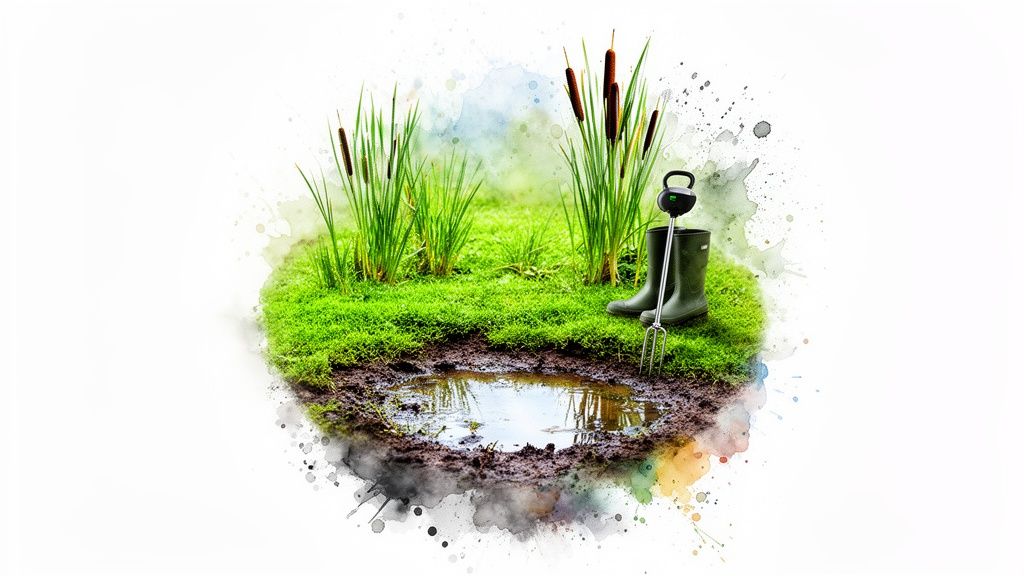
A key difference is persistence. A spot from poor drainage will eventually dry out, while a spot from a pipe leak will remain constantly damp or soggy, even during dry weather. If the spot is unusually green or emits a foul odor, a pipe leak is the likely culprit. To learn more about drainage issues, check out this guide to yard drainage troubleshooting on dw-excavation.com.
2. Is trenchless pipe repair always cheaper than traditional excavation?
Not always. For short, easily accessible pipe sections, traditional excavation might be more cost-effective. However, when you factor in the cost of restoring landscaping, driveways, or patios that would be destroyed by digging, trenchless methods often provide better overall value for longer or less accessible pipe runs.
3. How long does an underground pipe repair take?
Trenchless repairs are often completed in a single day, minimizing disruption to your home. Traditional excavation can take several days, depending on the depth and length of the pipe, as it includes digging, repair, backfilling, and compaction.
4. Can tree roots really break my sewer pipes?
Absolutely. Tree roots are naturally drawn to the moisture and nutrients inside a sewer line. They can infiltrate tiny cracks and, over time, expand with enough force to split or completely crush pipes made of clay, cast iron, or even PVC.
5. What is the average lifespan of underground pipes in California homes?
It varies by material. Older homes in Sonoma or Monterey may have cast iron pipes that last 50-75 years or clay pipes that last 50-60 years. Modern PVC pipes can last 100 years or more. However, factors like soil conditions, seismic activity, and tree root intrusion can significantly shorten these lifespans.