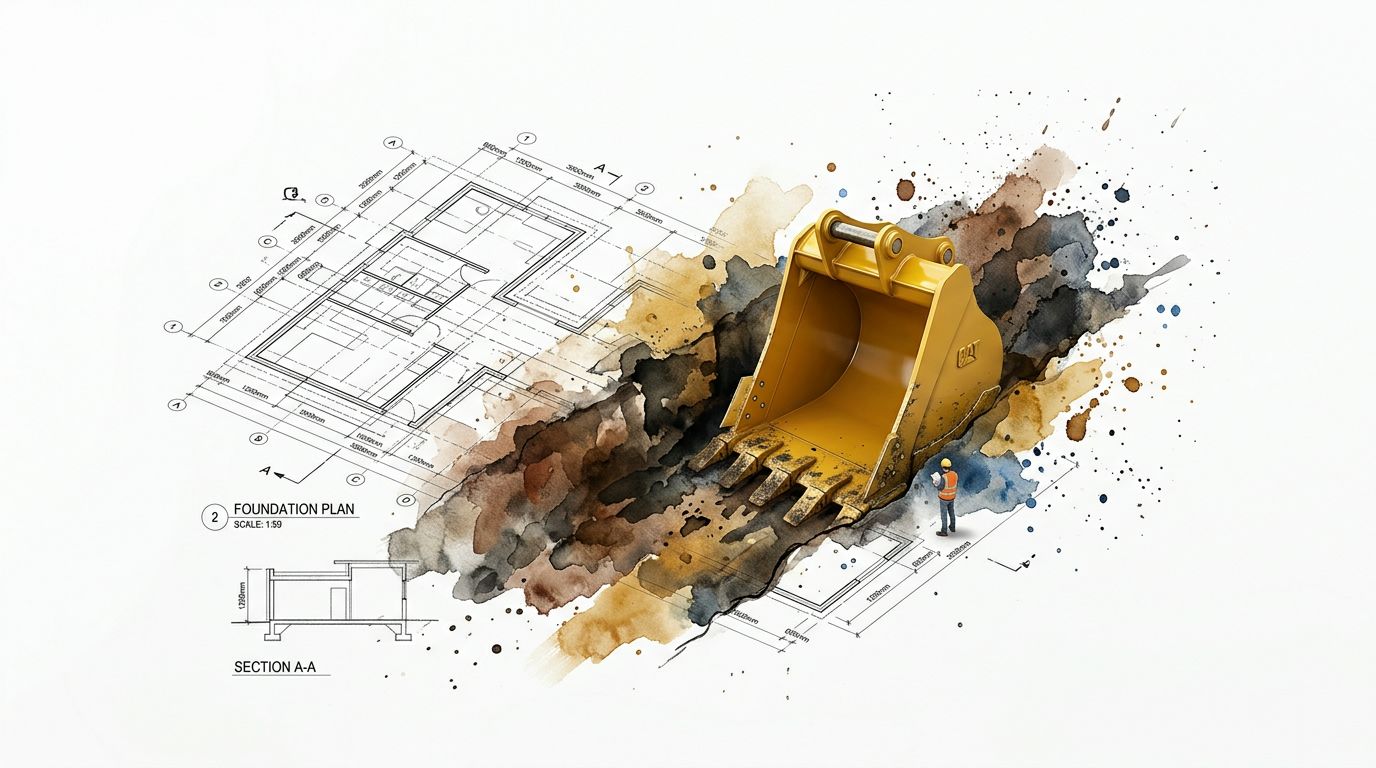
You've got plans in hand, maybe an ADU approved, maybe a custom home or a major addition, and now the key questions start. You need a foundation excavation contractor, but you're also trying to figure out what that entails beyond dirt moving and machine time. That's where a lot of projects go sideways. The excavation phase decides whether the foundation crew walks onto a clean, accurate, drainable site, or spends the next stretch of the job dealing with bad grades, water, buried surprises, and layout problems.
On a simple flat lot, that work can look straightforward. On a hillside parcel, an infill property, or an older lot with existing utilities, it's a different kind of job. In places like Sonoma County and Monterey County, ground conditions, drainage, setbacks, and access can change the plan fast. The contractor you hire needs to understand the whole site, not just the cut.
Your Guide to Hiring a Foundation Excavation Contractor
A foundation excavation contractor is the contractor who prepares the ground so the structure can start on something stable, correctly laid out, and buildable. That includes more than digging to depth. It usually means reviewing plans, checking utilities, establishing layout, managing spoils, protecting nearby improvements, and making sure the subgrade is right before concrete work begins.
This is a big industry, but it's still highly local. The U.S. excavation contractors industry is projected to reach about $203.1 billion in revenue by 2025, with around 235,000 businesses operating in the sector, according to IBISWorld's excavation contractors industry outlook. That matters because excavation is everywhere, but site conditions are never generic. One contractor may be fine on open production lots and completely out of rhythm on a tight residential build.
What the job really affects
The dig affects:
- Foundation accuracy: Footings and slab work depend on correct elevation and layout.
- Drainage behavior: Water management starts before concrete, not after.
- Utility coordination: Sewer, water, conduit, and trench routing need room and planning.
- Schedule stability: A bad excavation phase slows every trade that follows.
Practical rule: If the excavation contractor treats your project like a hole with dimensions, keep asking questions.
A homeowner often sees the concrete as the big milestone. In practice, the quality of the concrete work is tied to the quality of what happened first. If the pad is off, if wet areas were ignored, or if the excavation wasn't checked continuously, the next crew inherits the problem.
What to pay attention to early
Before you compare bids, compare thinking. Listen for whether the contractor talks about grade control, access, water movement, and buried conflicts. Those are the signs you're talking to someone who understands how the site needs to perform after the build is done.
First Steps Defining Your Project Scope
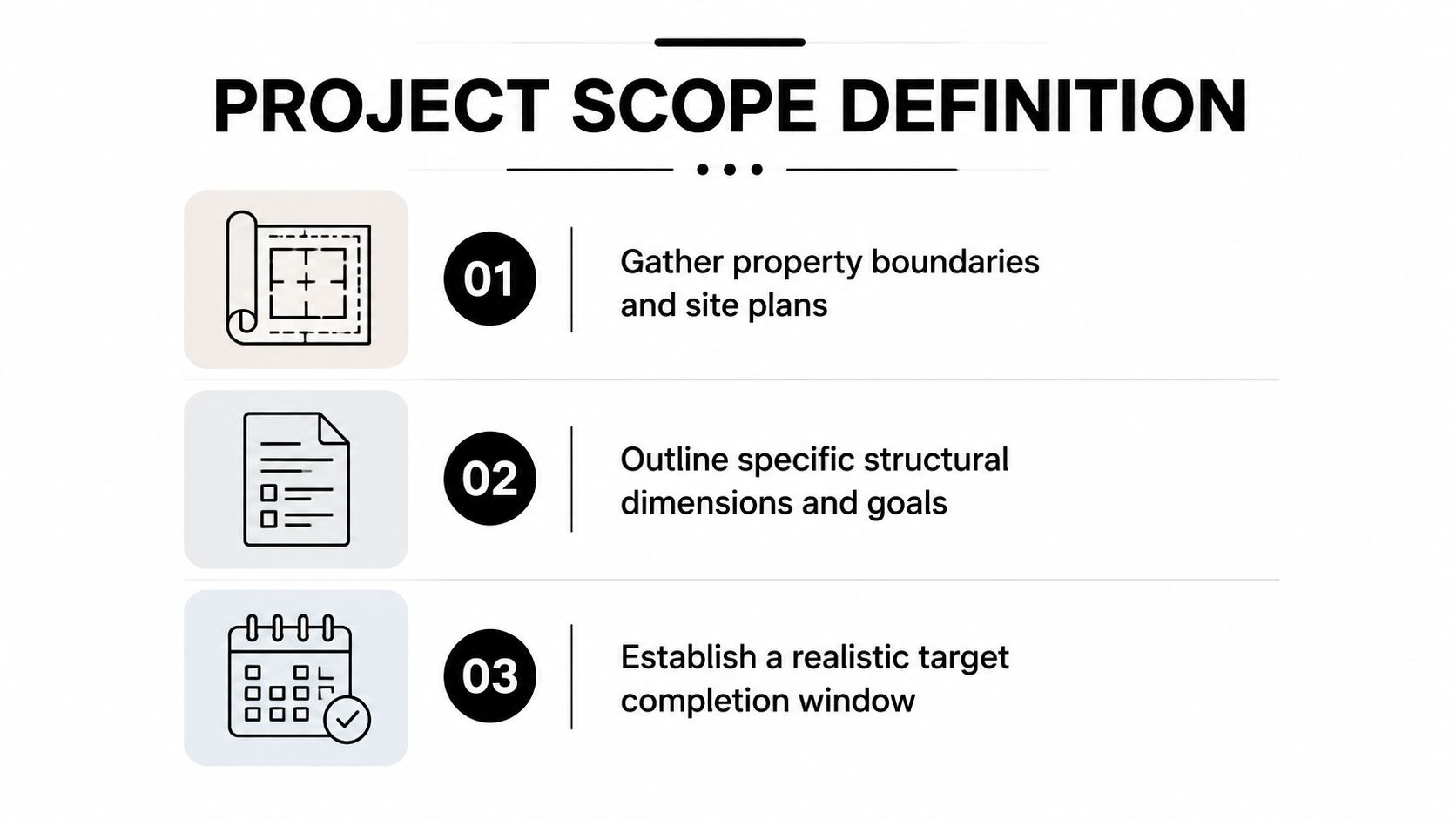
Before you call anyone, get your information in order. A contractor can only give you a useful answer if you can show what you're building, where it sits on the lot, and what conditions already exist. A vague request like “I need a foundation dug” usually leads to a vague estimate, and that's where misunderstandings start.
Bring the right documents first
If you have them, gather these before the first call or site walk:
- Site plan or survey: Property lines, setbacks, easements, and existing structures matter immediately.
- Foundation drawings: The excavation shape, depth, and relation to finish grade come from the plans.
- Soils or geotechnical information: Even limited information is better than guessing.
- Utility information: Existing sewer, water, septic, power, and drainage lines can reshape the work.
- Permit notes: Review comments often reveal access, drainage, or erosion requirements early.
If your plans are still rough, that's fine. Just say that clearly. Early-stage planning is common, but the conversation is different from pricing a permit-ready excavation job.
Know what kind of foundation you're actually building
A slab-on-grade, crawl space, stepped hillside footing, and deepened foundation area do not excavate the same way. The machine may be similar. The planning isn't.
A good starting point is understanding how the drawings describe the base of the structure. If you need a refresher on plan language, this foundation plan guide for home builders gives a useful overview of what the foundation sheets are trying to communicate. If you want to get more comfortable reading the sheet set itself, DW Excavation also has a practical article on how to read blueprints for excavation work.
Questions worth answering before the site visit
Write these down and answer them as best you can:
| Question | Why it matters |
|---|---|
| What structure is being built | A house, ADU, garage, and addition all create different access and staging problems |
| Is the lot flat, sloped, or tight | Equipment choice, spoil handling, and safety planning change quickly |
| Are there existing improvements nearby | Fences, retaining walls, patios, and neighboring structures limit excavation options |
| Do you know of old utilities or abandoned lines | Hidden lines are one of the easiest ways to lose time and create avoidable damage |
| Is drainage already a problem on the property | Water should shape the excavation plan from day one |
Bring the contractor enough information to react to the real project, not a simplified version of it.
That homework saves time. It also helps you tell the difference between someone who's thinking through your site and someone who's just giving you a number.
Site Challenges That Define the Work
Two projects can have the same foundation dimensions and still be nothing alike. Lot conditions dictate the scope. That's why a quick dig quote often misses the point on residential work, especially where slopes, older infrastructure, or infill construction are involved.
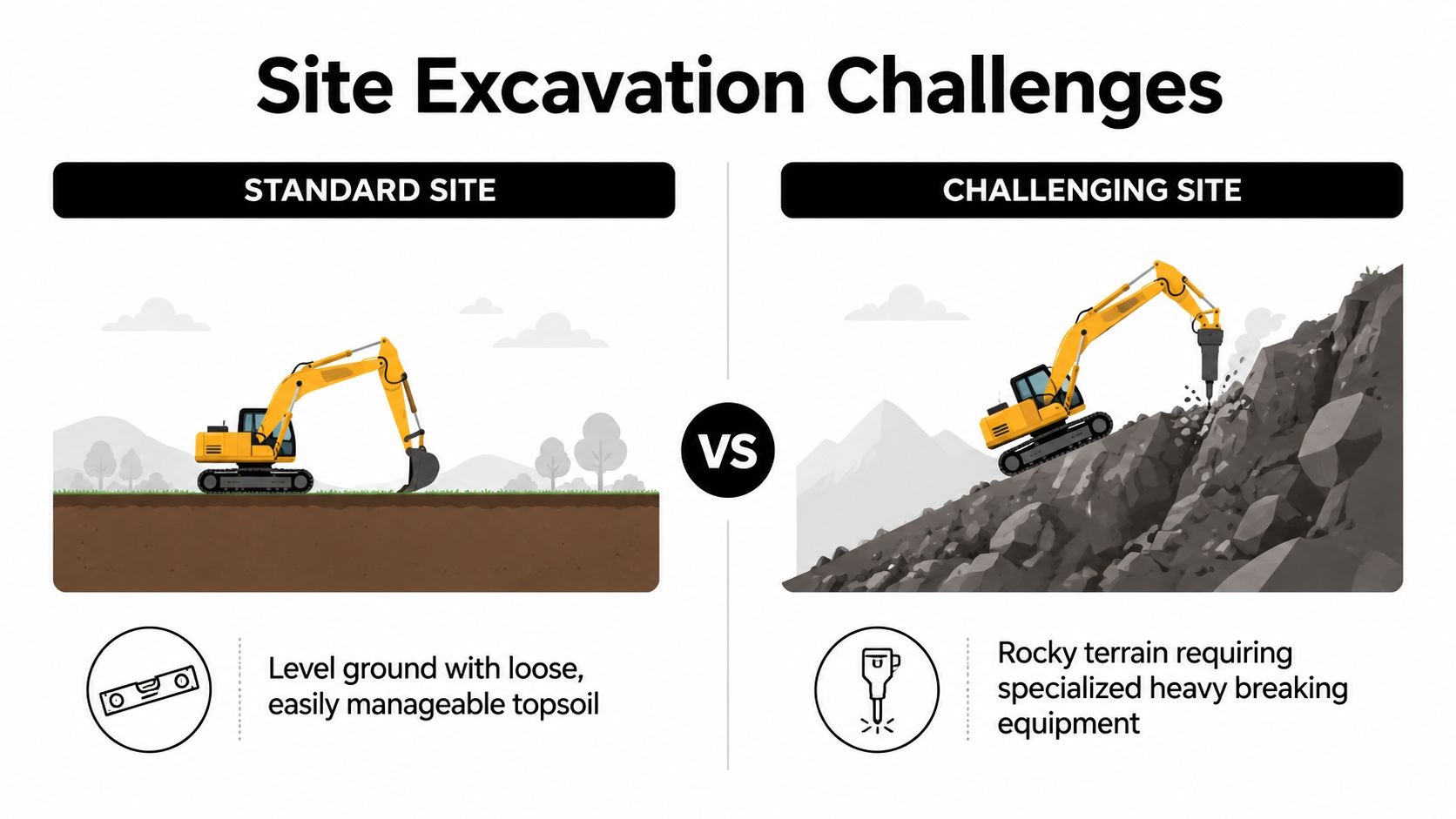
One point that deserves more attention is simple: the best contractor isn't always the cheapest digger. In challenging markets, the long-term cost driver is often whether the contractor can manage slope stability, utility routing, and stormwater control from the start, as noted in this industry discussion around contractor selection and site complexity. That's especially true on ADUs and hillside projects where mistakes get expensive fast.
Hillsides and slope work
Slope work changes everything. Access gets tighter, spoil piles need a place to go, and the cut itself can affect neighboring ground or existing improvements. The excavation has to respect the site, not just the drawing.
On these jobs, contractors should be thinking about:
- Machine access: Can equipment reach the cut safely without damaging improvements or losing stability?
- Cut sequencing: The order of excavation matters on sloped ground.
- Water movement: Hillsides concentrate runoff. If water isn't controlled, the excavation can soften or unravel.
- Soil retention and erosion: Exposed soils need protection, especially if the project won't move straight into concrete.
If your project includes exposed banks or runoff concerns, it helps to understand some of the basics behind methods used to prevent soil erosion on active construction sites.
On a hillside, “close enough” grade work usually turns into somebody else's problem later. That somebody is usually the owner.
ADUs and tight infill lots
ADU excavation often looks small on paper and complicated in the field. There may be limited side-yard access, existing homes close to the work, mature landscaping, old utilities, and strict setback limits. A contractor needs to work with precision and patience, not just speed.
Common pressure points on infill lots include:
- Existing structures nearby
- Unknown utility paths
- Limited room for spoils or imported material
- Drainage conflicts between old and new improvements
The lot might be small, but the coordination load is usually higher than people expect.
Drainage and utility integration
A foundation hole is only one part of the site. Sewer, water, downspout discharge, swales, trench routes, and finish grades all connect to how the property will behave once the structure is complete. If those pieces are treated as separate decisions, rework shows up later.
Here's what works better:
| Site issue | Poor approach | Better approach |
|---|---|---|
| Drainage | Wait until after concrete to think about runoff | Set drainage strategy before excavation is complete |
| Utilities | Trench wherever there's room later | Reserve routes while the site is still open |
| Finish grade | Focus only on footing depth | Check how final elevations will move water away from the structure |
That's the fundamental reason site planning matters. The excavation contractor isn't just shaping the hole. They're shaping how the project functions after everyone else leaves.
How to Choose the Right Foundation Excavation Contractor
A lot of hiring mistakes happen before any dirt moves. A bid comes in low, the schedule sounds aggressive, and everyone assumes foundation excavation is a straightforward cut. Then the operator hits a utility conflict, the export plan falls apart, or the grades do not tie back into drainage the way the plans suggested. By that point, changing contractors is expensive.
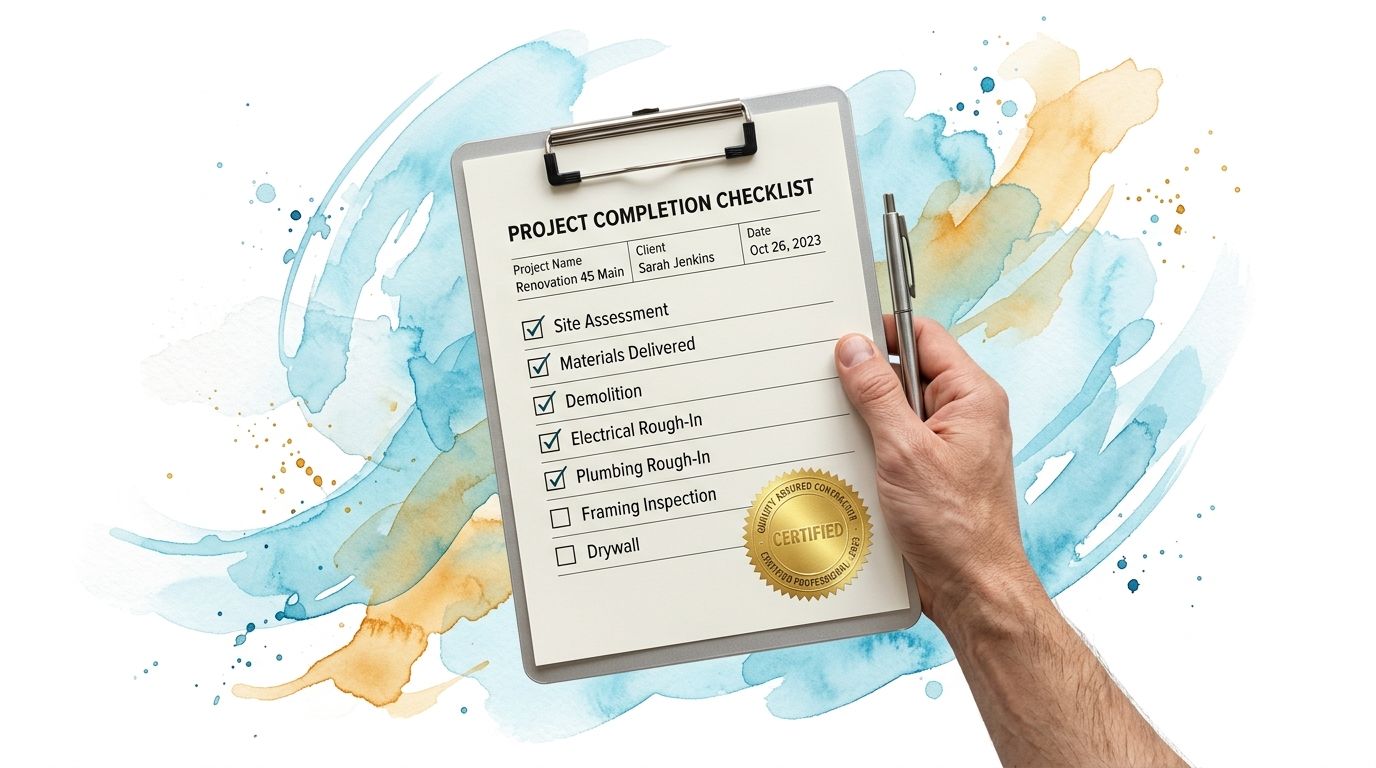
Hire the contractor who can explain how the site will work after excavation, not just how they will get the hole open. On a hillside lot, that means cut stability, access, water movement, and export logistics. On an ADU site, it usually means tight tolerances, protection of existing improvements, and utility routing that does not create a second problem later.
One question usually separates experienced contractors from sales-driven ones. Ask what can go wrong on your specific lot, and what they do before digging to reduce that risk.
The right contractor asks as many questions as you do.
Ask about projects like yours
Past work should match your conditions, not just your foundation type. A contractor who does large open-site production work may not be the right fit for a constrained infill lot. A crew that handles ADUs well may not be the right crew for a steep custom home with retaining, dewatering, and long utility runs.
Useful questions include:
- What part of this site concerns you first
- How do you verify utility locations before excavation starts
- What do you use for grade control
- How do you handle changes between plan elevations and field conditions
- Who is responsible for catching a problem early on site
Listen for specifics. Good answers sound like field procedure, not general confidence.
Look for a process you can follow
A contractor should be able to walk you through layout review, utility verification, excavation sequencing, spoil handling, subgrade checks, and communication with the surveyor, engineer, or concrete crew. If the conversation stays focused on machine size, daily rate, and how fast they can start, you still do not know how they manage risk.
Getting another opinion can help if two bids are far apart or one scope feels thin. This article on whether you should get a second opinion before hiring a foundation contractor gives a practical way to review that decision.
For clients who want a better sense of how contractors present scope and explain their process, this Recepta.ai playbook for contractors is worth reading. It shows the difference between generic selling and clear explanation, a distinction that matters when you're comparing bids.
Pay attention to tools, records, and coordination
Good excavation still depends on operator judgment, but judgment alone is not enough on a complex site. Ask how the crew tracks elevations, protects benchmarks, confirms footing depth, and documents field changes. GPS, lasers, survey control, and photo documentation all help keep small grade errors from turning into concrete or drainage problems.
Coordination matters just as much. Foundation excavation touches utilities, access, haul routes, water control, and final site performance. If a contractor treats those as someone else's problem, the low bid can get expensive fast.
What to Expect During the Excavation Process
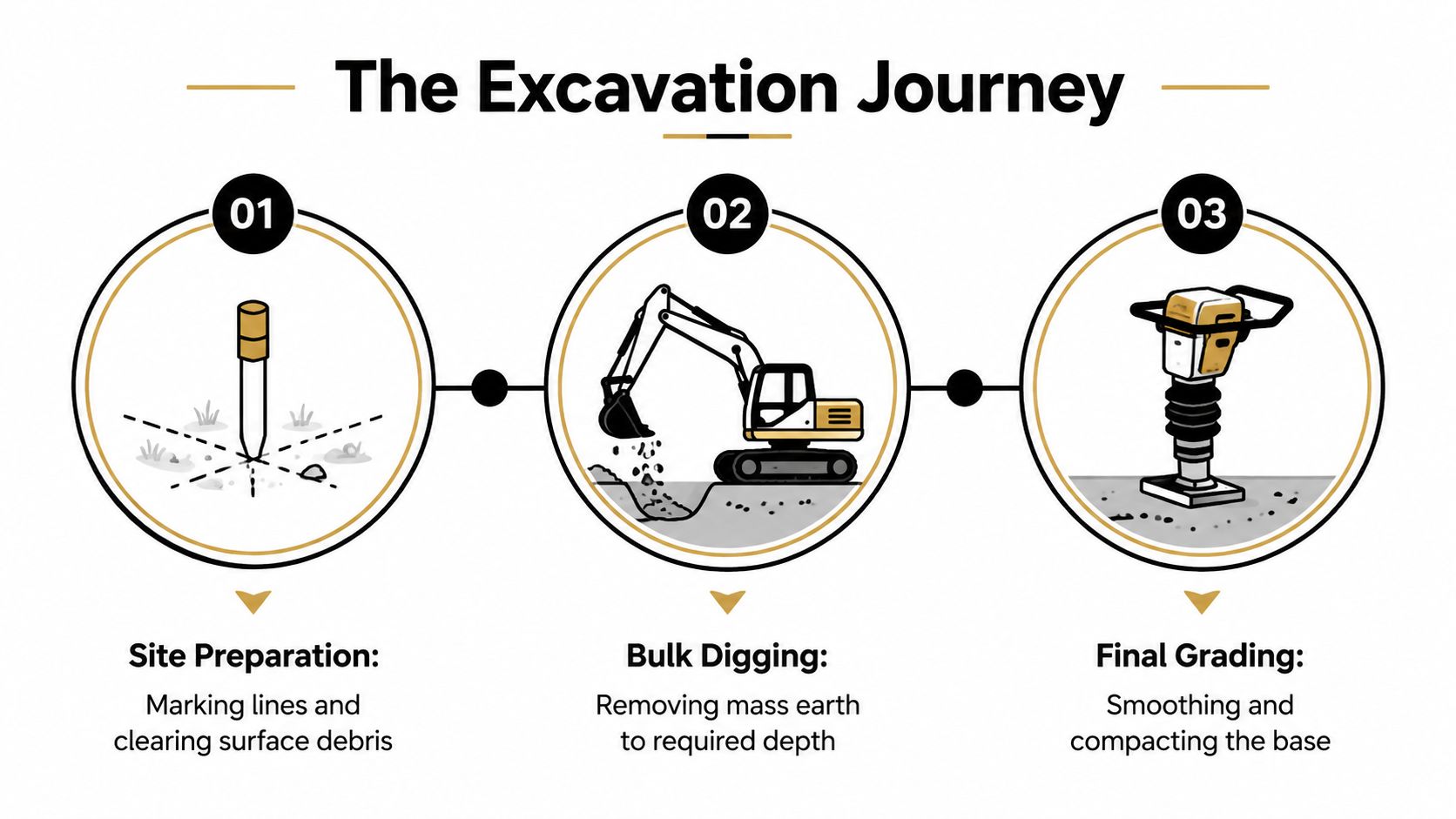
Once the project is approved and laid out, the work moves in a sequence that should feel controlled, not rushed. A professional excavation workflow typically includes pre-excavation utility and geotechnical review, survey and layout, staged excavation with continuous grade control using tools like GPS and lasers, and subgrade verification, as described in this overview of precision-focused excavation practices. That process matters because hidden mistakes at excavation stage often don't show up until concrete, framing, or drainage work starts failing to line up.
The site gets prepared before the real digging starts
The first part is usually clearing what's in the way, confirming access, protecting anything that needs to stay, and rechecking layout. Stakes, benchmarks, and reference points need to make sense in the field, not just on paper.
If utilities are part of the same project, this is also where the contractor starts thinking about trench routes and sequencing. Homeowners often see the excavation as one activity, but in the field it's tied to grading, trenching, and staging. If you want a broader view of that relationship, this guide on what excavation means in construction work gives helpful context.
The dig happens in stages
Good operators don't usually drop to final grade in one aggressive pass. They work down in stages, check elevations, clean up edges, and adjust to what the ground is doing. Soil changes, buried debris, old concrete, roots, and wet pockets can all show up once the surface is opened.
That's where field judgment matters. Drawings show intent. The ground shows reality.
If the site tells you something different than the plan expected, the smart move is to stop, verify, and adjust.
The base gets checked before foundation work continues
After excavation reaches the intended lines and depth, the base needs to be verified. Soft spots, overexcavation, loose material, or standing water need correction before footing or slab prep goes further. This is one of the least visible parts of the process and one of the most important.
Even practical details on site gear reflect that work environment. For anyone curious about the kind of heavy-equipment culture that surrounds excavation work, this Cat Black 8 Excavator item is a light example from outside the construction documents and machinery side of the trade.
The day-to-day reality is less glamorous. It's checking grade, cleaning bottoms, protecting the cut, and making sure the next trade inherits a site that's ready.
After the Dig Long-Term Site Stability
The excavation isn't finished when the hole looks right. Long-term performance depends on what happens immediately after. Backfill has to be suitable and placed correctly. Final grading has to move water away from the structure. Utility trenches, pad transitions, and surrounding surfaces all need to support the same outcome, which is a stable site that doesn't create water or settlement problems later.
If the project includes a pad or building platform, the relationship between the excavation and the finished support area matters just as much as the footing trench itself. This overview of what a building pad does on a construction site is a useful reference because it connects excavation work to the broader ground the structure depends on.
A good handoff between excavation, concrete, plumbing, and grading crews prevents a lot of future trouble. Poor handoff leaves small errors buried under finished work.
That's the main thing to remember when hiring a foundation excavation contractor. You're not just choosing someone to dig to plan depth. You're choosing the contractor who sets up the entire site to support the structure, the drainage pattern, and the utility layout for years to come.
If you're planning a build, addition, ADU, or site improvement and want to talk through real-world excavation conditions before the work starts, contact DW Excavation, LLC. They serve Sonoma County, Monterey County, and the California Central Coast with foundation excavation, grading, drainage, utility excavation, and site planning support.