
Your driveway probably doesn't look bad all at once. It starts with fading, a few small cracks, maybe a spot that stays dark after rain. Then you start wondering how often should you seal your driveway so you don't end up paying for bigger repairs later.
Quick Answer
For most homes, asphalt driveways should be sealed every 2 to 3 years, while concrete often falls into a roughly 4 to 7 year range in mild coastal conditions, depending on traffic, sun, drainage, and surface wear. The right schedule depends less on a calendar alone and more on material, use, and whether water is getting where it shouldn't.
Introduction and Quick Answer
If your driveway is looking tired, you're asking the right question at the right time. Sealing too late lets water and sun do damage. Sealing too often can create its own problems, especially on asphalt.
A good schedule starts with the material. A better schedule starts with the material, the way the driveway was built, and the conditions it sees on the California Central Coast.
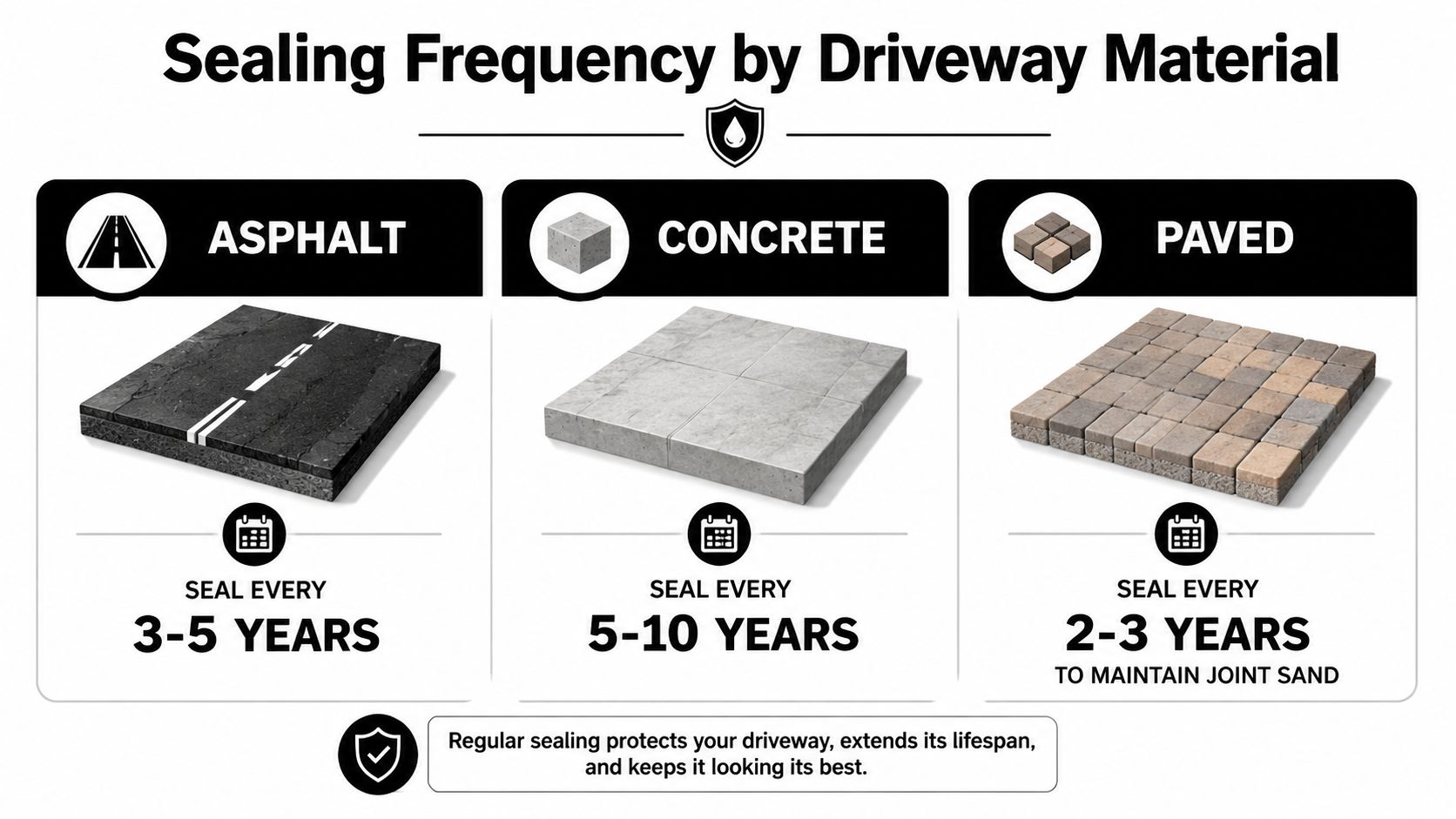
Sealing Frequency by Driveway Material
The sealing schedule changes with the surface you're trying to protect. Asphalt, concrete, and pavers don't age the same way, and they don't fail for the same reasons.
Asphalt
For asphalt, the standard rule is every 2 to 3 years. That's the baseline most homeowners should start with, and it's backed by guidance that also notes unsealed asphalt driveways typically last 10 to 15 years, while regularly sealcoated driveways can last 20 to 30 years in moderate climates according to Barts Asphalt on driveway sealcoating intervals.
That schedule makes sense in the field. Asphalt loses protection as the surface oxidizes, dries out, and opens up to water. Once that starts, small surface wear turns into cracking and edge failure much faster.
Practical rule: If you have asphalt and you don't know when it was last sealed, inspect it now instead of guessing from memory.
For a new asphalt driveway, timing matters too. You want the pavement cured before the first sealcoat. If you're also looking at larger rebuild questions, this guide on putting asphalt over concrete helps explain why what's underneath matters just as much as the finish on top.
Concrete
Concrete doesn't follow the same schedule as asphalt. In mild coastal areas, a lot of homeowners can go longer between applications if the slab was poured well, drains correctly, and isn't seeing unusual wear.
The practical reason to seal concrete is different. You're usually protecting against staining, surface wear, and moisture intrusion through the face and joints. On a properly built residential driveway, that often means resealing on a longer cycle than asphalt, especially where freeze-thaw isn't the main issue.
What changes the timeline most is water. If the slab stays wet, gets runoff from landscaping, or has poor slope, sealers wear out faster and surface problems show up sooner.
Pavers
Pavers are their own category. Sealing is often more about stabilizing joint sand, limiting staining, and keeping the surface looking uniform than protecting a single solid slab.
The right timing depends heavily on the paver type, the sealer used, sun exposure, and how much movement the surface sees. A paver driveway with solid edge restraint and good drainage usually behaves very differently from one laid over a weak base that shifts with seasonal moisture.
If a homeowner asks me for one simple answer, I tell them this. Asphalt needs the strictest schedule. Concrete is more forgiving when the site is prepared well. Pavers depend heavily on base quality and drainage.
Key Signs Your Driveway Needs Resealing
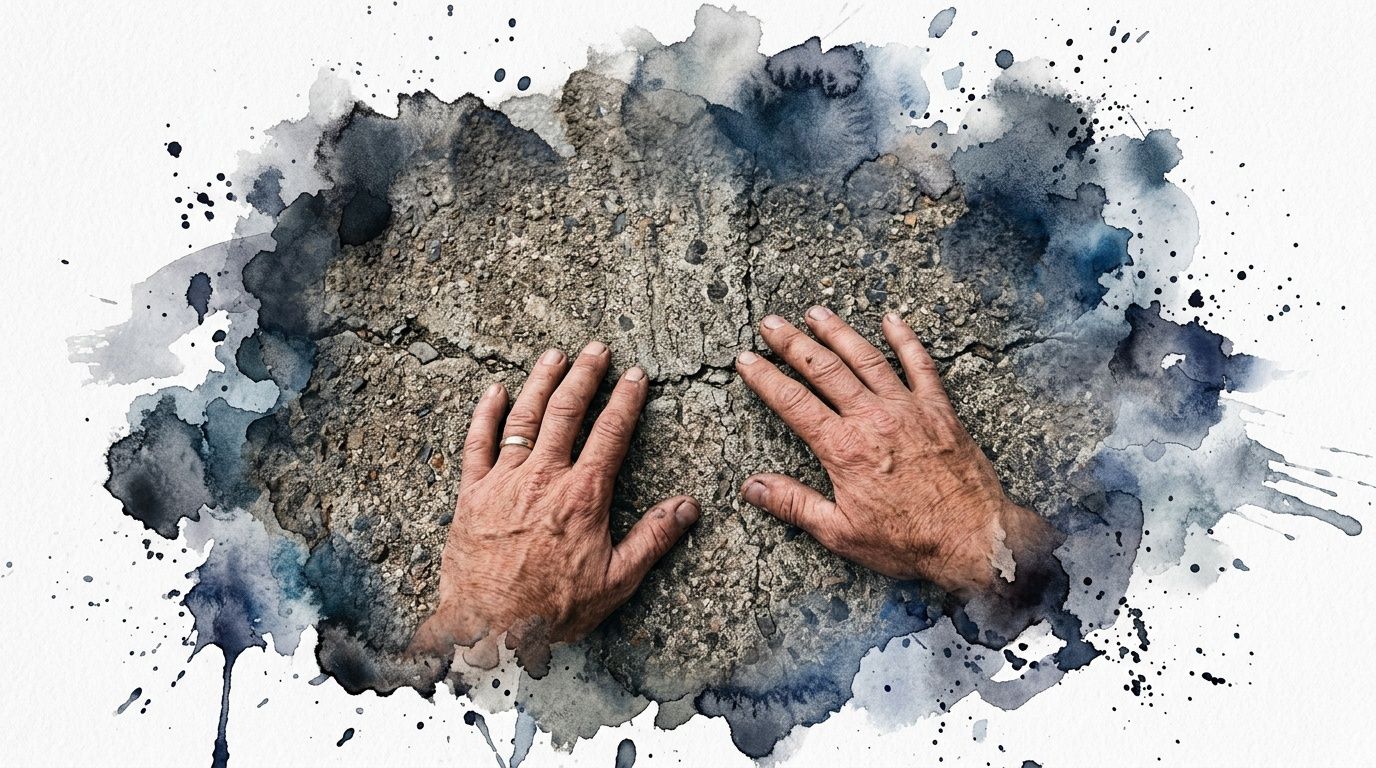
A calendar helps, but the surface usually tells you first. Walk the driveway in daylight and look for the signs that the previous sealer is spent.
The color has changed
On asphalt, black doesn't stay black forever. When it starts turning dull gray, that's a sign the binder is losing protection.
Unprotected asphalt hardens as UV exposure oxidizes the binder, which reduces flexibility and leads to thermal cracking. Sealants act as a sacrificial UV and moisture barrier, slowing that process by 50 to 70% according to Aurora Asphalt on sealcoating performance.
Water doesn't bead anymore
A sealed surface should shed water better than a worn one. If rain soaks in quickly or darkens the pavement in uneven patches, the protective layer may be gone.
This matters on the Central Coast because repeated wetting is often the bigger issue than snow or ice. Water that sits or soaks in usually means it's time to look closer at both the surface and the drainage.
If a driveway stays wet in the same spots after a normal rain, don't just blame the sealer. Check the slope and where runoff is coming from.
You can see small cracks starting
Hairline cracking is the point where maintenance still works. Once those cracks widen, sealing alone isn't enough because sealer is not a structural repair.
If you're trying to decide whether you're dealing with normal wear or the start of a bigger failure, this article on how to fix a crack in driveway asphalt gives a useful breakdown of what should be filled first.
The surface is loosening or staining easily
On older driveways, the top starts to look rough instead of tight and uniform. Aggregate may show more clearly, oil marks may linger, and the finish stops looking even after cleaning.
For homeowners comparing surfaces, it also helps to look at options like installing permeable natural stone driveways, especially where drainage is a recurring issue and runoff control matters as much as appearance.
Factors That Change Your Sealing Schedule
The standard answer gets you close. The actual answer comes from how the driveway lives day to day.

Climate on the California Central Coast
In Sonoma County, Monterey County, and along the California Central Coast, sun and seasonal moisture do most of the work. You may not be dealing with long frozen winters, but UV exposure, coastal air, and repeated wet periods can still wear a driveway down.
That means the schedule should follow conditions, not just a generic national average. A driveway in full sun with runoff crossing it during winter storms often needs attention sooner than one that drains cleanly and stays dry.
For homeowners planning a new driveway or repaving job, this piece on how Central Coast weather affects grading and drainage for new projects is worth reading before the first truck ever shows up.
Traffic load
A single-family driveway with light use isn't the same as one carrying work trucks, trailers, or frequent turning from heavier vehicles. For high-traffic driveways, sealing every 1 to 2 years can make sense because heavy vehicle use can accelerate wear by 2 to 3 times compared to standard residential use, as noted in this sealcoating frequency summary.
Turning movement matters too. A driveway can look fine in the straight sections and still wear out at the apron or near the garage where tires scrub the surface.
Age of the pavement
New asphalt and older asphalt shouldn't be treated the same. New pavement needs time to cure before the first coat. Older pavement may need crack repair, patching, or surface correction before any new sealer goes down.
Concrete follows the same common-sense rule. If the slab already has movement, scaling, or drainage issues, a fresh coat won't fix the cause.
Quality of the last sealing job
Not all sealer failures mean the driveway itself is bad. Sometimes the prep was poor, the cracks weren't treated correctly, oil spots weren't cleaned, or the coating went down under the wrong conditions.
A sealer only performs as well as the surface under it. Dirt, moisture, movement, and trapped oils shorten the life of the coating fast.
If the finish peels, stays blotchy, or wears off unevenly, I don't assume the answer is "seal more often." Usually the better question is what was missed before the material went on.
How Proper Site Prep Reduces Sealing Frequency
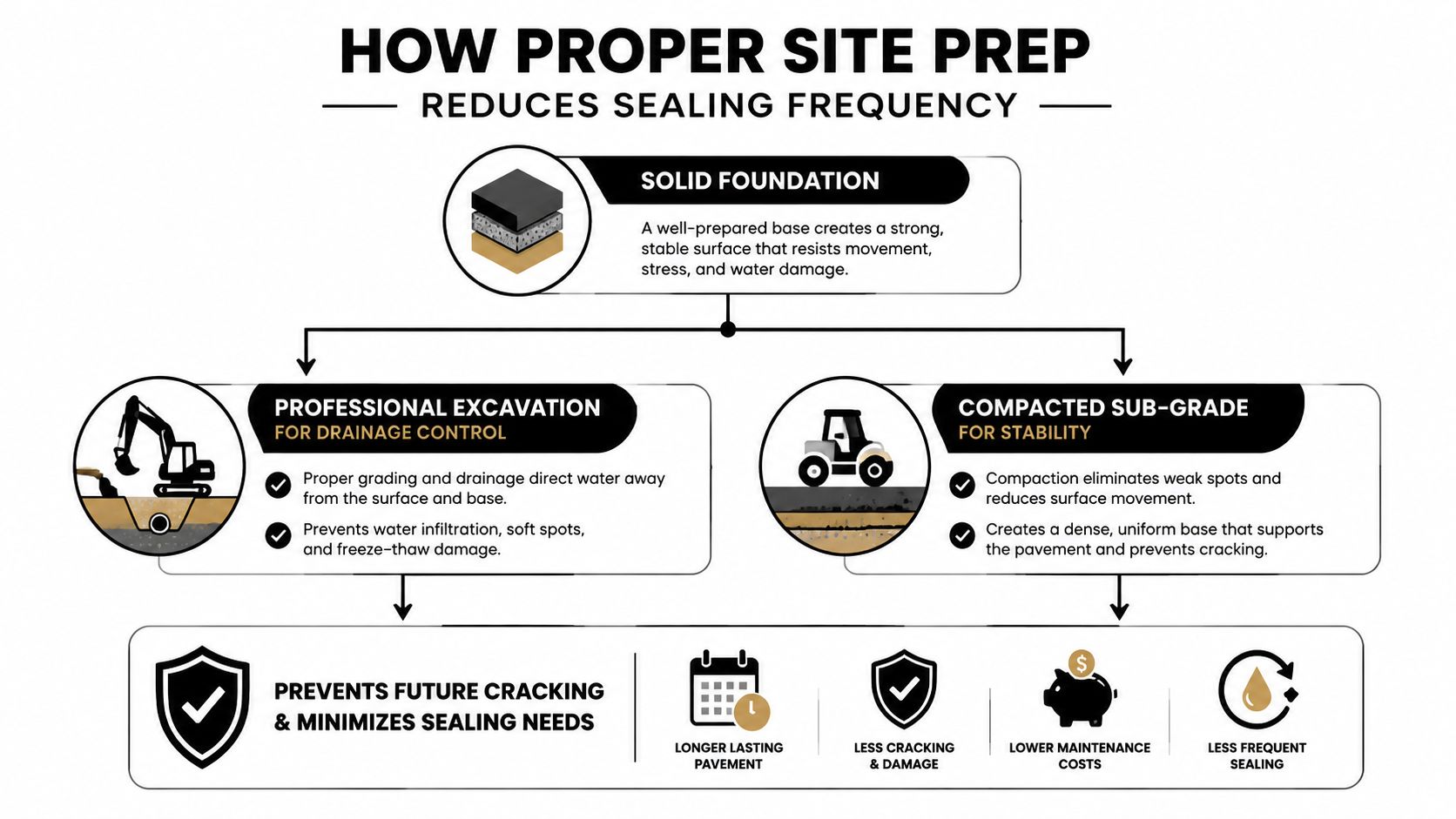
The part most homeowners don't see is what controls a lot of the maintenance later. The subgrade, the drainage, and the way the site is shaped decide whether the surface stays stable or starts breaking down from below.
Water is the problem under a lot of driveways
When water sits under or alongside a driveway, the surface pays for it later. You start seeing cracking, edge breakdown, low spots, and sealers that don't last because the slab or asphalt mat keeps moving.
That's why the prep work matters so much. Proper excavation, grading, base compaction, and drainage control are what give the surface a chance to behave the way it should.
A useful local question before repaving is whether you need grading before you repave your driveway. In many cases, the answer is yes, especially if the existing driveway already shows ponding or settlement.
Concrete especially benefits from good drainage
One of the more overlooked points in sealing advice is that site prep can extend how long a concrete sealer lasts. A cited gap in many guides is that expert drainage grading can extend sealing intervals to 5+ years for concrete by preventing the moisture problems that cause sealer failure in the first place, as discussed by SunDek in its concrete sealer guidance.
That lines up with what contractors see in the field. A slab with clean drainage and a stable base usually asks for less maintenance than a slab fighting water from day one.
If you want a practical read on application issues that also carry over to exterior flatwork, this guide to common concrete floor sealing mistakes is useful because many failures start with the same prep and moisture problems.
What actually works
Good site prep isn't glamorous, but it works. A driveway built on a properly compacted base, with water directed away from the pavement and edges protected from erosion, gives the sealer a much easier job.
DW Excavation, LLC handles grading, drainage solutions, driveway and road preparation, and paving preparation for projects where long-term surface performance matters. That's the kind of work that affects how often a homeowner ends up resealing later.
A Seasonal Driveway Maintenance Schedule for the Central Coast
A driveway lasts longer when you pay attention to it in small steps instead of waiting for visible damage. In Sonoma and Monterey, the seasons are mild enough that regular checks usually catch problems early.

Fall
- Clear leaves and debris: Organic material holds moisture and can stain concrete or keep asphalt damp longer than it should.
- Check drains and edges: Make sure runoff has somewhere to go before winter storms start.
- Look at transitions: Garage aprons, culvert crossings, and driveway edges often show the first signs of settlement.
Winter
- Watch water during storms: The best time to spot bad drainage is while rain is moving across the property.
- Mark pooling areas: If water sits in the same place every storm, note it so it can be corrected later.
- Avoid sealing in poor conditions: Wet and cool weather is for inspection, not rushed coating work.
Spring and summer
Spring and summer are usually the right window for cleaning, repair, and sealing because the surface has time to dry and cure properly.
- Wash the driveway: Dirt hides cracks, oil spots, and worn sections.
- Inspect the finish: Look for fading, water absorption, and early cracking.
- Schedule repairs before sealing: Surface coating should follow prep, not replace it.
For homeowners comparing materials and upkeep, these practical concrete driveway solutions for homeowners give a good outside perspective on choosing a driveway that fits local conditions. If rain regularly causes trouble on your property, this article on why Monterey driveways fail after rain and how proper grading fixes it gets to the root issue.
Frequently Asked Questions About Driveway Sealing
Can I just seal over existing cracks?
No. Small cracks should be treated first, and larger movement cracks may point to a base or drainage problem. Sealer protects the surface, but it doesn't rebuild structure.
Is it cheaper to seal the driveway myself?
Sometimes it is on paper, but only if the prep is done right and the surface condition is simple. If the driveway has oil contamination, active cracking, drainage problems, or previous coating failure, a bad DIY job can leave you paying twice. The best next step is usually a site-specific estimate.
How do I know if a sealing contractor did a good job?
The surface should be cleaned properly, cracks should be addressed before coating, and the finish should look consistent after curing. If the contractor can't explain the prep work clearly, that's usually a problem. Good sealing starts long before the material hits the driveway.
Why does my newer asphalt driveway look patchy?
Patchy color doesn't always mean failure. Asphalt can cure unevenly, and past repairs or variable absorption can show through the finish. If the surface is peeling or staying soft, that's different and should be checked.
Can you seal a driveway too often?
Yes, especially with asphalt. Some guidance warns that yearly sealing can trap oils and lead to peeling or softening instead of helping the pavement.
When should a new asphalt driveway get its first seal?
It shouldn't be sealed immediately after installation. New asphalt needs curing time first, and the exact timing depends on the pavement condition and local weather. If you're unsure, have the surface inspected instead of sealing by the calendar alone.
Start Your Driveway Project on Solid Ground
Knowing how often should you seal your driveway helps you protect what you already have. But the longer-term answer is building or rebuilding the driveway correctly in the first place, with drainage, grading, and base preparation handled before the surface goes down.
If you're planning a new driveway, a major repair, an ADU project, or a repaving job in Santa Rosa, Sonoma County, Monterey County, or the California Central Coast, start with the ground conditions first. That's usually what decides whether the surface stays low-maintenance or keeps needing attention.
If you want to talk through driveway prep, grading, drainage, or paving preparation, contact DW Excavation, LLC for a free estimate or site consultation. Call (707) 601-9091, visit 470a Caletti Avenue, Windsor, CA 95492, or learn more at dw-excavation.com.