Effective drainage solutions for homes are your property's first and most critical line of defense against water damage. Think of them as a carefully designed system meant to collect rainwater and groundwater and guide it safely away from your foundation, stopping costly structural repairs, basement flooding, and landscape erosion before they ever start.
Why Proactive Drainage Is a Smart Investment
That sinking feeling of finding water in your basement or watching your lawn turn into a swamp is a universal homeowner headache. Beyond the immediate mess, though, uncontrolled water is a silent threat to your home's structural integrity and long-term value.
A well-designed drainage system isn’t just about preventing puddles; it's a crucial investment that acts as your property's silent guardian.
What are the real costs of poor drainage?
Effective water management is especially vital for homeowners in Sonoma and Monterey County, where seasonal rains and varied soil types can create serious challenges. When water pools against your home, it exerts immense hydrostatic pressure on your foundation walls.
Over time, this pressure can lead to cracks, leaks, and even bowing. You can learn more about just how much poor grading can damage your foundation in our detailed guide.
The Hidden Consequences of Ignoring Water Issues
Ignoring drainage issues can kick off a cascade of expensive problems that extend far beyond a soggy lawn.
- Foundation Damage: Persistent moisture can weaken concrete, leading to cracks that compromise the entire structure of your home.
- Mold and Mildew Growth: Damp basements and crawl spaces are ideal breeding grounds for mold. According to FEMA, mold can cause serious health issues and is notoriously expensive to remediate [FEMA, 2021].
- Landscape Erosion: Unmanaged runoff can wash away valuable topsoil, kill your plants, and create unstable slopes in your yard.
- Pest Infestations: Standing water is a welcome mat for mosquitoes, termites, and other pests that thrive in moist environments.
The real cost of poor drainage isn’t just the repair bill for a cracked foundation—it’s the loss of peace of mind. A professionally engineered system buys you security, knowing your biggest asset is protected from the ground up.
Investing in the right drainage solutions for homes today is the single best way to prevent catastrophic expenses tomorrow.
Decoding the Best Drainage Solutions for Your Property
Choosing the right system comes down to a few key ideas. The best drainage solutions for homes are all about matching the right tool to your specific water problem.
Whether you're fighting a swampy lawn that never dries out or watching water pool a little too close to your foundation, there's an engineered solution that can fix it. Here’s a simple way to think about it: surface drainage handles the water you can see, while subsurface drainage takes care of the water you can't see.
What are Surface Drainage Systems?
Surface drainage solutions are designed to grab and redirect rainwater the moment it hits your property. Think of these systems as your home’s first line of defense in a downpour.
Some of the most common and effective surface solutions include:
- Proper Grading: This is the absolute foundation of good drainage. Grading reshapes your landscape so it slopes gently away from your house, using gravity to guide water toward the street or a storm drain.
- Catch Basins: Picture these as mini storm drains for your yard. A catch basin is a collection box installed at a low point on your property with an underground pipe to whisk the collected water away.
- Downspout Extensions: If your downspouts pour water at the base of your home, you're asking for trouble. Extensions must carry that concentrated roof runoff at least 10 feet away from your foundation.
This decision tree really drives home how ignoring standing water can snowball into massive structural problems.
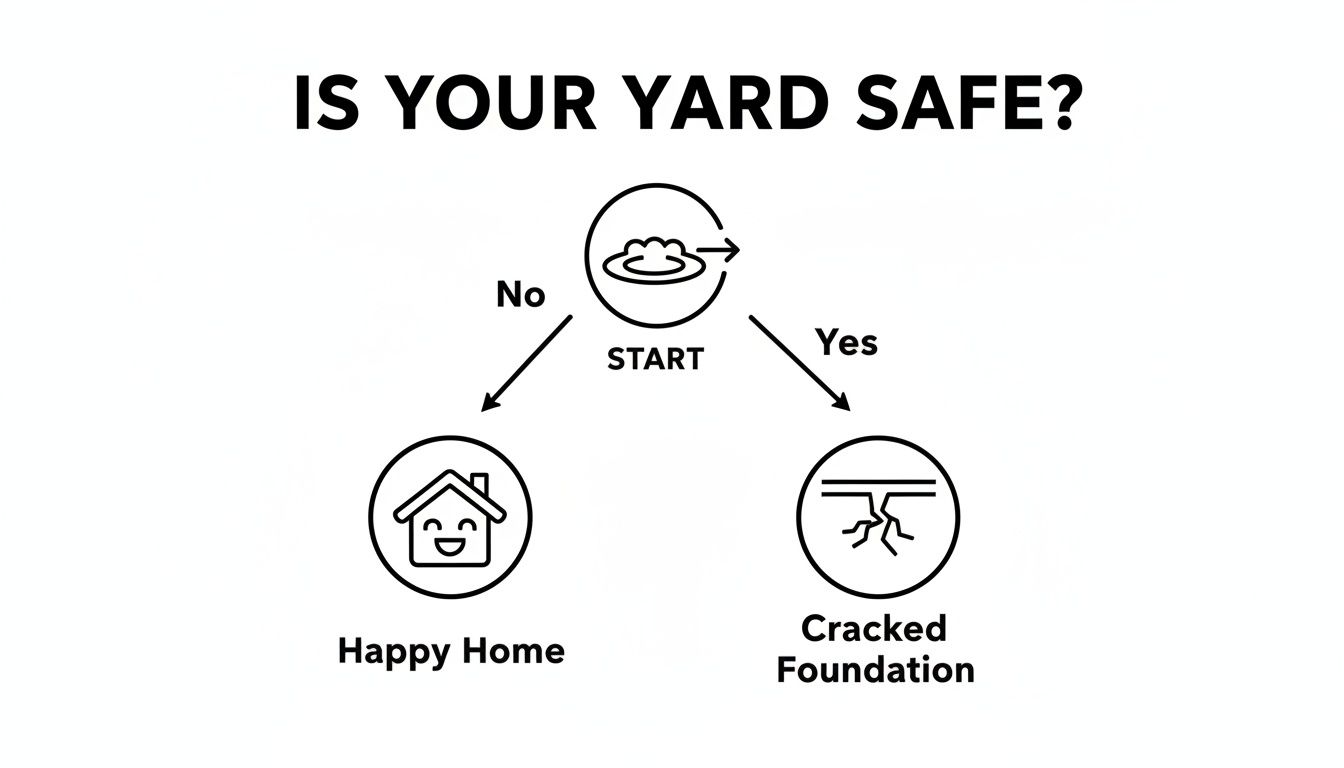
As the flowchart shows, a yard free of pooling water is a safe yard. One with lingering puddles? That's a direct route to some very expensive foundation damage.
What are Subsurface Drainage Systems?
When your problem is less about surface runoff and more about groundwater, you need to go underground. Subsurface systems work out of sight, creating an escape route for water that’s already saturated the ground.
The king of subsurface solutions is the French drain. It’s a sloped trench filled with gravel surrounding a perforated pipe. Groundwater seeps into the trench, finds its way into the pipe, and flows away to a safe exit point.
A well-designed French drain acts like a protective moat around your foundation. It intercepts migrating groundwater before it can exert hydrostatic pressure on your foundation walls, which is a leading cause of basement leaks and cracks.
How do I choose the right system for my California property?
The perfect system for your home depends entirely on your unique issue. In Sonoma or Monterey County, heavy winter rains and clay-heavy soils often mean a combination of solutions is the best bet. You can learn more about how to fix flood risks with proper grading in our specialized guide.
- For a Widespread Soggy Yard: A French drain system is probably your best bet.
- For Water Pooling in One Specific Low Spot: A catch basin can zero in on that problem area.
- For Water Around the Foundation: Start with downspout extensions and consider grading improvements or a perimeter French drain.
It’s also critical to look at all sources of water. For homes with flat or low-slope roofs, knowing how solutions like tapered roof insulation for drainage work can make a huge difference in managing runoff. Every piece of the puzzle, from the shingles to the soil, plays a part.
How to Assess Your Yard's Drainage Needs Like a Pro
You don't need an engineering degree to start figuring out your property's drainage problems. The best time to play detective is right after a big rainstorm, when all the evidence is in plain sight.
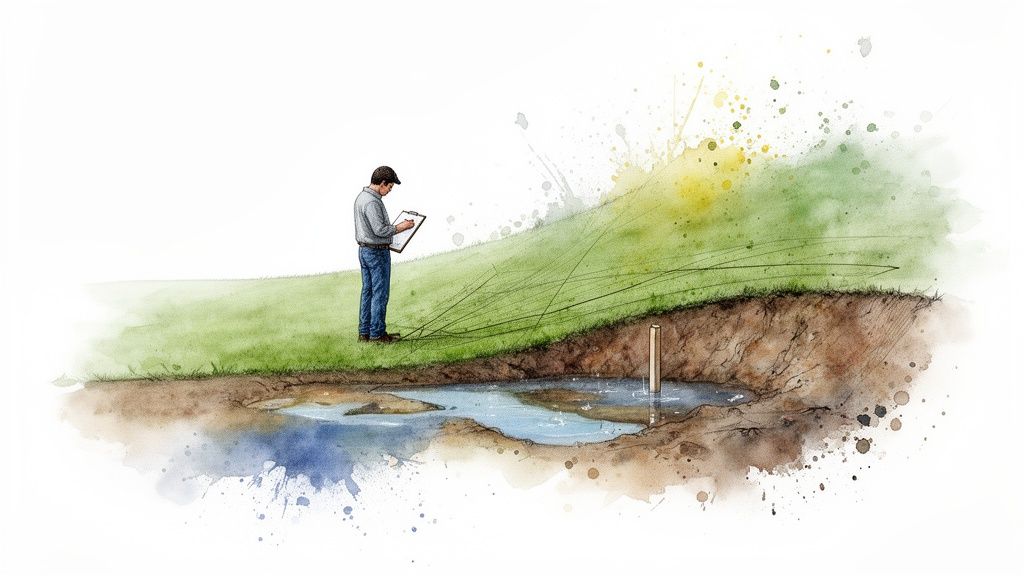
This initial walk-around is your first step toward a real, permanent fix. Grab a notepad and let’s go through the kind of checklist a pro would use to pinpoint exactly what your yard needs.
Your Post-Rainstorm Walkthrough Checklist
After the next downpour, take a slow walk around your entire property. You'll want to pay close attention to these key spots.
- Map the Puddles: Note every spot where water is still standing an hour or more after the rain has stopped. Are these puddles near your foundation?
- Follow the Water's Path: Look for small channels in the mulch or matted-down grass. This shows the natural route water is taking across your land.
- Inspect Your Foundation: Look for dark, damp stains or white, chalky mineral deposits called efflorescence. This is a classic sign that water is seeping through the concrete.
- Check Your Downspouts: If your gutters are dumping water right next to your foundation, you've likely found a huge part of the problem.
How do topography and soil affect drainage?
Beyond just spotting puddles, you need to understand the shape of your land and what it’s made of. This is especially true across the California Central Coast, where the unique terrain means a one-size-fits-all solution won't cut it.
First, think about the grade of your yard. Even a slight negative grade can funnel thousands of gallons of water straight at your foundation.
Think of your property's grade as the blueprint for water flow. If that blueprint guides water toward your house, even the best drain system is going to struggle. Correcting the slope is often the single most powerful fix you can make.
Next, get a feel for your soil. The clay-heavy soils common in Sonoma and Monterey Counties are terrible at drainage. If you can roll a handful of damp soil into a sticky ball, you have high clay content, meaning surface drainage is critical.
When should I call a professional?
Your DIY assessment gives you a fantastic head start. But there are definitely times when calling in a professional is non-negotiable.
You should call an expert if:
- You see significant foundation cracks or bowing walls.
- Your property is on a steep or multi-level slope.
- The water problems are widespread, not isolated.
- You think the issue might be connected to a neighbor's property.
A professional site evaluation from a company like DW Excavation goes way beyond a quick visual check. If you're ready to move from looking to solving, you can find helpful next steps in our guide to yard drainage troubleshooting.
Comparing Drainage System Costs and Long-Term Value
When it comes to protecting your home from water, it's easy to get sticker shock. But treating a professionally installed drainage solution as a mere expense is missing the bigger picture.
It's one of the smartest investments you can make in your property's health and value. You have to weigh the upfront cost against the catastrophic expenses it helps you avoid.
Breaking Down the Investment
The cost of any drainage system depends on the size of your property, the complexity of the problem, and the specific solution. A simple downspout extension is affordable, while a full-perimeter French drain is a more significant investment.
But every dollar you spend on proactive water management delivers a powerful return. A dry, stable foundation isn’t just a feature; it’s a major selling point that preserves your home’s market value. The global drainage systems market is projected to hit USD 2.55 billion by 2032, driven by this need to protect property [Vantage Market Research, 2023].
Cost and Benefit Analysis of Popular Drainage Solutions
This table helps homeowners compare the upfront costs, maintenance requirements, and long-term effectiveness of different drainage systems.
| Drainage Solution | Average Installation Cost | Typical Lifespan | Key Benefit |
|---|---|---|---|
| French Drain | $4,000 – $15,000+ | 30+ years | Intercepts groundwater before it reaches the foundation. |
| Sump Pump | $1,200 – $3,500 | 7-10 years | Actively pumps water out of a basement or crawlspace. |
| Yard Regrading | $1,500 – $5,000+ | Permanent | Uses gravity to direct surface water away from the home. |
| Catch Basin | $500 – $2,500 | 50+ years | Collects runoff in low spots to prevent pooling water. |
Choosing the right system is about balancing your budget with the level of protection your property needs.
What is the true cost of inaction?
Ignoring a drainage problem is like knowing you have a small leak in your roof and just hoping it goes away. The costs of doing nothing always compound over time.
Here's a common scenario:
- The Initial Problem: Water pools against the foundation during heavy rain.
- The Short-Term Result: A damp basement, musty smells, and peeling paint.
- The Long-Term Consequence: Hydrostatic pressure causes foundation cracks, and toxic mold starts to grow.
- The Final Bill: The homeowner now faces foundation repair, mold removal, and replacing flooring. This can easily cost 5-10 times more than the original drainage solution.
A professionally engineered drainage system is essentially an insurance policy against the most destructive force your home can face: water. The real value is in the sleepless nights you avoid and the structural integrity you preserve.
Modern techniques like trenchless pipe repair allow us to fix underground lines without turning your lawn into a construction site. You can learn more in our guide on the truth about trenchless pipe repair that homeowners should know.
Why Professional Installation Is Non-Negotiable
A drainage system is only as good as its installation. The temptation to grab a shovel and save a few bucks with a DIY approach is strong. But when it comes to drainage solutions for homes, this is one area where cutting corners can cost you big time.
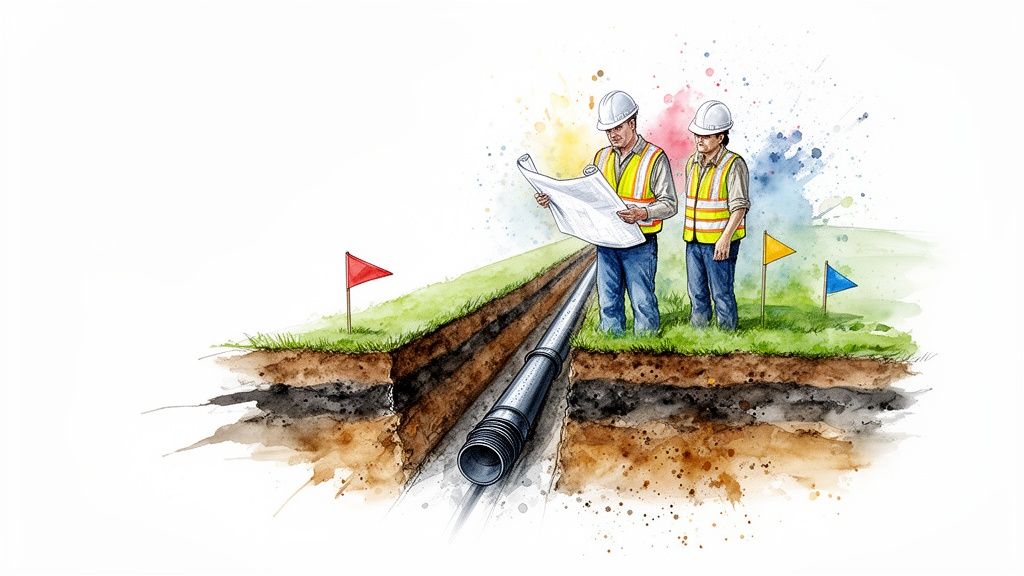
Hiring a professional isn't just about paying for labor. It’s about bringing in an expert who understands the complex dance between your home, your land, and the local environment.
What are the risks of DIY installation?
A seemingly simple French drain or grading job requires a level of precision that’s easy to miss without proper training.
Here are the most common DIY or amateur installation failures:
- Incorrect Slope: A tiny miscalculation in the pipe’s gradient can cause water to flow right back toward your foundation.
- Wrong Materials: Using the wrong type of gravel or pipe is a recipe for disaster. The system will inevitably clog and fail.
- Utility Line Damage: Digging without knowing where underground gas, water, and electrical lines are is incredibly dangerous and expensive.
- Creating New Problems: A poorly planned discharge point can move your water issue into your neighbor’s yard or start a new erosion problem.
To avoid these costly mistakes, it’s critical to master backyard drainage system installation, which almost always means calling in a professional.
An Engineering-Integrated Approach to Drainage
A lasting solution involves more than just digging a trench and laying some pipe. At DW Excavation, we bring an engineering-integrated mindset to every project.
A professional doesn’t just install a drainage system; they engineer a permanent solution. This means analyzing soil mechanics, calculating hydrostatic pressure, and designing a system that works in harmony with the unique climate of your California property.
This deeper level of planning is what separates a temporary fix from a true strategy to protect your property. We find the root cause of the water problem and design a solution that solves it for good.
What is the value of an expert partnership?
Ultimately, professional installation is about safeguarding your home. The right partner provides more than a functional drain; they deliver peace of mind.
A true professional handles permits, ensures everything is up to code in Sonoma or Monterey County, and takes full responsibility. When you invest in expert installation, you’re investing in the structural integrity of your home for years to come.
FAQs About Home Drainage Solutions
1. How long does a drainage system installation take?
A simple fix like underground downspout extensions might take a day. A more comprehensive project, like a full perimeter French drain, is typically a three to five-day job, depending on soil conditions and property access in areas like Sonoma County.
2. Will installing a drainage system damage my landscaping?
Minimizing disruption is a top priority for any true professional. While digging is necessary, a skilled team is surgical. We carefully plan our work to protect mature plants and can often replace turf so there is little sign we were ever there.
3. What is the average cost of a French drain in California?
As a ballpark estimate, homeowners in California can generally expect to invest between $25 to $50 per linear foot. While this seems significant, it's a fraction of the $10,000 to $40,000+ cost for major foundation repairs, making it a wise investment.
4. How much maintenance do drainage systems require?
Professionally installed systems are built to be low-maintenance. You'll just need to periodically clear debris from any catch basin grates and inspect the system's outlet point to ensure it isn't blocked. In the rare case of a major clog, understanding options like those in our guide on sewage damage clean-up can be helpful.
5. Is it a bad idea to install a drainage system myself?
For anything more serious than adding a plastic downspout extension, yes. The risks of getting it wrong are just too high. A drain installed with the wrong slope can channel water directly back toward your foundation, making the problem worse. Hiring a professional is about getting a permanent solution that actually works the first time.
Ready to protect your home with a drainage solution engineered for long-term performance? The team at DW Excavation, LLC combines technical expertise with a commitment to quality, delivering permanent solutions for homeowners across Sonoma County, Monterey County, and the California Central Coast. Contact us today for a professional site evaluation and a clear plan to keep your property safe and dry.