
It’s a sinking feeling every homeowner dreads: seeing water pool up against your house's foundation. What looks like a simple puddle is often the first sign of a much bigger problem hiding in plain sight—improper yard grading. A professional grading fix for flood risk isn’t just about moving dirt; it’s a carefully engineered solution to protect your biggest investment from the silent, destructive power of water.
This guide will walk you through why proper grading is your first line of defense, how to spot trouble, and what professional solutions can permanently solve your drainage woes.
What Is Proper Grading and Why Is It So Important?
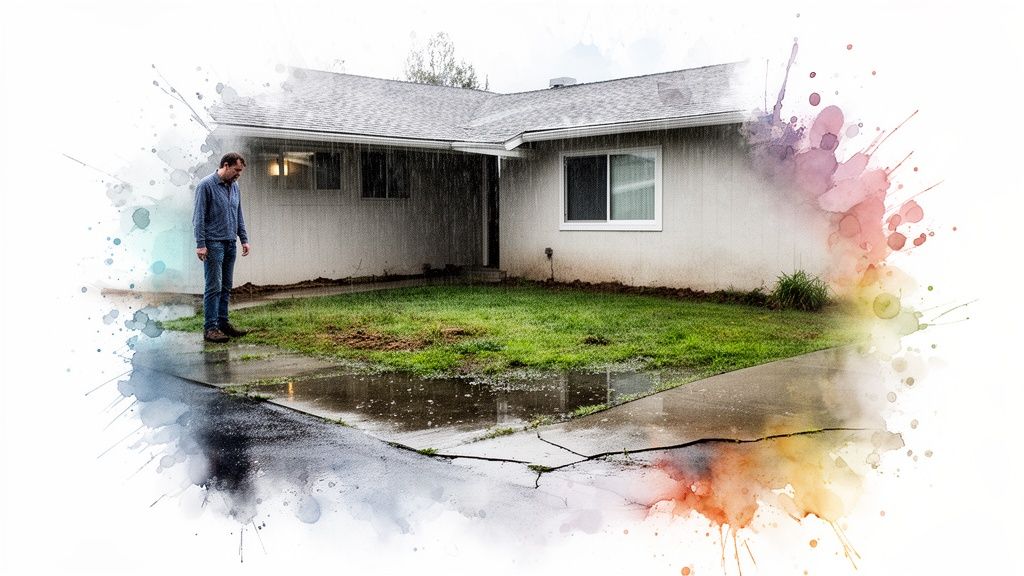
Here in Sonoma County and along the California Central Coast, many people look to new landscaping when they see drainage problems. While helpful, those are often just band-aids on a grading issue. Proper grading is the science of shaping your land to guide water safely away from your home, preventing it from soaking into the soil next to your foundation.
When the ground slopes toward your house—what we call "negative grading"—every rainstorm turns your yard into a funnel. This directs water exactly where you don't want it, leading to expensive consequences that go beyond a soggy lawn.
The True Cost of Ignoring Poor Grading
Putting off a grading fix is a gamble that rarely pays off. Water sitting against your foundation builds up immense hydrostatic pressure, which can quietly cause major damage.
- Foundation Cracks: All that relentless pressure can cause cracks in your concrete, putting your home's entire structural integrity at risk.
- Basement or Crawlspace Flooding: Water is persistent and will find a way in, leading to leaks, dangerous mold growth, and ruined belongings.
- Soil Erosion: Uncontrolled water flow will carve away your valuable topsoil, destabilizing your landscape and, in severe cases, the ground under your home.
- Damaged Landscaping: Waterlogged soil suffocates the roots of grass and shrubs, killing your curb appeal along with your plants.
Flooding is the most common natural disaster globally. In the decade leading up to 2022, insured losses from global flood events soared past $88 billion [Swiss Re, 2022]. This is a stark reminder of why being proactive is non-negotiable for homeowners in our region. A proper grading fix for flood risk is an investment in your property's future health and value.
The best way to start is by taking a walk around your property. Check out our guide on yard drainage troubleshooting to learn what to look for.
How Can I Diagnose My Property's Flood Vulnerability?
You don't need to be a soil engineer to spot the major red flags for flood risk. The best time to play detective is right after the next big rainstorm. Throw on some boots, take a walk around your property, and look for the clues that water leaves behind.
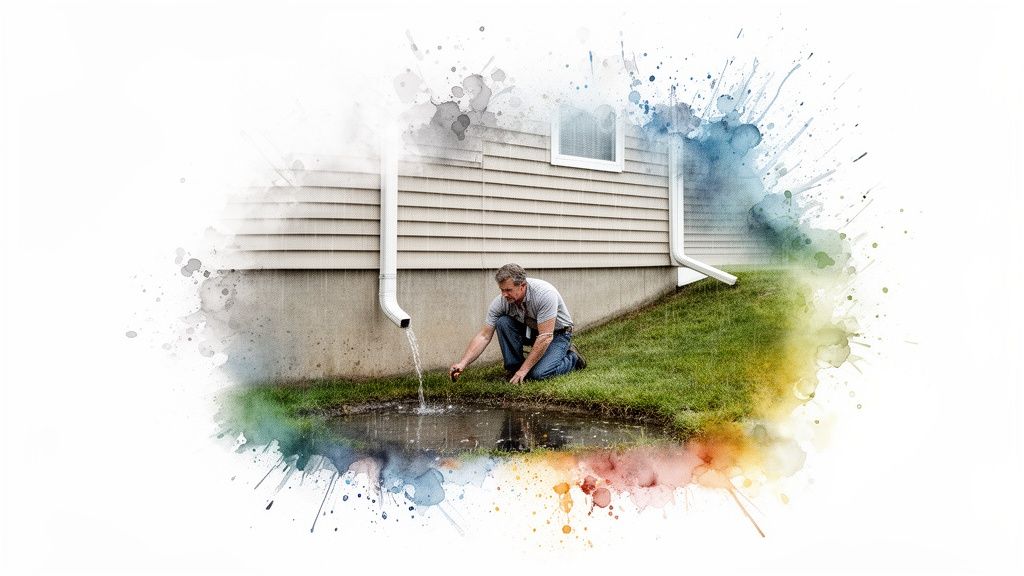
Do you see puddles forming within ten feet of your home's foundation? Are there soggy patches in the yard that never seem to dry out? These are clear signals that water isn't draining away from your home like it should be.
What to Look for on Your Property
Pay close attention to the slope of the ground right up against your house. If it looks like the dirt is tilting back toward your foundation, you've got a negative grade. That’s a huge contributor to water damage and foundation issues.
Also, check where your downspouts are discharging roof water. If they’re dumping it right at the base of your foundation, you’re inviting moisture problems into your home. It's also smart to think about what's underground; knowing how to find sewer lines and other utilities is important, as subsurface issues can cause surface problems.
While a visual check is invaluable, we now use advanced tools to get the full picture. Data modeling and sophisticated software can quantify flood risk with incredible accuracy, helping us design grading solutions perfectly calibrated for the flood profiles here on the Central Coast. A negative grade is a non-negotiable issue that demands a fix. See the serious consequences in our article on how poor grading can damage your foundation or driveway.
What Are the Most Effective Drainage and Grading Solutions?
Once you’ve pinpointed the trouble spots, it’s time to look at a professional grading fix for flood risk. Several battle-tested solutions can control water flow, and each one is designed to solve a specific drainage problem. Getting familiar with these options will help you understand how a professional develops a complete, customized plan for your property.
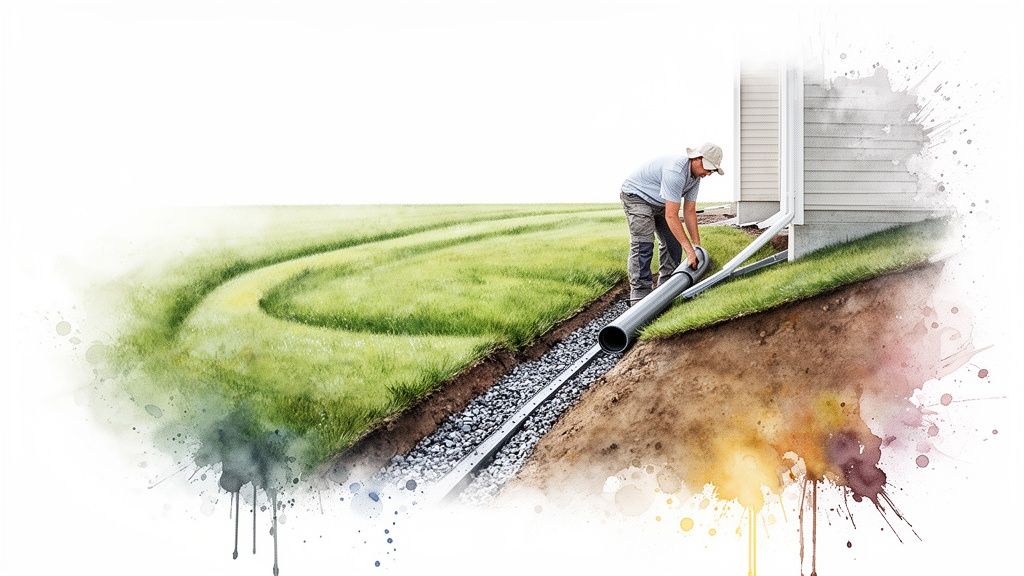
For surface water, a strategically placed swale is often the perfect fix. Think of it as a shallow, wide channel with gently sloping sides that intercepts water and guides it to a safe discharge point. If your lawn feels like a sponge, a French drain is an incredibly effective solution. It's a gravel-filled trench with a perforated pipe that collects excess groundwater and channels it away.
Common Grading and Drainage Methods
Choosing the right tool for the job is everything in excavation. Different problems require different solutions, and often, a combination of methods provides the best defense.
| Solution | Best For | Key Benefit |
|---|---|---|
| Swale | Redirecting surface water from gentle slopes or neighboring properties. | A natural-looking, low-impact way to guide runoff away from critical areas. |
| French Drain | Removing subsurface water from perpetually soggy lawns or around foundations. | Prevents soil saturation and relieves hydrostatic pressure against foundation walls. |
| Regrading | Correcting negative slopes that direct water toward a home's foundation. | Creates a positive slope to ensure water flows decisively away from the structure. |
| Retention Pond | Managing large volumes of stormwater on bigger properties or new developments. | Holds excess water during heavy rain, releasing it slowly to prevent flooding. |
Why Your Foundation Perimeter Is Critical
When water is pooling right next to your home, immediate action is essential. The soil within the first ten feet of your foundation is the most critical zone. We reshape it to create a positive slope, making sure water moves decisively away from your home's structure.
This isn't just pushing dirt around; it's about creating a precisely engineered slope that stops water infiltration dead in its tracks. You can find more practical advice and explore some easy grading and drainage tips to help visualize how these solutions work. Often, the best approach combines methods; learn more about fixing drainage and grading problems with a strategic, professional approach.
Should I DIY or Hire a Professional Grading Contractor?
It’s tempting to tackle a drainage problem yourself, and for some small-scale tasks, that’s perfectly fine. If you’re just extending a downspout or digging a shallow, decorative swale in a garden bed, a DIY approach can work.
But the line between a simple fix and a major project is thin. The moment your plans involve changing the actual slope of the ground near your foundation, you’ve crossed into professional territory. A mistake can have serious consequences.
The Risks of a DIY Grading Fix
Trying to regrade your property without the right experience is a huge gamble. The potential downsides aren't just inconvenient—they can be incredibly expensive.
- Making Things Worse: It's surprisingly easy to accidentally create a new low spot or reverse the slope, funneling water directly into your foundation.
- Creating Neighbor Problems: Redirecting water off your property sounds like a good idea until it floods your neighbor's yard, leading to damaged relationships and liability issues.
- Causing Structural Damage: Using the wrong equipment or digging in the wrong spot can destabilize the ground supporting your home, leading to foundation cracks.
Hiring a professional isn't just about getting access to an excavator. It's about bringing in expertise to protect your home's value. A small miscalculation can turn a drainage issue into a foundation catastrophe. A professional understands soil mechanics, knows local building codes, and can create a stable base, as explained in our guide to creating a professional building pad for a new structure.
What Is the Professional Grading Process?
Hiring an excavation contractor to fix a flood-risk grading problem can feel like a huge step, but a true professional follows a clear, straightforward process. It all starts with an on-site consultation where an expert walks your property, checks soil conditions, and sees the specific drainage issues firsthand.
From there, we develop a detailed grading plan. Today, experienced contractors use advanced tools like GPS grading systems to map out a solution with surgical precision. This engineered blueprint becomes the guide for everything that follows, from pulling permits in places like Monterey County to the actual earthmoving.
From Blueprint to a Finished Site
Once the plan is locked in and permits are in hand, the real work begins. Our operators use specialized machinery to carefully reshape the land exactly as planned, making sure every slope directs water safely away from your foundation.
The job isn't done when the machine shuts off. We make sure the site is thoroughly cleaned up, leaving your property safer and often looking better than when we arrived. This structured approach is designed to give you a permanent solution, not a quick patch job.
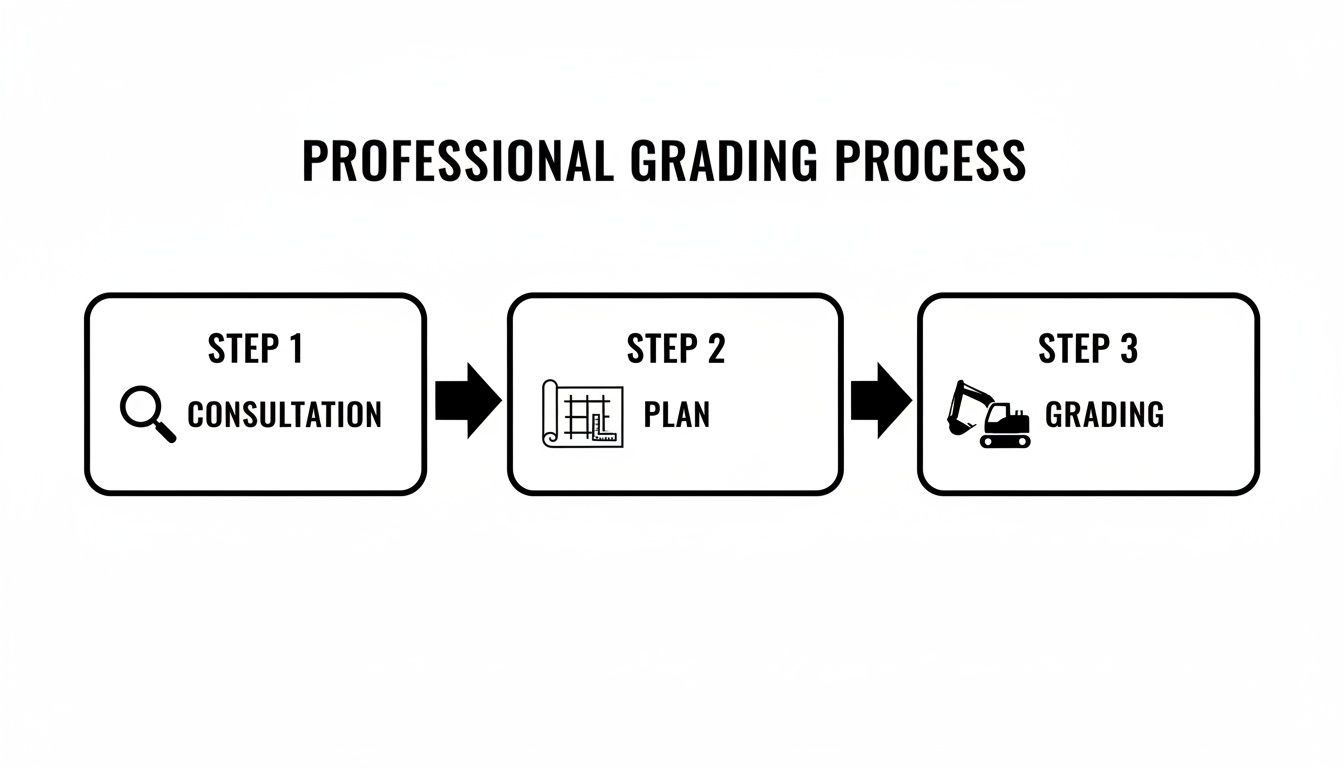
Successful grading is built on expert assessment and meticulous planning before any dirt gets moved. You can learn more about our approach by exploring our professional grading services on the California Central Coast. A professional grading fix for flood risk is a systematic process that replaces guesswork with data-driven planning and precise execution.
Frequently Asked Questions About Grading for Flood Risk
How much slope do I need to drain water away from my house?
The ground should slope away from your foundation at a minimum of one-quarter inch per foot for the first 10 feet. This gentle grade is incredibly effective at moving surface water away from your home's structure. Anything flatter invites water to hang around and cause trouble.
Can bad grading really cause foundation problems in California?
Absolutely. It's one of the most common causes of serious structural damage we see in Sonoma and Monterey counties. When water pools against your foundation, it creates enormous hydrostatic pressure that can lead to cracks, leaks, and eventually, significant foundation failure.
Will a professional grading fix ruin my landscaping?
A professional excavation contractor knows your landscaping is a huge part of your home's value and always aims to minimize disruption. While some plants might need to be temporarily moved and replanted, a well-designed grading plan integrates with your existing yard. Often, the improved drainage leads to a healthier landscape.
Do I need a permit for a yard grading project in my area?
It depends on the scale of the project and your local city or county rules. Minor adjustments probably won't require a permit. However, if you're planning significant earthmoving or making changes that could affect your neighbors' drainage, you almost certainly will. A reputable contractor will handle the entire permitting process for you.
What's the difference between a swale and a French drain?
A swale is a shallow, landscaped channel on the surface designed to redirect rainwater runoff. A French drain is a subsurface solution—a perforated pipe in a gravel-filled trench—that collects and removes groundwater from soggy soil. They solve two different types of water problems.
Ready to stop worrying every time it rains? At DW Excavation, LLC, we blend engineering know-how with hands-on experience to create grading solutions that last. Contact us today for a professional site assessment.