Everyone wants pavement that lasts. The problem is, most contractors focus on the wrong thing: the shiny black topcoat.
While you’ll hear plenty of generic tips about sealcoating, the real secret to avoiding cracks and potholes isn't on the surface. True pavement longevity comes from an engineered foundation built on proper site grading, soil compaction, and smart drainage—the factors most providers fail to address.
The Hidden Weakness in Most Paving Projects
Paving conversations almost always center on the asphalt itself. You'll hear contractors talk about cost-effective paving or using "hot mix," showcasing a fresh, black surface as the main deliverable.
Those things aren't wrong, but they completely sidestep what’s happening underground. The truth is, that's where nearly all pavement failures begin. Without a solid, well-drained foundation, even the best asphalt is destined for an early grave.
Shifting Focus From Surface to Structure
At DW Excavation, we don’t see grading, drainage, and paving as separate tasks. We treat them as one integrated system designed to protect your investment for decades.
Before a single paver rolls onto your property, we assess the slope, subsoil, and stormwater flow. This engineering-first approach prevents water pooling, surface cracks, and sinking—saving you thousands in future repairs.
The difference is staggering. Pavement with proper grading and base preparation can last 20+ years, while poorly prepped surfaces degrade in just 5–10 years [Federal Highway Administration, 2021]. To see what else goes into a project built to last, take a look at the truth about excavation projects most contractors don’t tell you.
Surface-Level Fixes vs. Foundational Solutions
Too often, paving is treated like a cosmetic fix. But a truly durable surface requires a deep, structural solution.
| Factor | Standard Paving (Surface-Focused) | Integrated Paving (Foundation-Focused) |
|---|---|---|
| Primary Goal | Achieve a smooth, black topcoat quickly and affordably. | Build a durable, long-lasting pavement system. |
| Initial Focus | The quality and thickness of the asphalt layer. | Soil stability, water drainage, and proper grading. |
| Typical Lifespan | 5-10 years before major repairs are needed. | 20+ years with standard maintenance. |
| Common Issues | Alligator cracking, potholes, sinking, and water pooling. | Minimal issues; surface remains stable and even. |
| Long-Term Cost | Lower initial cost but high lifetime cost due to frequent repairs. | Higher initial investment but significantly lower lifetime cost. |
Focusing on the foundation isn't just about doing the job right—it's about protecting your investment and preventing future headaches.
Why a Foundation-First Approach Matters in California
When you adopt a foundation-first mindset, you stop the most common pavement problems before they ever start. Our engineered approach prevents water from pooling, stops cracks before they can form, and eliminates the sinking that plagues so many properties.
This doesn't just save you thousands in future repairs; it significantly boosts your property's value. In Sonoma and Monterey County, where rainfall and shifting soils are common, smart grading isn't just a best practice—it's essential. It’s not just about asphalt; it’s about the site engineering that protects it.
Why Your Pavement's Foundation Is Everything
Think of your new driveway like a house—it’s only as strong as the foundation it’s built on. Even the most flawless asphalt surface will crack and sink if the ground beneath it is weak.
The science behind what makes pavement last starts long before the first truckload of asphalt arrives. It all begins with the subgrade—the native soil that acts as the ultimate base. If this layer isn't handled correctly, every layer on top is doomed from the start.
Starting with the Subgrade
Any paving project worth its salt begins with a serious look at the existing soil. Here in Sonoma and Monterey Counties, we see everything from expansive clays that swell with moisture to loose loams that shift under pressure.
We start by assessing the soil’s composition to create a stable, uniform platform that won't shift later.
This critical first step involves a few non-negotiables:
- Stripping Unsuitable Material: We haul away topsoil, organic matter, and any soft dirt that can't be compacted into a solid base.
- Achieving Optimal Moisture: We either add water or let the soil dry to hit the right moisture level for maximum compaction.
- Compaction: Using heavy rollers, we methodically densify the soil, squeezing out air pockets and dramatically increasing its strength.
Cutting corners on these steps is a guaranteed recipe for premature failure, no matter how thick a layer of asphalt you put on top.
Building a Rock-Solid Aggregate Base
Once the subgrade is compacted, we build the aggregate base. This layer of crushed rock is the pavement's primary structural support system.
A well-built aggregate base is the unsung hero of a durable pavement system. It transfers loads from the surface down to the subgrade and channels water away, preventing the soil saturation that destroys asphalt from below.
Using precise GPS grading technology, we shape this rock foundation to create the perfect slope for water runoff. This ensures water never gets trapped inside the pavement's structure, where it can do the most damage. To learn more about creating a stable base, check out our guide on what is a building pad.
This diagram shows how these essential layers work together.
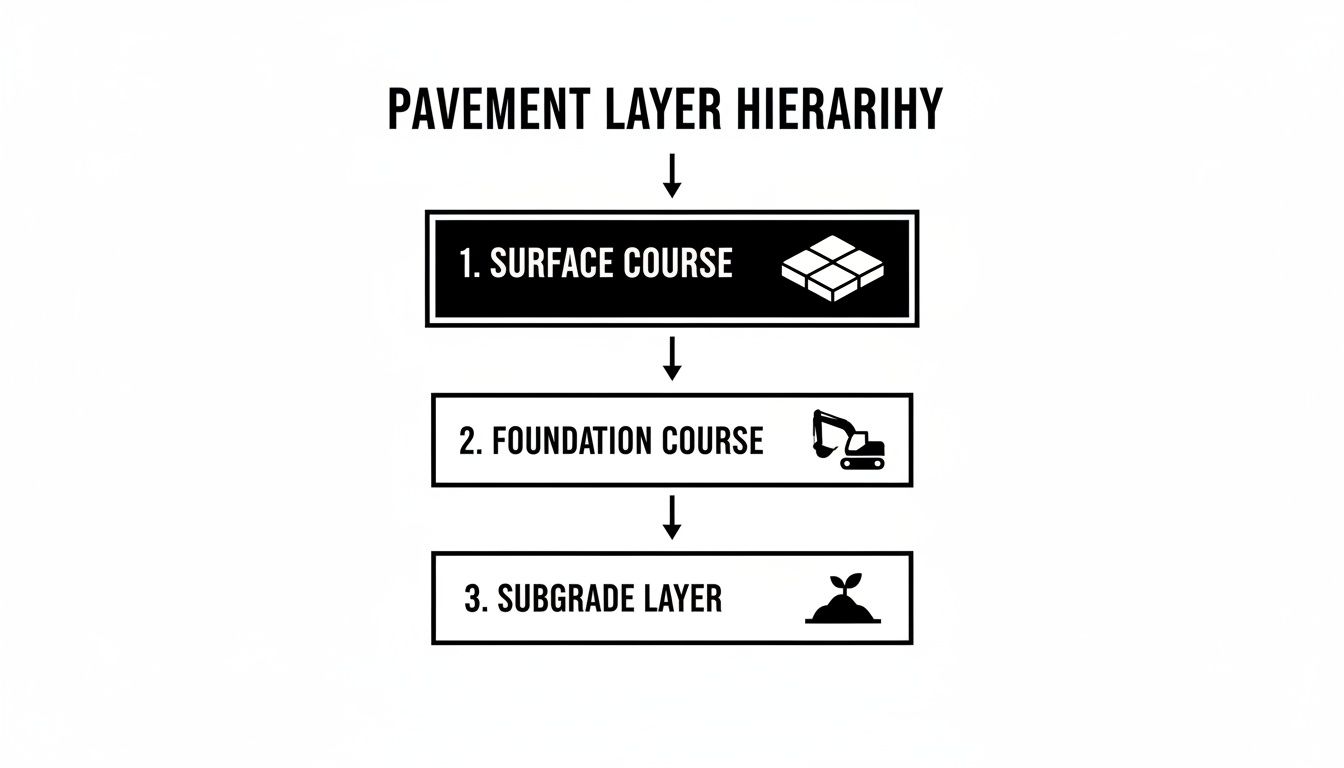
As you can see, the blacktop you drive on is just the tip of the iceberg. Investing the time and expertise into these unseen layers is what separates a 5-year pavement job from a 20-year asset.
The Critical Role of Smart Drainage Design
If the subgrade and base are the skeleton of your pavement, a smart drainage plan is its circulatory system. Uncontrolled water is the number one enemy of pavement longevity.
A proactive drainage strategy isn't a "nice-to-have"—it's non-negotiable, especially on the California Central Coast. Seasonal downpours can turn stable ground into a soft, unsupportive mess. This is what really makes pavement last.
A Multi-Layered Defense Against Water Damage
An effective drainage system uses several components working together to protect the entire pavement structure.
Here are the key solutions we rely on:
- Precise Surface Grading: This is your first line of defense. By engineering a gentle but consistent slope (typically around 2%), we use gravity to force rainwater off the asphalt before it can seep in.
- Bioswales and Catch Basins: These strategically placed channels catch runoff, slow it down, filter out pollutants, and guide water safely into the main stormwater system.
- Subsurface Drains: Underground systems like French drains are crucial. They act as interceptors, capturing groundwater before it can ever weaken the aggregate base and subgrade.
Protecting your investment goes far beyond surface-level fixes. A professional French drain installation can be one of the most important components of your project's long-term defense.
How to Counteract Hydrostatic Pressure
One of the most destructive forces acting on your pavement is hydrostatic pressure. This is the powerful upward force exerted by groundwater trapped beneath the pavement.
This constant pressure leads to heaving, bulging, and severe cracking that originates from the bottom up. The only way to stop this silent destroyer is with a well-designed drainage system that relieves pressure before it builds.
Without proper drainage, you're letting water attack your pavement from every angle. A smart drainage plan ensures the foundation you invested in stays dry, stable, and strong for its entire service life.
In Sonoma and Monterey Counties, managing both surface and subsurface water is absolutely essential. You can see how we tackle local water challenges in our guide on how grading can fix your property’s flood risk. This integrated approach is how you build pavement that's not just made to look good, but engineered to endure.
Choosing the Right Materials for Lasting Results
Once you have a rock-solid, well-drained foundation, the spotlight turns to the pavement itself. The right blend of aggregate (stone) and asphalt binder is what will ultimately stand up to years of Sonoma County traffic and Central Coast weather.
It’s never about just laying down generic blacktop. A residential driveway in Monterey has completely different needs than a heavy-duty commercial lot, and the material selection has to reflect that.
The Power of Recycled Asphalt Pavement (RAP)
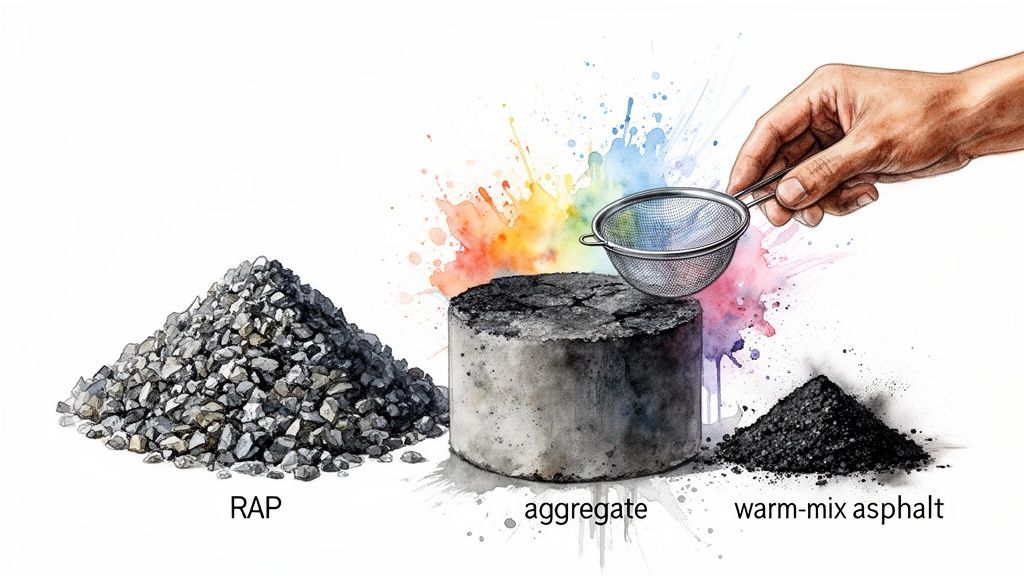
Modern paving is getting smarter and more sustainable, and one of the biggest leaps forward is recycled asphalt pavement (RAP). This isn't just an eco-friendly trend; it's a structurally superior choice.
According to the National Asphalt Pavement Association, an incredible 99% of reclaimed asphalt is reused in new pavement mixes [NAPA, 2023]. When properly processed, RAP can create a new mix that is often stronger and more resilient than one made entirely from new materials.
We often recommend RAP because it keeps waste out of landfills and lowers a project's carbon footprint. To get a better handle on this, check out our guide on why recycled asphalt is now the standard in California paving.
Innovations in Asphalt Technology
Beyond recycling, advancements like warm-mix asphalt (WMA) are making pavement surfaces stronger and longer-lasting.
Warm-mix asphalt is produced at lower temperatures than traditional hot-mix, which cuts down on energy use and emissions. More importantly, it allows for better compaction on the job site. The result is a denser, more durable pavement that’s far less vulnerable to water damage.
This improved workability means we can achieve superior density even on cooler days, which extends the paving season and guarantees a higher-quality finish.
Engineering the Perfect Mix for Your Project
Ultimately, the goal is to engineer the perfect asphalt mix for each specific job. This means getting all the components just right for its intended use.
- Aggregate Size and Shape: The crushed stone in the mix needs to be angular and properly graded to lock together, creating a strong, stable skeleton.
- Asphalt Binder Grade: The liquid asphalt that glues the aggregate together must be selected based on our local climate to resist cracking in the cold and rutting in the summer heat.
When you combine a precisely engineered subgrade with the right, high-quality materials, you get an integrated system that’s truly built to endure.
How Proactive Maintenance Protects Your Investment
Even the most perfectly engineered pavement needs a smart maintenance plan. Once you’ve built a solid subgrade and used the right asphalt mix, the job isn't over; the focus shifts from building to preserving.
Simple treatments like crack sealing and sealcoating become your secret weapons when applied to pavement with a strong foundation. They stop water—pavement's number one enemy—from seeping through the surface and compromising the base layers.
Why Prevention Is Better Than Repair
It's a common mistake to think maintenance is only for things that are already broken. The best maintenance happens before you see problems.
By the time you see a network of cracks, water has already started its destructive work on the foundation below. A proactive approach is all about keeping that top surface sealed and watertight, ensuring the structural layers stay dry and stable.
Key Proactive Maintenance Strategies
To keep your pavement in top shape, a few key strategies make a huge difference. These tasks are simple but have an outsized impact on longevity.
- Crack Sealing: The second a small crack appears, it’s an open door for water. Sealing it immediately with a flexible, rubberized material stops water before it can weaken the base.
- Sealcoating: Applying a high-quality sealcoat every 3-5 years is like putting sunscreen on your asphalt. It protects the surface from damaging UV rays and adds another waterproof barrier.
- Regular Cleaning: Keeping the pavement clear of dirt and leaves is also crucial. Debris can trap moisture against the asphalt, and plant roots can wedge their way into tiny crevices, forcing them open.
These steps form a powerful defense system that keeps the integrity of your initial investment intact for decades.
How Early Action Maximizes Pavement Lifespan
The data backs this up. Studies show that preservation treatments applied early in a pavement's life can dramatically extend its service. Timely asphalt overlays and seals on busy roads can add 10-15 years or more to their lifespan [FHWA, 2021]. You can discover more research on pavement preservation strategies and see the data for yourself.
Here in Monterey County, where winter storms can dump a lot of rain, a well-maintained surface is your best defense. For more on preparing for wet weather, check out our article on the 5 reasons to schedule pipe repair in Monterey before the next storm hits.
Frequently Asked Questions About Pavement Longevity
1. How does proper grading save me money in the long run?
Proper grading prevents water from pooling on your pavement and seeping into its foundation. This stops the root cause of cracks, potholes, and sinking, saving you thousands in costly repairs and extending the pavement's lifespan from 5-10 years to over 20 years.
2. Can you just pave over my old, cracked driveway?
Paving over a failing driveway is a temporary fix that wastes money. If the foundation is weak, the same cracks and dips will reappear within a year or two. We diagnose the root cause—usually poor drainage or subgrade—and fix the foundation first for a permanent solution.
3. What is the best time of year for paving in Sonoma or Monterey County?
The ideal time for paving in our climate is during the dry, warm months, typically from late spring to early fall. Warm temperatures and low moisture allow the asphalt to compact correctly and cure into a strong, durable surface that will last for decades.
4. Why is soil compaction so important for my pavement?
Soil is the ultimate foundation for your pavement. If it's not properly compacted, it will shift and settle under the weight of vehicles, causing the asphalt above to sink and crack. We compact the subgrade to create a dense, stable platform that won't move.
5. Do I need a permit for a new driveway in California?
Permit requirements vary by city and county, but you will likely need one if your project involves a new curb cut, alters drainage, or exceeds a certain size. We help our clients in Sonoma and Monterey navigate local regulations to ensure the project is fully compliant and avoids fines or delays.
Ready to build a paving project that’s engineered to last? At DW Excavation, LLC, we know that durability starts from the ground up. Contact us today for a consultation and see what a difference an engineering-first approach can make.