If you're mapping out a paving project, the ground is shifting beneath our feet. The year 2026 isn't just another date on the calendar—it's shaping up to be a genuine turning point for eco-friendly paving, moving it from a niche "green" option to a mainstream necessity. A perfect storm of new rules, smarter materials, and changing expectations is converging to make sustainable practices the new standard.
This trend is reshaping how public agencies and eco-aware homeowners choose contractors. Low-bid paving jobs without sustainability considerations are losing favor to those that include recycled materials and drainage-smart grading practices.
Why Paving Standards Are Shifting in 2026
For a long time, eco-friendly paving was a "nice-to-have." By 2026, that's changing. It's becoming a must-have for contractors, developers, and homeowners across California.
Simply ignoring this shift isn't an option anymore—it means getting left behind. For any project on the Central Coast, from Sonoma County down to Monterey County, failing to adapt could mean non-compliant driveways or losing out on public works bids. The timeline below shows just how quickly this is moving from a niche trend to the new industry standard.
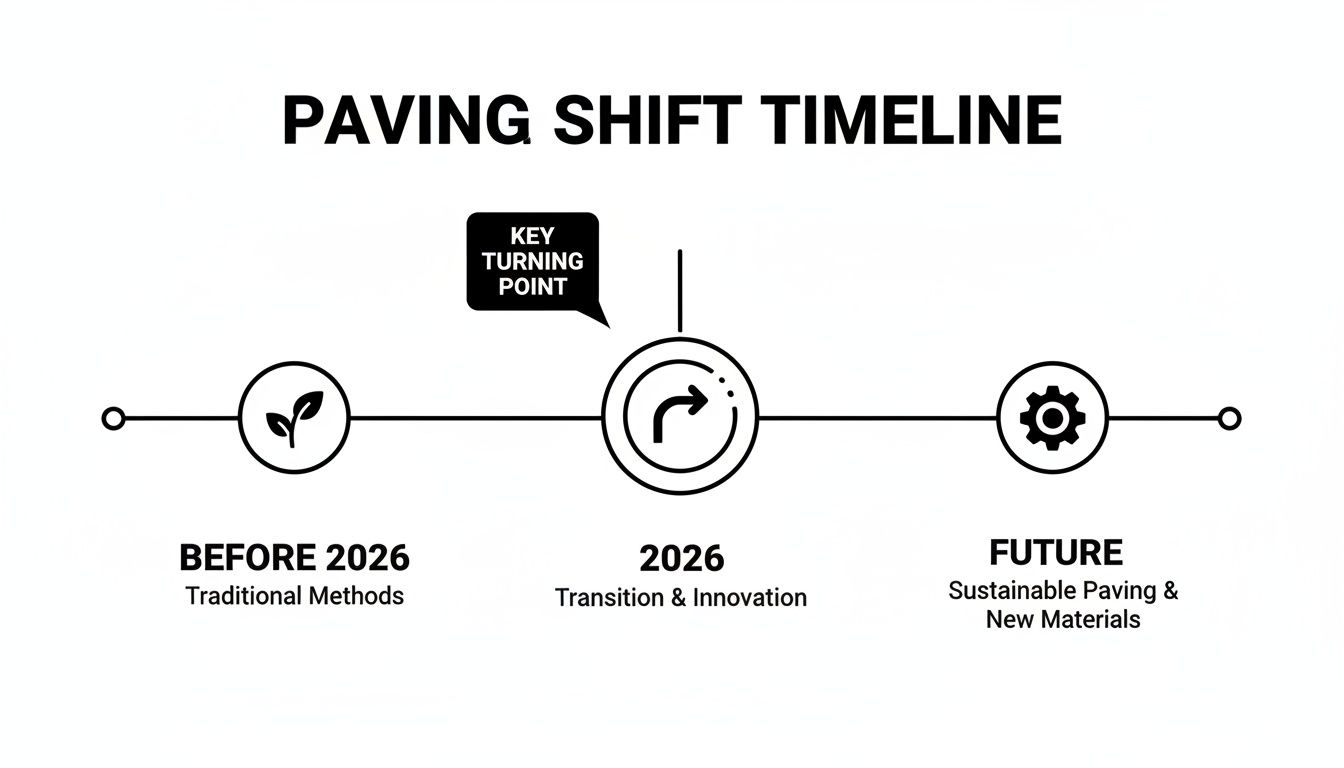
As you can see, 2026 is the accelerator. It’s the year when sustainable materials and forward-thinking methods go from being ideas to being the way things are done.
What Key Drivers Make 2026 a Paving Turning Point?
This isn't just about feeling good about the environment; powerful economic and regulatory forces are driving this change. To help break it down, we’ve put together a table summarizing the four main factors making 2026 so important.
| Driver | Impact in 2026 | What This Means for Your Project |
|---|---|---|
| Tougher Regulations | California's new mandates and procurement timelines make eco-friendly designs and materials a requirement for project approvals and permits. | Non-compliance isn't an option. Your project must meet new standards for recycled content and stormwater management to get the green light. |
| Material & Tech Advances | Solutions like warm-mix asphalt, bio-asphalts, and permeable pavers are now more accessible, cost-effective, and reliable than ever before. | You have better, more durable options that also happen to be good for the environment. These aren't experimental—they're proven performers. |
| New Funding Cycles | Federal and state infrastructure grants are increasingly tied to sustainability metrics, rewarding projects that prioritize green practices. | Adopting eco-friendly methods can actually help you secure funding and incentives, lowering your overall project cost. |
| Smarter Client Demand | Homeowners and developers now see sustainable features as a mark of quality and a long-term investment, not just a bonus. | A "green" driveway or parking lot is a major selling point that boosts property value and appeal. It's what savvy buyers are looking for. |
These forces are working together to reshape the industry. A contractor who still just lays down blacktop without thinking about the bigger picture is going to find themselves on the outside looking in.
Breaking Down the Forces Driving Change
Let's dig a little deeper into these drivers. Clients—both public and private—are asking tougher questions now. They want to know what's in the asphalt and how it's being installed.
Here’s a closer look at the core factors pushing this change:
- Regulatory Pressure: California is leading the charge with new rules demanding more eco-conscious materials and stormwater-friendly grading. Low-impact designs and recycled content are fast becoming prerequisites for getting a permit.
- Material Innovation: Technologies like warm-mix asphalt and bio-asphalts are finally hitting the mainstream. In fact, current data shows 99% of reclaimed asphalt pavement (RAP) is now reused in new roads, and California is pushing for even more [NAPA, 2025].
- Shifting Client Demands: Today’s homeowners and developers are environmentally aware and expect sustainable options. A project's green credentials are no longer just a footnote; they are a critical part of its quality and value. You can learn more about what homeowners should be asking for in our guide to 5 smart paving trends California homeowners should know in 2026.
At DW Excavation, we stay ahead of these changes by integrating grading, paving, and eco-conscious material sourcing. This not only helps clients meet sustainability goals but also extends pavement life and reduces long-term maintenance.
Exploring the New Wave of Green Paving Materials
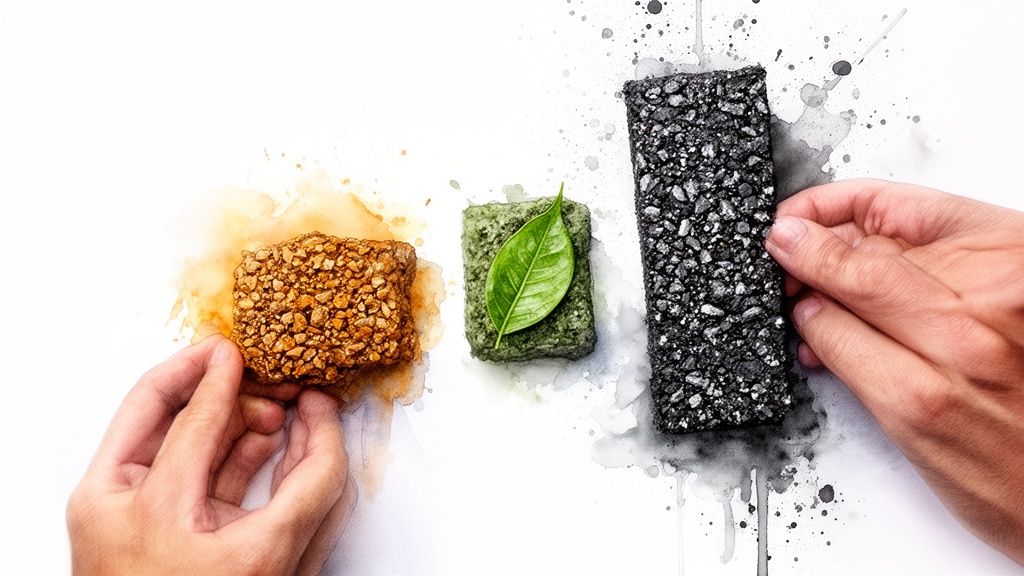
When people hear "eco-friendly paving," their minds often go straight to recycled asphalt. While that’s a huge part of the story, the real innovations set to become mainstream by 2026 go much deeper.
These new materials are already transforming how we build surfaces, from rural driveways in Sonoma County to public roads in Monterey County. The broader paving asphalt market is quickly shifting toward these practices, with a global market that hit $35,788 million in 2025 and is projected to climb to $49,462.7 million by 2033 [Cognitive Market Research, 2025]. This isn't a fad; it's a fundamental change driven by performance and regulations. You can dig into the numbers in this paving asphalt market report from Cognitive Market Research.
Beyond Simple Recycling: Warm-Mix and Bio-Asphalts
The most significant game-changer right now is warm-mix asphalt (WMA). Traditional hot-mix asphalt is produced between 300-350°F, but WMA can be made at just 200-250°F. This simple change drastically cuts fuel consumption and greenhouse gas emissions.
Another exciting frontier is the development of bio-asphalts. These materials use organic, non-petroleum-based binders derived from sources you wouldn't expect:
- Tree resin
- Molasses
- Vegetable oils
Using these renewable binders reduces our reliance on fossil fuels and often comes with a much lower carbon footprint.
The Power of Reclaimed and Recycled Content
Using reclaimed materials does more than just divert waste from landfills—it often creates a superior final product. This is where expertise in material science and application becomes absolutely critical.
A common misconception is that recycled materials compromise on quality. In reality, modern techniques for incorporating Reclaimed Asphalt Pavement (RAP) can produce surfaces that are more flexible and longer-lasting than those made with 100% virgin materials.
Reclaimed Asphalt Pavement (RAP) is the cornerstone of green paving. According to the National Asphalt Pavement Association, over 99% of reclaimed asphalt is reused in new pavement mixes, making it America’s most recycled material [NAPA, 2025]. This practice saves landfill space and reduces the need for new oil and aggregates. We cover this in more detail in our article explaining why recycled asphalt is now the standard in California paving.
Real-World Benefits for California Projects
For property owners on the California Central Coast, these material advancements offer tangible advantages. Choosing a contractor who understands how to properly source and apply these materials is key.
At DW Excavation, we integrate these advanced materials into our paving projects. This ensures you get a surface that is not only compliant and eco-friendly but also engineered for a longer, lower-maintenance lifespan.
How New Regulations and Funding Are Forcing the Change
Wondering what’s really pushing the construction industry toward eco-friendly paving? It’s a seismic shift driven by new regulations and financial pressures that are making 2026 a make-or-break deadline.
Sustainable practices are becoming a non-negotiable requirement for getting projects approved, funded, and built. The push is coming from the top down. California state mandates, along with new cycles of federal infrastructure funding, are creating a powerful combination of incentives and strict new rules for paving.
This new reality is starting to shut the door on contractors who haven't adapted. The old days of winning a public works contract just by being the lowest bidder are numbered. Today, a bid that ignores sustainability is often disqualified from the start.
The Public Sector Ripple Effect
This government-led initiative is creating a massive ripple effect that's already spilling over into the private market. When public works projects set a new bar, developers, builders, and homeowners quickly take notice.
Ignoring these evolving codes in places like Sonoma or Monterey County can lead to costly project delays or outright permit rejections.
Why Green Paving is Now a Qualification
The real takeaway here is that this shift isn't just about "going green." It's about being qualified to even bid on a project. Contractors who can demonstrate expertise in sourcing and applying recycled materials now have a decisive competitive advantage.
By 2026, the ability to meet green paving specifications will be a baseline requirement, not a bonus feature. This creates a clear gap in the market. Contractors who still treat grading and paving as separate tasks—or who ignore recycled content—risk being disqualified from bids or missing private clients who now ask: “Is this a green project?”
The Market Proves the Momentum
The financial markets are reflecting this unstoppable momentum. The eco-friendly asphalt market, valued at $2.5 billion in 2024, is on track to hit $4.8 billion by 2033 [GlobeNewswire, 2024].
This growth is fueled by real-world applications proving these materials are ready for prime time. As these technologies become standard, the infrastructure beneath our feet is becoming just as important as the structures above—a trend we're also seeing in underground utilities. For a deeper dive, read our analysis on why 2026 is a breakout year for underground pipe repairs.
For projects here on California's Central Coast, adapting to these changes isn't just smart; it's essential for survival. At DW Excavation, we help our clients navigate these evolving codes and expectations, ensuring their projects are built to last and pass inspection.
The Economic Shift That Makes Green Paving Affordable
For years, the biggest roadblock for eco-friendly paving was cost. Many people still assume that “green” means “expensive.” But the entire economic landscape is shifting, and by 2026, sustainable paving will often be the most financially savvy choice.
This isn’t a feel-good trend. It's a change driven by hard numbers and powerful market forces. The price of virgin materials like aggregates is climbing, and so are landfill fees. Suddenly, using recycled materials isn’t just an environmental decision; it’s a smart business one.
How Recycled Materials Lower Upfront Costs
The most immediate way green paving saves you money is by using Reclaimed Asphalt Pavement (RAP). According to the National Asphalt Pavement Association (NAPA), reusing just one ton of RAP saves about 1.5 tons of virgin material.
That creates a clear financial win. When a contractor like DW Excavation sources high-quality RAP for a project in Sonoma or Monterey County, we pass those material savings directly on to you.
Long-Term Savings from Smarter Design
The financial perks of sustainable paving go way beyond the initial installation. Modern eco-friendly surfaces are engineered to be tougher and cheaper to maintain over their lifetime.
- Increased Durability: Materials like rubberized asphalt create a more flexible surface that resists cracking. That means fewer expensive repairs down the road.
- Reduced Maintenance: Permeable paving systems let water drain straight through the surface, which reduces the freeze-thaw stress that causes potholes and cracks.
- Integrated Stormwater Management: A well-designed permeable driveway or parking lot can eliminate the need for a separate, costly drainage system like French drains or catch basins.
A smart initial investment in an eco-friendly system with proper grading is almost always cheaper than the total cost of a traditional surface that needs constant repairs and a separate drainage system.
Cost Comparison: Traditional vs. Eco-Friendly Paving
To really see this economic shift in action, let’s compare the costs for a typical residential driveway project. This simple breakdown shows why looking only at the initial price tag can be misleading.
| Cost Factor | Traditional Asphalt | Eco-Friendly Paving (with RAP & Permeable Design) |
|---|---|---|
| Initial Material Cost | Higher due to 100% virgin materials and rising aggregate prices. | Lower due to incorporating cost-effective recycled asphalt pavement (RAP). |
| Installation Labor | Standard labor costs for paving and grading. | Similar labor costs, with a focus on specialized grading for drainage. |
| Separate Drainage System | Often Required. May need additional costly trenches, pipes, or drains. | Often Eliminated. The permeable surface and grading manage water on-site. |
| Long-Term Maintenance | Higher. Prone to cracking and requires regular sealing. | Lower. Increased flexibility and better drainage reduce wear and tear. |
| Total Lifetime Cost | Higher due to ongoing repairs and potential drainage system expenses. | Lower due to upfront material savings and reduced long-term upkeep. |
The smart money is moving toward sustainable solutions. At DW Excavation, our engineering-first approach ensures your project not only meets the new 2026 standards but also delivers the best possible long-term value.
Why Your Paving Project Starts with Smart Grading
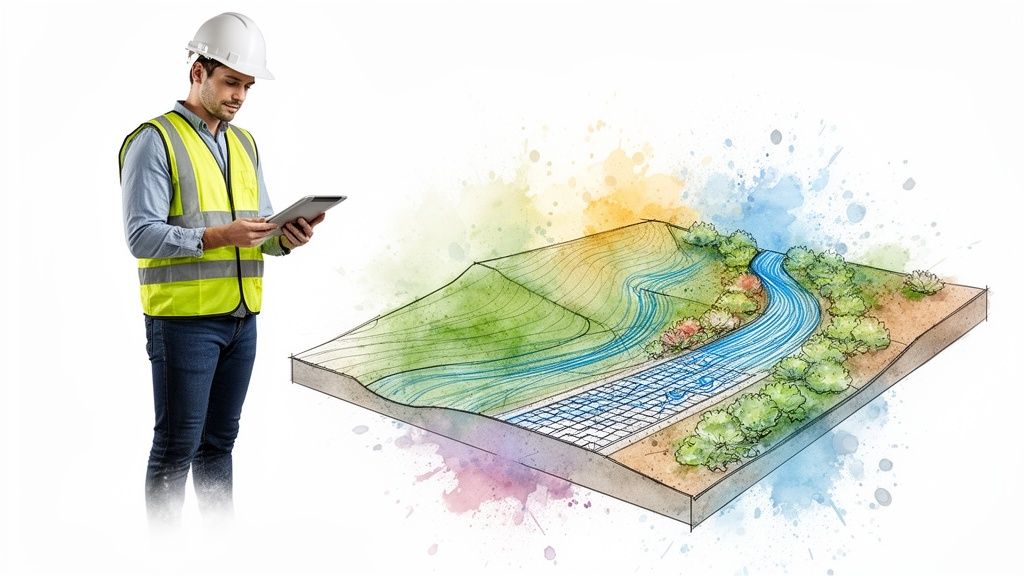
A beautiful, long-lasting driveway is only as good as the ground it’s built on. As we move toward the new standards of 2026, the link between modern paving materials and proper grading has become absolutely critical.
For years, many contractors treated grading and paving as two separate jobs. That old-school approach is a recipe for disaster with today’s advanced eco-friendly paving systems.
The Inseparable Link Between Grading and Paving
Modern materials, especially permeable pavers, simply don't work without an integrated plan. The success of these systems hinges entirely on what’s happening underneath. Without precise grading, a permeable surface can fail spectacularly, leading to water pooling, erosion, and premature cracking.
A low-bid paving job that skimps on site prep isn't a bargain anymore; it’s a future liability. Homeowners and developers across Sonoma and Monterey counties are learning that a successful project demands a contractor who understands the entire system.
How Expert Grading Prevents Common Paving Failures
Proper grading is a technical discipline that shapes the land to control water—the number one enemy of any paved surface. A smart, engineering-focused grading plan is your best defense against the most common paving problems:
- Water Pooling: Precise slopes get rid of standing water, which causes cracks and potholes.
- Erosion and Washouts: Smart grading stabilizes the sub-base, making sure heavy rains don't wash away the foundation of your driveway.
- Foundation Damage: By directing water away from your house, proper grading protects your home’s foundation from water damage.
Many homeowners ask us about this crucial first step. If a new driveway is on your radar, you can learn more in our guide that answers the question, “Do I need grading before I repave my driveway?”. Understanding this integrated process is fundamental.
We don't see grading and paving as separate tasks. We see them as two halves of a single, engineered solution. Our process always starts with a grading plan that perfectly supports the paving material you choose.
Building for the Future on a Solid Foundation
As California continues to push for more eco-conscious building, the gap between forward-thinking contractors and those stuck in old habits will only get wider. By 2026, clients won't just hope for a paving contractor who understands site work—they'll expect it.
Choosing a partner who masterfully integrates grading and paving is the smartest way to future-proof your investment. At DW Excavation, we build from the ground up to make sure your project is ready to pass the 2026 test with flying colors.
How to Prepare Your Project for the New 2026 Standard
Getting ahead of the new 2026 paving standards doesn't have to be complicated. It really comes down to a simple shift in mindset: moving from short-term savings to long-term value.
This change starts by asking better questions before a single shovel hits the ground. Instead of just asking for the cheapest bid, you should be asking about the specific materials and methods that will make your project compliant, durable, and sustainable.
A Practical Checklist for Future-Proof Paving
The best way to guarantee your project is ready for what's next is to build sustainability into your specifications from the beginning. Here are the essential questions to ask your contractor to make sure you're on the right track:
- What percentage of recycled content, like RAP, will be used in the asphalt mix? A modern contractor should be aiming for a high percentage to cut down on both costs and environmental impact.
- How will the grading plan manage stormwater on-site? You want to hear about solutions that prevent runoff and protect your foundation, like designs incorporating permeable pavers.
- What is your experience with warm-mix asphalt or other low-emission technologies? Their answer will tell you if they're committed to modern, eco-friendly installation methods.
- Can you provide a long-term maintenance plan? A quality job should come with clear guidance on how to maximize its lifespan.
Thinking about these details early on is critical. To see how these specifications fit into the larger project framework, check out our guide on what a site plan is and who can help you make one.
Why Your Choice of Partner Matters More Than Ever
The sustainable paving market isn't just growing—it's exploding. Projections show the eco-friendly asphalt pavers market is set to hit an incredible $24.9 billion by 2033, growing at a compound annual rate of 25.60% [HTF Market Intelligence, 2024]. You can read the full research on the eco-friendly pavers market to get the full picture.
This means 2026 is the tipping point where these technologies go from being niche options to the industry standard. This change is creating a huge gap between contractors who are ready for the future and those who are stuck in the past.
For paving and grading projects in Sonoma and Monterey County, DW Excavation helps you meet evolving codes and expectations—without sacrificing quality or budget. Let’s build smarter, longer-lasting surfaces that pass the 2026 test.
Frequently Asked Questions About Eco-Friendly Paving
Why is 2026 considered a turning point for paving?
The year 2026 is a convergence point for several key factors. New California regulations demanding higher recycled content and better stormwater management become standard, new cycles of federal funding prioritize green projects, and advanced materials like warm-mix asphalt become more cost-effective and widely available.
Is eco-friendly paving more expensive in California?
Not necessarily. While some advanced permeable systems can have higher upfront costs, using recycled asphalt pavement (RAP) is often cheaper than using 100% virgin materials. Furthermore, an eco-friendly design that manages stormwater on-site can eliminate the need for a separate, expensive drainage system, lowering the total project cost.
How does proper grading help my paved driveway last longer?
Proper grading is the foundation of a long-lasting driveway. It ensures water drains away from the surface and your home's foundation, preventing water pooling that leads to cracks, potholes, and erosion. For eco-friendly permeable systems, precise grading is essential for the system to function correctly and manage water effectively.
What are the main benefits of using recycled asphalt?
Using recycled asphalt pavement (RAP) offers significant benefits. It lowers project costs by reducing the need for new materials, conserves natural resources, and saves landfill space. From a performance standpoint, modern asphalt mixes with high RAP content can be more flexible and resistant to cracking than traditional asphalt.
What should I ask a contractor about their eco-friendly paving practices?
To ensure a contractor is truly qualified, ask specific questions. Ask for the exact percentage of recycled content they will use in the asphalt mix. Inquire about their experience with permeable pavers and ask to see their grading plan for managing stormwater. A knowledgeable contractor should provide clear, transparent answers.
Ready to make sure your next paving project is built for the future? The experts at DW Excavation, LLC combine smart grading with sustainable materials to deliver surfaces that are tough, compliant, and cost-effective. Contact us today for a consultation.