
If your yard floods or water pools near your home after rain, the grading around your house may be to blame. Many homeowners don’t realize that poor slope or soil prep during construction can lead to serious drainage problems, but the short answer is a resounding yes, poor grading can cause devastating damage.
Think of your home’s grading as its first line of defense—when it’s done right, it sheds water away harmlessly. But when it's wrong, sloping toward your house instead of away, it’s like aiming a firehose at your foundation and driveway. This constant flow of water saturates the soil, creating immense pressure that weakens everything it touches and leads to the kind of structural damage that costs a fortune to repair.
Why Poor Grading Is a Silent Home Killer
Most homeowners never give the gentle slope of their yard a second thought, but it's one of the most critical factors protecting their entire property. Proper grading is simply the art of shaping the land so that rainwater flows away from your home and other structures. When this is overlooked or done incorrectly, water becomes a relentless, destructive force.
The physics are straightforward: water always follows the path of least resistance. A negative grade, where the land slopes toward your home, funnels every single drop of rain straight to your foundation walls. This soaks the surrounding soil, causing it to expand and exert incredible hydrostatic pressure. Over time, this constant force will crack concrete, bow basement walls, and create leaks that lead to mold, rot, and structural decay.
The Double Threat: Foundations and Driveways
For driveways, the damage comes from erosion. Water pooling on or near the pavement seeps underneath, washing away the compacted sub-base that gives it support. Without that solid base, the heavy asphalt or concrete will inevitably sink, crack, and crumble under the weight of your vehicles [DW Excavation Insights].
This problem has gotten so bad that in 2024, California updated drainage regulations to require better on-site stormwater retention. That’s because flooding—even in "safe zones"—has increased due to improper grading and impermeable surfaces [Smart Cities Dive, 2025]. You can learn more about these updates to California's stormwater rules from Smart Cities Dive.
Understanding the True Cost of Doing Nothing
Let's be clear: ignoring a grading problem is a guaranteed way to empty your bank account later. The damage starts small—a little crack here, a damp spot there—but it grows exponentially, turning a preventable issue into a massive repair project.
To put it in perspective, we've put together a quick overview of how these issues develop and what you can expect to pay if they’re left unchecked.
How Poor Grading Impacts Your Home and Driveway
| Affected Area | How Damage Occurs | Common Warning Signs | Potential Repair Cost |
|---|---|---|---|
| Foundation | Saturated soil expands, creating hydrostatic pressure that pushes against walls, leading to cracks and failure. | Cracks in walls or floors, bowing basement walls, musty odors, water leaks. | $5,000 – $25,000+ |
| Driveway | Water seeps underneath and erodes the supportive sub-base, causing the surface to sink, crack, and fall apart. | Sinking slabs, large "alligator" cracks, uneven surfaces, persistent pooling water. | $3,000 – $10,000+ |
The good news is that these problems are completely avoidable. This guide will break down exactly how this happens and, more importantly, what you can do to protect your biggest investment from the ground up.
Understanding the Science of Water and Slopes
To really get how poor grading can wreck your foundation or driveway, you have to understand one simple thing: water always wins. It will always find the path of least resistance. The goal is to make sure that path leads far away from your house.
Think of your property as a tiny hill with your home sitting at the peak. A gentle, consistent slope moving away from your foundation is what we call a positive grade. This is your number one defense, using gravity to naturally guide every drop of rain safely away.
A negative grade, on the other hand, does the exact opposite. It creates a subtle low spot or funnel that slopes toward your home, channeling water directly to your foundation and under your driveway. When this happens, that water has nowhere else to go. It just sits there, saturating the ground around your biggest investment into a soggy, high-pressure mess.
The Power of Hydrostatic Pressure
This pooling water is especially bad news in the heavy clay soils we have all over Sonoma and Monterey counties. When clay gets wet, it doesn't just get muddy—it expands, and it expands with incredible force. This force is known as hydrostatic pressure.
Imagine the pressure you feel pushing on your ears when you dive into the deep end of a pool. Now, picture that same relentless force pushing against your foundation walls, 24/7, every single time it rains.
This constant, immense pressure is the primary culprit behind foundations that crack, bow inward, and leak. It isn't a sudden disaster; it's a slow, powerful siege that compromises your home's structural integrity from the outside in.
At the same time, this runaway water is busy eroding the compacted base material from underneath your driveway. It carves out hidden voids, leaving the asphalt or concrete above with no support. Eventually, it sinks, cracks, and crumbles. The damage is systematic and almost guaranteed if you don't address the root cause.
This flowchart breaks down the direct line from poor grading to property damage.
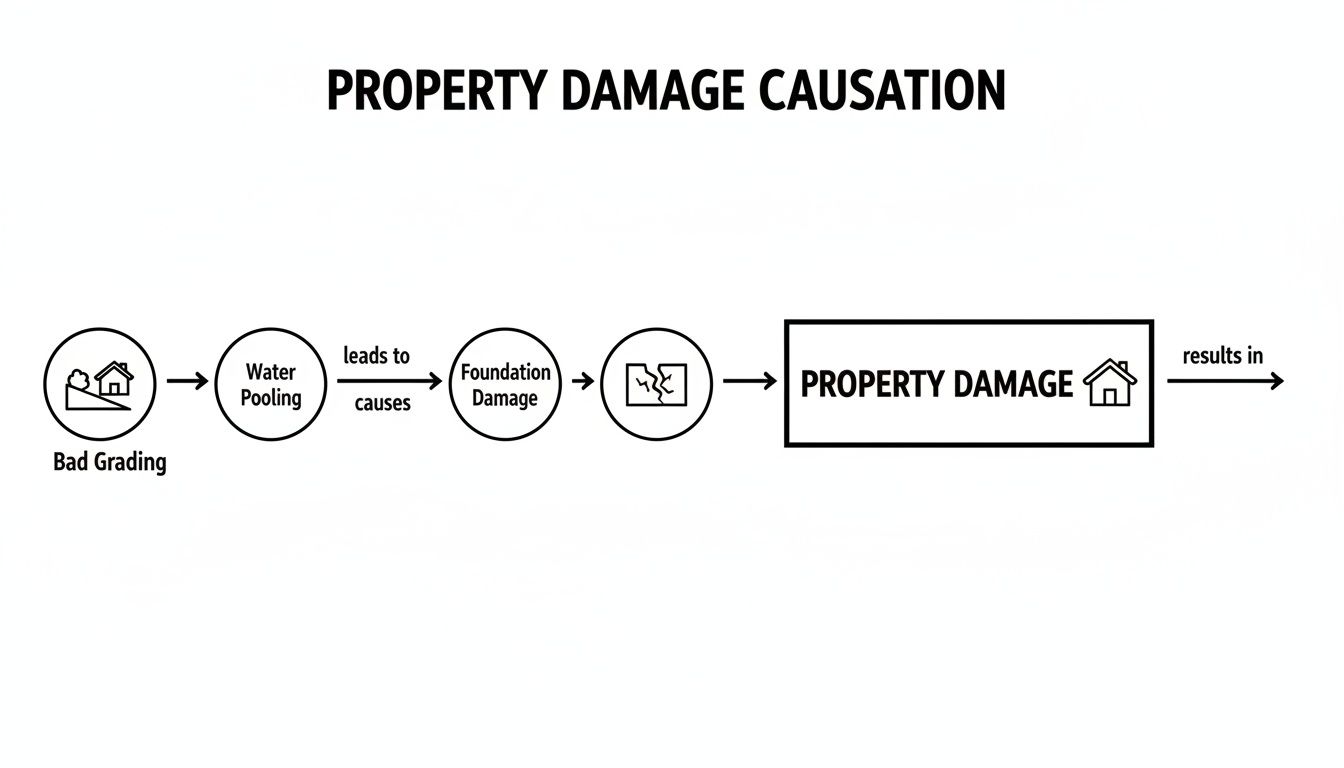
As you can see, bad grading isn't just a minor issue—it's the trigger that sets off a chain reaction leading directly to the costly damage homeowners dread.
Why Small Slopes Have a Big Impact
This isn't just theory; it's what we see in the field every day. In fact, foundation issues are now one of the most common red flags in home inspection reports, and they're almost always tied back to improper grading. If you want to dive deeper, you can read more about these home inspection findings from InspectorPro Insurance.
This really drives home why a seemingly insignificant slope is so critical. A drop of just a few inches over several feet can be the difference between a dry, stable home and one that’s constantly under attack by water.
What Is the Proper Slope for a Yard?
So, how much slope is enough? The gold standard in the industry is a drop of at least six inches over the first ten feet away from your foundation. This creates a reliable grade that forces surface water to keep moving.
But hitting that target isn't about guesswork with a shovel and a rake. It takes careful measurement, an understanding of your specific property's layout, and professional execution to get it right.
This is where professional water management services are a game-changer. A properly engineered grading plan doesn't just look at the slope; it considers your soil type, local rainfall patterns, and existing landscape features to build a complete defense against water intrusion.
How to Spot the Warning Signs of Poor Grading
You don't need to be an excavation expert to spot the red flags of bad grading. The signs are often hiding in plain sight, especially after the next big rainstorm hits the Central Coast.
Knowing what to look for can be the difference between a simple, manageable fix and a catastrophic, five-figure repair bill down the road. This section is your field guide—take a walk around your property and keep an eye out for these tell-tale signs. Each one points back to the same root cause: water isn't draining correctly, and it's starting to attack your home and driveway.
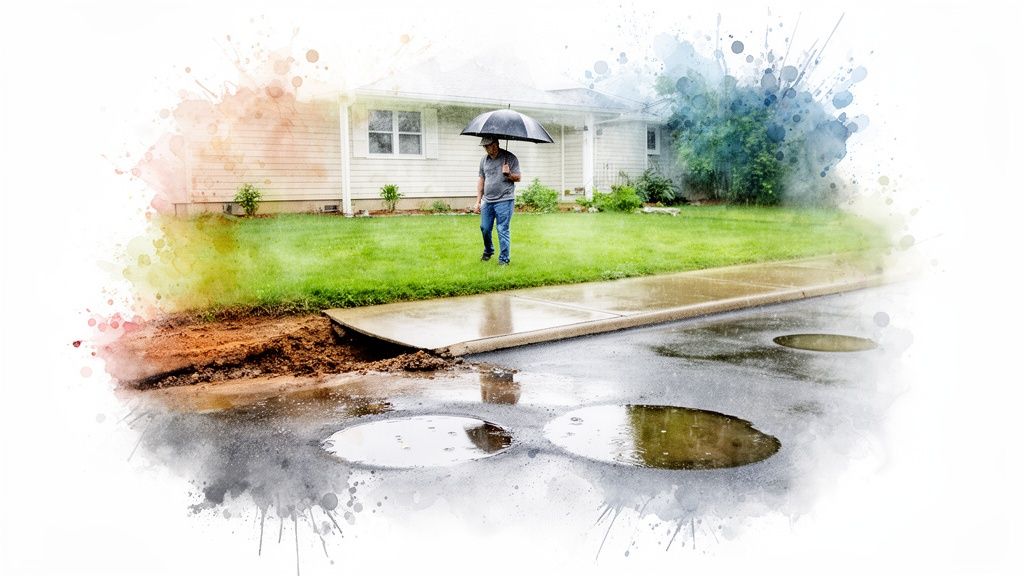
Outdoor Clues Around Your Property
The most obvious evidence of a grading problem will almost always show up outside your home first. These signs are clear indicators that surface water has nowhere to go and is actively working against your structures.
- Persistent Puddles or Standing Water: If you see water pooling near your foundation for hours or even days after a storm, that’s a major red flag. This stagnant water is just sitting there, saturating the soil right where it can do the most damage.
- "Bird Baths" on Paved Surfaces: Noticeable puddles on your driveway or patio are clear signs of an improper slope. Water should sheet off these surfaces and drain away, not collect in mini-ponds.
- Soil Gaps Around the Foundation: Take a look at where your foundation meets the dirt. If you see areas where the soil has pulled away, creating visible gaps, that’s a problem. This often happens as water-logged soil expands and then contracts when it dries, destabilizing the ground right next to your home.
- Visible Erosion and Mulch Displacement: After it rains, do you notice little rivers where soil or mulch has washed away? This shows that water is flowing with enough force to erode your landscape, and it's often headed directly toward your foundation.
These outdoor signs are your home’s early warning system. For homeowners in Monterey, spotting these issues is the first step in protecting your property. For a deeper dive, check out our guide to Monterey driveway excavation and leveling.
Indoor Signs of Water Intrusion
By the time you see symptoms inside your home, the problem has likely been developing for a while. These signs mean that water has already found a way past your foundation’s defenses.
Home inspection professionals consistently report that constant moisture exposure from poor grading weakens foundations, leading to cracks and settling. In fact, their audits of thousands of properties have traced over 30% of basement leaks directly back to improper grading.
You can learn more about these findings and how professionals link grading to leaks on LunsPro Georgia.
Keep an eye out for these subtle but serious indoor clues:
- Damp Spots or Stains: Check your basement or crawl space walls for any discoloration or damp patches. They’re most obvious right after a heavy rain.
- Persistent Musty Odors: A lingering smell of mildew or damp earth is a sure sign that moisture is present where it absolutely shouldn’t be.
- Efflorescence: Have you noticed a white, chalky substance on your concrete or brick walls? This is efflorescence, a salty deposit left behind as water seeps through the material and then evaporates. It's a dead giveaway that water is getting in.
- Fine, Web-Like Cracks: Small, spiderweb-like cracks appearing in foundation walls or concrete floors are often the first physical sign of stress from hydrostatic pressure building up outside.
Common Grading Mistakes and Smarter Solutions
When you spot a soggy yard or see water pooling on the driveway, the temptation is to grab what looks like an easy fix. Many homeowners try to solve the issue with surface drains or French drains after the damage is done. But these are often band-aids.
The real fix is getting the grading right — shaping the land to direct water away from the structure in the first place. If the land itself is sloped toward your house, water will always follow gravity. It will find its way past any surface-level fix you put in its path.
What to Do Instead of Quick Fixes
The only way to truly solve the problem for good is with professional regrading—physically reshaping the land to create a gentle, consistent slope that carries water away from your home and paved surfaces. A smarter approach always begins with a professional evaluation.
Have a professional evaluate your lot’s slope, soil compaction, and runoff patterns. In some cases, regrading the yard just a few inches can dramatically reduce water pooling. For paved areas, consider using permeable materials that allow water to drain naturally [UC Davis, 2024].
Why Guesswork Just Doesn't Work
Trying to fix grading without the right equipment and experience can easily make things worse. It’s a science that demands precision.
Here’s what a professional brings to the table that DIY efforts usually miss:
- Precise Slope Calculation: Hitting that industry-standard drop of at least six inches over the first ten feet from a foundation isn't something you can eyeball. It requires laser levels and transit tools to get it perfect.
- Proper Soil Compaction: You can't just push dirt around. The soil has to be compacted correctly in layers to prevent it from settling later on and undoing all the hard work.
- Integrated Drainage Planning: A professional looks at the big picture. Water isn't just moved away from your house; it's directed to a suitable location like a storm drain, a swale, or another safe runoff area.
At DW Excavation, we bring grading expertise rooted in real drainage science, not guesswork. If you want to get ahead of the next storm, our guide offers some expert grading tips before the rain hits.
The Professional Process for Correcting Poor Grading
Fixing a grading problem isn't a guessing game—it's a science. While a soggy yard might seem like a simple landscaping fix, the real solution is an engineered process that manages water for the long haul. A pro doesn't just push dirt around; they rebuild your property's first line of defense against water damage.
The whole thing kicks off with a detailed property assessment. An experienced grading contractor won't just eyeball it. We use precise tools to analyze your lot's existing slope, figure out the specific soil type, and map where water is currently flowing. This step is critical because every property in Sonoma County or along the Central Coast is unique, presenting different challenges that demand a custom solution.
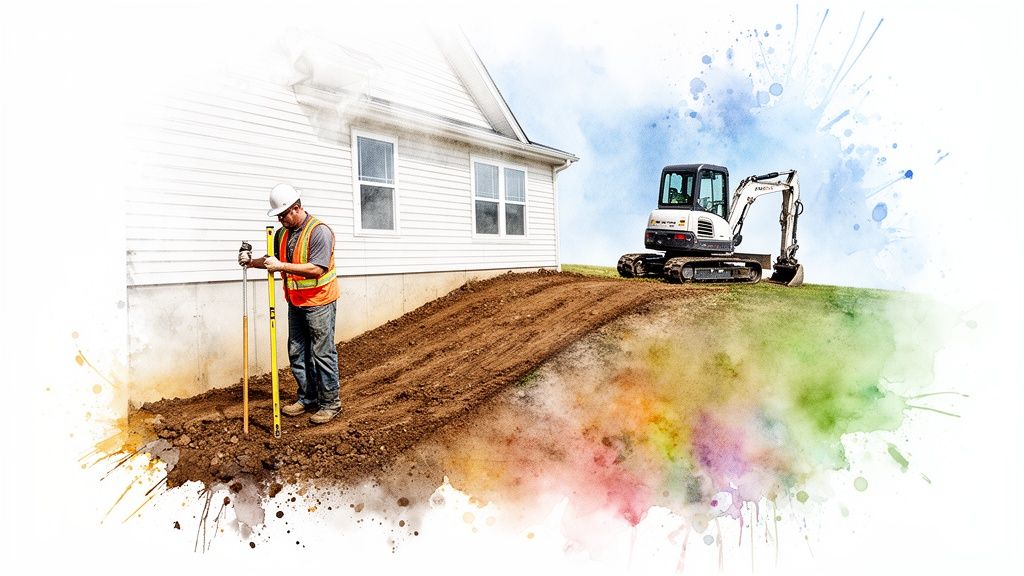
Developing a Strategic Grading Plan
Once we've sized up the problem, we develop a clear, actionable plan. This is much more than a rough sketch; it’s a detailed blueprint that maps out every single step. The plan specifies exactly how much soil needs to be moved and lays out the precise final elevations required to get the slope right.
The ultimate goal is to create a "positive grade"—a gentle slope that actively channels water away from your foundation and driveway. This is where real expertise comes into play, turning a complex drainage headache into a series of calculated, manageable steps. By creating this clear plan, we take the mystery out of the work and make sure you understand exactly how we’re going to protect your property.
The Execution Phase: Shaping and Compacting
With a solid plan in hand, the physical work begins. This is a multi-step process, and every part is done with precision to guarantee the fix lasts.
- Preparation and Removal: First, we carefully remove any existing landscaping, like grass or shrubs, from the area that needs reshaping. This gives us a clean slate and clears the way for the necessary equipment.
- Establishing the Correct Slope: Next, we bring in fill dirt and expertly shape it to create the proper slope. The industry standard is a drop of at least six inches over the first ten feet away from your foundation. This creates just enough of a decline for gravity to do its job and pull water away from your home.
- Proper Soil Compaction: This is easily the most critical—and most often skipped—step. After the new soil is shaped, it must be mechanically compacted in layers. Compacting the soil properly prevents it from settling over time, which would completely undo our work and bring those drainage problems right back.
Why Professional Grading Is a Smart Investment
This is about more than just getting rid of puddles. It’s about protecting your biggest investment from devastating and expensive structural damage. In fact, research shows that nearly 60% of all foundation problems in U.S. homes are a direct result of improper grading and poor drainage.
While a major foundation repair can easily run $5,000 to $20,000, professional grading usually costs just a fraction of that.
DW Excavation brings grading expertise rooted in real drainage science, not guesswork. They build every slope and sub-base to protect your property long-term—and they back it with support if problems arise after construction.
If you’re seeing standing water or a sinking driveway, DW Excavation provides expert grading services on the California Central Coast rooted in real drainage science. We don’t just treat the symptoms—we fix the cause.
Protecting Your Property in Sonoma and the Central Coast
Living in Sonoma County, Monterey County, or anywhere along the California Central Coast means you know our weather is anything but ordinary. We bounce between long, dry spells that bake the soil hard and intense winter downpours—those "atmospheric rivers"—that can completely saturate the ground in just a few hours.
These heavy rains put a massive strain on your property's ability to handle water. More importantly, they ruthlessly expose any weak spots caused by poor grading. A yard that seems perfectly fine in August can turn into a swampy, destructive mess by January if the slope isn’t engineered to handle our region’s specific climate.
Why Local Expertise Matters
A grading plan that works perfectly in another state could fail spectacularly here. Our local experience means we design and build grading solutions specifically to manage California's unique challenges. We're intimately familiar with the expansive clay soils common to this area and know exactly how they swell and shrink during our prolonged wet and dry cycles.
On top of that, we build every project to meet California's strict and recently updated drainage regulations. This isn't just about checking a box for compliance; it's about creating resilient systems that protect your investment for the long haul.
A common misstep is assuming all grading is the same. But a solution built for the sandy soils of a desert climate will not protect a home in the clay-rich hills of Sonoma during a winter storm. Local knowledge is the key to a lasting fix.
From Symptoms to Solutions
If you’re tired of a soggy yard, a cracking driveway, or that sinking feeling every time a big storm is in the forecast, it’s time for a new approach. Patching the symptoms with temporary fixes only leads to more frustration and bigger bills down the road. The only way to stop the cycle is to fix the root cause.
This is where our engineering-integrated approach makes all the difference. We don’t just push dirt around; we precisely reshape your land to ensure water flows safely and predictably away from your foundation and paved surfaces. By analyzing your property's unique slopes and soil makeup, we develop a plan that works with our local environment, not against it. For homeowners ready to dive deeper into the specifics, DW Excavation provides expert land leveling services in Monterey and Sonoma County designed for our climate.
Connecting with a local expert who knows how to solve the underlying problem is the most important step you can take. We have the experience to fix the cause, not just patch the symptoms, giving you peace of mind for years to come.
FAQs: Your Grading and Foundation Questions Answered
We get a lot of the same questions from homeowners dealing with soggy yards and foundation worries. Here are some clear, straightforward answers to the most common questions we hear, based on our years of experience in the field.
How much does it cost to regrade a yard in California?
For a typical residential lot in areas like Sonoma or Monterey County, you can expect the cost to regrade a yard to fall somewhere between $1,500 and $5,000. Of course, this can shift based on the size of your property, how severe the slope is, and whether we can easily get equipment in.
Can I fix my home's grading myself?
While small landscaping jobs are fine for DIY, fixing a real grading issue is best left to the pros. It's not just about moving dirt; achieving the precise slope required to protect your foundation means using specialized equipment like laser levels to get it perfect.
A small miscalculation can accidentally make the drainage problem worse, funneling even more water toward your home. When you're talking about protecting your biggest asset, hiring an experienced contractor is a smart investment.
How long does it take for poor grading to cause damage?
The timeline really depends on your local climate and soil. Here on the California Central Coast, where we have heavy clay soil and intense rainy seasons, visible damage like small foundation cracks or leaks can show up in as little as 2-3 years.
In other situations, it might take 5-10 years before you see major problems. The key takeaway is that the damage is always progressive—it will get worse over time if you don't address it.
Is a French drain a good substitute for regrading?
No, a French drain is a tool for a different job. It's designed to manage groundwater (water moving below the surface), not surface water runoff from rain. While it can be a great part of a total drainage solution, it absolutely cannot replace proper grading.
Does homeowners insurance cover damage from poor grading?
This is a tough one for homeowners, but the answer is typically no. Most standard insurance policies view damage from poor grading—like a settling foundation or slow water intrusion—as a maintenance issue, which means the homeowner is responsible for the cost of repairs.
If you live in Sonoma County or the Central Coast and are tired of dealing with standing water or a sinking driveway, reach out to DW Excavation. We’ll help you fix the root cause—not just the symptoms—with an engineering-integrated approach that protects your property for years to come. Learn more and schedule your assessment at https://dw-excavation.com.