
When a pipe fails under your yard, the decision between trenchless technology and traditional excavation can feel overwhelming. Many homeowners are told trenchless is cleaner and faster, but also pricier. The real question is: Is it the best option for my situation, or am I being upsold?
The truth is, the best option is entirely situational. It depends on your property’s layout, soil conditions, and the specific nature of the pipe damage. There's no single "right" answer for everyone.
This guide will cut through the noise and give you a clear, honest comparison. We'll lay out the real-world trade-offs so you can understand what makes the most sense for your home, especially here in Sonoma and Monterey Counties.
What Are My Pipe Replacement Options?
So, should you choose trenchless or traditional pipe replacement? The decision comes down to balancing cost, disruption, and long-term reliability. A common misstep is assuming trenchless is the "modern" fix and better by default—or that any plumber can perform it. But not all pipe systems are good candidates.
Leaking pipes are a massive issue nationwide, with 6 billion gallons of treated water lost every day [GlobeNewswire, 2025]. For a homeowner, that translates into a soggy yard, risks to your foundation, and potential health hazards. We’ve worked with plenty of residents in Sonoma and Monterey who have faced this exact dilemma, worried about both the immediate cost and whether the fix will actually last.
Key Factors at a Glance
The right approach starts with a full inspection and comparison. If your yard has stable soil, shallow damage, and no major tree root invasion, trenchless may save you time and landscaping.
But if the pipe slope is compromised or you’re dealing with collapsed sections, open-trench replacement is more reliable long-term. Some trenches hide deeper root problems or slope issues that trenchless can’t solve. This is why DW Excavation provides honest assessments based on what’s best for your site, not just what’s quickest.
Quick Comparison of Pipe Replacement Methods
Here’s a straightforward look at how trenchless and traditional methods stack up against the factors that matter most to homeowners.
| Factor | Trenchless Replacement | Traditional Open-Trench Replacement |
|---|---|---|
| Property Disruption | Minimal. Usually requires just two small access points. It saves your landscaping, driveways, and patios. | High. Involves digging a long trench, which means extensive restoration for lawns and hardscaping. |
| Project Timeline | Fast. Often done in a single day, which means less inconvenience for your household. | Slower. Can take several days to a week for the digging, replacement, backfilling, and initial cleanup. |
| Upfront Cost | Generally higher. This is due to the specialized equipment and materials needed. | Typically lower, especially if your landscaping is simple and cheap to restore. |
| Long-Term Reliability | Excellent when done on the right pipes. A new liner can easily last 50+ years. | Proven and highly reliable. It allows for a full inspection and correction of any underlying grade issues. |
This table gives you a good starting point, but the final decision always comes down to the details of your property and the condition of the pipe.
Trenchless technology is a fast-growing $6B industry, expected to reach $8.4B by 2030, which reflects confidence in its performance [GlobeNewswire, 2025]. You can read more about the growth of trenchless technology at TechSci Research. But it's not always the right fit.
If you're worried about a failing pipe, it's always better to act before a small leak turns into a big, expensive mess. You can learn more in our guide on the 5 reasons to schedule pipe repair in Monterey before the next storm hits.
How Does Each Pipe Replacement Method Actually Work?
Before you can decide between a trenchless fix and a traditional one, you need to understand what’s actually happening underground. Both solve the core problem—a broken pipe—but they get there in completely different ways.
At DW Excavation, we’re experts in both approaches. That means we give you honest advice based on your property's specific needs, not just on the one service we happen to offer.
The Proven Method: Traditional Open-Trench Excavation
This is the classic approach, often called "open-cut" excavation, and it’s exactly what it sounds like. For decades, it’s been the industry standard for a reason: it’s straightforward and incredibly reliable.
Here’s how it unfolds on your property:
- Excavation: We bring in an excavator and carefully dig a trench along the entire path of the damaged line.
- Removal & Replacement: The old, failing pipe is physically lifted out and replaced with a brand-new, high-quality pipe.
- Inspection & Grading: With everything exposed, we inspect the soil, correct any slope problems, and ensure the new pipe has a solid, stable bed.
- Backfilling: Once installed and tested, we backfill the trench, compacting the soil to prevent future settling.
The biggest advantage here is total access. It allows our crew to physically see and fix severe problems that trenchless methods can’t touch, like a completely collapsed pipe or major sags.
The Modern Alternative: Minimally Invasive Trenchless Technologies
Trenchless technology is the modern answer to avoiding a massive trench across your yard. Instead of digging up the entire line, these methods only require small entry and exit pits. The two most common techniques are Cured-in-Place Pipe (CIPP) lining and pipe bursting.
Cured-in-Place Pipe (CIPP) Lining
Think of CIPP as creating a brand-new pipe right inside the old one. We insert a flexible liner saturated with a special epoxy resin into the damaged pipe and inflate it.
The resin then hardens—or "cures"—creating a smooth, seamless, and tough new pipe wall. This new liner seals cracks, stops leaks, and blocks tree roots from getting back in.
Pipe Bursting
Pipe bursting is a full replacement method without the trench. We pull a cone-shaped "bursting head" through the old, damaged pipe, fracturing it outward into the soil.
Right behind it, we pull in a brand-new, seamless High-Density Polyethylene (HDPE) pipe. This method is also the only trenchless technique that allows you to upsize your pipe's diameter.
Digging Into the Key Decision Factors for Your Project
Choosing between trenchless and traditional pipe replacement goes far beyond a simple pros and cons list. The right answer comes from a frank look at your project's total cost, how much disruption you can handle, and what will give you the most reliable fix.
Many homeowners hear "trenchless" and assume it's automatically the better, modern option, but that’s a common misstep. Let's break down the critical factors to help you figure out which method delivers the best long-term value.
Total Project Cost Beyond the Initial Quote
When you’re weighing trenchless vs. traditional, you’re really asking, "Which is more cost-effective in the long run?" It's about the total financial impact once the dust settles.
- Trenchless Costs: The higher upfront price comes from specialized equipment. But that cost is often offset by massive savings in restoration, since you aren't paying to fix your lawn or driveway.
- Traditional Costs: The initial quote for excavation might look lower, but you must factor in restoration expenses. Restoring a torn-up lawn, driveway, or garden can easily add 30-50% to your final bill.
Property Disruption and Impact on Daily Life
Let's be honest: your daily routine matters. Traditional excavation turns your yard into a construction zone for days, sometimes even a week or more.
In contrast, trenchless repairs are almost surgical. We only need two small access points, which means the yard you've worked so hard to maintain stays intact. This minimal intrusion means less noise, less mess, and a much faster return to normalcy.
This simple decision tree shows the first question an expert will ask: is your pipe even a candidate for a trenchless solution?
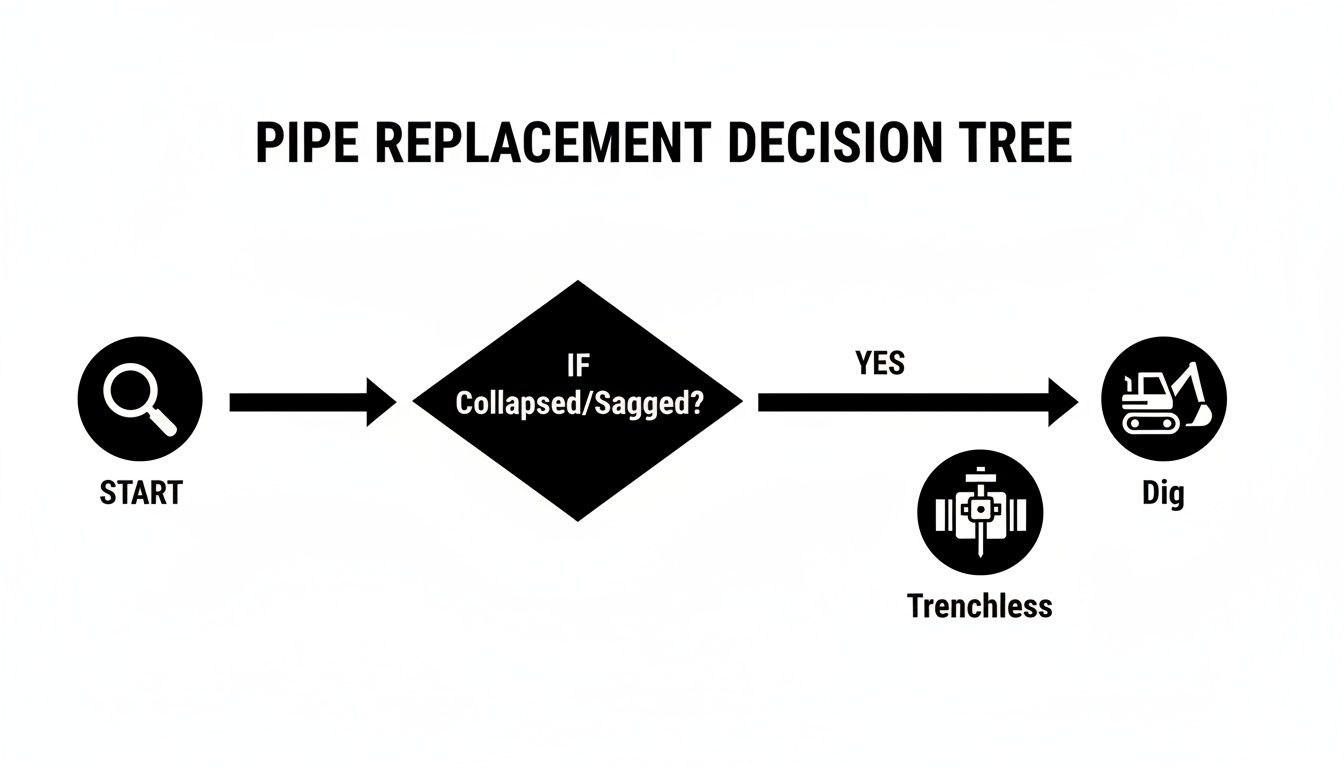
As the flowchart shows, a collapsed or seriously sagged pipe almost always points toward traditional excavation. Trenchless methods need a relatively intact "host" pipe to work.
Project Timeline From Start to Finish
Speed is often a top priority. Traditional open-trench replacement is a multi-day affair involving digging, replacing the pipe, inspection, and backfilling.
Trenchless methods are in a different league. Most residential projects can be completed in a single day, which is a key reason for the method's growth.
Long-Term Reliability and Performance
At the end of the day, the most important factor is long-term reliability. The good news is that both methods, when performed correctly and in the right situation, offer excellent longevity.
A properly installed traditional pipe is a proven solution. It allows us to correct underlying problems like poor soil compaction or an improper grade—critical in areas with shifting clay soils.
Trenchless solutions also deliver incredible durability. The seamless liners used in CIPP are rated to last 50 years or more. However, their reliability is completely dependent on the condition of the original host pipe. An honest assessment is everything, and you can learn more by reading about why 2026 is a breakout year for underground pipe repairs.
Detailed Cost and Impact Analysis
To truly compare apples to apples, you have to look beyond the initial quote. This table breaks down the full financial and logistical impacts you should consider.
| Consideration | Trenchless CIPP and Bursting | Traditional Open-Trench |
|---|---|---|
| Initial Labor & Equipment | Higher, due to specialized machinery and certified technicians. | Lower, relies on standard excavation equipment. |
| Restoration Costs | Minimal to None. Preserves driveways, patios, and landscaping. No need for major reconstruction. | High. Budget for concrete repair, new sod, replanting trees/shrubs, and rebuilding hardscapes. Can add 30-50% to the total cost. |
| Project Duration | Typically 1 day. Less time off work, faster return to normal life. | 3-7+ days. A prolonged period of noise, mess, and access restrictions. |
| Permitting Complexity | Often simpler, as it involves less surface disruption. | More complex, may require traffic control, extensive inspections, and soil compaction tests. |
| Long-Term Value | Excellent. The seamless liner is rated for 50+ years and prevents future root intrusion. | Proven reliability. Allows for correction of grade and soil issues, ensuring a solid foundation for the new pipe. |
| Hidden Costs | Few. The upfront cost is typically all-inclusive. | Many potential hidden costs, such as sprinkler system repair, fence removal/replacement, or unexpected soil issues. |
This side-by-side view makes it clear: the "cheaper" option upfront isn't always the most cost-effective solution once you account for the entire project.
When Trenchless Technology Is the Smart Choice
Trenchless pipe replacement shines when the cost of tearing things up is far greater than the cost of the repair itself. If your failing pipe is hiding under valuable landscaping, a custom paver driveway, or that patio you just finished, trenchless is almost always the smarter way to go.
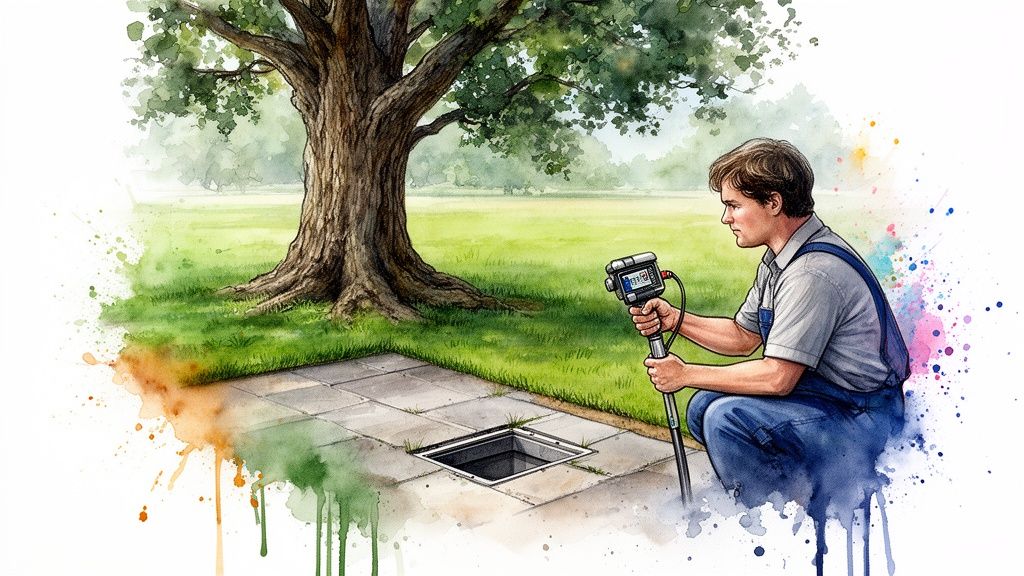
For most homeowners in Sonoma County or Monterey County, the thought of a backhoe destroying years of hard work is a non-starter. This is where trenchless saves the day.
Ideal Scenarios for a Trenchless Solution
Trenchless methods are fantastic for pipes dealing with cracks, leaks, or tree root invasions. The one non-negotiable? The original "host" pipe needs to have its basic shape and slope intact. A professional camera inspection is the only way to know for sure.
Here are the situations where trenchless is the clear winner:
- Pipes Under Obstacles: The damaged line is buried beneath your driveway, walkway, garage, or another permanent structure.
- Preserving Mature Landscaping: You need to protect established trees, gardens, and intricate hardscaping from destruction.
- Minimizing Downtime: You can't afford to be without service for long. Most trenchless jobs are wrapped up in a single day.
- Environmentally Sensitive Areas: It dramatically reduces soil disruption and the project's overall carbon footprint.
If you want to cut through the marketing noise, check out our guide on the truth about trenchless pipe repair that most homeowners don't hear.
Case Example: A Sonoma County Homeowner
We recently worked with a Sonoma County homeowner whose sewer line ran directly under a 100-year-old oak tree and a custom flagstone patio. A traditional dig-up estimate was staggering, including fees for a certified arborist and a complete patio rebuild.
By opting for a Cured-in-Place Pipe (CIPP) lining, the homeowner dodged all excavation. The project saved them an estimated $15,000 in restoration costs alone and preserved the irreplaceable character of their property. This is what trenchless technology is all about.
Making the Final Call
If your pipe qualifies, trenchless offers a faster, cleaner, and often more affordable solution once you factor in all the costs. If you’re in Sonoma County or Monterey County and dealing with leaking lines or suspicious yard flooding, DW Excavation can help you figure out the safest and most cost-effective fix.
When Traditional Excavation Is the Only Reliable Solution
Trenchless technology is an impressive leap forward, but it's not a silver bullet. A common misstep homeowners make is assuming this "modern" fix is always the better option. Some situations absolutely demand the proven reliability of traditional open-trench excavation.
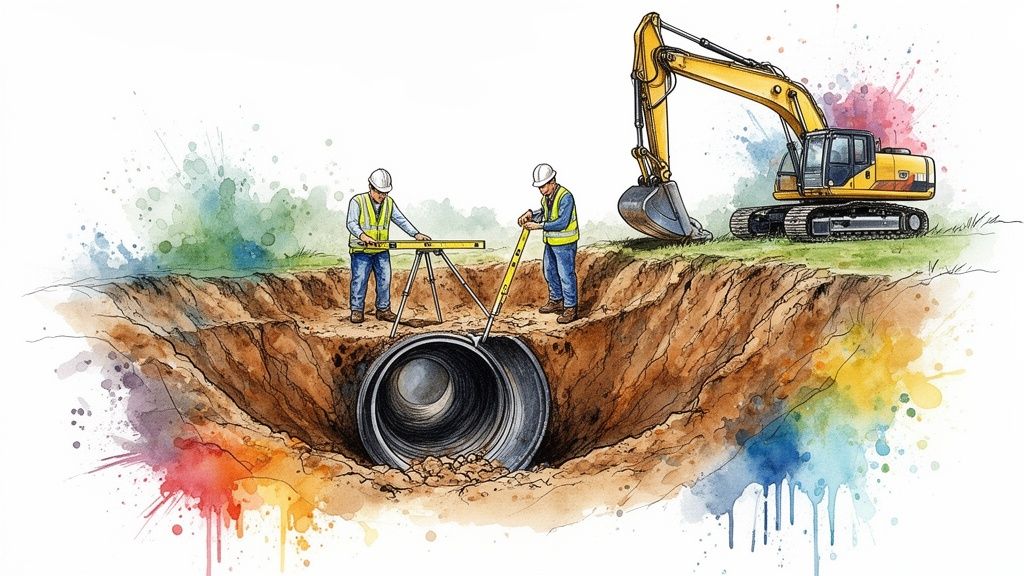
This method becomes necessary when the pipe damage is too severe for a liner or a bursting head to handle. Forcing a trenchless repair on an unsuitable pipe is a temporary patch that is almost guaranteed to fail.
When Digging Is the Only Answer
Sometimes, an open trench is the only way to guarantee a proper, long-term fix. A camera inspection will quickly reveal if your pipe falls into one of these categories.
Here are the scenarios where we almost always recommend traditional excavation:
- Completely Collapsed Pipes: If a section of your sewer line has been crushed, there's no "host pipe" left for a liner to follow.
- Significant Sags or 'Bellies': Over time, shifting soil can cause a pipe to develop a dip that kills the gravity-fed flow. Trenchless methods just line the improperly graded pipe.
- Complex Lateral Reconnections: If multiple smaller pipes tie into your main line, a trench provides the clear access needed to reconnect everything perfectly.
- Multiple Offset Joints: When pipe sections are so badly misaligned that they create major ledges, trenchless equipment often can't get through effectively.
In these cases, only digging allows a crew to physically remove the failed pipe, re-grade the trench bed, and install a new line on a solid foundation.
Case Example from Monterey County
We saw a perfect example of this on a Monterey property with shifty clay soil. The homeowner had constant backups, and another contractor had recommended a trenchless liner. Our camera inspection revealed the real issue: a significant belly in the line caused by soil movement.
A trenchless liner would have just followed the sag, dooming the homeowner to the same chronic blockages. The only reliable solution was a full excavation. We were able to correct the pipe’s grade and install a new sewer line that will function properly for decades. Fixing the reason the pipe failed is the key to a lasting solution. When backups are severe, it’s also important to understand the protocols for sewage damage clean up.
How to Find a Contractor Who Offers the Right Solution
After weighing the pros and cons, the final piece of the puzzle is finding a contractor who will guide you to the right solution—not just the one they prefer to sell. An honest, thorough assessment is the most valuable part of this entire process.
A trustworthy partner should be proficient in both modern and traditional techniques. This ensures their recommendation is based on a professional diagnosis of your specific situation.
Asking the Right Questions Before You Hire
To protect your investment and ensure a lasting repair, it’s critical to vet any potential contractor. Before you sign a contract, ask these direct questions.
Here are four essential questions every homeowner should ask:
- Do you perform both trenchless and traditional pipe replacement? A "yes" here means they won't push one method simply because it's the only tool in their toolbox.
- How do you determine which method is best for my property? Look for an answer that prioritizes a detailed camera inspection and analysis of your pipe’s condition, slope, and surrounding soil.
- What does your camera inspection process involve? They should be able to clearly explain how they identify collapses or severe bellies that would disqualify a trenchless approach.
- Can you explain the potential risks or hidden costs for both options? An honest contractor will be upfront about potential complications.
The trenchless pipe rehabilitation market is projected to grow significantly, driven by the need for less disruptive infrastructure fixes. You can learn more from the full research on the trenchless pipe market.
At DW Excavation, we pride ourselves on providing honest assessments. We’ve handled countless projects where we advised against trenchless because it wasn’t worth the risk. If you’re in Sonoma or Monterey County, reach out for a site visit and straight talk—no guesswork, no pressure.
Your Top Pipe Replacement Questions Answered
1. Is trenchless pipe replacement always more expensive?
Not when you consider the total project cost. The upfront quote for trenchless can be higher, but it often saves you thousands in restoration costs for your lawn, driveway, or patio, making it the more cost-effective option overall.
2. Can trenchless methods fix a completely collapsed pipe?
No, and this is a critical distinction. Trenchless methods require a "host" pipe that is still structurally intact. If the pipe is crushed or has a severe sag (a "belly"), traditional excavation is the only reliable way to fix it.
3. How long does a trenchless pipe liner last?
Modern Cured-in-Place Pipe (CIPP) liners are incredibly durable, with a typical lifespan of 50 years or more. The seamless, joint-free material is highly resistant to corrosion and future root intrusion.
4. What if my pipes are old cast iron or clay?
These older materials are often perfect candidates for trenchless lining, as long as they haven't collapsed. CIPP lining can seal cracks and prevent future root damage in clay pipes and stop corrosion in cast iron pipes, extending their life for decades.
5. Will I need a permit for pipe replacement in Sonoma County?
Yes, replacing a main sewer or water line almost always requires a permit from your city or county, whether the method is trenchless or traditional. This ensures the work is done safely and to code. A good contractor will handle the entire permitting process for you.
If you're in Sonoma County or Monterey County and dealing with leaking lines or suspicious yard flooding, DW Excavation can help you figure out the safest and most cost-effective fix. Reach out for a site visit and straight talk—no guesswork, no pressure.