When you discover a sewage backup, your first moves are the most important. They’re all about protecting your health and your property. Before you even think about the mess, focus on safety: stop the source, kill the power, and get everyone out of the area. This isn't just dirty water; it's a serious biohazard requiring a professional for proper sewage damage clean up.
What Are the First Steps After a Sewage Backup?
A sewage backup isn't just an inconvenience—it's a significant health risk. In the industry, we classify this as "Category 3" or "black water" because it's teeming with dangerous bacteria, viruses, and pathogens that can make people incredibly sick. How you respond in that first hour can make all the difference in keeping your family safe and preventing more extensive damage to your Sonoma or Monterey County home.
The three steps below are your non-negotiable safety protocol.
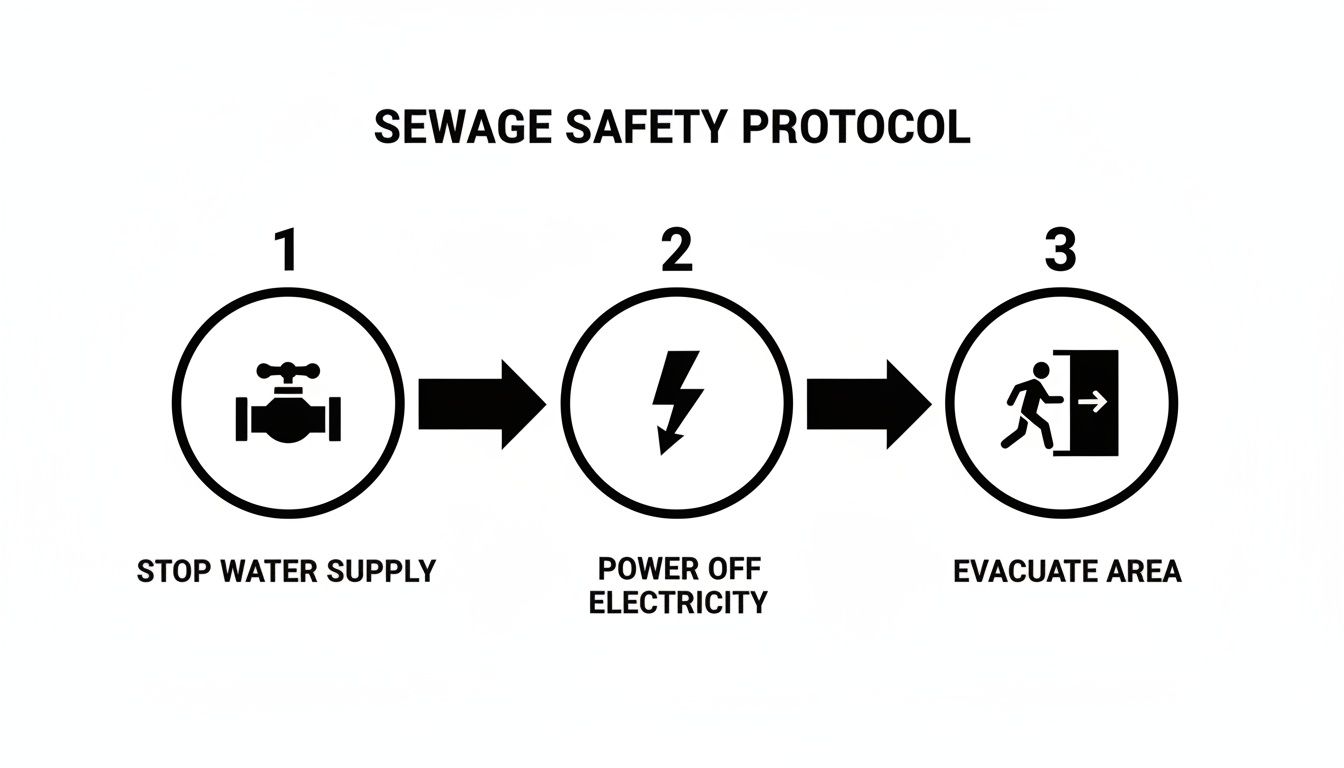
This simple flow—water off, power off, people out—is the foundation of a safe response. Once this is done, you can call in the professionals.
Protect Your Health and Property
Your number one priority is getting people and pets away from the contamination. Make sure all children, elderly family members, and pets are evacuated from the affected area immediately.
If you can get to them without stepping in the contaminated water, open some windows. Ventilating the space will help start dispersing the harmful fumes and awful odors.
Whatever you do, don't grab the bleach or other household cleaners. Mixing bleach with ammonia—which is often found in raw sewage—can create toxic chloramine gas. These cleaners simply aren't strong enough to properly sanitize porous materials that have soaked up black water.
How Should I Document the Damage for Insurance?
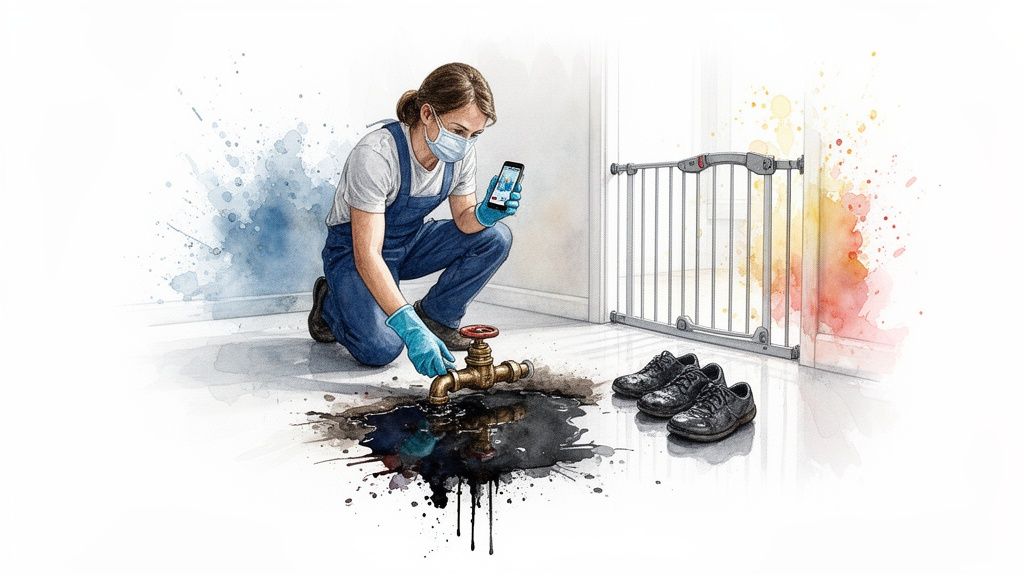
Before a single thing is moved or cleaned, grab your phone. Take tons of photos and videos of the damage from every possible angle. This documentation is absolutely critical for your insurance claim, as it proves the initial extent of the damage.
This isn't just a local problem. The UN's 2025 extended report on global wastewater highlights that only about 58% of the world's household wastewater was safely treated in 2022. For us here on the California Central Coast, where heavy rains can overwhelm older sewer lines, it's a stark reminder of why professional cleanup and proper pipe repairs are so vital.
When a backup signals a deeper problem with the main line, you might need to look at more serious fixes. Sometimes, the only way to address the root cause is with emergency excavation solutions in Monterey County.
What Does a Professional Cleanup and Restoration Process Involve?
Once you’ve handled the immediate safety issues, the real work of professional sewage damage clean up begins. This is far more than a simple mopping job; it's a systematic process to bring your property back to a safe, livable condition. When certified technicians arrive, they come with specialized equipment and a clear plan to tackle the contamination head-on.
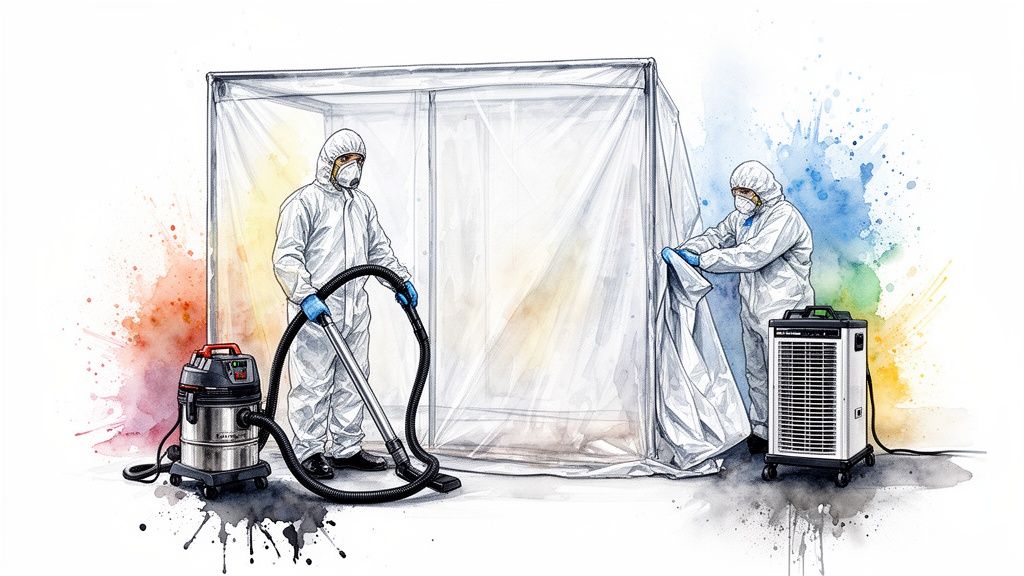
The first order of business is a thorough site assessment. The pros will figure out exactly how far the damage has spread, using moisture meters to check for hidden water in places like wall cavities. They’ll then set up a containment zone with heavy-duty plastic sheeting and negative air pressure machines to stop airborne pathogens from contaminating the rest of your home.
Extraction and Safe Disposal of Contaminated Materials
With the site contained, the physical removal gets underway. Forget your shop vac; the team will use high-powered, truck-mounted extraction systems to pull out all standing black water and solid waste. This equipment is powerful enough to draw deep-seated contaminants out of flooring and subflooring.
Next, the crew will carefully remove and bag any porous materials soaked by the sewage. It’s a tough loss, but these items simply can't be saved.
This typically includes:
- Drywall and insulation
- Carpeting and padding
- Upholstered furniture and mattresses
- Paper products and books
These items are treated as biohazardous waste and disposed of following strict local and state rules. The goal here is to remove anything that could possibly harbor dangerous bacteria, giving you a completely clean slate for the restoration.
Sanitizing and Drying the Affected Area
After everything is stripped out, the remaining hard surfaces get a deep clean and disinfection. Professionals use hospital-grade, EPA-approved antimicrobial sprays designed to kill nasty pathogens like E. coli and hepatitis. It’s a multi-step process that ensures every last surface is properly sanitized.
Finally, the most critical part of preventing future problems begins: the drying phase. According to FEMA, mold can begin growing on damp surfaces within just 24 to 48 hours [FEMA, 2021].
Industrial-strength air movers and dehumidifiers are set up to create a powerful vortex of airflow, pulling every last bit of moisture from wood, concrete, and other structural materials. Technicians monitor the progress with specialized tools until the area is verified as completely dry and safe.
For properties with more complex contamination, especially where soil or groundwater is involved, it's worth exploring all your options. Understanding advanced solutions like eco-remediation services on the California Central Coast can offer a path to a full and lasting recovery.
How Much Does Sewage Cleanup Cost?
Facing a sewage disaster is stressful enough without the added anxiety of a surprise bill. A professional sewage damage clean up is a serious investment in your property's health and safety, and the final price tag depends on a handful of key factors. No two sewage backups are ever the same, which makes getting a detailed, itemized quote an absolute must.
It really comes down to the scope of the damage. A small toilet overflow contained on a tile bathroom floor is a world away from a main line backup that floods an entire finished basement. The first is a manageable problem; the second is a major restoration project.
What Factors Influence the Final Bill?
Several variables directly impact what you'll pay for professional restoration. Understanding them helps you see where your money is going and why cutting corners is never an option.
- Size of the Affected Area: The more square footage that needs water extraction, deep cleaning, and industrial drying, the higher the labor and equipment costs will be.
- Type of Materials Damaged: Porous materials are the real budget-killers. Things like drywall, carpet, insulation, and untreated wood almost always have to be torn out and thrown away. Non-porous surfaces like sealed concrete or tile can often be saved, but they still need intensive sanitation.
- Water Category: All sewage backups are considered Category 3 water, or "black water." This is the most hazardous class, legally requiring the highest level of sanitation protocols and full personal protective equipment (PPE) for the crew, which increases labor costs.
A single sewage backup can easily cost anywhere from $5,000 to $20,000 for professional cleanup and restoration. This figure doesn't even touch the cost of repairing the broken pipe or potential health issues. You can discover more about the broader economic risks of sewage leaks and their environmental impact.
Properly documenting every damaged item is critical for your insurance claim. For bigger jobs, the rebuilding phase means sourcing new drywall, flooring, and other building supplies. Finding a single source for all your construction material supply needs can make a massive difference.
Why is it Important to Fix the Source of the Problem?
A professional sewage damage clean up gets your home back to a safe, livable state, but that’s only half the battle. If you don't tackle the underlying issue, you’re just setting a timer for the next backup. The real, lasting solution is almost always underground.
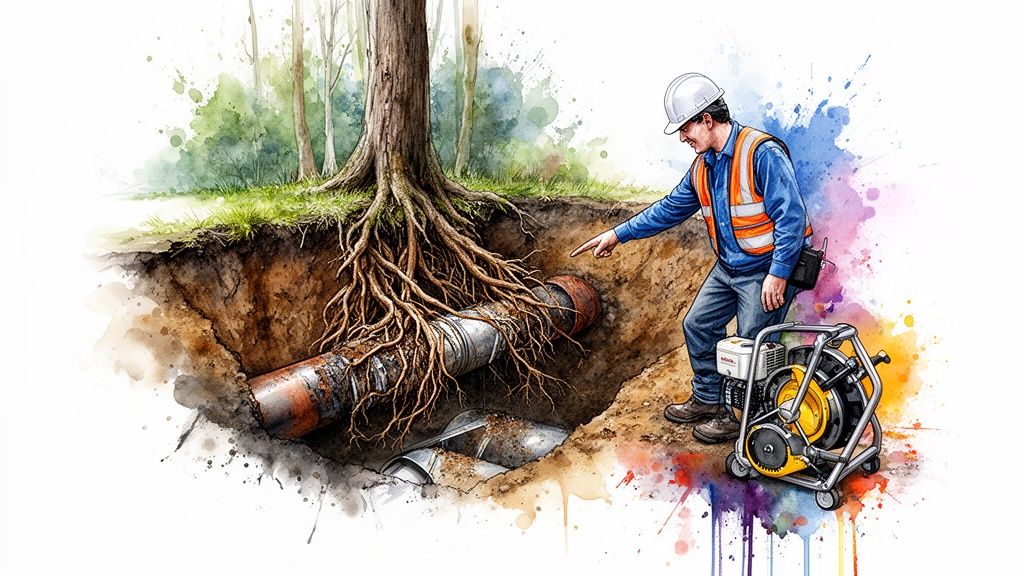
Many sewage backups are just symptoms of a failing underground pipe. Over the years, sewer lines can break down from age, shifting soil, or, most commonly, invasive tree roots. Here in Sonoma and Monterey Counties, we see it all the time with older clay or cast-iron pipes.
Identifying the True Culprit
Pinpointing the exact cause isn’t a guessing game. Professionals use sewer camera inspections to get a live feed from inside your pipes, which is the only way to know for sure what you're up against.
We consistently find that recurring sewage issues stem from a few common sources:
- Invasive Tree Roots: This is the number one offender. Roots sneak into the smallest cracks, expand, and can eventually shatter the pipe.
- Poor Site Grading: If your land isn't sloped correctly, it can put tremendous pressure on underground utilities, causing them to bend, shift, or break.
- Aging or Damaged Pipes: Old materials just don't last forever. They become brittle and are far more susceptible to cracks and leaks.
- Soil Compaction: Heavy equipment or poor site prep during construction can compact the soil enough to crush the pipes buried underneath.
Permanent Solutions for Underground Pipe Repair
Once the camera inspection reveals the problem, you have a couple of paths to a permanent fix. The right choice depends on the pipe's location, the severity of the damage, and your property layout.
Traditional excavation is often the most direct approach for severe damage. It involves digging a trench to physically access and replace the broken section of pipe. While it's disruptive, sometimes it's the only way.
But digging isn't the only answer anymore. Modern techniques like trenchless pipe repair can often fix a damaged line without tearing up your entire yard, saving your landscaping and driveway.
Comparing Pipe Repair Methods
| Feature | Traditional Excavation | Trenchless Repair |
|---|---|---|
| Site Disruption | High (involves digging a large trench) | Minimal (requires only small access points) |
| Project Time | Days to over a week | Typically 1-2 days |
| Cost | Can be high due to labor and landscape restoration | Often more cost-effective when factoring in restoration |
| Best For | Severely collapsed pipes or complete line replacement | Cracked, leaking, or root-damaged pipes |
| Landscape Impact | Destroys lawns, driveways, and gardens | Preserves existing landscaping and hardscaping |
Ultimately, the goal is to choose the solution that provides a permanent fix with the least disruption. Exploring your options with a professional who understands both methods is key. You can learn more in our guide to finding the best underground pipe repair contractor.
How Broader Waste Issues Affect Your Property
When a sewer line backs up into your yard or home, it’s easy to think the problem starts and ends at your property line. But more often than not, what you’re seeing is just one symptom of a much larger infrastructure problem. The issue isn't always just your pipes; it's frequently tied to widespread waste management challenges.
This is especially true during California’s intense rainy seasons.
Here's how it plays out: overwhelmed public systems can lead directly to contaminated groundwater and soil. This contamination often comes in the form of leachate—a toxic liquid that drains from landfills. Over time, it can seep into the ground and slowly degrade local sewer infrastructure.
When heavy rains pound Sonoma or Monterey County, these already compromised systems are the first to give out, making a backup on your property far more likely.
Building Resilience Against System-Wide Failures
The scale of the problem is staggering. According to the EPA, the average person in the U.S. generates over five pounds of municipal solid waste per day [EPA, 2024]. Much of this ends up in landfills, producing more leachate that can pollute groundwater and put immense pressure on local sewer systems.
Proactive site management is your property's best defense against these external pressures. While you can't fix the entire municipal system, you can fortify your own land to be more resilient.
This is where smart site planning and solid utility installation become your best insurance policy. By making sure your property is managed right, you dramatically cut the risk of dealing with a disgusting and expensive sewage damage clean up. A huge part of this is knowing how to start fixing drainage and grading problems long before they escalate into a full-blown disaster.
FAQ: Your Top Questions About Sewage Damage Cleanup
When you're dealing with a sewage backup, you need straight answers, and you need them now. Here are some of the most common questions we hear from homeowners in Sonoma and Monterey County.
How long does the sewage damage clean up process take?
It completely depends on the extent of the damage. A small, contained backup can often be cleaned, sanitized, and dried in about 1-3 days. However, a major sewer line break that floods multiple rooms could take a week or more, especially if excavation is needed to repair the pipe.
Is it really unsafe to stay in my house during the cleanup?
Yes, for the health of you and your family, we strongly advise finding somewhere else to stay. Raw sewage contains dangerous bacteria and viruses that can become airborne. Our crew sets up strict containment zones, but the affected area is considered hazardous until professionally cleared.
Will my homeowners insurance cover sewage damage in California?
This can be tricky. Standard homeowners policies often don't cover damage from sewage backups unless you have a specific rider or add-on for it. The first thing you should do is call your insurance agent to confirm your coverage. We document everything with photos and detailed reports to help you file a successful claim.
What happens to all my stuff that got contaminated?
Unfortunately, anything porous that has absorbed raw sewage must be discarded. There's no way to guarantee it's 100% sanitized, and keeping it would pose a long-term health risk.
- Porous Items (Must be discarded): Carpets, mattresses, upholstered furniture, books, and most drywall.
- Non-Porous Items (Often salvageable): Hard surfaces like tile, glass, metal, and some sealed hardwoods can usually be saved through professional cleaning.
It's just a small spill. Can't I just clean it up myself?
We strongly advise against it. Even what looks like a minor spill is classified as "black water" and is loaded with harmful contaminants. Safely handling it requires professional-grade personal protective equipment (PPE), specialized disinfectants, and specific disposal protocols to avoid serious health hazards.
Once the inside is clean, the real fix is often underground. To diagnose and repair the broken pipes that led to the disaster, you need a team you can trust. DW Excavation, LLC are the experts in getting to the root of the problem.
Visit our website to schedule a comprehensive site assessment today.