
When your sewer line fails, you're faced with a tough choice: is trenchless sewer line repair worth the cost, or is traditional excavation the smarter move? It’s a question that stumps many homeowners.
You're weighing the high-tech appeal of trenchless methods against the fear of a massive bill. The truth is, while the upfront cost of trenchless repair can be higher, it often saves thousands in the long run by avoiding the demolition of your lawn, driveway, and landscaping.
Your Sewer Line Is Broken. Now What?
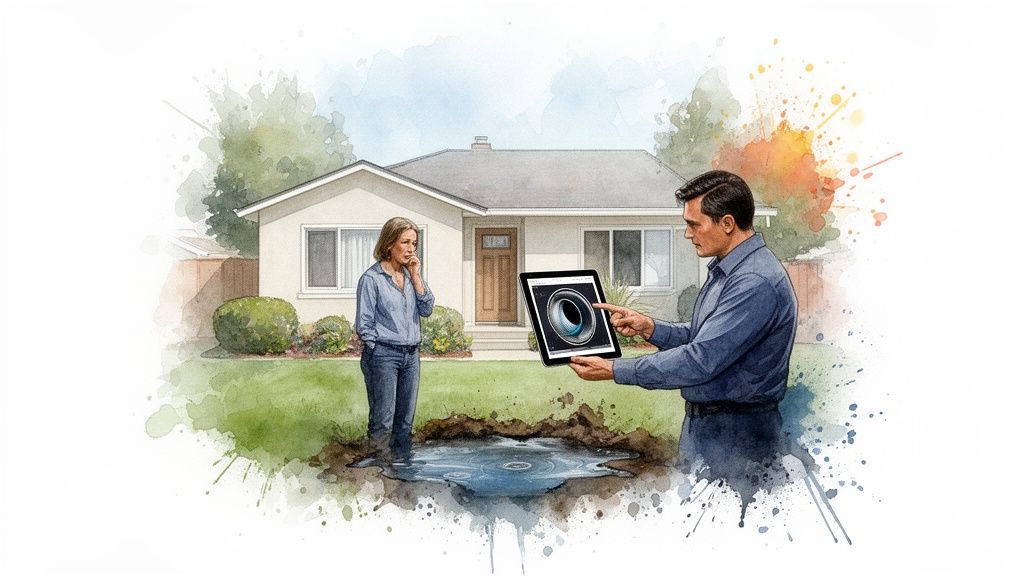
Discovering a broken sewer line is incredibly stressful. For homeowners in Sonoma or Monterey County, the big question becomes: invest in modern trenchless technology or stick with a traditional dig-and-replace job? Many fear making the wrong call and wasting thousands on a solution that doesn't last.
This guide provides a transparent cost-benefit analysis to help you decide. We cut through the sales pitches to show you that the "best" method depends on your property’s unique situation—from soil type to how your pipe failed.
Trenchless vs. Traditional Repair: The Core Differences
Making the right call can feel overwhelming, so let's break it down. This table gives you a quick, at-a-glance comparison of the two main approaches.
| Decision Factor | Trenchless Repair | Traditional Excavation |
|---|---|---|
| Property Disruption | Minimal. Requires only small access points, preserving your yard, driveway, and patios. | Maximum. Involves digging a long, deep trench directly over the old pipe. |
| Project Timeline | Fast. Most jobs are finished in a single day. | Slow. Can take several days or even a week, depending on complexity. |
| Total Cost | Higher upfront cost but fewer restoration expenses (landscaping, concrete work). | Lower per-foot digging cost, but expect high hidden costs for property restoration. |
| Durability | Creates a new, seamless "pipe-within-a-pipe" that's highly durable and root-resistant. | New pipe is durable, but multiple joints can become potential weak points over time. |
| Best-Case Scenario | Ideal for repairing pipes located under established landscaping, driveways, or buildings. | The only option for a completely collapsed or severely "bellied" (sagging) pipe. |
Trenchless repair isn’t just a buzzword—it’s a growing $8.4 billion industry, expected to expand as U.S. utilities face widespread pipe failures [Research and Markets, 2023]. Before you choose a method, you need to understand the problem. This guide to signs, causes, and solutions for a broken sewer line is a great resource.
And if you're already dealing with the messy aftermath, our guide on sewage damage clean-up can help you handle the immediate situation safely.
What Are the Main Trenchless Sewer Repair Methods?
When a sewer line fails, most homeowners picture a backhoe tearing up their lawn. But what if you could fix the problem without turning your property into a construction zone? That’s what trenchless sewer repair is all about.
The term "trenchless" means fixing your pipes with minimal digging. It shares principles with advanced methods like non-destructive digging techniques that prioritize safety and precision. Let’s break down the two most common methods: Cured-in-Place Pipe (CIPP) lining and pipe bursting.
Cured-in-Place Pipe (CIPP) Lining
Think of CIPP lining as creating a brand-new, joint-free pipe inside the old one. We insert a flexible, resin-soaked liner into the damaged pipe through a small access point—no massive trench needed.
Once in position, the liner is inflated against the walls of the original pipe. We then use heat or UV light to "cure" the resin, hardening it into a tough, seamless new pipe. CIPP is perfect for pipes with cracks or leaks that are otherwise structurally intact.
Pipe Bursting
What happens if the old pipe is collapsed or too small? That's where pipe bursting comes in. This is a full replacement method that still avoids digging a long trench.
We use a hydraulic machine to pull a new, high-density pipe through the path of the old one. A cone-shaped "bursting head" fractures the old pipe and pushes the fragments into the soil, allowing the new pipe to slide into place.
You can learn more about how these modern solutions are changing the industry in our article about the breakout year for underground pipe repairs.
Cost vs. Disruption: A Head-To-Head Comparison
When you're trying to decide if trenchless sewer line repair is worth the cost, you need a direct comparison. It’s not just about the price per foot; it’s about the total investment in time, money, and property impact.
Traditional excavation seems cheaper at first glance, but that number is misleading. It completely ignores the expensive, disruptive mess left behind.
The Hidden Costs Of Traditional Digging
The real financial gut punch of traditional repair comes from the "hidden" costs that pile up. These are the expenses that never show up on the initial plumbing quote.
Think about what you might have to repair or replace:
- Landscaping Restoration: Replacing sod, replanting gardens, and repairing sprinkler systems can add thousands to the final bill.
- Hardscape Reconstruction: If your sewer line runs under a driveway or patio, get ready for significant demolition and repaving costs.
- Extended Labor Fees: A project that drags on for days means higher labor bills and more chaos at home.
This is where the true value of trenchless repair becomes crystal clear. It eliminates nearly all of these secondary expenses, making its higher upfront cost much more competitive when you look at the total investment.
Total Cost Of Ownership: Trenchless vs. Traditional
| Cost Factor | Trenchless Repair (CIPP/Bursting) | Traditional Excavation |
|---|---|---|
| Initial Repair Cost | Higher per foot, but often lower overall due to fewer secondary costs. | Lower per foot, but this is only the starting point for total expenses. |
| Labor & Equipment | Less labor-intensive, specialized equipment. Usually completed in 1-2 days. | High labor costs, heavy machinery. Can take several days to over a week. |
| Landscaping Repair | Minimal to none. Two small access points are easily restored. | Very high. Full replacement of sod, gardens, trees, and sprinklers. |
| Hardscape Repair | Minimal to none. Avoids demolition of driveways, patios, walkways. | Extremely high. Requires demolition and complete reconstruction of concrete/pavers. |
| Long-Term Value | High. Preserves property value by leaving landscape and hardscape intact. | Can lower curb appeal and property value due to extensive, visible repairs. |
This table shows why the upfront price tag is only a small part of the story. When you account for the restoration nightmare that comes with digging, trenchless methods often emerge as the more financially sound choice.
Below is an overview of the two main trenchless methods, which offer distinct advantages depending on the situation.
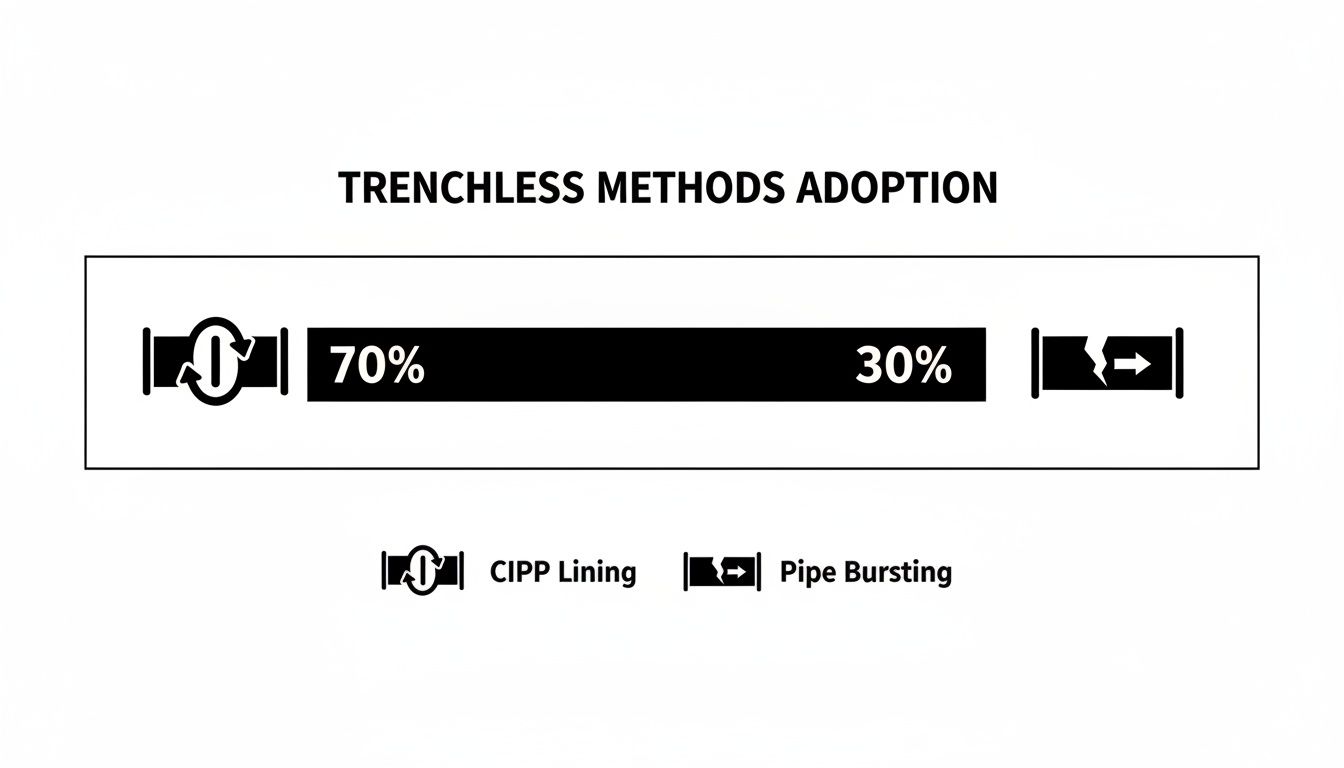
For a deeper dive into common misconceptions, you can read our guide on the truth about trenchless pipe repair that most homeowners don’t hear. This comparison highlights why taking a comprehensive look at both cost and disruption is critical.
When Is Trenchless Repair a Bad Idea?
While trenchless technology offers incredible benefits, it's not a cure-all. Many homeowners assume trenchless is always better or always too expensive. In reality, trenchless isn’t a one-size-fits-all fix.
Knowing when to stick with traditional excavation is key to a successful repair. A trenchless repair can fail if the slope is wrong, the pipe is fully collapsed, or the wrong liner type is used. That’s why some jobs still need a traditional dig.
Specific Scenarios Demanding Excavation
Certain pipe conditions make trenchless methods a non-starter. Trying to force a trenchless fix in these situations is a recipe for a failed repair and wasted money.
Here are the main situations where digging is the only right answer:
- Completely Collapsed Pipes: When a pipe is pancaked, there's no hollow channel left for a liner or bursting head. Excavation is the only way to remove the failed section and lay a new pipe.
- Severe Pipe Sags or "Bellies": Over time, shifting soil can cause a section of your sewer line to dip, creating a low spot that collects waste. Relining a bellied pipe just gives you a new pipe with the same sag. The only real fix is to dig it up and re-establish the proper grade.
- Improper Slope or Grade: A sewer line needs a consistent downward slope. If the pipe was installed incorrectly from the start, a trenchless repair just locks in that original mistake.
Why You Need an Honest, Site-Specific Assessment
Choosing the right method always starts with a thorough camera inspection. At DW Excavation, we prioritize the right solution over the easy one, bringing an engineering-focused mindset to every assessment in Sonoma and Monterey County.
If trenchless is the best fit, we'll explain why. But if your pipe's condition demands traditional methods, we'll be straight with you. Sometimes, a hybrid approach (partial excavation + relining) is the safest and most cost-effective solution, especially for jobs like stormwater trenching emergencies.
Making The Right Choice For Your California Property
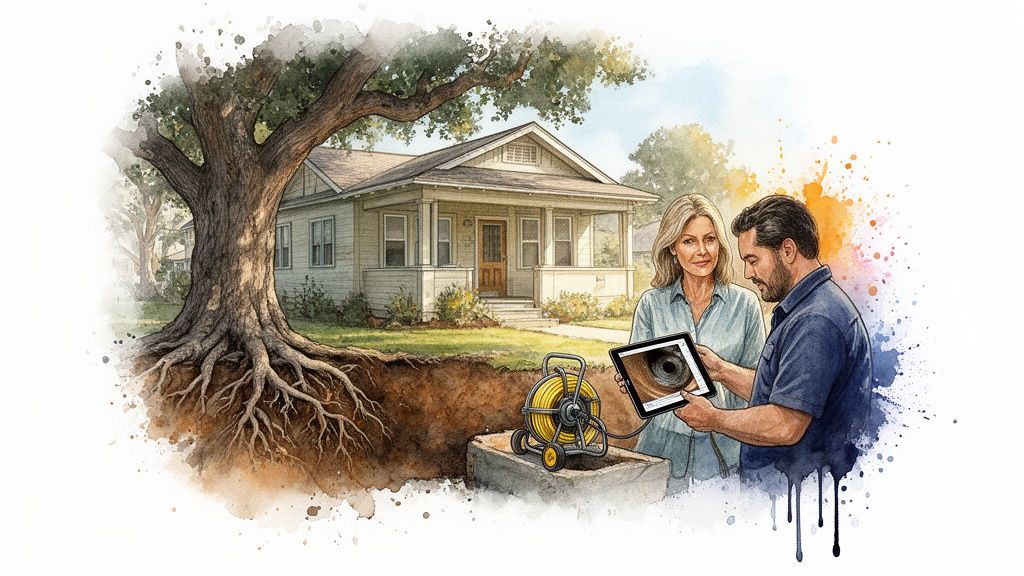
Figuring out if trenchless sewer repair is worth the cost isn't just a technical question—it's a local one. For property owners in Sonoma and Monterey Counties, factors like older housing stock, aggressive tree roots, and the unique soils of the California Central Coast play a massive role.
A generic quote over the phone is never enough. The only way to make a smart investment is to start with a professional, on-site evaluation, including a high-definition camera inspection.
What A Professional Site Evaluation Includes
Before choosing a repair method, you need a clear diagnosis. A comprehensive evaluation looks at multiple factors to determine if trenchless is viable or if a traditional dig is the safer bet.
An expert assessment will investigate:
- Pipe Material and Condition: Is it old clay, cast iron, or PVC? Are there minor cracks, root intrusion, or a total collapse?
- Slope and Grade: Does the pipe have the proper downward slope, or has it developed a "belly" that’s trapping waste?
- Soil Type: The sandy or clay-heavy soils along the Central Coast can shift, affecting the pipe's stability.
- Accessibility: Is the sewer line buried under mature trees, a custom patio, or a new driveway?
DW Excavation’s Engineering-Integrated Approach
Many contractors offer the one solution they happen to sell. At DW Excavation, we bring an engineering-focused mindset to every project. We don't just patch the problem; we identify the underlying cause to ensure the solution holds up for decades.
We explain when trenchless technology will provide a durable repair and when digging is safer. Our goal is to provide honest, expert advice—not just one solution. Worried about your pipes? Our article on scheduling pipe repair before the next storm hits might be helpful.
Frequently Asked Questions About Trenchless Repair
Even after weighing the pros and cons, you probably still have questions. Here are some of the most common questions we hear from property owners across California.
How long does a trenchless sewer repair take?
One of the biggest advantages of trenchless repair is speed. Most projects, whether CIPP lining or pipe bursting, can be completed in a single day. This is a stark contrast to traditional excavation, which can disrupt your life for a week or more.
How long does a trenchless repair last?
This isn't a temporary patch. A professionally installed trenchless liner or a new HDPE pipe is engineered to last for 50 years or more [Trenchless Technology Center, 2022]. The seamless, corrosion-resistant materials eliminate the joint failures common in older pipes, giving you decades of peace of mind.
What kind of warranty should I expect for trenchless repair?
A reputable contractor will stand behind their work with a solid warranty. For trenchless repairs, you should expect a warranty covering both materials and labor for anywhere from 10 to 25 years. Always get the warranty details in writing before signing a contract.
Can trenchless repair fix any type of pipe?
Trenchless methods are highly versatile and work with most common pipe materials, including cast iron, clay, and PVC. However, it cannot fix a completely pancaked pipe or a line with a severe "belly" or incorrect slope. A camera inspection is the only way to know for sure.
Will trenchless sewer repair increase my property value?
Absolutely. A brand-new, 50-year sewer line is a massive selling point for potential buyers. By preserving your landscaping, driveway, and curb appeal, trenchless repair protects your home's overall value far more effectively than a destructive trenching project.
If you're in Sonoma or Monterey County and wondering what’s really going on beneath your lawn, DW Excavation can help you find out—before you commit to the wrong fix. Contact us for a real, engineering-focused assessment based on your property's specific needs, not a one-size-fits-all sales pitch. Visit us at https://dw-excavation.com to schedule your consultation.