
It’s a homeowner’s nightmare: you spend thousands on a beautiful new driveway, only to watch it crack, sink, or grow weeds in just a few months. When this happens, it's easy to blame the new asphalt, but the real culprit is almost always what lies beneath.
The real question homeowners are asking is: what went wrong—and how do I avoid it next time? Getting the answer wrong is the single most expensive mistake you can make when repaving.
Why Do New Driveways Fail So Quickly?
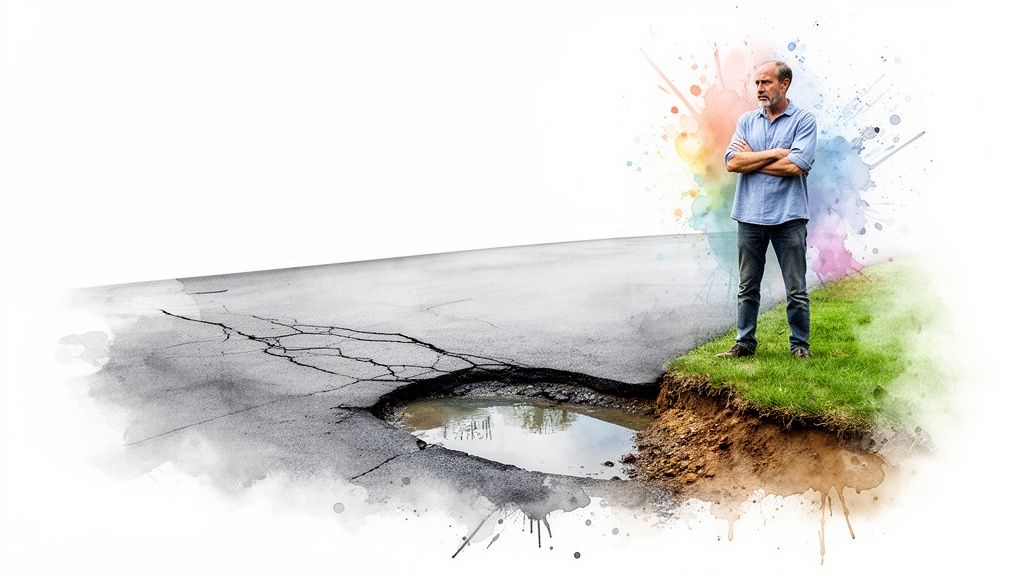
When a brand-new driveway shows distress within its first year, it’s natural to feel frustrated. The most common cause of early driveway failure isn’t the asphalt itself—it’s the grading and soil preparation underneath.
Simply paving over an old, damaged surface without fixing the underlying issues is like putting a fresh coat of paint on a rotting wall. It looks good for a minute, but the original problem will quickly show through.
Why the Base Matters More Than the Surface
The ground beneath your driveway has to be properly shaped, sloped, and compacted. This foundation supports thousands of pounds of vehicle weight and, just as importantly, sheds water effectively.
Many homeowners fall for the lowest bid from a contractor who skips this vital step. No compaction, no drainage planning, and no proper sub-base. This shortcut leads directly to these common driveway failures:
- Cracking and Potholes: Water gets trapped in the uncompacted base, freezes, expands, and shatters the new asphalt from below.
- Sinking and Rutting: The ground shifts and settles unevenly under your cars, creating ugly and dangerous dips.
- Weed Growth: Cracks created by a weak base give weeds the perfect place to take root and push through your new surface.
Studies show that driveways with proper base grading and compaction can last over 20 years, but shortcuts can cut that lifespan in half [Federal Highway Administration, 2022].
For homeowners in Sonoma and Monterey County, where seasonal rains can be intense, proper drainage is non-negotiable. An improperly graded driveway can channel water directly toward your home's foundation, creating far bigger problems.
Paving Over Problems vs. Building a Lasting Solution
This table contrasts the short-term appeal of skipping grading with the long-term reality.
| Approach | Immediate Outcome | Long-Term Reality (2-5 Years) |
|---|---|---|
| Paving Over Existing Damage | Looks great at first, with a lower initial cost. | Cracks, potholes, and sinking appear. You'll likely need another full replacement, costing more. |
| Proper Grading & Repaving | Higher upfront investment and takes slightly longer. | A durable, stable driveway that enhances curb appeal and lasts for decades. |
Investing in proper grading isn't just an expense; it's insurance against redoing the entire job in a few years. For more details, see our guide on fixing drainage and grading problems.
Understanding What Driveway Grading Actually Is
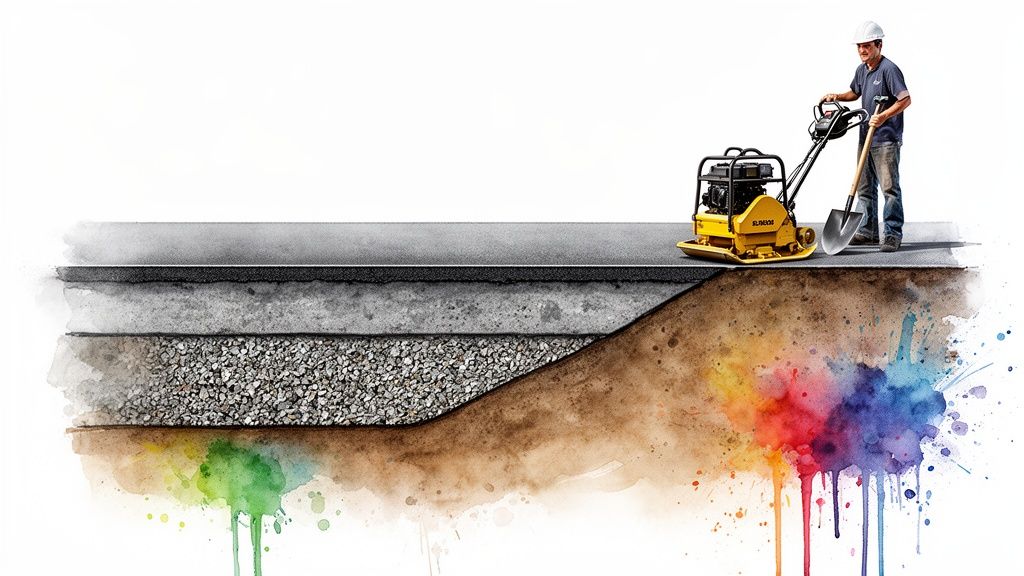
Most people focus on the smooth, black surface, but the secret to a long-lasting driveway lies hidden underneath. So, what exactly is driveway grading?
Grading is the process of preparing the earth beneath your driveway to create a solid, stable, and properly angled foundation. It’s an engineered process with two critical jobs that determine whether your investment lasts for decades or falls apart.
Creating a Solid, Compacted Foundation
First, grading establishes a firm, uniformly compacted sub-base. This engineered base spreads the heavy load of vehicles evenly, which stops the ground from shifting or settling over time.
Without this step, certain spots take more punishment, leading directly to the ruts, dips, and sunken areas you see in failing driveways.
Engineering Proper Water Drainage
The second job of grading is even more important: managing water. Water is the worst enemy of any pavement, causing rapid deterioration when it pools on the surface or seeps into the base.
Professional grading creates a precise, gentle slope—usually around a 2% grade—that channels rainwater away from your driveway and your home’s foundation. This prevents:
- Sub-Base Erosion: Standing water washes away the supportive material beneath your asphalt.
- Freeze-Thaw Damage: Trapped water freezes, expands, and shatters pavement from below.
- Foundation Issues: Bad drainage can send thousands of gallons of water straight toward your home.
A professionally graded sub-base is your best defense against water damage, especially in Sonoma and Monterey County. We've got more expert grading tips before the rain hits to help you prepare.
Warning Signs Your Driveway Needs Grading
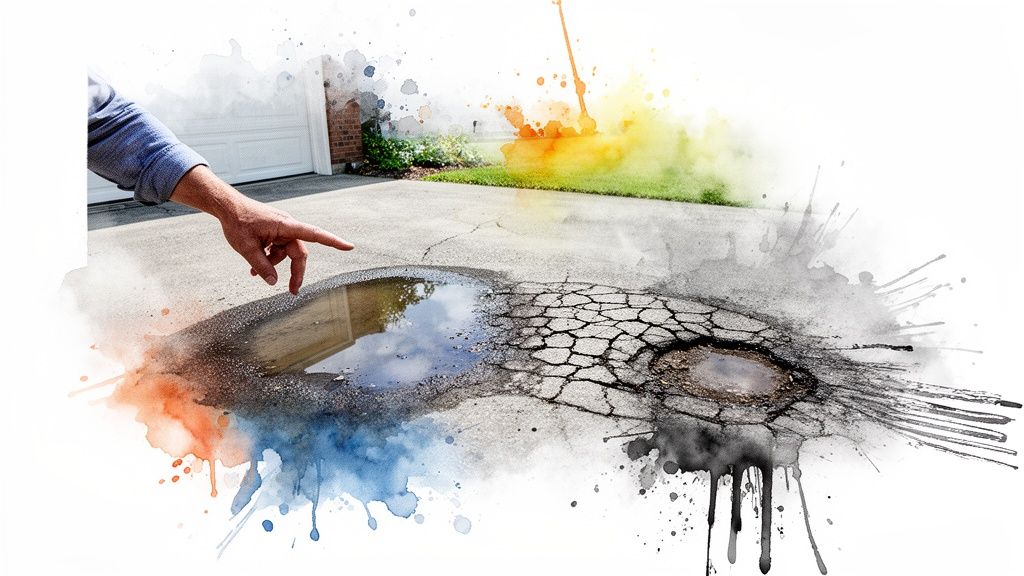
Before you repave, take a hard look at your existing driveway. Those cracks and puddles are often symptoms of a much deeper problem hiding in the foundation.
Paving over these issues is like putting a bandage on a serious wound. The underlying problem will always come back, usually worse than before.
Decoding Driveway Distress Signals
This quick guide connects what you see on the surface to what’s happening underneath.
| Symptom | What It Looks Like | What It Really Means |
|---|---|---|
| Puddles & Standing Water | Mini-lakes that stick around for hours or days after rain, especially near your garage or foundation. | The slope is wrong. The driveway isn't graded to direct water away, so it pools and seeps into the base, weakening everything. |
| Alligator Cracking | A web of interconnected cracks that look like an alligator's skin. | This is a classic sign of base failure. The foundation can no longer support vehicle weight, causing the asphalt to flex and break. |
| Sinking & Ruts | Noticeable dips, sags, or two parallel grooves where your tires always run. | The sub-base wasn't compacted correctly from the start. The ground is settling unevenly under pressure. |
| Deep Potholes | More than just a shallow hole—these are craters where the pavement has completely given way. | This is a total failure of the base in one spot. Water has likely infiltrated and washed away the foundation material. |
By spotting these issues early, you can avoid wasting money on a cosmetic fix and invest in a solution that lasts.
Puddles and Persistent Pooling Water
Standing water is the most obvious red flag. If your driveway turns into a collection of ponds every time it rains, you have a grading problem.
Those puddles are more than an annoyance. Water works its way into the sub-base, turning a solid foundation into a soft, unstable mess.
Alligator Cracking and Widespread Damage
Have you spotted a pattern of cracks that looks like reptile skin? In the paving world, we call this alligator cracking, and it’s a five-alarm fire for your driveway's foundation.
Slapping a new layer of asphalt on top of this is a fool's errand. The only way to fix it for good is to rebuild and regrade the base. For a deeper dive, check out our complete Sonoma County driveway paving and grading guide.
Sinking, Ruts, and Deep Potholes
If your driveway has developed permanent ruts or has areas that are visibly sinking, the ground wasn't compacted properly. The soil is shifting unevenly.
Paving over potholes or sunken areas without addressing the grading is a guaranteed waste of money. The new asphalt will sink into the same weak spots, and you’ll see those problems reappear within a year.
Avoiding the 'Pave and Pray' Contractor Trap
It’s tempting to accept a paving quote that's way lower than the rest. But a low bid is almost always a red flag for the "pave and pray" approach—a shortcut that cuts corners on site preparation.
These contractors ignore grading, skip soil compaction, and don't think about drainage. Their business model is built on a quick, cosmetic layer of asphalt that looks great for months but is guaranteed to fail.
The True Cost of Cutting Corners
Choosing a proper, engineered approach might have a slightly higher upfront cost, but it saves you thousands in the long run. An improperly graded driveway leads to constant repairs and a much shorter lifespan.
The numbers don't lie. Driveways without a proper foundation often fail at twice the rate, turning a one-time project into a frustrating cycle of expensive fixes [Pavement Interactive, 2023]. Angi offers a great cost breakdown that sheds more light on a quality paving job.
What Quality Preparation Really Looks Like
A quality contractor invests time upfront to perfect the foundation before any asphalt is laid. This meticulous process is the only way to build a driveway that lasts.
Professional preparation involves:
- Thorough Site Assessment: Evaluating soil conditions, checking the existing slope, and mapping drainage.
- Complete Removal: Tearing out all old, failed asphalt to get down to the sub-base.
- Expert Regrading: Reshaping the ground to create a precise slope that directs water away from your home.
- Layered Compaction: Compacting the sub-base in layers to build a dense, stable foundation that won’t shift.
This engineered method is the difference between a driveway that looks good for three years and one that lasts for thirty. We've detailed the common pitfalls when hiring local paving services in another guide.
The Professional Process for a Driveway Built to Last
A driveway that stands the test of time isn’t a happy accident. It’s the result of a deliberate, engineered process.
This professional method is the polar opposite of the cheap "pave and pray" shortcut.
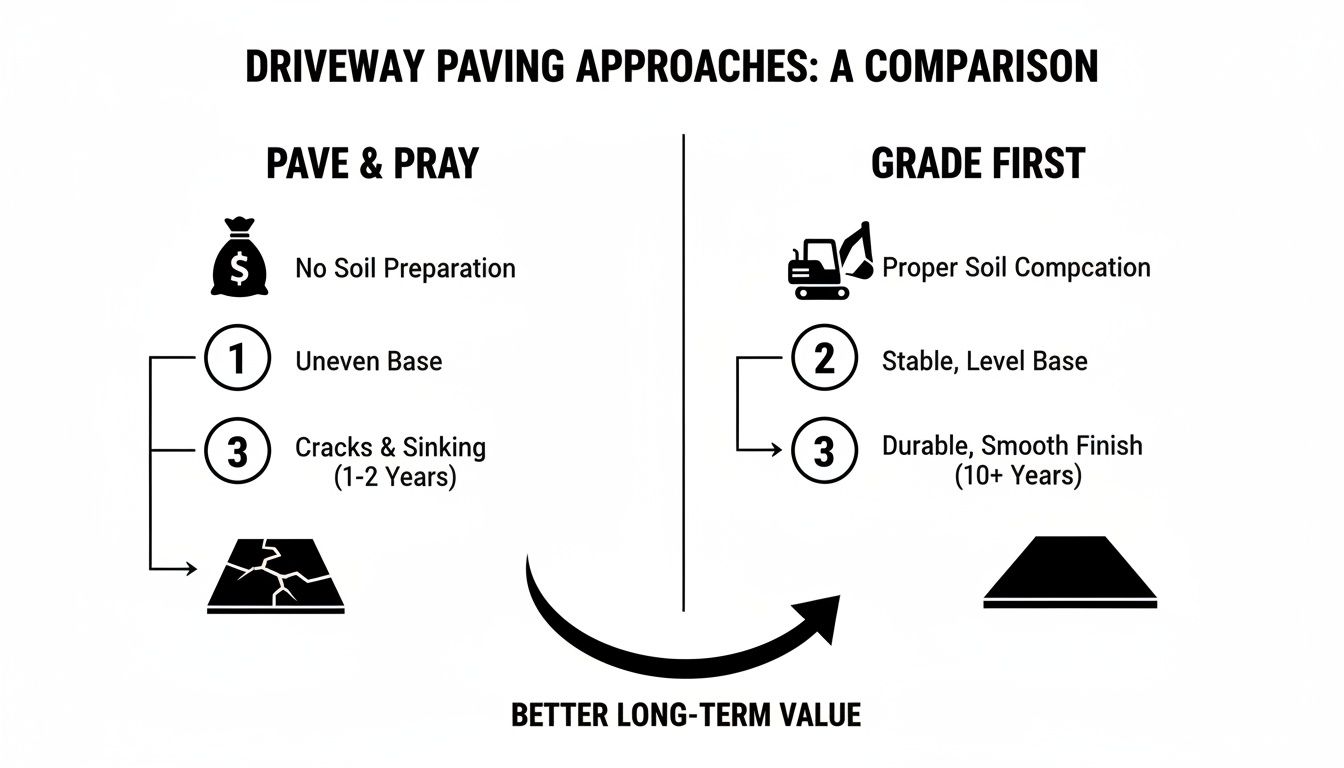
The takeaway is clear. While shortcuts might look tempting, the engineered "Grade First" approach is the only path to a driveway you can depend on.
Step 1: Thorough Site Assessment and Planning
The process kicks off with a comprehensive evaluation. A true pro gets boots on the ground to assess soil type, map drainage patterns, and measure every slope.
Step 2: Complete Removal of Old Asphalt
Next, every bit of old, failing asphalt has to go. This demolition phase rips off the band-aid, exposing the sub-base so we can rebuild it from the ground up.
Step 3: Expert Sub-Base Grading and Compaction
This is the most critical stage. The exposed sub-base is expertly graded to create a precise slope that forces water away from your foundation. The soil is then compacted in layers, creating a dense, stable platform.
Step 4: Installation of a Stable Aggregate Base
Once the soil is graded, we add a layer of crushed aggregate (gravel). This layer, typically 4 to 8 inches thick, acts as the driveway's structural backbone and provides crucial drainage.
In California, where our heavy winter rains hit hard, ungraded driveways can fail 60% faster because of poor drainage. You can learn more about these federal findings in their official construction guide.
Step 5: Precision Paving and Finishing
Only when the foundation is perfect do we pave. Hot mix asphalt is laid at a consistent depth and professionally compacted to create a smooth, dense, and water-resistant surface.
For a detailed look at this process, check out our ultimate guide to Monterey driveway excavation and leveling.
Paving Done Right the First Time—Guaranteed
So, do you need to regrade before you repave? If you want a job that lasts, the answer is almost always yes.
Pouring fresh asphalt over a failing base is a short-term patch that guarantees the same cracks and puddles will reappear within a year or two. At DW Excavation, we don’t just slap down asphalt—we engineer driveways from the ground up.
An Engineered Approach to Paving
Our entire process is built on a deep understanding of soil mechanics and water management. We know every project is different.
That’s why our commitment goes beyond just paving:
- We Check the Slope: We ensure a precise grade to channel water away from your foundation.
- We Analyze the Soil: We assess the sub-base to guarantee it’s properly compacted.
- We Engineer for Drainage: We design solutions that prevent erosion and water damage.
We stand by our work. If something isn’t right after installation, our team is back on-site within 48 hours to make it right.
Local Expertise You Can Count On
Serving Sonoma and Monterey County, DW Excavation knows how local soils, rains, and regulations affect your driveway’s durability. We build driveways designed to handle our region's environmental pressures.
Avoid the frustration of a failing driveway. Book a professional site assessment with our team. We’ll give you a clear, honest plan for a beautiful driveway that adds value to your property for years.
Your Driveway Grading Questions, Answered
Got questions about driveway grading? You're not alone. Here are straightforward answers to the questions we hear most often.
How much does it cost to grade a driveway?
The cost depends on your driveway's size, slope, and existing soil conditions. While grading can add 15-30% to the upfront cost, it prevents catastrophic failure and saves you a fortune in the long run. We provide a precise quote after a thorough site assessment.
Can I just pave over my old driveway?
Paving over an old driveway is only an option if its base is perfectly stable with zero cracks or drainage problems—which is rare. For most driveways, an overlay is a temporary bandage. The same problems will reappear within a year or two.
How long will my new driveway last with proper grading?
A driveway built on a professionally graded and compacted base can easily last 20 to 30 years. Compare that to a driveway paved over a poor foundation—it might start failing in as little as three to five years, especially in places with heavy rain like Sonoma County.
Do I need a permit for driveway grading in California?
In many parts of California, yes. Significant grading work often requires a permit, especially if the project alters drainage patterns. A qualified contractor like DW Excavation manages the entire permitting process for you, ensuring your project is fully compliant.
What happens if a contractor skips compaction?
Skipping compaction leaves the sub-base loose and unstable. The weight of your vehicles and rainwater will cause the base to shift and settle unevenly. This directly leads to the sinking, rutting, and "alligator cracking" that destroys driveways from the ground up.
Ready to invest in a driveway that's actually built to last? The team at DW Excavation provides expert grading and paving services engineered for California's unique climate. Book a professional site assessment today and get your project done right the first time.