The short answer is yes, you can put asphalt over concrete. This process, called an asphalt overlay, is a popular and often cost-effective way to get a fresh, new surface without the massive headache and expense of a full demolition and replacement. But there's a huge catch: it only works if the concrete underneath is structurally sound.
Paving over a failing foundation is a costly mistake that guarantees you'll be paying for the job twice. For property owners in Sonoma and Monterey counties, understanding when an overlay is a smart investment versus a short-term patch is critical.
Why Paving Asphalt Over Concrete Requires an Expert Eye
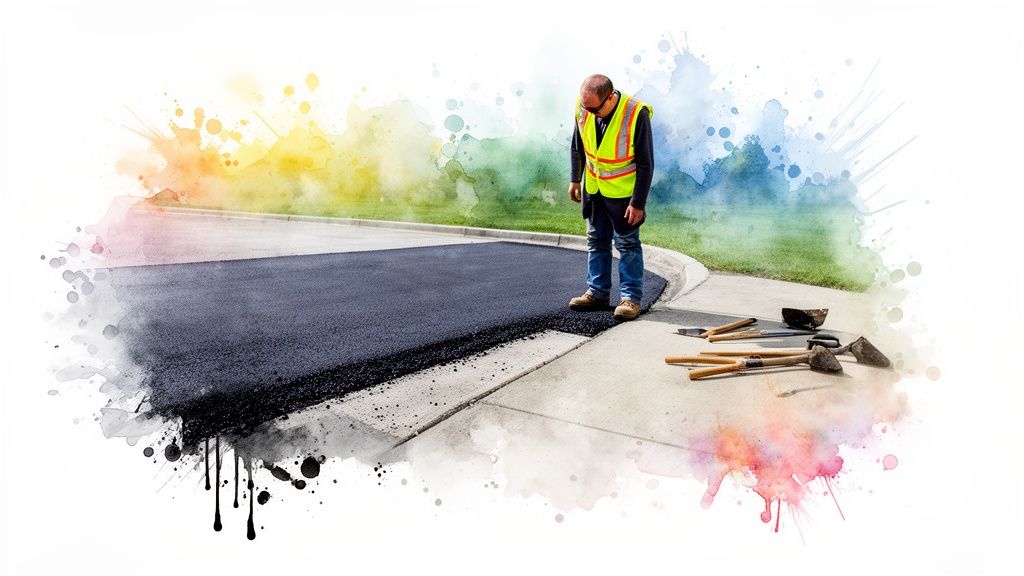
Think of your existing concrete driveway as the foundation of a house. If that foundation is cracked, shifting, or crumbling, anything you build on top of it is doomed to fail. The new asphalt will simply inherit all those existing problems, leading to a cracked, uneven surface in no time.
A successful overlay starts with a professional assessment of the underlying structure, paying close attention to the existing concrete foundations. Any weakness or instability in that base layer will telegraph straight through to your brand-new asphalt, a frustrating and expensive outcome for any homeowner.
When an Asphalt Overlay Makes Sense
An asphalt overlay is an excellent choice under the right circumstances. It saves a significant amount of time, cuts down on material waste, and is almost always more budget-friendly than a complete tear-out.
Here are the ideal scenarios for an overlay:
- Structurally Sound Concrete: The slabs underneath are stable, level, and show no signs of major sinking, heaving, or movement.
- Minor Surface Imperfections: The problems are purely cosmetic—think surface stains, discoloration, or tiny hairline cracks.
- A Desire for a Quick Upgrade: The installation is much faster than removing old concrete and pouring new, meaning less disruption to your home or business.
When Is an Overlay a Costly Mistake?
On the flip side, trying to pave over deep-seated structural issues is just throwing good money after bad. Your new asphalt surface will crack, crumble, and deteriorate quickly, forcing you to pay for the job all over again.
You should steer clear of an overlay if you see any of these red flags:
- Large, Deep Cracks: Any cracks wider than a quarter-inch are a bad sign. If one side of the crack is higher than the other (vertical displacement), that's a sure sign of base failure.
- Shifting or Sunken Slabs: Uneven sections mean the soil underneath the concrete is unstable, a problem a layer of asphalt can't fix.
- Widespread Crumbling: If the concrete is spalling (flaking) or breaking apart, the new asphalt won't have a solid, stable surface to bond to.
Asphalt Overlay Quick Decision Guide
Use this table to quickly assess if an asphalt overlay is a smart choice for your concrete surface.
| Current Concrete Condition | Is an Asphalt Overlay a Good Idea? | Why or Why Not |
|---|---|---|
| Solid, level, with only minor hairline cracks or stains | Yes, excellent choice. | The concrete provides a stable base, and the overlay is an efficient cosmetic and functional upgrade. |
| Multiple cracks wider than a 1/4 inch | No, not recommended. | These are "reflective cracks" that will quickly appear in the new asphalt, signaling underlying movement. |
| Uneven slabs, sinking, or heaving sections | Absolutely not. | This points to a failed sub-base. The asphalt will follow the contours of the unstable concrete and fail. |
| Surface is crumbling, flaking, or "spalling" | No. | The new asphalt needs a solid surface to adhere to. A deteriorating base will cause the overlay to break apart. |
Understanding the difference between a good candidate for an overlay and a bad one is the key to a long-lasting, durable paving project. To see how we handle these projects with expertise, you can learn more about DW Excavation’s professional paving services on the California Central Coast.
The Pro’s Playbook for a Perfect Asphalt Overlay
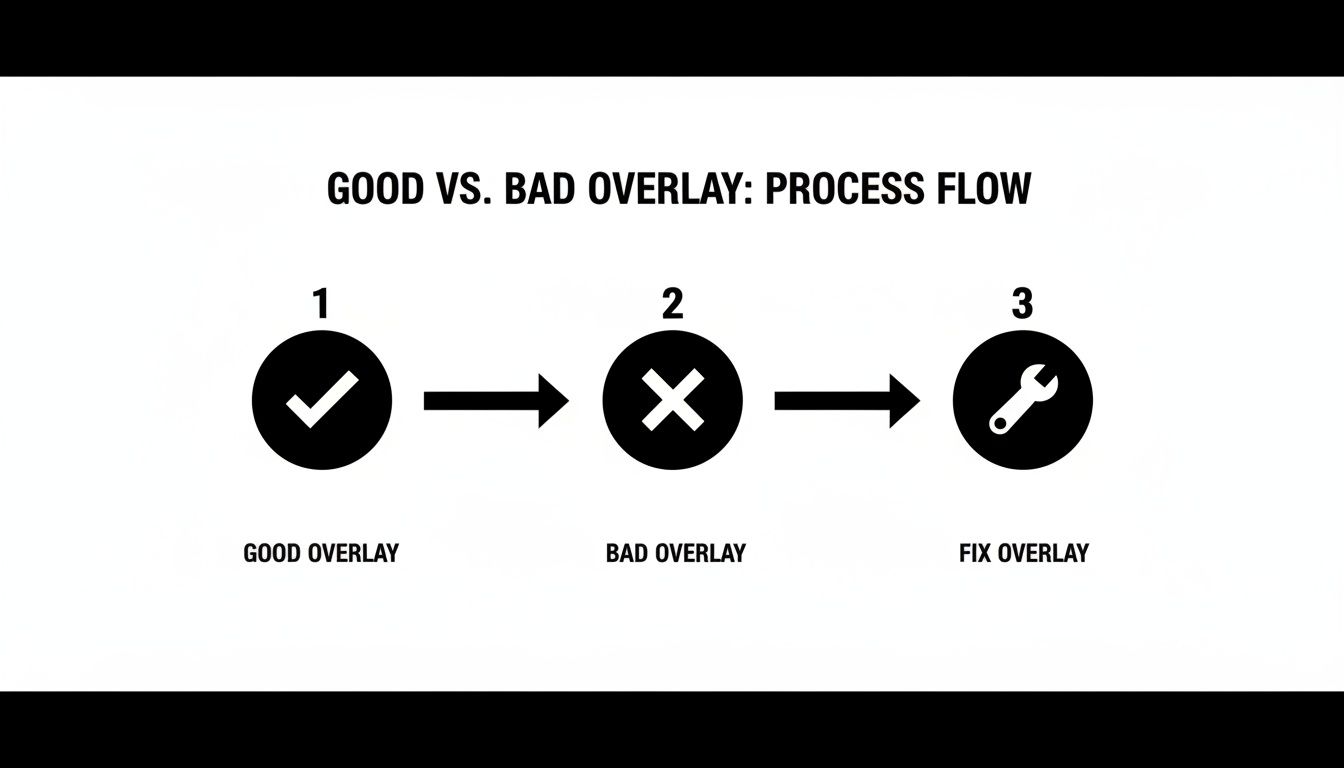
Laying a durable asphalt surface over concrete isn't about taking shortcuts; it's an engineered process where every step builds on the last. Skipping a step compromises the entire job, leading to premature failure and costly repairs.
This methodical approach ensures the new asphalt layer bonds properly and can handle everything from daily traffic to Sonoma County's wet winters. From the first inspection to the final pass of the roller, every action is about maximizing strength and longevity.
Step 1: Thorough Surface Inspection and Cleaning
Before any equipment arrives, a detailed inspection is performed to spot hidden issues that could sabotage the overlay. A trained eye will look for signs of instability, poor drainage, and the true severity of any cracks.
Once the concrete gets the green light, it undergoes a deep cleaning using high-power washing or mechanical brooming. A spotless surface is non-negotiable for a strong bond between the old concrete and new asphalt.
Step 2: Meticulous Crack Repair and Sealing
Next is the most critical phase: addressing every crack and joint in the old concrete slab. Ignoring this step is the #1 cause of "reflection cracking"—when old flaws ghost their way up through new asphalt.
Each significant crack is cleaned and filled with a specialized, flexible sealant. This prevents water intrusion and allows for tiny movements without breaking the bond, separating a professional job from a temporary patch. To learn more about what separates quality work from corner-cutting, check out the truth about excavation projects most contractors don't tell you.
Step 3: Applying a Tack Coat for a Super-Strong Bond
With the surface prepped, we apply a tack coat. This is a thin layer of liquid asphalt emulsion that acts as an industrial-strength glue between the old concrete and the new asphalt. It creates an incredibly powerful bond, ensuring the two layers act as one solid, unified slab.
A tack coat is not optional. Without it, the new asphalt will shift, slide, and delaminate under the stress of vehicle weight and temperature swings, leading to quick and catastrophic failure.
Step 4: Precise Laying and Compaction
Finally, hot-mix asphalt is laid over the tacky surface using professional paving equipment for a consistent and even thickness. Then come the rollers, which are critical for the asphalt's strength and durability.
Heavy rollers make multiple passes, compressing the new asphalt to the specified density. This process squeezes out air pockets and creates a smooth, tough, and water-resistant finish built to last. For top-tier results, many crews now use modern solutions like battery-powered compaction equipment to get the job done efficiently.
How Professionals Prevent Reflection Cracking
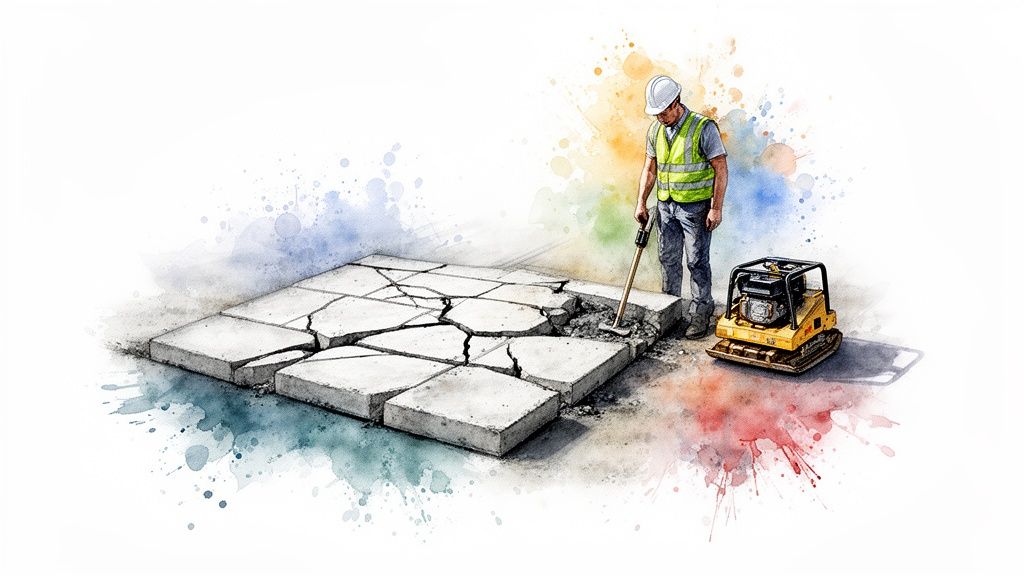
The number one enemy of an asphalt overlay is reflection cracking. This is when existing cracks and joints from the concrete below eventually ghost their way up to your new asphalt surface. Simply paving over the problem is a rookie mistake and a guaranteed recipe for failure.
A true professional doesn't just hide these weak points—they neutralize them before laying any asphalt. This proactive approach is what separates a driveway built for years of performance from one that fails after the first season.
Advanced Mitigation Techniques
To win the battle against reflection cracking, experienced contractors use specialized methods to decouple the new asphalt from the movement happening below. One of the most effective strategies is a process called cracking and seating.
This technique involves intentionally breaking the old concrete slab into smaller, more stable pieces, usually around two to three feet in size. A heavy roller is then used to "seat" these smaller sections, pressing them firmly into the subgrade. This transforms a rigid slab prone to shifting into a stable, interlocking base that better distributes stress.
Why It's a Game-Changer
The cracking and seating method fundamentally changes the behavior of the foundation, creating a more flexible and forgiving base. A comparative study found this preparation technique delayed the appearance of most transverse cracks for five years, while sections without this prep showed reflection cracking almost immediately [findings on crack prevention techniques, 1985].
For projects across Sonoma and Monterey Counties, where shifting soils and temperature swings are a given, this level of prep work is essential for long-term durability. It’s a clear sign of a contractor who takes an engineering-first approach to building a surface that truly lasts.
Why a Strong Bond Is Your Best Defense Against Pavement Failure
When you put asphalt over concrete, you are engineering a single, unified structure. The long-term success of this project hinges entirely on the bond between the new asphalt and the old concrete.
Laying hot asphalt directly onto untreated concrete is a recipe for disaster. The asphalt will never properly adhere, creating a weak point where moisture can sneak in and cause damage from the inside out.
The Science of Sticking It Out
To create a bond that lasts, paving professionals rely on two key components: a tack coat and the right asphalt binder. The tack coat acts as the primary adhesive, ensuring the new asphalt layer locks firmly into place.
The binder within the asphalt mix itself also plays a huge role. In climates like we have in Sonoma and Monterey counties, the choice of binder is crucial for flexibility and durability. Research shows that mixes using certain aggregates like sandstone can be 20-30% more prone to cracking, highlighting why professional material selection is so critical [asphalt material performance from ARDOT, 2022].
Why Material Choices Matter in California
Here on the Central Coast, pavement constantly expands in the summer heat and contracts during our chilly, damp winters. This movement puts immense stress on the bond between the asphalt overlay and the concrete base.
An improperly chosen binder can become too brittle in the cold or too soft in the heat. By choosing the correct combination of tack coat and asphalt mix, a contractor ensures the new surface can handle these cycles without delaminating. To stay current on material science, explore some of the smart paving trends California homeowners should know.
How Long Will Your New Asphalt Last?
A professionally installed overlay on a solid concrete base can realistically give you 10 to 20 years of service. The final lifespan hinges on the condition of the concrete underneath, traffic volume, and the California Central Coast climate.
The good news is, a little proactive care goes a long way. Simple, consistent maintenance can easily add years to its life, keeping it looking sharp and performing flawlessly.
Getting the Most Out of Your Investment
- Sealcoat Every 3 to 5 Years: Sealcoat creates a tough barrier against UV rays, water, and oil spills that make asphalt brittle and prone to cracking.
- Fill Cracks Right Away: Sealing a small crack immediately with a rubberized filler stops water from sneaking underneath and wrecking the base.
- Keep It Clean: Regularly sweeping away dirt, leaves, and debris prevents staining and protects the asphalt binder from breaking down.
A long-term study of asphalt overlays on concrete pavement found one section remained almost completely crack-free after nine years of heavy traffic, saving an estimated $18 million in reconstruction costs [long-term paving performance findings, 2005]. Of course, proper drainage is also key; see our guide on why Monterey driveways fail after rain.
FAQs: Paving Asphalt Over Concrete
1. How much does it cost to put asphalt over a concrete driveway?
The cost depends on your driveway's square footage, the concrete's condition, and the required asphalt thickness. However, an overlay is almost always more affordable than a full demolition and replacement, which includes significant labor and disposal fees. A professional site assessment is the only way to get an accurate quote for your Sonoma County property.
2. How thick should an asphalt overlay be?
For a typical residential driveway in California, the industry standard is a compacted thickness of 2 to 3 inches. This depth offers a great balance of durability and structural strength for daily traffic from cars and light trucks. Heavier vehicles may require a thicker layer.
3. Can I just fill my concrete cracks with asphalt?
No, this is a common mistake that is guaranteed to fail quickly. Hot mix asphalt will not bond properly inside a narrow concrete crack and will pop out as the concrete expands and contracts. Cracks must be professionally cleaned and sealed with a specialized, flexible sealant before an overlay is considered.
4. Do I need a permit for an asphalt overlay in Sonoma or Monterey County?
Permit rules vary by city and county. A simple overlay that doesn't change the driveway's size or drainage often doesn't need a permit. However, if the project alters the slope or water runoff, a permit is likely required. It's always best to consult a local contractor familiar with Central Coast regulations.
5. What happens if a contractor skips the tack coat?
Skipping the tack coat is a major red flag. It is the essential "glue" that chemically bonds the new asphalt to the old concrete. Without it, the layers will never fuse, leading to slippage, cracking, and rapid failure of the entire surface. A tack coat is non-negotiable for a quality job.
Ready to find out if an asphalt overlay is the right solution for your property? The experts at DW Excavation, LLC provide honest assessments and professional paving services built to last. Contact us today for a free consultation.