Quick Answer
Asphalt tack oil is the bonding layer sprayed between asphalt surfaces so old and new pavement stick together as one. If that bond is weak or skipped, the surface can slip, crack, or separate early. For a driveway or road to hold up, tack oil has to be chosen and applied correctly.
If you're planning a new driveway, an overlay, or a repair after utility work, you'll probably hear the term asphalt tack oil. It sounds like a minor detail, but it isn't. It's one of the steps that decides whether the pavement holds together for the long run or starts failing at the bond line.
This matters even more in places like Sonoma County and the California Central Coast, where heat, fog, damp mornings, and surface contamination all affect how well asphalt layers stick. If you want a plain-language look at the bigger picture, this article on what really makes pavement last is a good companion read.
What Is Asphalt Tack Oil and Why Is It So Important
A common failure starts like this. A driveway overlay looks clean and smooth on day one, then a year or two later the top layer starts slipping where cars brake, turn, or climb. The problem often is not the asphalt mix itself. It is the bond between the old surface and the new one.
Asphalt tack oil, also called tack coat, is the sprayed asphalt emulsion placed between pavement layers so they bond and carry traffic together. If that bond is weak, the new mat can shift independently instead of working as part of one pavement section. That is how you get slippage cracks, shoving, edge separation, and early delamination.
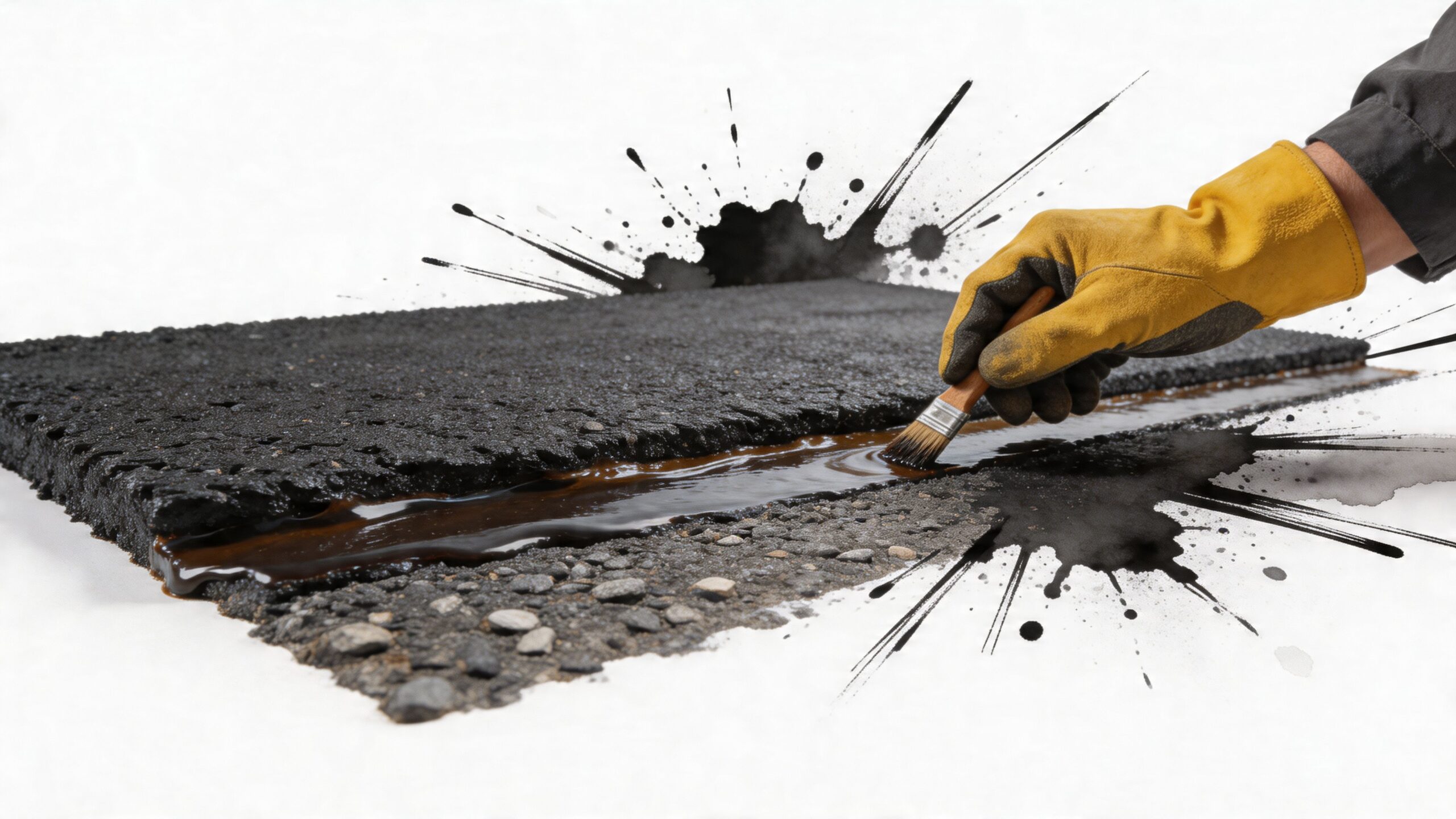
Tack oil is structural, not cosmetic
Property owners often confuse tack coat with sealcoat because both are black liquid products used around asphalt work. They do different jobs.
Sealcoat protects the top surface from weathering and wear. Tack oil bonds one pavement layer to another. If an overlay is going over existing asphalt or concrete, that bond layer affects how the pavement handles braking force, heat, and repeated wheel loads.
In practical terms, skipping tack or applying it poorly can shorten the life of an otherwise good paving job.
Why this matters more in California conditions
California weather changes how tack coat behaves in the field. Along the coast, fog, marine air, and cool mornings can leave pavement damp longer than it looks. Inland, heat can dry surfaces fast, but it also raises the risk of tracking, over-application problems, or paving before the tack has set the way it should.
That is why tack oil is not a one-rate, one-method step. Surface temperature, shade, dust, traffic contamination, and moisture all change how the bond should be handled. A contractor working in Sonoma County or on the Central Coast has to account for those conditions before the paver ever arrives.
I have seen two driveways built with similar mix and similar thickness perform very differently because one had a clean, even, properly timed tack coat and the other did not.
The real cost of getting it wrong
Bond failure usually does not show up the day the crew leaves. It shows up after traffic works on the weak spot for months. You may first notice a crescent-shaped crack where vehicles turn into a garage, a ripple near the street, or a section that sounds hollow and starts to separate.
Once layers start losing bond, water gets in more easily and repairs become more expensive. At that point, the fix is rarely a simple patch. It often means cutting out failed sections or replacing the overlay sooner than expected.
Good results come from surface prep and judgment
Tack coat only works if the surface underneath is ready for it. Dirt, loose fines, old oil drips, and moisture all interfere with adhesion. So does spraying too little, spraying too much, or letting traffic contaminate the bond before paving.
This also matters on resurfacing work that includes recycled material or existing aged pavement. The base surface has to be evaluated for texture, cleanliness, and compatibility before the overlay goes down. For property owners comparing paving approaches, this guide on why recycled asphalt is now the standard in California paving helps explain how existing pavement condition affects the final result.
A good tack coat job is easy to overlook because it is supposed to disappear into the finished pavement. That does not make it minor. It is one of the steps that decides whether the new asphalt stays bonded and durable, or starts coming apart from the bottom up.
Understanding Tack Oil Types and Chemistry
A driveway can look fine on paving day and still fail early if the wrong tack coat goes down underneath. We see that risk more often where California conditions swing hard between coastal fog and inland heat. The chemistry has to match the pavement, the moisture, and the timing of the paving operation, or the new asphalt can start losing bond long before the surface looks worn.
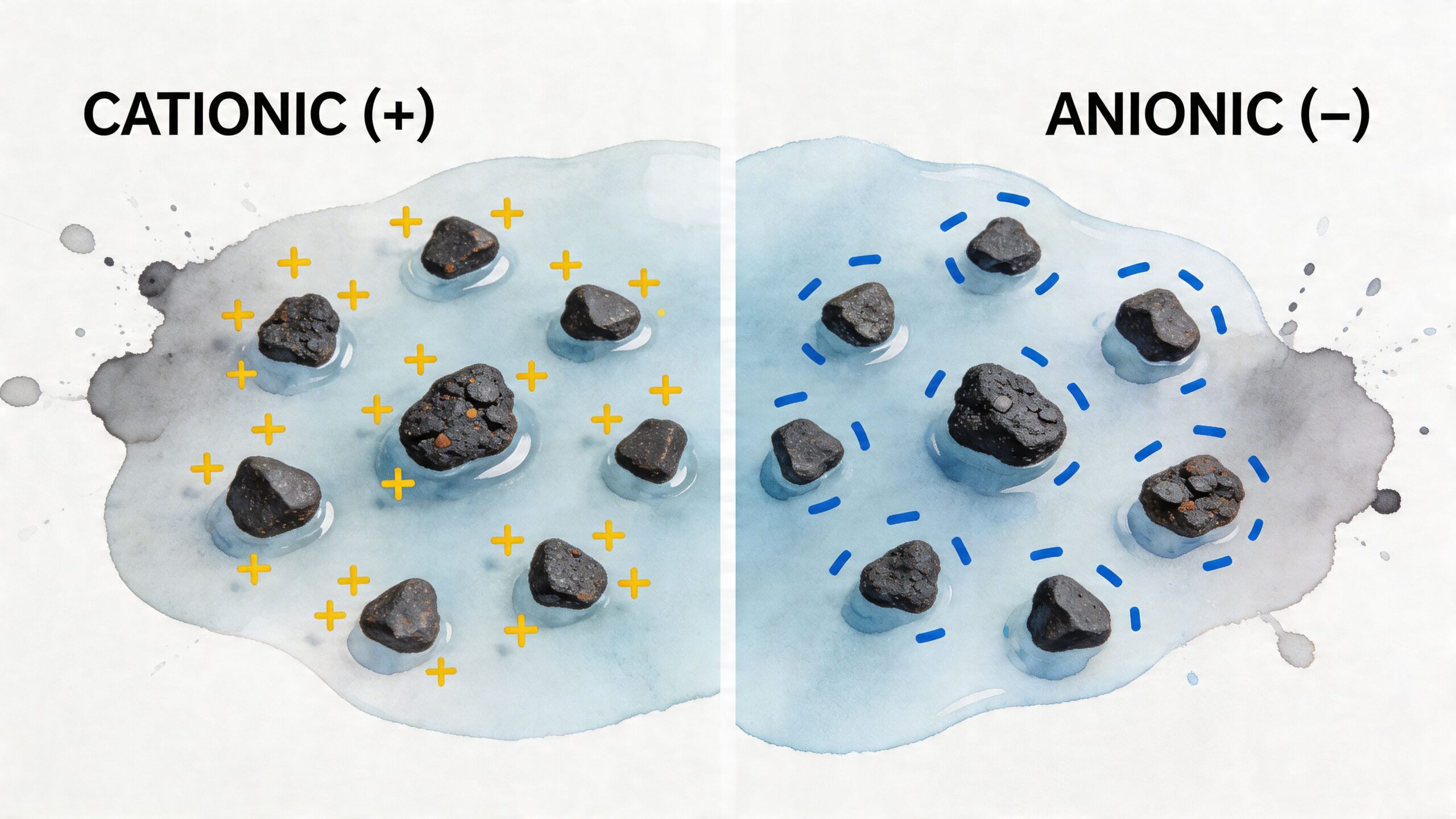
Anionic and cationic tack oils in real conditions
The two main families are anionic and cationic emulsions. For a property owner, the practical difference is simple. Some products are less forgiving around moisture, while others bond more reliably when the surface stays cool or slightly damp.
SS-1h is a common anionic tack coat. It is widely used and can perform well on dry, clean pavement with enough time to break before the asphalt mat is placed. That often suits hot inland jobs where the sun helps dry the surface and crews can control the sequence.
Cationic emulsions are often the safer choice in coastal work. They are generally better suited to damp pavement and marine conditions, which matters in places where fog hangs around, shaded pavement stays cool, or the surface never fully dries first thing in the morning.
That choice affects bond strength directly.
A driveway overlay in inland Sonoma County may give a crew a dry, warm window to use an anionic product successfully. A private road closer to the coast in Monterey County can be a different story. If the pavement is cool from marine air and the tack has trouble setting, the overlay is more likely to slip, shear, or delaminate under traffic.
A utility patch is usually less forgiving than either one. Trench edges collect dust, old pavement varies in texture, and patched areas often have more contamination than the rest of the lane. If the tack type is wrong for the surface, those seams are usually the first place the repair starts coming apart.
On a coastal job, the same tack coat that works on a dry inland afternoon can leave you with a weak bond on a foggy morning.
What else changes besides chemistry
Chemistry is only part of the decision. Crews also have to consider how fast the emulsion breaks, how much asphalt residue it leaves behind, whether it has been diluted for the application, and what surface it is being sprayed onto.
That matters because two tack coats can both be called acceptable and still behave very differently in the field.
Viscosity affects how the material sprays and whether it forms a uniform film instead of streaking or puddling. Dilution changes how much water has to leave before the bond is ready. The surface texture matters too. A tight, relatively smooth asphalt surface needs a different approach than rough milled pavement or old oxidized asphalt.
One rule should never be ignored. Do not mix cationic and anionic materials on the same bond interface. If they are incompatible, the emulsion can destabilize and the bond can suffer. In plain terms, the tack stops acting like a clean adhesive layer and starts working against itself.
Material choice also ties into project goals around emissions and product selection. Property owners looking at long-term paving decisions can read more in this article on eco-friendly paving changes expected in 2026.
Best Practices for Asphalt Tack Oil Application
Even if a driveway looks finished, it can still be headed for early failure if the tack coat was applied wrong. The problems usually show up later as slippage, shoving, edge separation, or a new layer that starts peeling away from the surface below. That bond line is thin, but it decides whether the pavement works as one system or starts separating under traffic and weather.
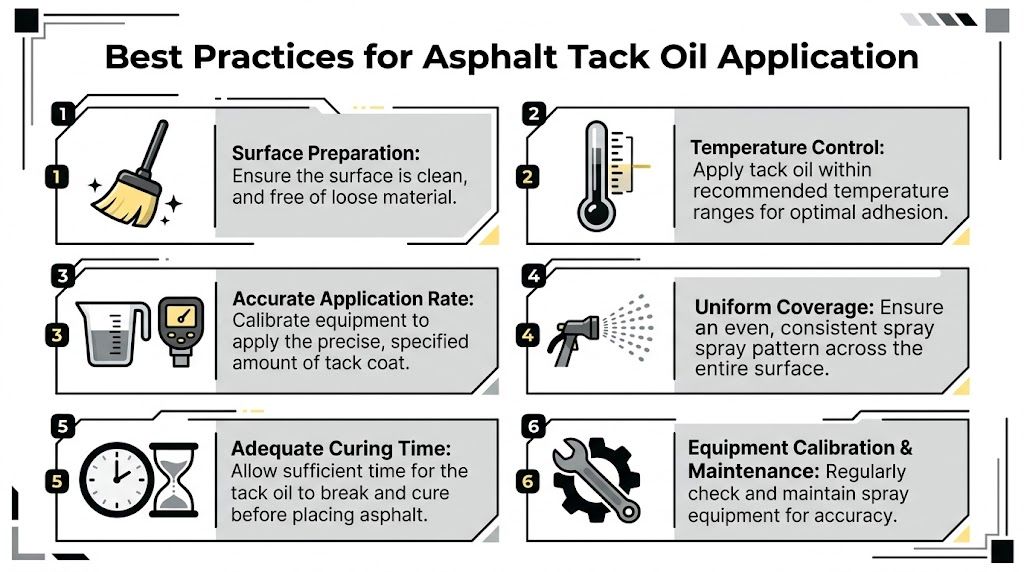
Start with a surface that is actually ready
Tack oil is not a substitute for cleaning. If dust, loose millings, mud, sand, leaves, or blown-in shoulder material are still on the pavement, the tack bonds to that layer first. Then the new asphalt is sitting on contamination instead of sound pavement.
This is a common failure point on residential work. Driveway edges near landscaping, utility patches, and low spots that hold fines usually need more than a quick pass with a broom. Good crews sweep, blow, and check the corners and edges by hand because those are the spots where delamination often starts.
Match the shot rate to the surface, not to habit
There is no one setting that fits every job. A tight, smooth asphalt surface takes a different application than oxidized pavement, a milled surface, or a concrete transition. If the rate is too light, parts of the overlay never get a full bond. If it is too heavy, the tack can track, pool, or create a slip plane instead of a clean interface.
The target is even coverage. No dry stripes. No puddles. No guessing from the back of the truck.
What a professional crew checks before paving
Crews that get consistent bonds usually check the same field conditions every time:
- Surface cleanliness: No loose debris, dust, or soft contaminated spots.
- Distributor calibration: The spray bar, nozzles, pressure, and truck speed have to produce a uniform fan pattern.
- Coverage consistency: The surface should show a continuous film, especially at overlaps, edges, and transitions.
- Break and set: The emulsion needs time to change from brown and wet-looking to a darker, ready state before the mat goes down.
- Tracking risk: Traffic, foot movement, or equipment crossing the area too early can pull tack off the surface and leave weak spots.
I always pay attention to overlaps and tie-ins. Many bond failures start there because the crew focused on the main run and got sloppy at the edges.
California conditions change the timing
California is hard on paving crews because the same product can behave very differently from one part of the job to another. Coastal fog and cool marine air slow break time and can leave a surface looking ready when it is not. Inland heat can push the water out fast, but that does not excuse rushed application or poor coverage. Hot weather also raises the chance of tracking if crews do not control the work area.
A shaded apron, a sunny drive lane, and a patch under a tree can all be on the same property. They will not act the same. That is one reason tack coat should never be treated like a throwaway step.
Concrete transitions need even more attention because the bond line is less forgiving. If your project includes that kind of interface, this guide on putting asphalt over concrete explains why prep and tack application have to be handled carefully.
Pave at the right moment
Crews should not place hot mix over tack that is still too wet, contaminated, or disturbed by traffic. They also should not let the prepared surface sit long enough to collect new dust and debris. The right window is narrow on some days, especially on coastal mornings and inland afternoons.
That timing judgment is where experience matters. On our jobs, we adjust for fog, heat, shade, and wind because a bad bond does not usually fail on day one. It fails months later, after the owner has already paid for work that should have lasted much longer.
Clean application matters too
Proper tack application includes site control. Overspray on curbs, concrete, finished flatwork, and drainage paths creates avoidable cleanup problems. Tracked tack on clean surfaces is another sign the operation was not managed well.
Good paving work is not just getting the overlay down. It is getting full bond without leaving a mess behind.
Common Project Use Cases for Tack Oil
A property owner approves what looks like a straightforward overlay or patch. Six months later, the new asphalt starts slipping at the edge, a seam opens, or the surface shoves under turning tires. In a lot of those failures, the problem is not the top layer itself. The bond underneath was weak from the start, and tack oil was part of the reason.
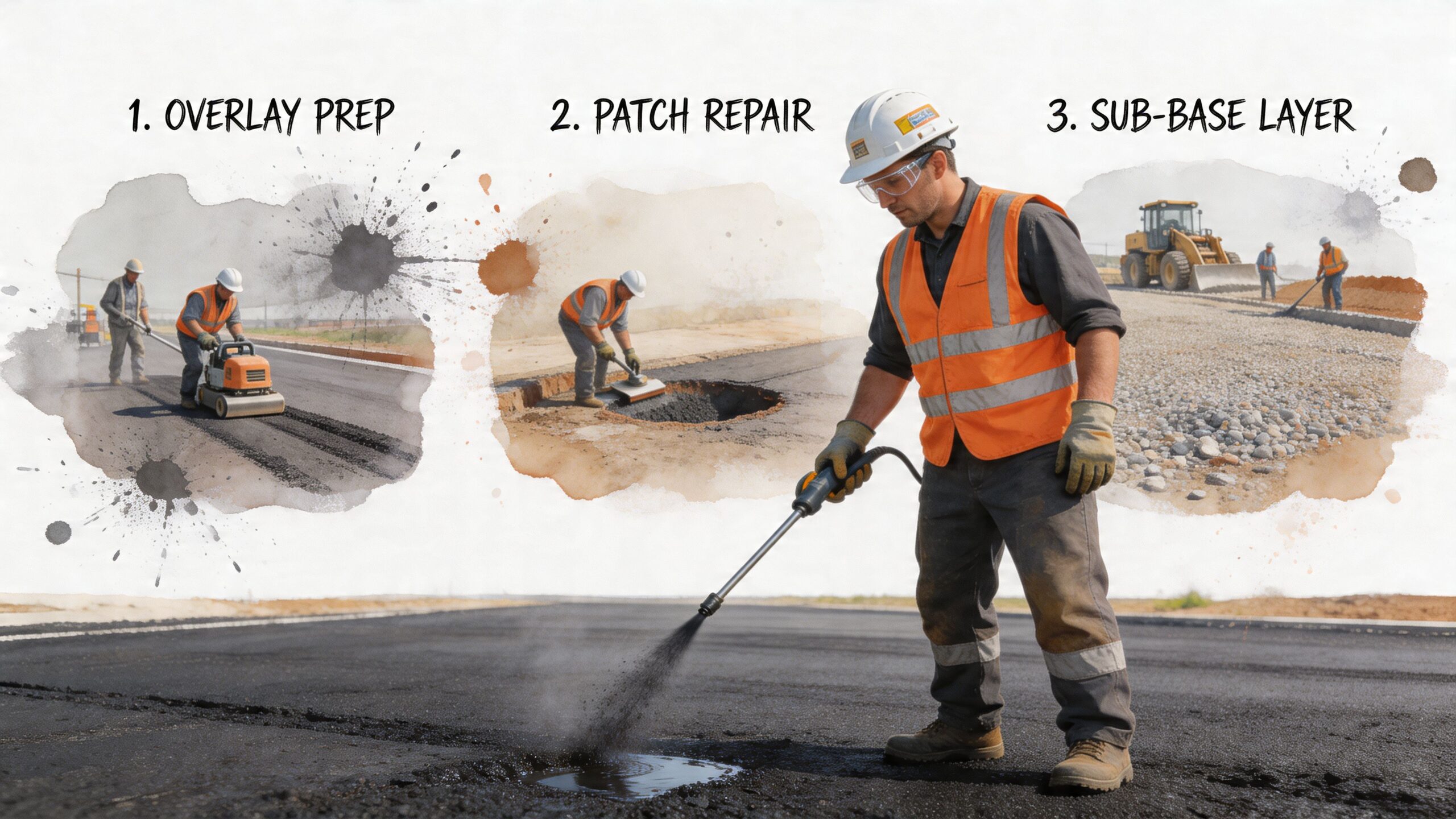
Residential driveway overlays
Driveway overlays are one of the most common places bond problems get missed.
The old pavement stays in place, the new lift goes on top, and everything can look finished and clean the same day. But a driveway sees slow, tight turning movements, parked vehicle loads, and steering stress near garages and gates. If tack coat is light, patchy, or contaminated, the new mat can slide over the old surface instead of locking to it.
California conditions make that harder than many owners realize. Along the coast, fog and cool mornings can slow break time and leave crews with a short paving window. Inland, hot afternoons can dry surfaces fast, but heat also punishes any weak bond once vehicles start turning on the fresh overlay. The result is often slippage cracks, scuffing, or early separation in the exact spots owners use every day.
Utility patches after excavation work
Utility work creates some of the highest-risk tack coat situations because the repair area is small, but the bond surfaces are everywhere. You have sidewalls, tie-ins, joints, and often irregular cuts around trench work.
A patch can have solid base repair and still fail early if those contact points are not coated correctly. Once the edge opens, water gets into the seam, the base starts losing support, and traffic works the patch loose from the perimeter inward. That is why trench patches often show failure at the joint long before the middle of the patch breaks down.
Projects that transition between concrete and asphalt need even closer control. If your job includes that interface, this guide on putting asphalt over concrete explains why bond preparation has to be handled carefully.
Road widening, lane additions, and multi-lift paving
Tack oil also matters on larger work, including private roads, access lanes, parking areas, and road sections built in lifts. Each asphalt layer needs to act as one structure under traffic. If the lifts are not bonded, they move independently, and that shortens the life of the pavement.
You may not see that failure immediately. What shows up later is slippage, shoving, cracking at the interface, or premature fatigue because the load is not being shared the way the pavement was designed to. On busier sites, delivery routes, and commercial entrances, those problems show up faster.
What durable work looks like in the field
Good results come from field control, not guesswork.
- Clean bond surfaces: Dust, loose fines, and mud on the existing pavement or patch wall weaken the bond before the new asphalt is even placed.
- Coverage that matches the surface: Milled asphalt, aged pavement, and smooth dense surfaces do not all take tack the same way.
- Attention to microclimates: Coastal fog, shaded areas, and hot inland exposure change how fast the emulsion breaks and how crews time placement.
- Protected joints and tie-ins: Fresh tack should stay clean and undisturbed until paving, especially around narrow patches and transitions.
- No shortcut spraying: Uniform application matters. Dry stripes and puddled spots both lead to trouble.
That is the difference between a patch or overlay that holds together and one that starts asking for repair money far too soon. At DW Excavation, we pay close attention to those details because bond failures rarely announce themselves on day one. They show up later, after the owner assumes the job was done right.
Safety, Environmental, and Regulatory Rules
A tack coat job can fail before the new asphalt is even rolled if the crew treats handling and cleanup as an afterthought. I have seen that happen on small driveways and larger access roads alike. The bond may look fine that day, then problems show up later because the material was contaminated, tracked, washed, or mishandled.
California adds another layer to this. Coastal fog can slow the break and leave surfaces vulnerable to pickup and tracking. Inland heat can make crews rush, overspray, or pave before the site is under control. Good tack work means controlling the material from storage to final placement, not just getting it on the ground.
Why emulsions are the standard now
Modern tack coats are typically emulsified asphalt because they are easier to handle cleanly than older solvent-heavy products. That matters for air quality, worker exposure, and jobsite control.
The practical point for an owner is simple. Safer, cleaner materials still need disciplined application. If a contractor sprays too much, lets vehicles track through it, or allows dust and runoff to contaminate the bond area, the job quality drops fast no matter what product was specified.
Runoff, overspray, and site protection
Tack oil belongs at the bond line. It should not end up in gutters, drain inlets, landscaping, bare soil, or across finished concrete.
That takes planning.
On sloped driveways, curb returns, trench repairs, and patch tie-ins, the crew has to keep the spray pattern tight and the application rate controlled. Near the coast, moisture and fog can keep the surface tacky longer, so tracking becomes a bigger risk. In hotter inland areas, the material may set faster, but that does not excuse sloppy edges or overspray onto adjacent surfaces.
A careful crew also watches traffic and foot movement. One tire pass through fresh tack can carry material onto sidewalks, garage slabs, and public streets. Then the site turns into a cleanup problem, and the bond line is no longer clean.
Storage and handling affect performance
Tack coat is not a product you leave sitting however you want and expect consistent results later. Storage temperature, circulation, contamination, and transfer methods all affect how it sprays and how it performs in the field.
If you are evaluating how liquid materials should be stored and contained, this guide on choosing the right chemical storage tank for your facility is a useful reference point.
On paving jobs, poor storage shows up as separated material, clogged spray nozzles, uneven distribution, or emulsion that breaks at the wrong time. Those are field problems, not paperwork problems, and they can lead directly to weak bond areas that fail early.
Compliance shows up in the workmanship
Safety and environmental compliance are part of doing the job right. Workers need proper protective gear. The site needs traffic control. Drainage features need protection. Waste and residue need to be managed instead of ignored.
That is true on a residential driveway too.
A lot of owners assume these rules mainly apply to highway work. In practice, smaller jobs are where shortcuts are often easier to spot. If a contractor is careless with tack oil around storm drains, landscaping, or finished surfaces, that usually tells you plenty about how they handle the hidden parts of the paving work too.
At DW Excavation, we treat those controls as part of quality. In coastal California, that means accounting for damp conditions and slower break times. In hotter inland areas, it means managing heat, timing, and tracking risk so the bond stays clean and the finished pavement has a better chance of lasting.
Why Proper Tack Coat Application Is a Job for Professionals
A driveway can look fine on day one and still be headed for trouble. I have seen overlays start slipping at the edge, crack in the wheel path, or separate around patches because the bond underneath was handled poorly. That failure usually starts at the tack coat line, long before the owner can see it.
Proper tack application takes more than spraying black liquid on old pavement. The crew has to match the material to the surface, apply the right rate, and time the paving so the bond forms the way it should. In California, that gets harder fast. Coastal fog, cool mornings, and shaded streets can slow the break and leave the surface vulnerable to tracking. Inland heat can dry conditions out so quickly that timing, coverage, and cleanliness have to be managed closely.
Equipment matters, but judgment matters more
Good results start with the right spray equipment and a crew that knows how to set it up. Uneven application leaves weak spots. Heavy application can create a slip plane instead of a bond. Hand wand work is useful at tie-ins, edges, and tight areas, but the main surface still needs consistent coverage.
The mistakes that shorten pavement life are usually simple.
Dust left on the surface. Tack tracked off by tires. Paving started before the emulsion is ready. Spray rates guessed instead of checked. Those problems are easy to hide once the finish mat is down, but they show up later as delamination, shoving, seam failure, and patches that break loose earlier than they should.
The cost shows up later
Poor tack work rarely causes a complaint the same afternoon. It shows up months or years later, when the top lift starts acting like a separate layer instead of part of a single pavement section. At that point, the fix is usually patching, milling, or replacing asphalt that should have lasted longer.
That is why experienced contractors treat tack coat as part of the structural work, not a cleanup detail.
On larger paving operations, crews also have to handle storage, transfer, and application controls correctly. If you want a plain-language reference on how liquid materials should be managed before they ever reach the spray bar, choosing the right chemical storage tank for your facility gives useful background.
Local conditions change the right approach
A contractor working in California needs to adjust for microclimates, not just the forecast. A site near the coast may need different timing and closer attention to break conditions than a similar job farther inland. Hot inland afternoons can narrow the work window in a different way, especially on small residential jobs where access, turning movements, and staged paving affect how clean the bond stays before placement.
At DW Excavation, we account for those variables because they directly affect how long the pavement holds together. Owners usually focus on the surface they can see. We focus on the bond underneath too, because that is what helps keep an overlay from separating early.
Frequently Asked Questions About Asphalt Tack Oil
A lot of overlay problems start with a surface that looked fine on paving day. Then a season of coastal fog, inland heat, traffic, and turning tires exposes a weak bond. These are the questions property owners usually ask before that becomes an expensive repair.
Do I really need asphalt tack oil on a driveway overlay?
Yes. If new asphalt is going over existing asphalt or concrete, the two layers need to bond and act like one pavement section.
Without that bond, the new mat can shift under braking, crack sooner at stress points, or separate in small areas that grow into larger failures. On driveways, I see this most often near garage approaches, tight turn areas, and spots where vehicles slow down and pivot.
How long does tack oil need before paving can start?
There is no single clock for every job. The right time depends on the product, the surface temperature, shade, wind, and moisture in the air.
Along the California coast, morning fog and cool marine air can slow the break and set. Inland, heat can speed things up, but that does not mean crews should rush placement over a dirty or poorly prepared surface. The goal is simple. Apply it at the right rate, let it break properly, and pave while the bond is ready.
Can you apply tack oil if the pavement is damp?
Sometimes, but the answer depends on how damp it is and which tack material is being used. A lightly damp surface is different from visible moisture, trapped water, or coastal condensation that keeps coming back.
That is one of those field calls that matters. A contractor has to judge whether conditions will still allow a clean bond or whether the job should wait.
Does more tack oil create a stronger bond?
No. Too much tack can cause slippage, tracking, and a slick layer between lifts instead of proper adhesion.
Too little is a problem too. The right application rate changes with the surface texture and condition. A milled surface, aged asphalt, and smooth pavement do not all take tack the same way.
Is tack oil the same thing as sealcoating?
No. Sealcoating is a surface treatment. Tack oil is a bonding layer placed between pavement layers.
They do different jobs, and one does not replace the other.
Will I see the tack oil after the job is finished?
Usually not. Once the asphalt is placed and compacted, the tack coat is buried below the surface.
What you will notice later is whether the pavement stays tight and bonded. When tack is handled correctly, the overlay holds together better through weather changes, traffic stress, and normal aging.
Call to Action
If you have a paving, grading, driveway, or utility repair project and want a clear opinion on site conditions, bond prep, and what the pavement needs to last, take a look at these California Central Coast paving services and talk the job through before work starts.
Sources
The technical points in this article are based on standard pavement practice, manufacturer guidance, and published industry material on tack coat selection, application rates, bond performance, and surface preparation. The California angle matters too. Coastal fog can slow break times, inland heat can change spray behavior and tracking risk, and both conditions affect whether the new asphalt layer bonds the way it should.
For property owners, the practical takeaway is simple. Good tack coat work is one of the details that keeps a driveway or private road from separating early, especially where patching, overlays, and climate swings put extra stress on the bond between layers.
If you want a contractor to look at site conditions before paving, review our California Central Coast paving services. Call (707) 601-9091 or visit 470a Caletti Avenue, Windsor, CA 95492.