If you've noticed a spiderweb of cracks spreading across your driveway, you're looking at alligator cracks in asphalt. Don't mistake this for a simple cosmetic flaw. These cracks are a serious warning that the very foundation under your asphalt is starting to give way, much like a cracked phone screen signals deeper damage.
Ignoring them is like putting a small bandage on a major wound—it won’t stop the problem from getting worse. Understanding what causes alligator cracks is the first step toward a permanent, cost-effective solution that protects your property value.
What Are Alligator Cracks in Asphalt?
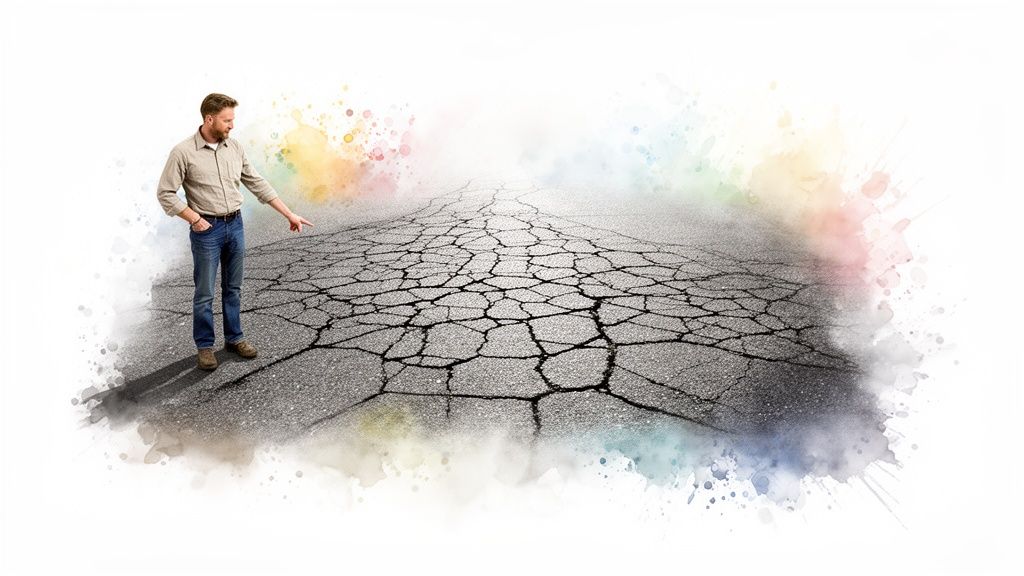
Alligator cracking, also known as fatigue cracking, gets its name from the interconnected, blocky pattern that resembles an alligator's scales. It is one of the most severe types of pavement damage because it signals a failure that starts from the bottom up. Unlike a single, isolated crack, this pattern points directly to a weak or unstable sub-base.
Imagine your asphalt pavement is like a house. The blacktop you see is just the roof and walls, but the real strength comes from the foundation buried underneath. If that foundation is weak or waterlogged, the entire structure will flex, fracture, and eventually collapse under pressure.
What Is the Main Cause of Alligator Cracking?
The formation of alligator cracks almost always traces back to what’s happening underneath the surface. Here in California, from Sonoma County to the Central Coast, our heavy winter rains and clay-rich soils can accelerate these issues.
Here are the primary culprits:
- Water Infiltration: Water is public enemy number one for asphalt. When it seeps through tiny openings, it soaks the gravel base and the soil subgrade below, turning a solid foundation into a soft, spongy mess that can't support any weight.
- Sub-Base Failure: If the sub-base wasn't compacted correctly or graded properly during installation, it simply can't handle the load of the asphalt and the traffic on top of it. This causes the pavement to bend and flex until it breaks.
- Excessive Loading: Your driveway was designed to handle a certain amount of weight. Constantly parking heavy vehicles like RVs or having frequent delivery trucks drive over it can overload the pavement, causing it to fatigue and crack long before its time. The Federal Highway Administration notes that fatigue cracking is a direct result of load-related stress [FHWA, 2023].
Why Surface Patches Fail on Alligator Cracks
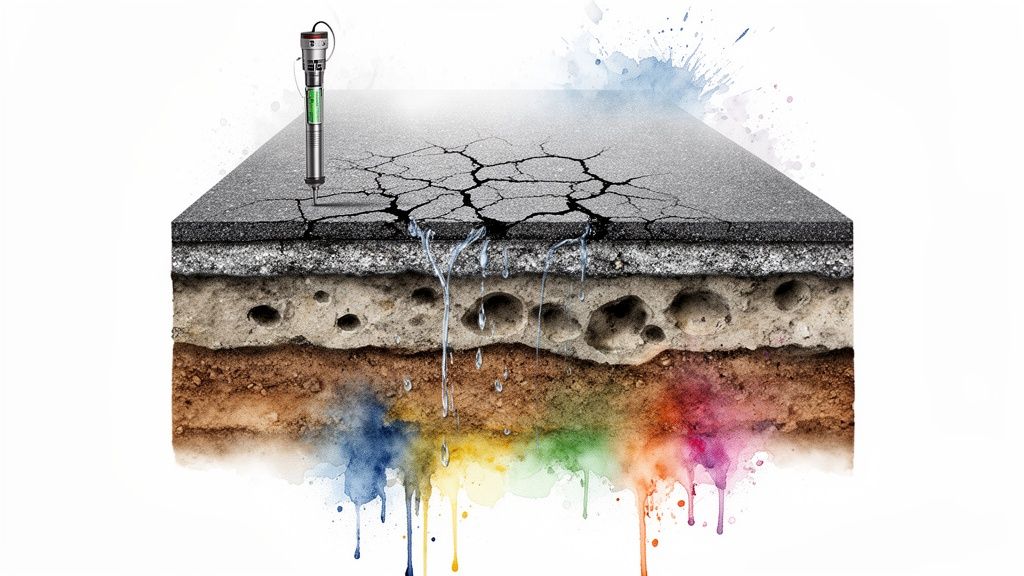
Think of alligator cracks as symptoms, not the actual disease. They’re the surface-level warning sign that something is seriously wrong deep down, where the pavement’s real strength comes from. That’s why just patching these cracks is like putting a small bandage on a broken bone—it hides the problem but does absolutely nothing to fix the deep structural failure.
To get a real, lasting repair, you must first understand what’s causing this collapse from below. In almost every case, it boils down to three culprits working together to destroy your asphalt from the inside out.
How Water Infiltration Destroys Your Driveway
Water is, without a doubt, the number one enemy of asphalt pavement. It works its way through tiny, almost invisible cracks on the surface and starts soaking the gravel base and soil subgrade underneath. What was once a solid, stable foundation slowly turns into a soft, spongy mess.
This process creates hidden pockets and voids that you can't see. As cars and trucks drive over the pavement, the asphalt flexes down into these weak, water-logged spots. It's like bending a paperclip back and forth over and over—eventually, the stress becomes too much, and it snaps.
Why a Weak Foundation Guarantees Failure
Strong pavement absolutely requires a solid, well-compacted sub-base. If the original crew used cheap materials, didn't compact the base enough, or graded the area improperly, the foundation was set up for failure from day one. A weak sub-base simply can't distribute the weight of traffic the way it's supposed to.
Instead of spreading the load out, all that pressure gets focused on small, unsupported areas. This forces the asphalt above to bend and flex until it finally gives way, cracking into that classic alligator pattern. You can learn more about how poor grading wrecks driveways before the asphalt even cracks in our detailed guide.
Pushing Pavement Beyond Its Load Limit
Every residential driveway and commercial parking lot is engineered to handle a certain amount of weight. When you consistently put more stress on it than it was designed for, it's going to fail—and a lot sooner than you'd expect.
What does that look like in the real world?
- Heavy Vehicles: Parking a big RV, a boat on a trailer, or a heavy-duty work truck on a standard driveway.
- Frequent Commercial Traffic: Constant visits from delivery trucks, garbage trucks, or construction vehicles.
- Stationary Weight: Leaving a loaded dumpster or construction materials in one spot for weeks.
This constant, heavy pressure puts the asphalt under extreme stress, dramatically speeding up the fatigue process and causing those tell-tale alligator cracks in asphalt to appear.
How Professionals Diagnose the Root Cause of Pavement Failure
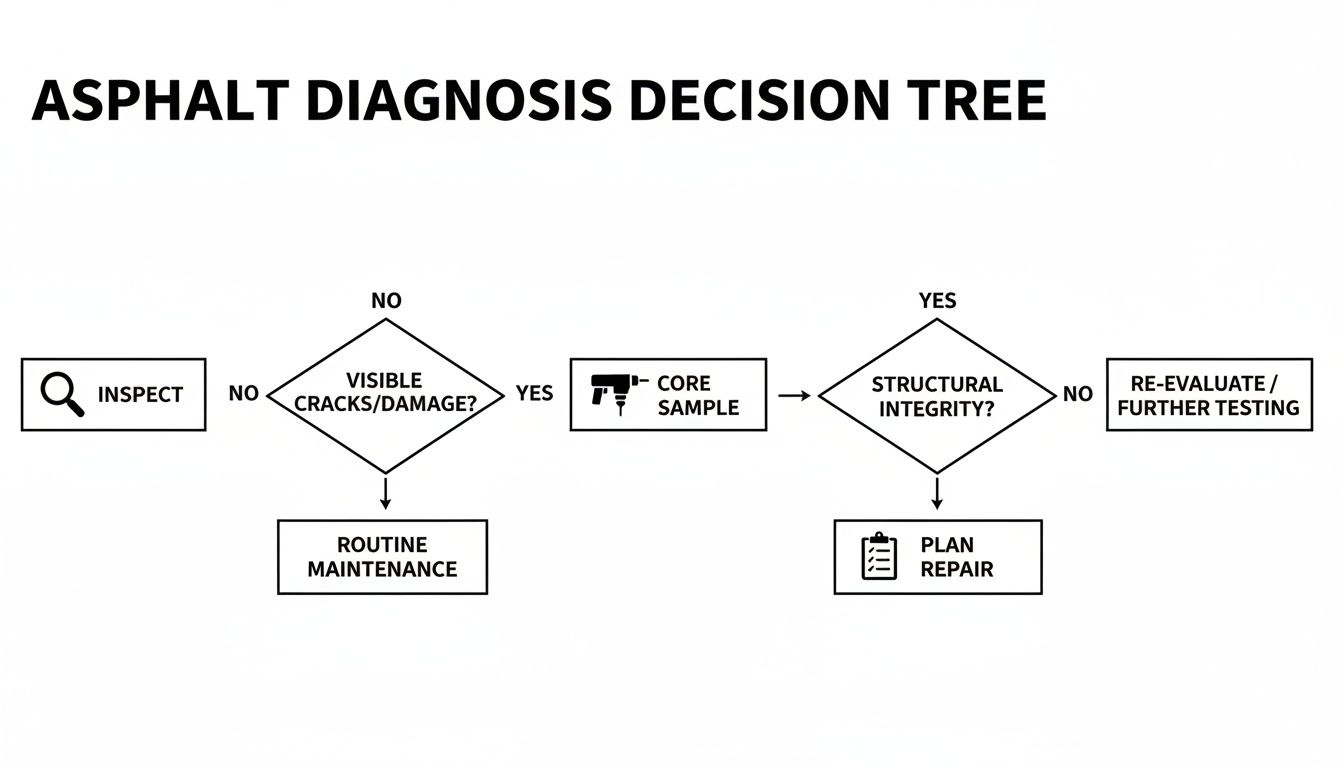
A real, lasting fix for alligator cracks always starts with a good diagnosis. Just patching the top layer without understanding the why is a recipe for failure. A true professional doesn't just look at the surface; they investigate what’s happening underneath. It’s this methodical approach that stops the frustrating—and expensive—cycle of patching, failing, and re-patching.
This isn't a quick glance; it's a structured assessment to get the full picture of the structural failure. For a busy contractor, juggling these detailed assessments with new client calls is a daily challenge, which is why a specialized answering service for contractors can be such a game-changer for their business operations.
The Initial Visual Inspection
First, an expert walks the site for a thorough visual survey. They don't just see cracks; they read them like a map, analyzing the pattern, density, and severity of the alligator cracks in asphalt. This tells them how and where the pavement is breaking down under stress.
They're also playing detective, looking at the surrounding area for clues and asking critical questions:
- Where is the water coming from? They'll spot downspouts aimed at the driveway, poor grading that traps water, or leaky sprinklers.
- What kind of weight is this area handling? Is a heavy RV parked here? Do delivery trucks drive over it every day?
- Are there any low spots? Depressions or "bird baths" where water pools are dead giveaways that the foundation underneath is soft and failing.
Going Deeper with Core Sampling
To confirm what they suspect from the visual check, professionals will often take core samples. This means drilling a clean, cylindrical plug out of the pavement, giving them a perfect cross-section of every layer. Think of it like a geological survey for your driveway.
Core sampling is the single most effective way to diagnose sub-base failure. It allows a contractor to physically see and feel the condition of the gravel base and the soil beneath, confirming if water has turned a solid foundation into a soft, unstable mess. Without this information, any repair is just a shot in the dark.
In our experience, we’ve found that many Monterey driveways fail after rain for this exact reason. Modern tech helps, too; new algorithms can identify fatigue cracks from images with over 90% accuracy, making that initial inspection faster and more precise. You can read the full research about these detection technologies and their findings.
Your Repair Options: From Temporary Patches to Full Reconstruction
Once you've spotted alligator cracks in your asphalt, it’s time to choose the right repair. This is where many property owners go wrong, opting for a cheap fix that only covers up the problem temporarily. Understanding your options—from a simple patch to a complete reconstruction—is key to making a smart investment that actually lasts.
Temporary Fixes vs. Permanent Solutions
It's tempting to go for a temporary repair like filling the cracks or applying a thin patch. The upfront cost is lower, but these fixes do absolutely nothing for the failed sub-base that’s causing the alligator cracking in the first place. Think of it like putting a fresh coat of paint on a crumbling wall—it looks better for a season, but you've completely ignored the structural rot happening underneath.
Permanent solutions, on the other hand, tackle the problem at its source. This means getting rid of the damaged asphalt and, more importantly, rebuilding the weak sub-base. It’s more involved, but it’s the only way to give your new pavement the solid, stable foundation it needs to survive.
Comparing Repair Methods for Alligator Cracks
This table helps you compare the trade-offs between different approaches, so you can see why tackling the root cause is so important.
| Repair Method | Best For | Longevity | Relative Cost |
|---|---|---|---|
| Crack Filling | Minor, single cracks (not alligatoring) | Very Short (1-2 years) | Low |
| Surface Patching | Small, localized cosmetic fixes | Short (1-3 years) | Low |
| Remove & Replace | Contained areas of alligatoring | Long (10-15+ years) | Medium |
| Full Reconstruction | Widespread, severe alligatoring | Very Long (15-20+ years) | High |
For true alligator cracking, you really only have two effective options: remove and replace, or a full reconstruction.
When to Use "Remove and Replace" for Localized Damage
If the alligator cracking is confined to one specific spot—like where a delivery truck always parks or a downspout soaks the ground—then a "remove and replace" repair can be a great solution. Think of it as asphalt surgery.
Here’s how it works:
- Cut It Out: We saw-cut around the entire damaged section to create clean, solid edges.
- Dig It Up: We excavate all the cracked asphalt and, crucially, the soggy, failed sub-base material underneath.
- Build It Back: We then install and compact a brand-new aggregate base, ensuring it’s graded properly.
- Pave It Over: Finally, we lay and compact fresh, hot-mix asphalt to create a patch that’s perfectly seamless and strong.
Why Full-Depth Reconstruction is the Ultimate Fix
What if the alligator cracking isn’t in just one spot? When damage is widespread, the only real, lasting solution is full-depth reconstruction. This means we are essentially building you a brand new driveway from scratch.
The process involves tearing out all the old asphalt, excavating the entire failed sub-base, re-grading the site for proper drainage, and then installing a completely new pavement structure. It's the most intensive option, but it's the only way to guarantee a long-term fix for severe alligatoring. If you're heading this route, you might be asking if you need grading before you repave your driveway, and our guide breaks down this vital step.
Why DIY Repairs for Alligator Cracks Almost Always Fail
It’s tempting to head to the hardware store and grab a bucket of cold patch. It feels like a quick, cheap win, but this approach almost always ends in frustration because it completely misses the real problem. Those store-bought patches are only meant for tiny, single hairline cracks—not the widespread structural failure that alligatoring represents.
Surface Fixes Can't Solve Sub-Base Problems
DIY products only touch the surface. Alligator cracks are just the symptom; the disease is a weak, waterlogged sub-base that's collapsing underneath. When you just pour filler on top, you haven't done anything to stabilize that failing foundation.
Sooner or later—usually after the first good California rain—the same movement that caused the original cracks will tear your patch to pieces. Worse yet, the patch can trap moisture underneath, speeding up the rot in the surrounding asphalt.
Common DIY Mistakes That Cost You More
Homeowners often fall into a few common traps that guarantee their repair will fail.
- Bad Surface Prep: A quick sweep isn't enough. Professionals use high-powered tools to blast out all dirt and moisture from cracks to ensure the new material bonds.
- Ignoring the Root Cause: The patch might seal one spot, but it does nothing to stop water from seeping into the sub-base from other areas.
- Using the Wrong Stuff: Cold patch is a temporary fix, not a structural repair material. It doesn’t bond properly and can't handle the stress from traffic or temperature swings.
A failed DIY patch is a clear signal that the real structural problem is getting worse. To understand what goes into a permanent, professional solution, take a look at the truth about excavation projects and see how a job done right delivers results that last.
How to Prevent Alligator Cracks Before They Start
When it comes to alligator cracks in asphalt, being proactive is the single most effective way to protect your investment. Real prevention starts long before the first paver ever shows up—it begins with a rock-solid foundation and a commitment to ongoing care. The battle is usually won or lost before a single drop of asphalt is poured.
Proper site grading is the most critical factor. It ensures water flows away from your pavement instead of pooling underneath it. A well-designed drainage system is your asphalt's best friend, especially for properties in Sonoma County and the Central Coast that get hammered with heavy winter rains.
Strategic Pavement Protection for Longevity
Once your asphalt is in, routine maintenance is your shield against the elements. Think of it as protecting your pavement from the sun and rain that make it brittle over time.
- Routine Sealcoating: Applying a high-quality sealcoat every 3-5 years is one of the most powerful things you can do. It blocks UV rays that dry out the asphalt and seals tiny openings before they become gateways for water.
- Respecting Load Limits: Every paved surface is engineered for a certain weight. Consistently parking heavy vehicles like RVs or commercial trucks on a standard residential driveway will cause premature fatigue and structural failure.
An extensive Michigan local agency report confirmed that alligator cracking is a classic sign of structural distress, almost always caused by water weakening the sub-base. The same study found that consistent, preventive treatments reliably extend the pavement's service life. Learn more in our guide on how a professional grading fix can reduce flood risk and protect your pavement at the same time.
FAQs About Alligator Cracks in Asphalt
1. How much does it cost to repair alligator cracks in Sonoma County?
The cost depends entirely on the repair method. A temporary surface patch might cost a few hundred dollars but won't last. A permanent solution like remove-and-replace or full reconstruction is an investment that varies based on the size of the area, site access, and the condition of the sub-base. A professional assessment is the only way to get an accurate quote for a lasting fix.
2. Can I just sealcoat over alligator cracks?
No, you should never sealcoat over alligator cracks. Sealcoating is a preventative maintenance tool for healthy asphalt, not a structural repair. Applying it over deep cracks traps moisture underneath, which accelerates the failure of the foundation and leads to a more expensive repair down the road.
3. How long will a proper asphalt repair last?
A temporary patch may not even last one rainy season. However, a professional reconstruction that rebuilds the sub-base, ensures proper grading, and uses quality hot-mix asphalt can easily last 15-20 years or more with routine maintenance. You're not just patching a problem; you're getting a brand-new, durable surface built to last.
4. Will a cracked driveway hurt my property value?
Yes, absolutely. Widespread alligator cracking is a major red flag for potential home buyers and inspectors. It signals an expensive, mandatory repair is needed, which can lower offers or even derail a sale. Fixing it the right way protects your home's value by eliminating a significant structural issue.
5. What is the best time of year for asphalt repair in California?
The ideal window for asphalt work along the California Central Coast is during the warmer, drier months, typically from late spring through early fall. Asphalt requires warmth and dry conditions to compact properly and for its liquid binders to cure into a strong, solid surface. Attempting repairs in cold or wet weather seriously compromises the quality and longevity of the job.
If you're seeing the tell-tale signs of alligator cracking, don't wait for the damage to spread and get worse. Contact DW Excavation for a professional assessment. We'll give you a permanent solution that protects your investment for years to come.
Visit our website to learn more about our paving and grading services.