Ever tried to build a sandcastle on a lumpy, shifting dune? It’s a lesson in frustration. The same principle applies to construction, which is why excavation is the unsung hero of every project, from a backyard ADU in Sonoma County to a major commercial build on the Central Coast.
So, what is excavation in construction? At its heart, it’s the highly skilled process of moving earth, rock, and other materials to create a perfectly stable, precisely graded foundation for everything that comes next. It's the critical first step that prevents future disasters.
The Hidden Groundwork Of Every Successful Build
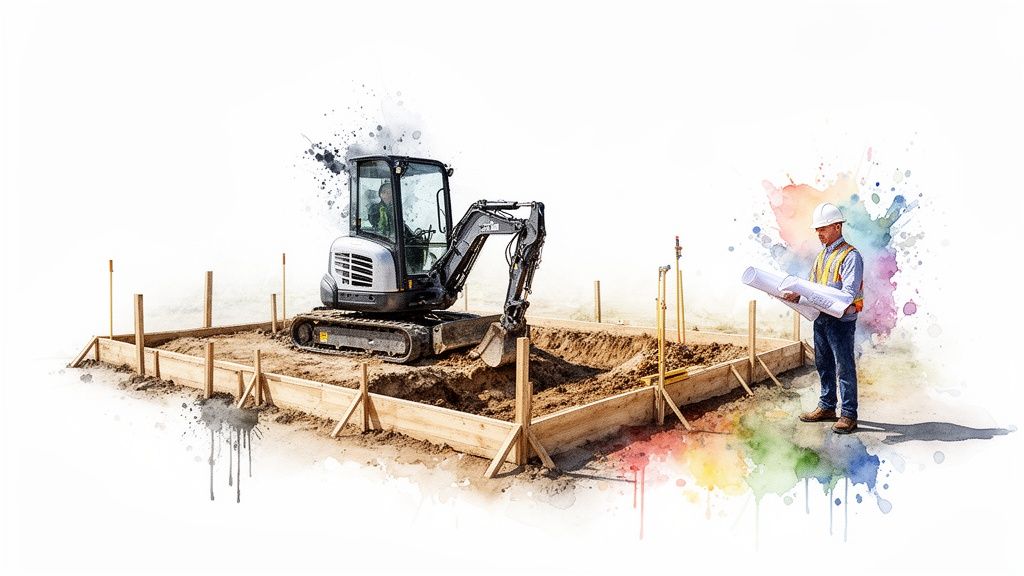
Excavation is so much more than just digging a hole. It's the art and science of sculpting the land to meet exact engineering specifications. This is the work that ensures a new home, roadway, or commercial building has a rock-solid base, heading off costly future disasters like cracked foundations, drainage nightmares, and structural failure.
Think of an excavation contractor as a land sculptor. We methodically remove, add, or reshape soil to create the perfect canvas for the build. It's this first phase that truly sets the stage for a project's success and longevity, making it one of the most critical steps in the entire process.
Why Professional Excavation Matters
Without an expert crew handling the site work, even the most brilliantly designed structure is at risk. Proper excavation isn't just a suggestion; it’s a necessity that protects your investment by achieving several key goals:
- Creates a Stable Base: We ensure the ground can support the massive weight of the structure without shifting or settling down the road.
- Manages Water Flow: Strategic grading is crucial for directing rain and runoff away from the foundation, preventing water damage and flooding.
- Prepares for Utilities: The work includes digging precise trenches for essential services like water, sewer, and electrical lines.
- Ensures Project Safety: A professional crew knows how to manage soil stability, preventing dangerous collapses and keeping the job site safe.
This process is the literal bedrock of projects worldwide. The U.S. excavation contractors industry is projected to reach over $70 billion in market size, driven by both residential and commercial construction demands [IBISWorld, 2024]. This highlights its essential role in a thriving construction sector.
Key Excavation Concepts At A Glance
This table breaks down the core components of excavation to give you a quick, clear understanding of what each term means for your project's success.
| Concept | What It Means for Your Project | Common Application |
|---|---|---|
| Site Clearing | Removing trees, rocks, and debris to create a clean slate for construction. | Preparing a raw parcel of land for a new home. |
| Grading & Sloping | Shaping the land to ensure proper drainage and create level surfaces. | Directing rainwater away from the foundation. |
| Trenching | Digging narrow channels for utilities like water, sewer, and electrical lines. | Connecting a new building to the city's services. |
| Backfilling | Replacing soil that was removed during excavation, often around a new foundation. | Securing foundation walls and utility trenches. |
| Compaction | Increasing the density of the soil to create a strong, stable base that won't settle. | Forming a solid building pad for the foundation. |
A key outcome of all this work is the creation of a building pad—the compacted, perfectly level area where the foundation will be poured. To see why this piece is so critical, check out our guide on what is a building pad and how it ensures structural integrity.
Exploring The Different Types Of Excavation Work
Excavation isn't just one-size-fits-all; it's a precise craft where the right approach makes all the difference. Think of it like a surgeon choosing a specific tool—each type of excavation serves a distinct purpose and requires its own set of skills and equipment.
When you understand the "what" and "why" behind each method, you can better articulate your project's needs. This is especially true whether you're planning a new build on a tricky Central Coast hillside or installing a modern drainage system for an older property in Monterey County.
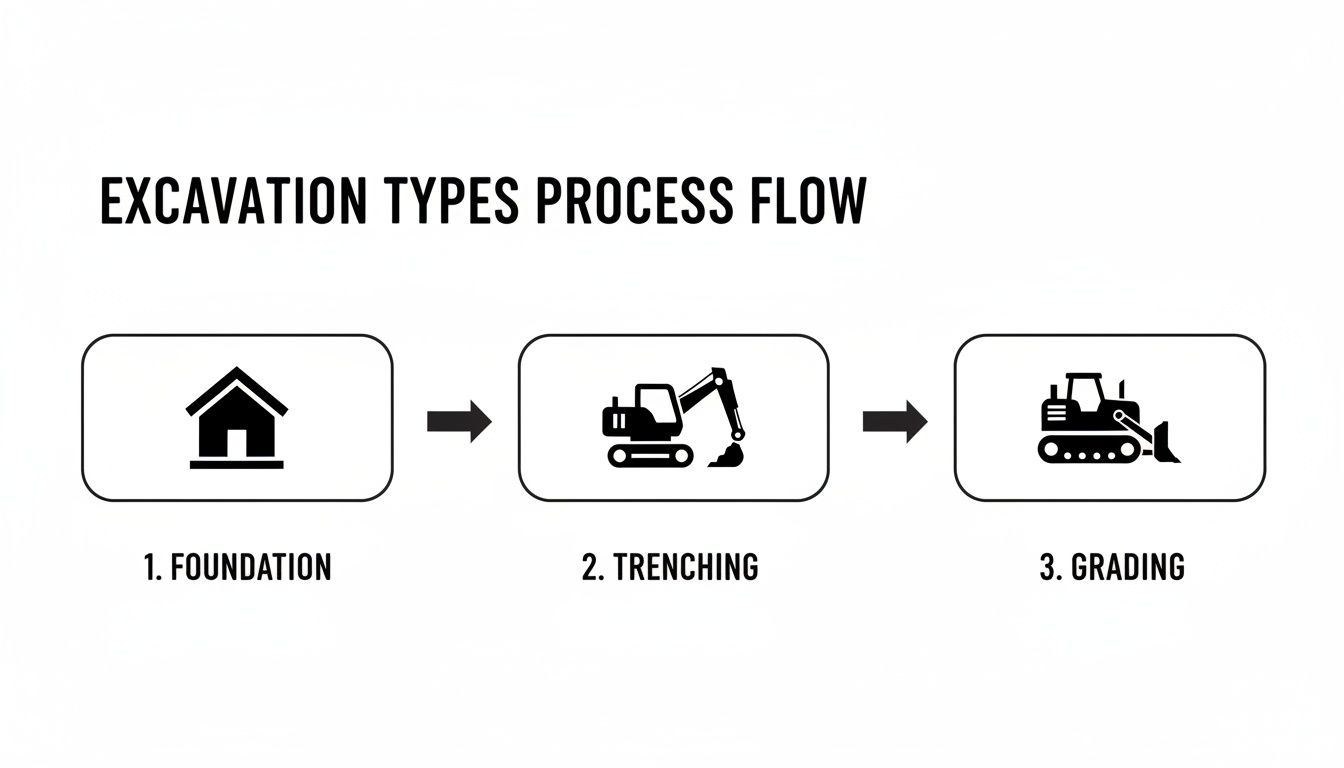
Foundation And Footing Excavation
This is probably the most common type of excavation and the one most people picture when they think of new construction. It involves digging out the soil to create a stable, perfectly level base for a building’s foundation, whether it’s a simple slab, a crawl space, or a full basement.
For example, here in Sonoma County with its rolling hills, foundation work often involves over-excavation. This means we remove extra soil and replace it with engineered fill to create a solid, predictable base. This step is crucial for counteracting the region's expansive clay soils, which can shrink and swell with moisture changes.
Trenching For Utilities
Nearly every modern property relies on a hidden network of connections for water, sewer, gas, and electricity. Trenching is the specialized process of digging long, narrow channels to house these essential utility lines. This work demands absolute accuracy to ensure pipes are laid at the correct slope for proper drainage.
Trenching is also one of the most hazardous construction operations. According to the U.S. Bureau of Labor Statistics, the fatality rate for excavation work is 112% higher than the rate for general construction [OSHA, 2024]. This statistic alone underscores why you need experienced, safety-obsessed professionals.
Grading And Site Preparation
Long before any digging for a foundation or trench begins, the land itself has to be prepared. Grading is all about sculpting the terrain to control the flow of water, making sure it moves away from buildings and doesn't create pooling or flooding issues.
This process is absolutely vital in places like Monterey County, where winter rains can be intense. Proper grading is your first line of defense against erosion and water damage. You can see how these approaches vary between projects by reading our guide on residential vs. commercial excavation.
Comparing Excavation Types For Your Construction Project
Use this table to quickly identify which excavation service aligns with your project needs by comparing their main purpose, typical scale, and the equipment involved.
| Excavation Type | Primary Purpose | Typical Project Scale | Key Equipment Used |
|---|---|---|---|
| Foundation/Footing | Creating a stable base for a new building or structure. | Residential or commercial buildings | Excavators, backhoes, compactors |
| Trenching | Installing or repairing underground utilities (water, sewer, gas). | From a single home to a subdivision | Trenchers, mini-excavators, backhoes |
| Grading/Site Prep | Shaping land for drainage, access roads, and building pads. | Any new construction or landscape | Bulldozers, graders, skid steers |
| Dredging | Removing sediment from underwater areas like ponds or waterways. | Waterways, ponds, ports | Long-reach excavators, barges |
Each of these services plays a critical role in the construction process, and choosing the right one ensures your project starts on solid ground.
The Excavation Process From Start To Finish
A professional excavation project isn't just about pushing dirt around. It’s a precise, multi-stage roadmap designed for safety, accuracy, and the long-term stability of whatever you're building. Let’s break down the journey from start to finish.
Stage 1: Site Assessment And Planning
The first, and arguably most important, step is a thorough site assessment. We take a deep dive into the property’s unique character—its soil type, topography, and any existing infrastructure. Soil reports tell us what we’re working with, dictating the equipment and techniques needed.
During this phase, we also bring in surveyors to map out property lines, elevations, and the exact footprint of the future structure. A detailed site plan is drawn up, outlining everything from the depth of the dig to erosion control measures. You can learn more about this crucial document in our guide on what is a site plan and who can help me make one.
Stage 2: Permitting And Legal Clearance
With a solid plan in hand, the next stop is navigating the world of permits. In California, especially in areas like Monterey and Sonoma County, regulations are strict to ensure public safety and protect the environment. This step involves submitting the site plan to local building departments.
We also make the essential call to 811, or "Call Before You Dig." This service alerts utility companies to come out and mark the locations of underground gas, water, and electrical lines. Skipping this isn't just illegal; it's incredibly dangerous.
Stage 3: Site Preparation And Clearing
Once all the permits are secured and the utility lines are flagged, the physical work can finally begin. Site preparation involves clearing the designated area of any obstacles. This could mean removing trees, hauling away large rocks, or breaking up old pavement to create a clean, safe work zone.
Stage 4: The Excavation Work
This is where the heavy machinery rolls in and the vision starts taking shape. Guided by the detailed site plan, our operators use excavators, bulldozers, and other specialized equipment to remove earth to the exact depths and dimensions required.
The global excavators market is projected to reach $63.14 billion by 2030, reflecting the ongoing demand for efficient and precise earth-moving equipment [Allied Market Research, 2023]. For Central Coast projects, using modern machinery is key to staying on schedule and on budget.
Stage 5: Backfilling And Compaction
After the foundation is poured or pipes are laid, the final step is to carefully backfill the excavated areas. This means putting soil back in, usually around the new foundation walls or over the utility lines in a trench.
But you can’t just dump the dirt back in. Each layer of backfill must be methodically compacted with specialized equipment to increase its density and ensure it won't settle, preventing costly structural issues down the road.
How Modern Technology Is Changing the Excavation Game

The days of pure guesswork in site work are long gone. Today's excavation projects blend raw power with incredible precision, thanks to smart technology that delivers better, faster, and safer results. This shift is transforming how we approach every phase of excavation.
GPS-Guided Grading for Pinpoint Accuracy
One of the biggest game-changers is GPS-guided grading. Imagine an excavator bucket or a dozer blade that knows its exact position on the job site down to the millimeter. Operators see a digital site plan on a screen in the cab, showing the machine's real-time position against the final design grade.
For homeowners and developers, this translates to real benefits:
- Faster Project Timelines: Work gets done more efficiently with fewer delays.
- Reduced Material Costs: By preventing over-digging, we only use the necessary amount of expensive materials like gravel or engineered fill.
- Superior Quality: The final grade is far more accurate, guaranteeing proper drainage and a perfectly level foundation pad.
Drone Mapping and Aerial Surveys
Before a single shovel hits the ground, drone technology gives us an incredible bird's-eye view of the entire property. Drones equipped with high-resolution cameras and LiDAR sensors can create detailed 3D topographic maps in a fraction of the time it would take a traditional survey crew.
These digital models allow us to meticulously plan every aspect of the project. We can spot potential headaches, like drainage issues or unexpected elevation changes, before they turn into expensive problems on the ground.
The Real-World Impact on Cost and Labor
Adopting these tools isn't just a trend; it's a direct response to industry pressures. The global excavators market is projected to hit $55.87 billion by 2033 as firms upgrade with tech like GPS for precision grading. In markets like the U.S., construction wages jumped 4.2% year-over-year amid major labor shortages. Technology helps bridge that gap, allowing skilled operators to work more efficiently and accurately. You can read the full research about these market dynamics to see how innovation is shaping the industry's future.
Navigating Safety And Compliance On Your Job Site
A successful excavation project isn’t just about moving dirt efficiently—it's about doing it safely and legally. This commitment to safety is a non-negotiable hallmark of any professional contractor and is central to what excavation in construction is all about.
Ignoring the rules doesn't just create risks; it can lead to dangerous accidents, crippling fines, and catastrophic project delays. From local California building codes to federal worker safety standards, every rule exists for a very good reason.
Why You Must Call 811 Before Digging
Before a single shovel hits the ground, the most important step is a simple phone call: dial 811. This is the national "Call Before You Dig" hotline. It’s a free service that alerts local utility companies to come out and mark the locations of their underground lines.
Hitting one of these lines by accident can cause serious injuries, widespread service outages, and incredibly expensive repairs. Making this call isn't just a good idea; it's the law in California. A true professional will always handle this process for you.
How Is Trench Safety Ensured?
Let’s be clear: trenches are inherently dangerous. The soil can be incredibly unstable, posing a huge risk of collapse. This is why trench safety is one of the most heavily regulated parts of excavation work.
To keep workers safe from cave-ins, contractors must use proven safety systems. Common methods include:
- Sloping: Angling the trench walls back at a safe incline so they are less likely to collapse.
- Shoring: Installing supports like hydraulic jacks and plates to hold the soil back.
- Shielding: Using heavy-duty trench boxes that workers can operate inside for protection.
A trained, competent person must inspect these systems every single day to ensure the site stays safe as conditions inevitably change.
The Importance of Permitting And Environmental Responsibility
Every excavation project, whether it's in Sonoma County, Monterey County, or anywhere on the Central Coast, has to follow local and state rules. This means getting the right permits before work can start, which might include grading permits, building permits, and erosion control permits.
These aren't just bureaucratic hoops. They exist to make sure your project meets California's strict building codes for things like seismic safety and environmental protection. A professional contractor handles this and implements best practices like dust control and sediment barriers to protect our local waterways.
How To Hire The Right Excavation Contractor In California
Choosing the right partner for your excavation is easily the most important decision you'll make for your project's foundation. A great contractor sets the stage for success, while the wrong one can lead to costly delays and structural problems.
This isn't about just finding someone with a machine; it's about finding a partner who sees the bigger picture. This practical checklist will guide you on what to look for when hiring a qualified, reliable professional in California.
Verify Their License And Insurance
First things first: never hire an unlicensed contractor. In California, any contractor performing work valued at $500 or more must be licensed by the Contractors State License Board (CSLB). You can and should verify their license status on the CSLB website.
Equally important is making sure they carry adequate insurance. Ask for proof of both general liability insurance and workers' compensation. This protects you from financial liability if an accident or property damage happens on your job site.
Look For Deep Local Experience
California’s geology is incredibly diverse. A contractor who has spent years working in Sonoma or Monterey County will have priceless knowledge of the local soil types, drainage challenges, and permitting quirks.
Ask to see a portfolio of their completed projects in your area. This is how you confirm they can handle specific regional challenges, like the expansive clay soils in Sonoma or the steep hillsides along the Central Coast.
Prioritize An Engineering-Integrated Approach
The best excavation contractors do a lot more than just dig dirt. They understand how their work fits into the entire site development plan. This engineering-integrated approach means they think like engineers, anticipating how grading will affect drainage or how soil compaction will support the final structure.
This foresight prevents expensive mistakes down the line. A contractor with this mindset will collaborate smoothly with your architect and structural engineer, ensuring the groundwork perfectly matches the project’s technical specs.
Ask The Right Questions Before You Hire
Before you sign any contract, make sure you get clear, confident answers to these key questions:
- How will you manage dust and erosion control on my property?
- What is your process for handling unexpected discoveries, like large rocks or old utility lines?
- Can you provide a detailed project timeline, including milestones for inspections?
- Who will be my primary point of contact throughout the project?
For a deeper dive into the role of a professional, explore our guide on what an excavating contractor is and what they do.
Frequently Asked Questions About Excavation
Here are answers to some of the most common questions homeowners and developers ask about excavation work.
How much does excavation cost for a new home foundation in Sonoma County?
The cost of excavating a foundation can vary widely. Key factors include the type of soil, site accessibility for equipment, the steepness of the property, and the size of the foundation itself. A complex build on a Sonoma County hillside will cost more than a simple foundation on a flat, accessible lot. The only way to get a real number is with a site visit from an experienced local contractor.
Do I need a permit for minor excavation work like a drainage trench?
You might. Even a small project like a drainage trench can require a permit, especially if it alters water flow or is near a property line. In coastal areas like Monterey, rules around erosion control are particularly strict. Always check with your contractor and the local planning department before starting any digging to avoid fines or stop-work orders.
How long does the excavation phase of a construction project typically take?
The timeline can range from a few days to several weeks. A simple utility trench might only take a day or two, while preparing a large site for a custom home with extensive grading could take weeks. Bad weather, unexpected soil conditions (like hitting rock), and inspection schedules can all affect the timeline. A professional contractor will provide a realistic schedule upfront.
What happens if you find unexpected rock during excavation?
Discovering massive boulders or old, buried debris is a common challenge. A seasoned contractor will have a plan. The process typically involves stopping work, informing the property owner, assessing the situation (sometimes with an engineer), and adjusting the plan. This might mean bringing in a hydraulic breaker to hammer through the rock or properly removing old debris according to environmental rules.
Why is soil compaction so important after backfilling?
Soil compaction is non-negotiable for the long-term health of your structure. After backfilling around a foundation, the soil is loose and full of air. If left uncompacted, it will settle over time, leading to cracked concrete, sinking patios, and even foundation damage. By compacting soil in layers, we create a dense, stable base that can support your structure for decades. For more on this, check out our guide on the truth about excavation projects.
Ready to start your project on solid ground? The team at DW Excavation, LLC brings an engineering-integrated approach to every job, ensuring your site is prepared with precision and expertise. Contact us today for a consultation.