
It’s a common question we hear from property owners: "Do I really need a formal site plan for a small project?" Homeowners often think permits and detailed plans are only for big developments, but the short answer is almost always yes.
It surprises many in Sonoma and Monterey County when they learn their backyard project—a new shed, retaining wall, or small ADU—needs an official site plan to get a permit. The real question isn't about the red tape; it's about making sure your project is safe, compliant, and won't cause expensive headaches down the line.
Why Even Small Projects Need a Blueprint for Your Land
When you're just adding a small structure, the paperwork can feel like overkill. But your local planning department isn't just looking at a shed; they're looking at its total impact on your property and the surrounding area.
Think of a site plan as the blueprint for your land, not just your building. It’s the master document showing how everything—the new, the old, and the underground—fits together safely.
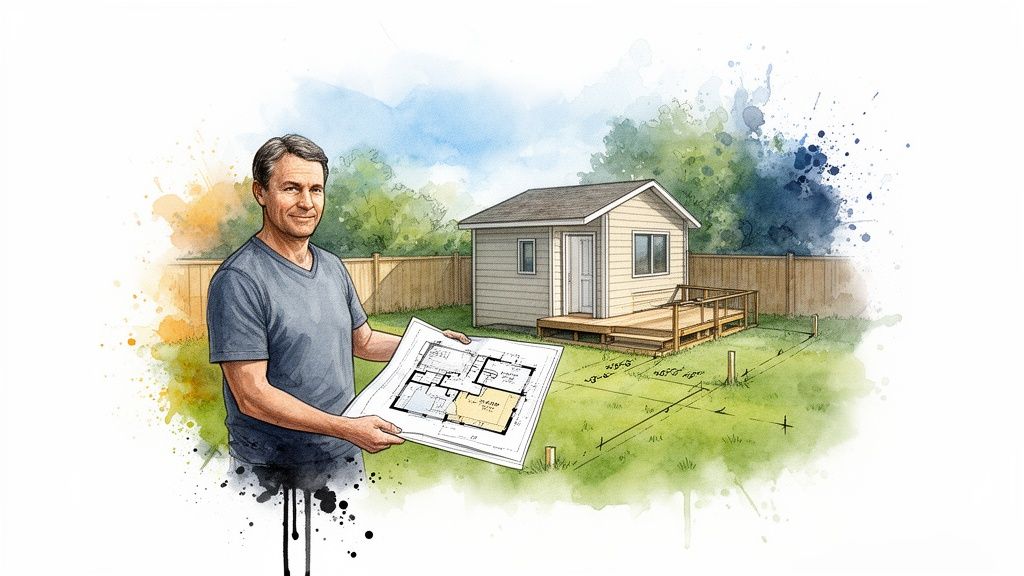
What Does a Site Plan Address for Small Builds?
Even a seemingly minor project can affect critical systems you can't see. Without a good plan, you risk creating serious, unintended consequences.
A professional site plan proves to the county that you've considered the important stuff:
- Drainage: How will that new concrete patio change rainwater flow? Will it flood your property or your neighbor’s yard?
- Setbacks: Is your new ADU a legally required distance from the property line? It's a costly mistake to find out after the concrete is poured.
- Utility Access: Are you building directly over a buried water main or electrical line that someone might need to access later?
- Fire Safety: In California, this is crucial. Is there enough clearance around your new structure for emergency crews?
When Do Small Projects Require a Site Plan?
The table below shows common projects and whether they typically trigger the need for a site plan.
| Project Type | Site Plan Typically Required? | Key Reason Why |
|---|---|---|
| Small Shed (under 120 sq. ft.) | Sometimes | If it has permanent utilities or a concrete foundation. |
| Large Shed (over 120 sq. ft.) | Yes | Size and permanence trigger building code and zoning reviews. |
| New Deck (any size) | Yes | Affects setbacks, impervious surface coverage, and safety codes. |
| Retaining Wall (over 4 ft. high) | Yes | Structural safety and its impact on soil and drainage are major concerns. |
| ADU or Tiny Home | Absolutely | Treated as a new dwelling; requires full review of utilities, access, and zoning. |
| Driveway or Patio | Yes | Changes drainage patterns and increases impervious surface area. |
Our site planning services are designed specifically to help homeowners navigate these exact rules.
The most common project delay we see is an incomplete permit application. A professional site plan is the single best tool to show county officials your project is well-thought-out, making approvals faster.
Why Your Backyard Project Faces Big League Rules
Why does your small project have to jump through so many hoops? The simple answer is that California's housing landscape has changed. With the boom in Accessory Dwelling Units (ADUs) and infill projects, even small-scale construction is now under a microscope.
Local planning departments in Sonoma and Monterey County aren't trying to bury you in red tape. They’re managing the cumulative effect of thousands of small projects, where even minor additions can contribute to larger community issues like drainage and fire safety.
Small Projects With Big Consequences
Believe it or not, a simple shed or patio can create serious safety and logistical headaches if not planned correctly. These rules protect your investment, your neighbors, and community infrastructure.
Without a site plan, you could accidentally create problems you never saw coming:
- Blocking Emergency Access: A new fence or retaining wall in the wrong spot could block a fire truck from reaching your house—or your neighbor's.
- Creating Drainage Nightmares: A new paved driveway creates an "impervious surface." Without a plan, you could unintentionally funnel stormwater into your basement or neighbor's yard.
- Conflicting with Utility Lines: Digging without knowing the exact location of buried water, gas, or electric lines can lead to dangerous accidents and expensive repair bills. State law requires you to call 811 before you dig to get these lines marked.
A professional site plan is more than just paper for the permit office; it's proof of responsible building. It shows you’ve thought through your project's impact on everything from soil stability to public safety.
Navigating Local Zoning and Regulations
Ultimately, these rules exist to ensure every new structure fits safely and legally into its surroundings. Trying to decipher specific local codes can be a huge source of frustration for homeowners.
Getting expert guidance really pays off. Navigating the nuances of local codes is a core part of our zoning services in Monterey and Sonoma County. A well-prepared site plan shows officials your project meets all community standards, leading to a much smoother approval process.
The Costly Misstep of Skipping a Professional Site Plan
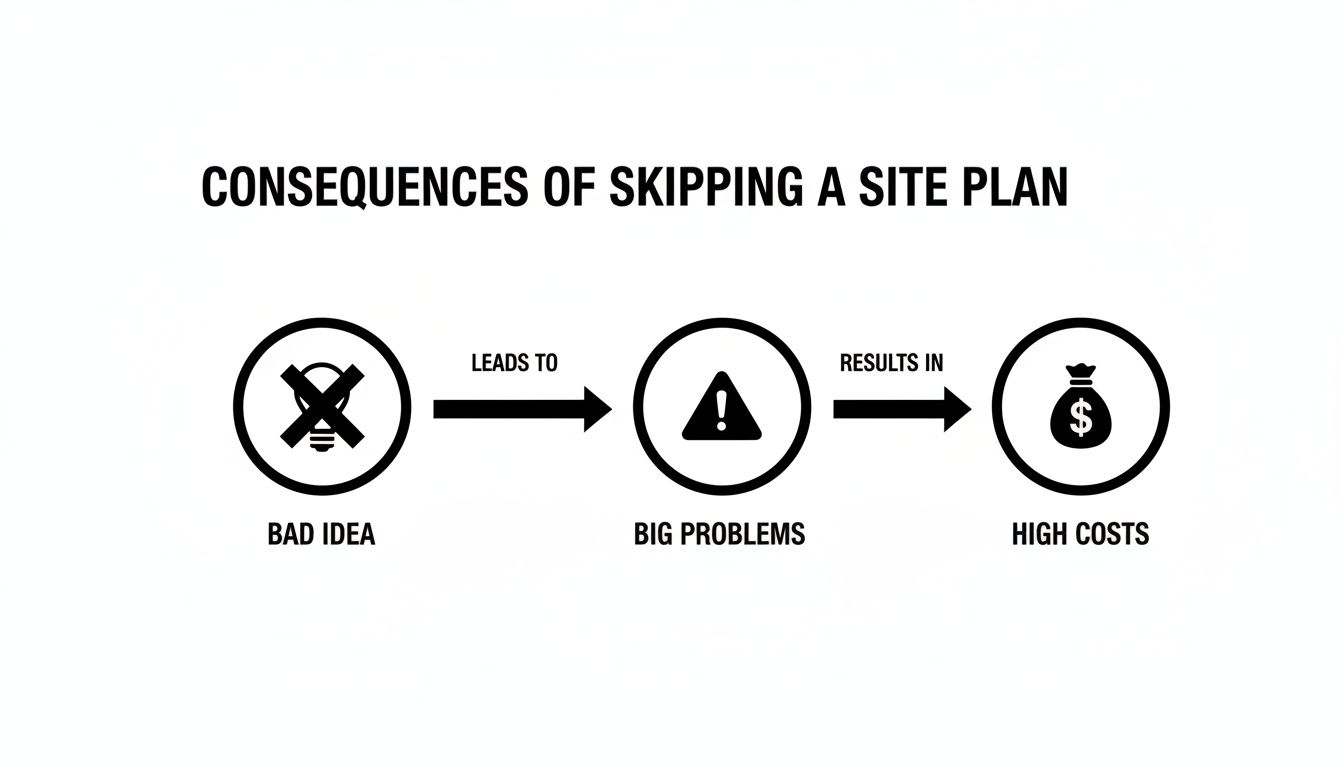
It’s a story we’ve seen play out too many times. A homeowner decides to skip a formal site plan to save cash, assuming "the contractor will handle it." Everything seems fine until a county inspector drives by and slaps a bright red stop-work order on the project.
This is the most common misstep we see, and it can delay a project by weeks or even months. That "small" shortcut spirals into a massive, costly, and entirely avoidable mess. A handshake deal simply won’t cut it when regulations are on the line.
The True Cost of Cutting Corners
Skipping a professional site plan is a high-stakes bet with your time and budget. The fallout from a stop-work order can be financially devastating.
Property owners who build without an approved plan often face a cascade of problems:
- Hefty Fines: Local jurisdictions can issue significant financial penalties for unpermitted work.
- Demolition Orders: You could be forced to tear down what you just paid to build, paying for demolition and removal.
- Months of Delays: Starting the permit process from scratch can wreck timelines and cause immense frustration.
- Legal Headaches: Unpermitted work can lead to disputes with neighbors if it causes issues like improper drainage that damages their property.
Avoid the Nightmare with Proper Planning
Investing in a professional site plan upfront is the single best way to prevent these expensive outcomes. Start with a professional site plan that includes grading contours, utility lines, drainage features, and setbacks. Showing how your project fits into the site is key to quick approval.
Making sure you hire a qualified professional from the start is critical. That's why we created our ultimate excavating contractor checklist—to help you ask the right questions and vet partners who understand proper site planning.
What a Professional Site Plan Actually Includes
When people hear "site plan," they often picture a complex architectural drawing. But its real job is simpler: to be a clear, official map of your property and what you intend to do.
A good site plan gives a bird's-eye view of your project, translating your idea into a language the planning department understands. It confirms that your new shed, deck, or ADU will fit safely and legally on your property without creating future headaches.
The Essential Checklist for a Small Project Site Plan
So, what should be on a site plan to get approved? Even for a minor build, a complete plan needs several critical elements to satisfy local requirements in Sonoma or Monterey County. We cover all the details in our guide on what is in a site plan and who can make one.
For now, here are the absolute non-negotiables:
- Property Lines and Setbacks: This shows the legal boundaries of your lot and the required buffer zones your new structure must respect.
- Existing and Proposed Structures: The plan maps out everything that’s already there (your house, garage) and clearly shows where the new structure will be built.
- Utility Line Locations: It precisely marks all underground utilities—water, sewer, gas, electrical—to prevent dangerous and costly mistakes during excavation.
- Grading and Topography: Contour lines illustrate the slope of your land, showing how the project will sit on the property.
- Drainage Features: This details how you'll manage rainwater with features like swales, French drains, or catch basins to prevent flooding.
How a Site Plan Prevents Drainage Disasters
Water damage is a huge headache for any property owner. Think of a site plan as your first line of defense—a strategic playbook to keep your property from turning into a swamp during California’s rainy season.
A "small" project like a new patio can completely alter how water flows across your land. Without a solid plan, that new hardscape can act like a dam, funneling runoff straight toward your foundation and leading to costly repairs.
From Technical Drawing to Practical Protection
This is where an engineering-minded approach makes all the difference. Our job is to translate technical concepts like grading contours into practical solutions that keep your property dry.
A proper site plan maps out exactly how water will behave. It includes crucial elements to direct water safely away from your home:
- Grading Contours: These lines on the plan show the precise slope of the land, ensuring water always flows away from your foundation.
- Drainage Features: The plan will specify where to put swales, French drains, or catch basins to capture and redirect excess water.
- Impervious Surfaces: It calculates the total area of surfaces like concrete, making sure the drainage system can handle the runoff.
Managing this runoff is also an environmental responsibility. The U.S. Environmental Protection Agency’s stormwater rule requires even small construction sites to have a plan for controlling erosion and protecting water quality [EPA, 2022]. If you want to dive deeper, our guide to fixing drainage and grading problems is a great resource.
A well-designed site plan does more than get your project approved. It proactively solves drainage issues before they start, saving you thousands in potential water damage.
Your Path to a Smooth Project Approval in California
Wading through permits and site plan requirements can feel like a nightmare, but it doesn't have to be. The secret is to use the site plan as the strategic tool it is. A bit of prep work now pays off big time, especially in places like Sonoma and Monterey counties.
DW Excavation guides clients through the entire process—from surveying to coordinating with county planning departments. We know how to navigate Sonoma and Monterey County codes and get your project permitted without drama.
A Simple Pre-Construction Checklist
Follow these three steps to get your project built right the first time.
- Confirm Local Requirements Early: Before buying a single nail, call your local county planning department and ask, "What are the site plan requirements for a project like mine?"
- Talk to an Expert Before Finalizing Designs: Get a professional opinion on the site plan before locking in your building designs. An expert can spot red flags that could send you back to the drawing board.
- Marry Your Site Plan to Your Construction Plan: A site plan shouldn't be an afterthought. The best projects happen when the site planning expert is in lockstep with the construction crew from day one.
We’re not just dirt movers—we know how to get your project permitted. If you're facing permitting confusion in Sonoma or Monterey, let DW Excavation simplify the site planning side of your project.
Frequently Asked Questions About Site Plans
It's normal to still have a few questions. Let's tackle some of the most common ones we hear from homeowners.
How much does a simple site plan cost in Sonoma County?
Costs vary based on the project's complexity and the property itself. A site with steep slopes or tricky access requires more work than a flat, empty lot. Think of it not as a cost but as insurance—it prevents far more expensive mistakes and county fines down the road.
Can I draw my own site plan for a permit?
While you might get away with a simple sketch for something tiny (like a garden bed), it’s almost always a bad idea for anything that needs a permit. Counties require plans drawn to a professional standard. Submitting a DIY plan is one of the fastest ways to get your permit application rejected.
How long does site plan approval take in Monterey County?
The timeline depends on the county’s current workload and the quality of your submission. A clean, accurate, and professionally prepared site plan can often sail through the initial review in just a few weeks. Incomplete or amateur plans can get stuck in a frustrating revision cycle for months.
Does my small retaining wall really need a site plan?
More often than not, yes—especially if it’s over four feet high or sits close to a property line. Building departments are serious about retaining walls because they directly impact soil stability and water drainage. A site plan proves that your wall is properly located and engineered.
What is the difference between a plot plan and a site plan?
People use these terms interchangeably, but they aren't the same. A plot plan is a simple map showing property lines and building footprints. A site plan is the highly detailed, technical document a county needs for a permit, including grading, drainage, utilities, topography, and setbacks.
Navigating local building regulations doesn't have to be a nightmare. The team at DW Excavation, LLC specializes in creating clear, compliant site plans that pave the way for a smooth project from day one. If you're ready to build in Sonoma or Monterey County, contact us today and let’s make sure your project starts on a solid foundation.