In 2026, California homeowners face a perfect storm: intense winter rains, record summer heat, and evolving building codes. Your driveway, once an afterthought, is now on the front lines. A cracked, poorly graded slab is no longer just an eyesore—it’s a liability that can cause foundation damage, localized flooding, and expensive repairs.
The good news is that paving technology is evolving to meet these demands. The industry is shifting from simply laying down asphalt to engineering complete paving systems designed to manage water, mitigate heat, and comply with stricter environmental regulations. For homeowners in regions like Sonoma County or the Central Coast, this means new opportunities to build smarter, more resilient properties.
This guide explores the essential paving trends that address today's climate and regulatory realities. We'll break down the 5 smart paving trends California homeowners should know in 2026, from materials that absorb stormwater to the high-tech precision that guarantees a perfect grade.
1. Permeable Pavement Systems (Pervious Concrete & Porous Asphalt)
As California grapples with cycles of intense drought followed by atmospheric rivers, managing every drop of water has become a top priority. Permeable pavement systems are one of the most intelligent paving trends for 2026. Unlike traditional surfaces that shed water into overwhelmed storm drains, permeable systems let rainwater pass directly through them.
This innovative approach mimics how soil naturally absorbs water. The pavement surface contains small, interconnected voids that allow water to flow through to a specially designed sub-base of graded aggregate rock. This sub-base acts as a temporary reservoir, allowing water to slowly infiltrate the soil and recharge groundwater tables.
Key Takeaway: Permeable paving turns your driveway from a contributor to stormwater runoff into an active part of the solution for water management and flood prevention.
Why is Permeable Paving a Smart Choice for California Homeowners?
In an era of stringent environmental regulations, this technology is a practical necessity. Many California cities, especially in environmentally sensitive areas like Sonoma and Monterey Counties, now require or incentivize low-impact development (LID) practices. Installing a permeable driveway can help you meet local stormwater reduction requirements.
Beyond compliance, the benefits are tangible:
- Reduced Flooding: Capturing rainwater where it falls prevents water from pooling on your property or flowing towards your home’s foundation.
- Groundwater Recharge: Every gallon that soaks back into the earth helps replenish local aquifers, a critical function during dry years.
- Improved Water Quality: The aggregate layers act as a natural filter, trapping pollutants from vehicles before they can contaminate local waterways.
What are the Practical Implementation and Cost Considerations?
Implementing a permeable system requires a professionally engineered design that considers your property's soil type. Properties with heavy clay soils may need an amended sub-base or an underdrain system to manage water infiltration effectively.
- Cost: The initial investment is typically 15-30% higher than conventional paving. A typical residential pervious concrete driveway might range from $10 to $20 per square foot installed.
- Longevity and Payback: These systems can last 20-30 years with proper maintenance. Homeowners may also see savings by avoiding the need for separate drainage systems.
- Maintenance: To maintain porosity, surfaces require regular vacuum sweeping two to three times a year and a professional cleaning every few years.
If you're considering this smart paving trend, ask potential contractors about their experience with permeable systems in your local soil conditions. It's also crucial to understand how these systems fit into a holistic site plan. To explore this further, you can learn more about integrating water management into landscaping projects.
2. Recycled Asphalt Is the New Standard (and It Works)
California is leading the way in sustainable paving. Recycled Asphalt Pavement (RAP) turns old, worn-out roads into a valuable resource for new projects. This approach involves milling up existing asphalt surfaces and blending the reclaimed material with a new binder to create a high-performance, eco-friendly mix.
This process is highly sophisticated. The reclaimed asphalt is carefully processed and tested to meet strict quality standards. When mixed into new hot-mix asphalt, RAP reduces the demand for virgin aggregate and expensive petroleum-based bitumen.
Key Takeaway: Recycled asphalt driveways are often more affordable and perform just as well when installed correctly, especially for rural or semi-rural homes in areas like Salinas or Carmel Valley.
Why is RAP a Smart Choice for California Homeowners?
In a state where environmental regulations are paramount, choosing RAP is a practical and responsible decision. California is a leader in this practice, with an incredible 99% of reclaimed asphalt now getting reused [NAPA, 2025]. This trend is strongly supported by agencies like Caltrans, proving its durability.
For homeowners, particularly those with long driveways, the benefits are significant:
- Cost Savings: By reducing the need for new materials, RAP can lower the overall project cost.
- Environmental Stewardship: Choosing RAP directly contributes to reducing landfill waste and cutting down on greenhouse gas emissions.
- Proven Performance: When properly engineered, RAP mixes deliver performance comparable to 100% virgin asphalt.
What are the Practical Implementation and Cost Considerations?
Successfully implementing a RAP driveway requires a knowledgeable contractor who understands how to balance the mix design for optimal performance. The percentage of RAP can vary, typically from 15% to 40% in residential applications.
- Cost: Projects using RAP can be 5-15% less expensive than those using 100% virgin asphalt. A typical driveway using a quality RAP mix might cost $6 to $12 per square foot.
- Longevity and Payback: A well-installed RAP driveway has a service life of 20 years or more, identical to conventional asphalt.
- Sourcing: The quality of the RAP is crucial. Your contractor must source material from a certified supplier who performs regular testing.
When discussing your project with a contractor, ask what percentage of RAP they recommend and why. To find high-quality, sustainable materials for your next project, you can get professional help with your construction material supply needs on the California Central Coast.
3. Drainage Failures Are on the Rise After Storms
The days of treating a driveway as a simple, standalone surface are over. We’re seeing more cases of driveway erosion and buckling after heavy rains, especially in older neighborhoods without engineered grading. With extreme weather more common, paving now needs to factor in water flow and runoff, not just looks.
This holistic method uses precise slope optimization and strategically placed drainage to direct, capture, and manage rainwater. The goal is to prevent water from pooling near your home’s foundation, causing erosion on hillsides, or overwhelming local storm drains. Choosing a contractor who understands your region’s soil and climate is more important than ever.
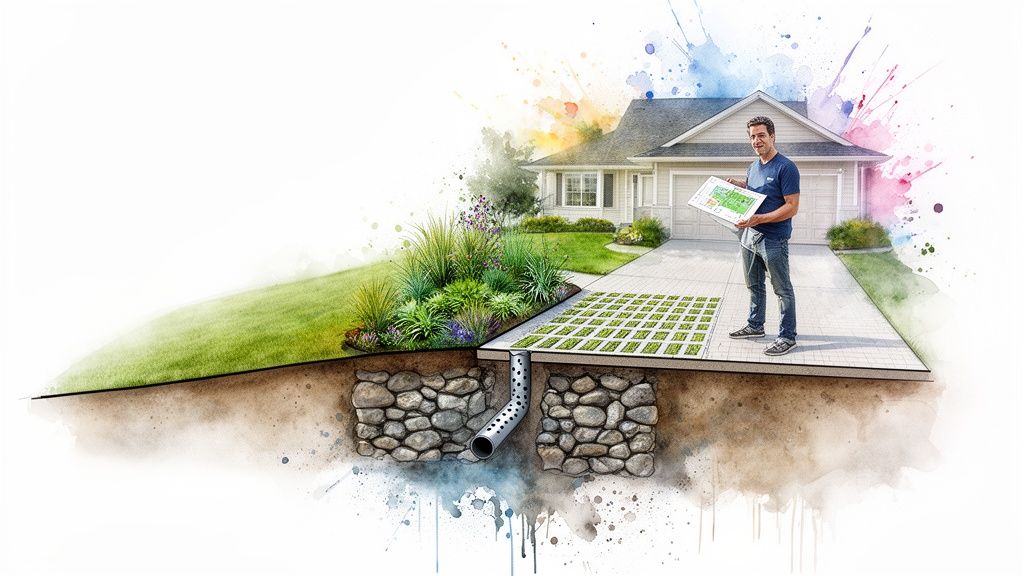
Key Takeaway: Integrated drainage design transforms your hardscapes from a potential liability into a crucial asset for property protection, preventing costly water damage and erosion.
Why is Integrated Drainage a Smart Choice for California Homeowners?
In California, where hillside properties and clay-heavy soils are common, unmanaged water is a homeowner's worst enemy. New ADU projects in counties like Marin, Sonoma, and Monterey often require integrated drainage plans to prevent water damage and mitigate flood risk.
The benefits of this integrated strategy are immediate and long-lasting:
- Foundation Protection: Engineering the grade away from your home with systems like French drains prevents hydrostatic pressure that can crack foundations.
- Erosion Control: On sloped properties, this design slows down and captures runoff, preventing soil from being washed away.
- Reduced Liability: Proper water management prevents your property’s runoff from damaging adjacent properties.
What are the Practical Implementation and Cost Considerations?
Successfully implementing an integrated drainage system requires a site-specific plan. It begins with a thorough site assessment, often using drone mapping and soil tests to identify critical drainage pathways.
- Cost: The cost is highly variable and can add $5 to $25+ per square foot to a standard paving project. This is far less than foundation repair, which can easily exceed $50,000.
- Longevity and Payback: This is a preventative investment that protects the longevity of both your pavement and your home's foundation.
- Maintenance: Homeowners must keep swales and catch basins free of debris to ensure the system functions correctly.
If your property is on a slope or you've noticed pooling water, this approach is non-negotiable. Find a contractor with proven expertise in civil engineering and excavation, not just paving. You can explore this further by reading about common solutions for fixing drainage and grading problems.
4. Site Plans Help Driveways Pass Inspection and Perform Better
A smart driveway isn’t just poured and paved—it’s planned. Local permitting now often requires a site plan that includes drainage, slope, and water retention. This ensures your driveway not only passes inspection but lasts longer and functions correctly within your property's ecosystem.
This technology utilizes materials with high solar reflectance to reflect more sunlight and absorb less heat. Instead of conventional black asphalt, cool pavements might use light-colored aggregates or reflective coatings. The result is a surface that can stay 20-40°F cooler, creating a more comfortable microclimate around your home.
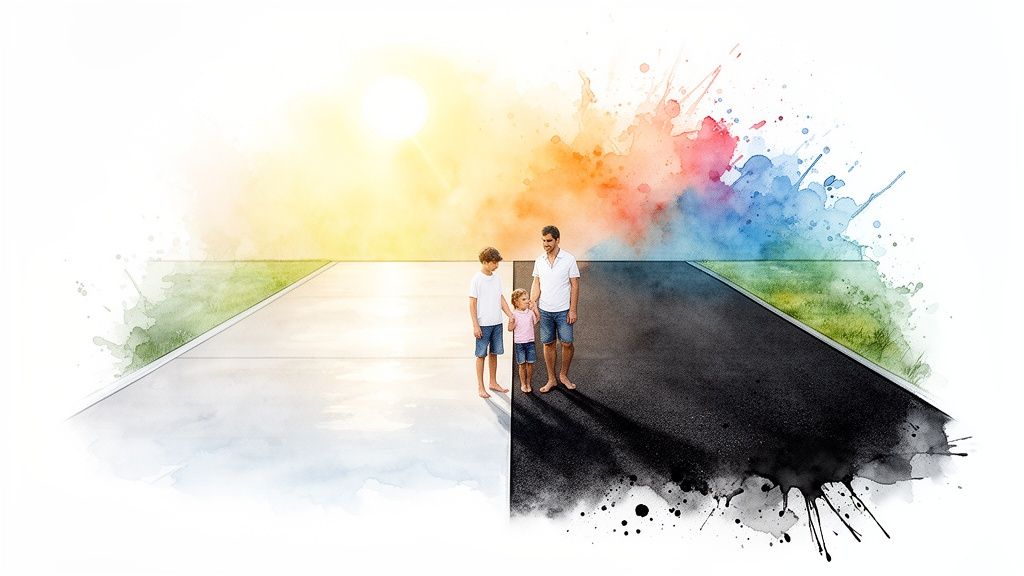
Key Takeaway: Cool pavements act like a reflective shield for your property, reducing ambient air temperatures, lowering air conditioning costs, and making outdoor spaces more usable.
Why is Cool Pavement a Smart Choice for California Homeowners?
This trend is driven by California’s climate resilience and energy efficiency goals. Programs like the City of Los Angeles' Cool Pavements Pilot have demonstrated significant temperature reductions. For homeowners, this technology provides immediate, tangible benefits.
The benefits extend beyond just personal comfort:
- Reduced Energy Bills: A cooler driveway means less heat is transferred to your home, reducing the load on your AC system.
- Enhanced Comfort and Safety: Lower surface temperatures make paved areas safer for children and pets.
- Improved Air Quality: Lower ambient temperatures can help reduce the formation of ground-level ozone (smog).
- Increased Property Value: A modern, energy-efficient feature like a cool pavement driveway can be an attractive selling point.
What are the Practical Implementation and Cost Considerations?
Implementing cool pavement requires choosing the right material for your climate. In hot, sunny areas, a high-albedo concrete or reflective asphalt offers maximum benefit. For existing driveways, reflective coatings can be a cost-effective upgrade.
- Cost: The initial cost for new cool pavement can be 10-25% higher than standard asphalt. Expect to pay between $8 to $18 per square foot.
- Longevity and Payback: Cool pavements have a lifespan comparable to conventional materials, around 15-25 years. The payback comes from long-term energy savings.
- Maintenance: To maintain high reflectivity, cool surfaces need to be kept clean with regular sweeping and a power wash every 2-3 years.
A smart driveway is an integral component of your property’s overall design. Understanding what is a site plan and who can help you make one is the first step toward a cohesive project that passes inspection and delivers lasting performance.
5. Grading Is No Longer Optional—It’s Critical
The days of relying solely on string lines and manual measurements for site grading are quickly becoming obsolete. Done Right the First Time Means No Callbacks Later. DW Excavation doesn’t just drop asphalt—we ensure every project starts with a solid foundation.
This high-tech approach uses drone mapping and GPS-guided equipment to ensure sub-inch accuracy during site preparation. A drone creates a precise 3D model of your property, allowing engineers to design a perfect grading plan. That plan is then loaded into GPS-guided equipment, which can execute the design with a level of precision impossible to achieve manually.
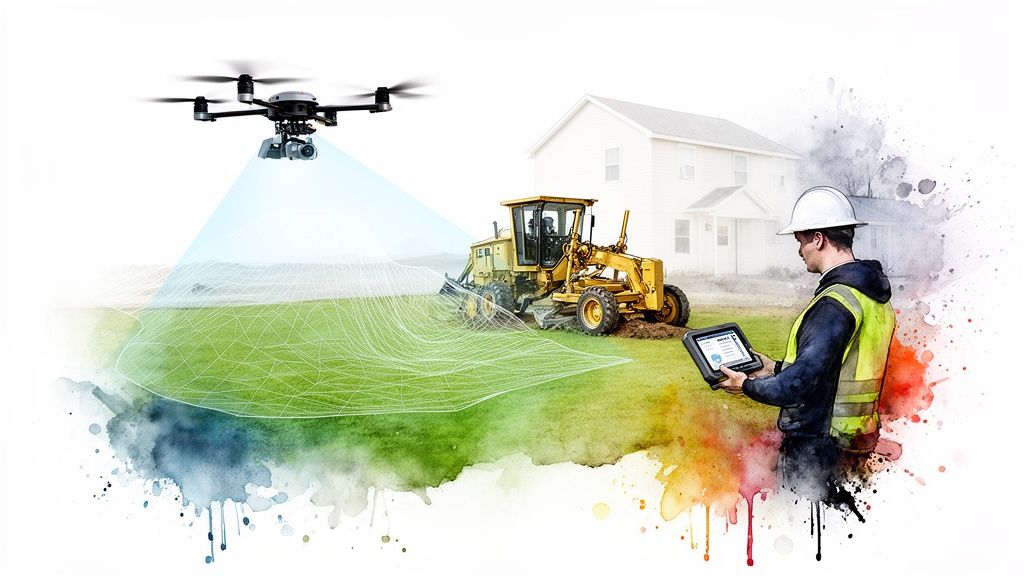
Key Takeaway: Proper grading and compaction can make or break your driveway. With the right prep, asphalt can last over 20 years, but poor grading can cause water to pool near your foundation—putting your home at risk.
Why is Precision Grading a Smart Choice for California Homeowners?
On complex properties common throughout California, precision is a necessity. Even minor grading errors can lead to major problems like foundation damage, erosion, and premature pavement failure. This technology directly addresses these risks.
From compacting the base in layers to checking slope percentages, our goal is simple: no surprises, no cracks, no water problems.
- Superior Drainage: GPS-guided grading creates precise, consistent slopes that direct water away from your home and foundation without fail.
- Longer Pavement Life: An impeccably graded and compacted sub-base prevents settlement and soft spots, which are the primary causes of cracks and potholes.
- Material and Cost Savings: By calculating exact cut-and-fill needs, this technology prevents over-excavation and minimizes material waste.
- Ideal for Complex Sites: For hillside homes or ADU projects, drone mapping provides the critical data needed to design a successful grading strategy.
What are the Practical Implementation and Cost Considerations?
Adopting this technology requires a contractor with the right equipment and expertise. Homeowners can review the 3D models to visualize the final outcome before work begins.
- Cost: A pre-construction drone survey typically costs between $1,500 and $3,000 for a residential property. This often pays for itself by preventing expensive rework.
- Longevity and Payback: Pavement on a precision-graded base can last up to 50% longer than on a conventionally graded site.
- Process: The process involves a drone flight, data processing, creation of a digital grading plan, and execution by GPS-automated equipment.
If your project involves a challenging site, this technology is the answer. Ask contractors about their experience with GPS-guided grading and drone surveying. To prepare for this process, you can learn more about getting your property ready with expert grading tips before the rain hits.
Planning a Smarter Driveway: Key Takeaways
Navigating modern paving is no longer just about choosing between asphalt and concrete. The smartest solutions for California in 2026 are deeply integrated systems, not just surfaces. The future of paving is about resilience, sustainability, and intelligent design that works with California’s unique environmental pressures.
The common thread is the undeniable importance of what lies beneath. A high-tech permeable surface will fail without a properly engineered sub-base. A recycled asphalt driveway won't last without meticulous grading and compaction. The long-term performance of your driveway is determined before a single paving stone is laid.
Guiding Principles for Your 2026 Paving Project
- Prioritize Water Management: Every modern paving project must have a clear plan for managing water to meet regulatory compliance and protect your property.
- Embrace Sustainable Materials: Recycled asphalt (RAP) is a proven, durable, and cost-effective standard that reduces landfill waste.
- Demand Precision from the Start: Technologies like drone mapping and GPS-guided equipment ensure engineering-level accuracy, preventing cracks and puddles.
- View Paving as an Integrated System: Your driveway is an integral component of your property's overall ecosystem.
Ultimately, the best choice depends on your specific location, budget, and goals. The key is to partner with a contractor who understands this bigger picture—a team that can discuss soil composition, local permit requirements, and long-term maintenance with confidence. As you consider these 5 smart paving trends California homeowners should know in 2026, remember that the smartest trend of all is investing in the expertise that gets the foundation right the first time.
Frequently Asked Questions (FAQs)
How long should a new driveway last in California?
A properly installed asphalt driveway with a well-compacted base and correct grading should last over 20 years. However, without proper site preparation, it could fail in as little as 5 years, especially with California's extreme weather cycles.
Is recycled asphalt as good as new asphalt?
Yes, when sourced from a certified supplier and used in a professionally engineered mix, recycled asphalt performs just as well as, and sometimes even better than, 100% virgin asphalt. It's a sustainable and cost-effective choice supported by Caltrans.
Why is grading so important for a driveway?
Proper grading ensures water flows away from your home's foundation and doesn't pool on the pavement surface. Poor grading is the number one cause of premature pavement failure, water damage to foundations, and erosion problems on your property.
Do I need a site plan for a simple driveway replacement?
It depends on your local municipality. Many cities in Sonoma and Monterey counties now require a site plan for significant paving projects, especially if they involve new drainage or changes to the property's slope, to ensure they meet stormwater regulations.
What is the biggest mistake homeowners make when paving a driveway?
The biggest mistake is focusing only on the final surface and choosing the lowest bidder without vetting their expertise in site preparation. A beautiful top coat of asphalt can't fix a poorly graded or improperly compacted base, which is where most failures begin.
Ready to build a driveway that’s engineered for performance from the ground up? At DW Excavation, we specialize in the critical site preparation, grading, and drainage solutions that make modern paving projects successful. Contact us today to discuss how our engineering-integrated approach can ensure your project is built to last.