
When a trench gives way or a storm drain bursts, what starts as a manageable issue can quickly spiral into a full-blown stormwater trenching emergency. The first few minutes are absolutely critical. Your actions in that initial window will determine whether you minimize the damage or face a costly, catastrophic failure.
The key is to move past the panic and take decisive, purposeful steps to secure the area and get the water flow under control while you wait for professionals.
Your First 30 Minutes In A Stormwater Trenching Emergency
It starts with a sound you shouldn't hear—a sudden gush of water, a deep gurgle, or the sickening groan of shifting earth. These are the tell-tale signs of a failing stormwater system. For homeowners in Sonoma County and along the California Central Coast, where intense winter rains put massive strain on our drainage infrastructure, knowing how to react is essential.
Your immediate job isn't to fix the problem; it's to manage the risk. First, safety. Then, containment. Unchecked runoff can undermine your home's foundation, flood electrical systems, and destabilize slopes, turning a simple drainage issue into a dangerous structural crisis.
Prioritize Safety Above All Else
Before you even think about the water, think about what it's near. If you see water pooling around outdoor electrical outlets or threatening to enter a garage or basement, shut off the power at the main circuit breaker immediately. If you smell gas or know a line runs through the affected area, shut off the main valve and call your utility provider right away.
Remember, water and unstable ground are a dangerous mix. Stay well clear of the collapsed trench or sinkhole, as the surrounding ground is likely compromised. Get your family and pets inside and away from the area to prevent any accidents.
Identify The Problem And Contain The Flow
Once you're sure the area is safe, try to identify where the water is coming from. Is it a single, obvious break in a pipe, or is a massive amount of rainwater overwhelming the entire system? Knowing the source helps a professional crew diagnose the problem much faster once they're on-site.
This simple flowchart breaks down your immediate protocol. It's all about a safety-first mindset, followed by a quick assessment and temporary action to stop things from getting worse.
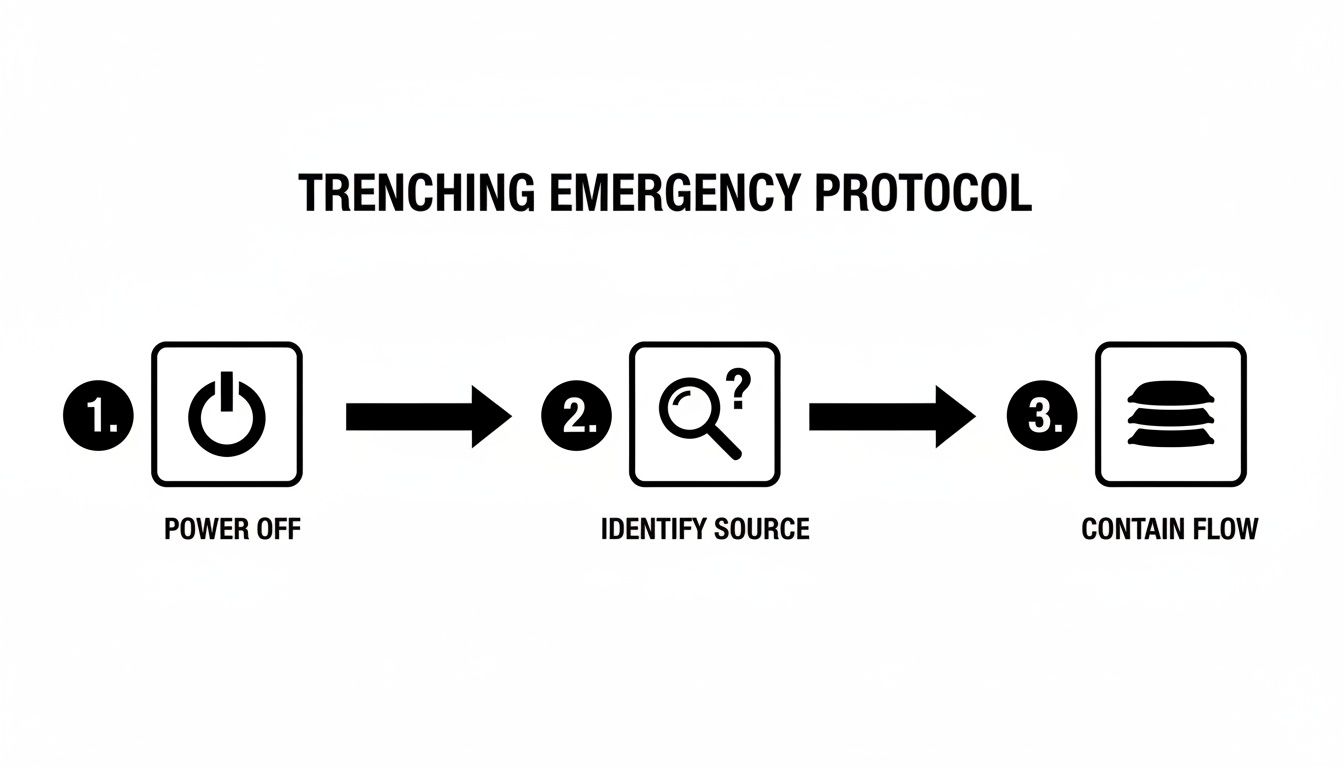
With the immediate hazards handled, shift your focus to containment. The goal is to divert water away from your home’s foundation or other important structures. You can build temporary berms with whatever you have on hand.
- Sandbags: This is your best option, if you have them.
- Bags of soil or mulch: A great, readily available alternative.
- Plywood or spare boards: Stake these into the ground to redirect shallower flows.
- A quick trench: If the soil is soft and you can work safely away from the unstable area, even a small, hand-dug trench can guide water to a better spot.
The point isn't to stop the water entirely—it's to change its path. Redirecting the flow even slightly can be the difference that saves you from thousands of dollars in foundation damage or severe erosion.
Immediate Safety and Containment Checklist
| Priority | Action Step | Why It's Critical |
|---|---|---|
| 1. Safety | Shut off power and gas if water is near utility lines or structures. | Prevents electrocution, fire, or explosion. This is a non-negotiable first step. |
| 2. Safety | Cordon off the area. Keep people and pets away from the collapse. | Unstable ground can give way without warning, expanding the hazard zone. |
| 3. Assessment | Quickly identify the source of the water (e.g., burst pipe, overland flow). | Helps you and the professionals understand the scale and nature of the problem. |
| 4. Containment | Use sandbags, soil, or boards to divert water away from foundations. | Minimizes immediate structural risk and costly water damage to your home. |
| 5. Documentation | Take photos and videos of the damage and water flow from a safe distance. | This evidence is invaluable for insurance claims and repair assessments. |
| 6. Professional Help | Call a qualified emergency excavation or drainage contractor. | You've managed the immediate risk; now it's time for experts to solve the root cause. |
Following these steps buys you precious time and gets the situation under control. To learn more about what happens next, our guide on emergency excavation solutions in Monterey explains what to expect when the pros arrive. Don't forget to take photos and videos from a safe distance—that documentation will be a lifesaver when you file an insurance claim.
Assessing The Damage: When Should I Call An Expert?
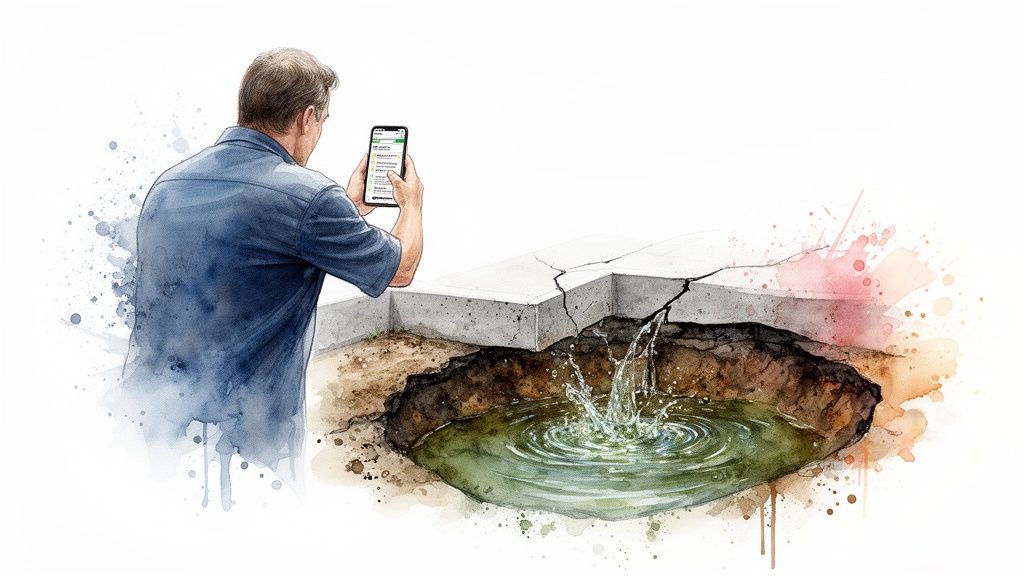
You’ve secured the area and temporarily slowed the water. Now comes the critical next step in any stormwater trenching emergency: figuring out exactly what you're up against. This is about carefully observing from a safe distance to gauge the severity.
A proper assessment is what separates a minor headache from a full-blown property disaster. Knowing what to look for helps you explain the situation clearly to a professional and tells you whether you need to make that call right now.
Distinguishing Minor Issues From Major Failures
Not all water problems are created equal. Some are annoyances, but others are ticking time bombs threatening the very ground your property stands on. From a safe spot, start looking for clues.
Minor problems are usually surface-level, like localized water pooling. Major failures, on the other hand, signal that something has gone wrong deep underground—often a collapsed pipe or a failed trench.
Here’s what to look for that signals a serious problem:
- Depressions or Sinkholes: If the ground is sinking or an actual hole is forming, that’s the classic sign of a collapsed underground pipe. Water is actively washing away the soil that supports the surface.
- Murky or Discolored Water: Rainwater should be relatively clear. If the water bubbling up is muddy or churning with debris, it’s coming from a broken line that's ripping up soil.
- Unusual Sounds: Gurgling, hissing, or the sound of rushing water coming from underground when it’s not raining are dead giveaways of a significant break.
- Newly Formed Cracks: Check for fresh cracks in nearby pavement, retaining walls, or your home’s foundation. This is a critical warning sign that the supporting soil is being eroded.
A Triage Checklist For Structural Risks
When water starts undermining the ground, the danger goes way beyond a soggy lawn. The stability of everything nearby—your home, your driveway, your retaining walls—is now at risk.
- Foundation Proximity: How close is the waterlogged or sinking ground to your house? If you see water pooling against the foundation or notice new cracks in the concrete, that's an immediate red flag.
- Slope Stability: Is the problem happening on or near a hill? Look for any signs of soil movement or trees that are starting to lean. Saturated soil dramatically increases landslide risk, especially for properties in Sonoma and Monterey Counties.
- Retaining Wall Integrity: Eyeball any retaining walls on your property. Are they bulging, cracking, or leaning? Water pressure building up behind a wall can lead to a complete and sudden failure.
- Pavement and Hardscape Damage: Look at your patios, driveways, and walkways. Are they cracking, sinking, or heaving upwards? This tells you the ground beneath them is no longer stable.
If you spot any of these structural risks, your problem has escalated from a drainage issue to a geotechnical hazard. This requires an immediate professional response to prevent what could become catastrophic damage.
Trying to DIY a fix on a major system failure is incredibly dangerous. This is the moment to find the right underground pipe repair contractor who can diagnose the problem correctly and fix it safely.
What Causes Stormwater Systems To Fail Suddenly?
A sudden stormwater system failure might feel like it came out of nowhere, but there's always an underlying cause. Figuring out the "why" behind a stormwater trenching emergency is the first step toward a real, permanent solution.
Most of the time, these failures are the final result of slow, hidden problems that finally hit a breaking point during a heavy storm. From aging materials to the unique geological challenges we face here in California, several factors can turn a stable drainage system into a ticking time bomb.
The Impact Of Aging Infrastructure
A lot of the stormwater systems across the state, especially in older neighborhoods, were built decades ago. Materials like clay (VCP) or concrete pipes were top-of-the-line for their time but have a limited lifespan and grow brittle.
The United States has over 1.6 million miles of sewer mains and an additional 800,000 miles of private lateral sewers [ASCE, 2021]. Much of this infrastructure is aging, leading to an increase in costly failures as intense storms become more common.
Shifting Soils And Root Intrusion
Here in Sonoma and Monterey Counties, we deal with expansive clay soils. These soils swell when wet and shrink when dry, putting incredible, uneven pressure on underground pipes, causing them to shift and crack.
A pipe that’s been forced even slightly out of alignment can create a low spot where debris collects, eventually leading to a complete blockage and pressure buildup. This is one of the most common precursors to a catastrophic pipe burst.
Invasive tree roots are another classic villain. A tiny crack in a pipe releases moisture, which acts like a homing beacon for thirsty roots. Once inside, they expand like a powerful wedge, shattering old pipes and creating dense blockages.
Improper Installation And Modern Strains
Sometimes, the problem started the day the system was first installed. If the soil around a pipe wasn't compacted correctly, it can settle over time, creating stress points that eventually fracture the pipe.
These old weaknesses often get exposed by the sheer force of modern storms. A system that seemed fine for 40 years can fail spectacularly when it gets slammed by an atmospheric river. This is why proper site planning is so critical from day one. Taking the time to consider how to approach integrating erosion control and water management solutions for sustainable landscaping can prevent these issues down the road.
What To Expect From An Emergency Excavation Service

When you make that urgent call for a stormwater trenching emergency, it's natural to feel overwhelmed. Knowing what to expect can turn a high-stress situation into a clear, manageable process.
A good contractor will first listen to your description of the problem—where the water is pooling, signs of sinking ground, and immediate risks. This initial info helps the team dispatch the right people and equipment from the get-go.
The Initial Assessment and Diagnostic Process
Once on-site, the crew’s first priority is always safety. They'll immediately secure the area with caution tape and safety cones to create a clear work zone.
Next is the diagnostic phase, where a professional team uses specialized tools to see what’s happening underground. The most common tool for this is a sewer camera—a small, high-resolution camera on a flexible cable fed directly into your drainage lines.
This camera inspection is absolutely critical because it:
- Pinpoints the Exact Failure: It shows the team precisely where a pipe has collapsed, cracked, or been blocked by roots.
- Identifies the Cause: The camera reveals the true nature of the problem, so you’re not just patching a symptom.
- Minimizes Disruption: By locating the exact problem spot, the excavation can be targeted and precise, saving your yard from unnecessary damage.
A thorough diagnostic isn't just a step in the process; it's the foundation of an effective repair. It ensures the proposed solution actually solves the root cause, preventing a repeat emergency.
Understanding the Equipment and Repair Strategies
After diagnostics, the project manager will walk you through their findings and propose a clear repair plan. This is where they'll explain the equipment and strategy they recommend.
Depending on the scale of the problem, you might see:
- Mini-Excavators: Compact but powerful machines perfect for digging in residential spaces.
- Vacuum Trucks: Essential for safely removing water, mud, and debris.
- Shoring Equipment: Metal plates or boxes used to stabilize trench walls, allowing workers to enter safely.
The repair method itself will usually be either traditional open-trenching or trenchless pipe repair. Open-trenching means excavating down to the damaged pipe for a direct repair, often necessary for severe collapses. Trenchless methods, like pipe bursting, allow for repairs with minimal digging and are a great choice for pipes under driveways or mature landscaping.
Navigating Permits, Insurance, And Long-Term Solutions
Once the immediate danger of a stormwater trenching emergency is behind you, the focus shifts from crisis control to recovery and prevention. This phase is about handling the administrative side—like permits and insurance—while making smart choices to ensure this never happens again.
Dealing with paperwork is the last thing anyone wants after an emergency, but it's a critical step. A professional contractor can handle most of the heavy lifting for you.
Do Emergency Repairs Require A Permit?
In many situations, yes. While local regulations in places like Sonoma County and Monterey County often have provisions for emergency work to proceed without a permit before the job starts, you will almost always need one retroactively.
An experienced excavation contractor knows these local regulations. They’ll manage the entire application and inspection process on your behalf, protecting you from potential fines and ensuring the work is properly documented.
Documenting Everything For Your Insurance Claim
Whether your homeowner's insurance will cover the damage depends on your policy and the cause of the failure. Meticulous documentation is your most powerful tool for a successful claim.
Here’s a quick guide on what to document:
- Comprehensive Photos and Videos: Get shots of the damage from every angle, including wide shots and close-ups of the broken pipe and resulting damage.
- A Detailed Timeline: Jot down a log of events as they happened—when you found the problem, what you saw, and when you called for help.
- All Receipts and Invoices: Keep a dedicated file for every single expense related to the emergency.
Think like an investigator. The more solid evidence you can provide to your insurance adjuster, the more you can streamline the claims process.
Moving From A Reactive Fix To A Proactive System
An emergency repair gets you back on your feet, but the real goal is to build a drainage system that can handle the next big storm without failing. This is the perfect time to think about upgrading your infrastructure.
A forward-thinking solution looks at the entire system. Your long-term plan might involve several key upgrades:
- Upgrading Pipe Materials: Swapping old clay or concrete pipes for modern PVC or HDPE provides better resistance to roots and shifting soils.
- Installing Modern Catch Basins: A well-placed catch basin can intercept a massive amount of runoff before it overwhelms your pipes.
- Adding Green Infrastructure: Solutions like infiltration trenches—gravel-filled ditches that let water soak naturally into the ground—can take a huge amount of strain off your main drainage lines.
A truly resilient property starts with a solid plan. To learn more, check out our guide on what a site plan is and see how it informs effective, lasting drainage solutions.
Frequently Asked Questions About Stormwater Trenching Emergencies
How much does an emergency stormwater repair cost in California?
The cost varies widely based on the severity of the problem. A simple clog might cost a few hundred dollars, while a major trench collapse requiring excavation and pipe replacement can range from several thousand to over $20,000. Factors like site accessibility, soil type, and the extent of the damage all influence the final price.
Will my homeowner's insurance cover this damage?
It depends on your specific policy and the root cause of the failure. Most standard policies do not cover damage from general flooding or issues caused by a lack of maintenance. However, if the failure was sudden and accidental, like a burst pipe, you may be covered. Always document the damage thoroughly and contact your insurance agent immediately.
Is it safe to stay in my house during a trenching emergency?
Safety is the top priority. If you see water approaching electrical outlets, a sinkhole opening near your home, or new cracks forming in your foundation, you should evacuate immediately. If the issue is contained to a remote part of your property and doesn't pose a threat, it may be safe to stay, but always follow the guidance of the professional crew when they arrive.
How can I prevent this from happening again?
Proactive maintenance is key. Schedule a professional camera inspection of your main drain lines every few years, especially if you have mature trees. Regularly clean your gutters, downspouts, and drain grates to prevent blockages. If you have an older home, consider upgrading your pipes to modern materials like PVC or HDPE, which are more resilient.
How long does an emergency repair typically take?
The timeline depends on the job's complexity. A simple repair might take a few hours, but a major project involving deep excavation could last several days to a week. Permitting requirements in Sonoma or Monterey County and coordination with utility companies can also affect the schedule. Your contractor should provide a realistic timeline after their initial assessment.
When you're facing a stormwater emergency, you need a team that responds with speed, expertise, and a clear plan of action. At DW Excavation, LLC, we specialize in diagnosing and resolving complex drainage failures to protect your property and restore your peace of mind. If you need immediate assistance or a long-term solution, contact us today at https://dw-excavation.com.