When you're building an ADU in Monterey County, it’s easy to get excited about floor plans and finishes. But the real success of your project starts where you can't see it—underground. A solid foundation is about much more than pouring a concrete slab.
It's about a deep, practical understanding of the Central Coast's tricky coastal soils, seismic risks, and local building codes. A durable foundation here demands expert site planning, geological insight, and flawless execution to avoid headaches that can cost a fortune down the road.
Why Your ADU Foundation Is The Most Critical Step
Building an Accessory Dwelling Unit (ADU) is a fantastic investment, whether for rental income or family housing. But that entire investment rests, quite literally, on its foundation.
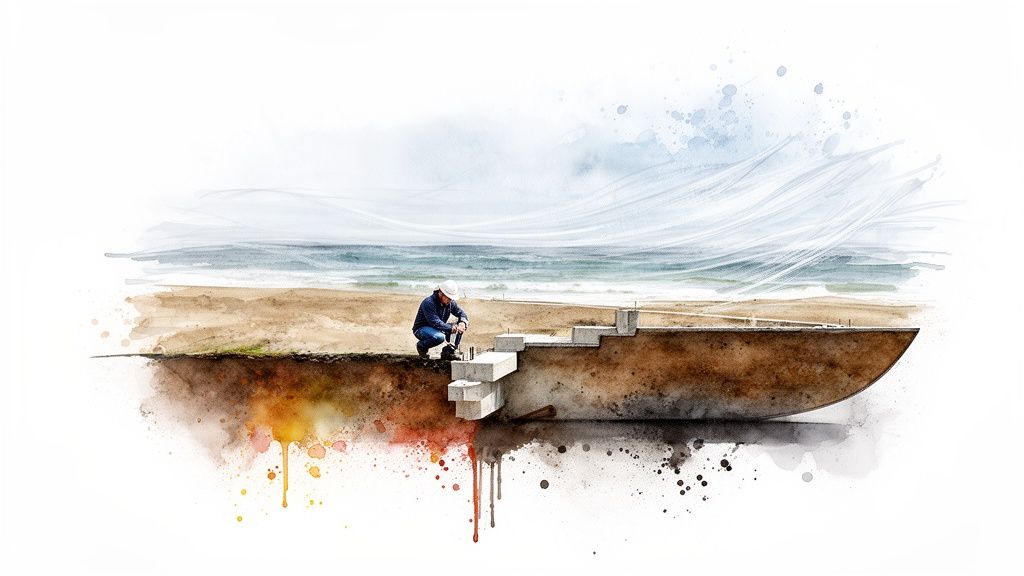
Think of your ADU’s foundation as the hull of a ship; it can't be a one-size-fits-all solution. It needs to be custom-designed for the specific conditions it will face—from expansive clay soils in Salinas to the unique seismic demands along the coast.
Ignoring this crucial first step is a recipe for disaster. Hiring a general contractor who doesn’t understand local setback rules, grading codes, or underground utility risks can cause project delays, failed inspections, or even foundation cracks down the line.
What Are the Risks of a Poorly Built Foundation?
Far too many ADU projects get derailed by foundation issues that were completely preventable. Bringing in a handyperson or a generalist who doesn’t specialize in ground-up construction is a huge gamble.
Here are just a few of the risks you run:
- Failed Inspections: The inspector takes one look at an incorrect footing depth or improper rebar placement and shuts your project down on the spot.
- Costly Delays: Hitting an unexpected utility line or discovering unsuitable soil after you’ve already started can add weeks or even months to your timeline.
- Future Structural Damage: A foundation that wasn't prepared right can lead to ugly cracks, persistent water intrusion, and settling issues that show up years later.
Why Do I Need an Expert Partner for Foundation Work?
The foundation phase isn't just about digging a hole and pouring concrete. It's an integrated process that weaves together site analysis, engineering, and navigating the local permit office. DW Excavation has worked on dozens of Central Coast ADU sites, and we tailor every foundation plan to site conditions.
A skilled foundation contractor ensures every single step—from initial grading to the final drainage plan—is executed perfectly. This creates a bulletproof base for your investment.
What Are the Key ADU Foundation Considerations in Monterey County?
| Critical Factor | Why It Matters for Your Foundation | Potential Risk of Neglect |
|---|---|---|
| Soil Analysis | Expansive clay and sandy coastal soils behave differently, requiring specific foundation designs to prevent shifting. | Foundation cracking, uneven settling, and long-term structural instability. |
| Seismic Activity | Being in an active seismic zone requires reinforced foundations designed to withstand ground movement. | Catastrophic structural failure during an earthquake; project won't pass inspection. |
| Site Grading & Drainage | Proper slope and drainage prevent water from pooling around and undermining the foundation. | Water intrusion in the ADU, soil erosion, and hydrostatic pressure causing cracks. |
| Utility Location | Hitting a buried water, sewer, or gas line is a dangerous, expensive, and time-consuming mistake. | Project shutdown, costly utility repairs, and potential safety hazards. |
Getting these four elements right from the very beginning is non-negotiable. It's the difference between a successful, valuable ADU and a project plagued with endless problems and repairs.
Understanding Monterey's Unique Ground Conditions
Before finalizing ADU plans, you have to understand the ground itself. The Central Coast is a challenging mix of shifting soils and seismic tension that can turn a dream project into a structural nightmare if you don't know what you're dealing with.
Building an ADU in Monterey without understanding the soil is like setting sail without checking the weather. The surface might look calm, but unseen currents and pressures are at work just below.
How Do Expansive Clay and Coastal Soils Affect Foundations?
Many properties, from the farmlands of Salinas to the Monterey Peninsula, sit on expansive clay soils. This material acts like a giant sponge, swelling dramatically with winter rains and shrinking during dry summer months. That constant expansion and contraction puts immense pressure on a foundation.
This seasonal movement is a primary culprit behind foundation cracks, uneven floors, and doors that suddenly jam. According to data on California soils, expansive clays can swell by 10% or more, exerting enough force to lift and crack concrete slabs [US Geological Survey, 2019].
What Are the Local Seismic Risks and Liquefaction Zones?
Living on the Central Coast means living with the real possibility of earthquakes. Our proximity to the San Andreas and other active fault lines is a non-negotiable fact for any construction project. An ADU foundation must be engineered not just to hold the structure up, but to hold it together when the ground shakes.
On top of that, many coastal areas around Monterey Bay are designated as liquefaction zones. During an earthquake, the sandy, water-saturated soil in these areas can temporarily lose its strength and behave like a liquid, causing foundations to sink or tilt catastrophically.
Why is a Geotechnical Report My Most Important Tool?
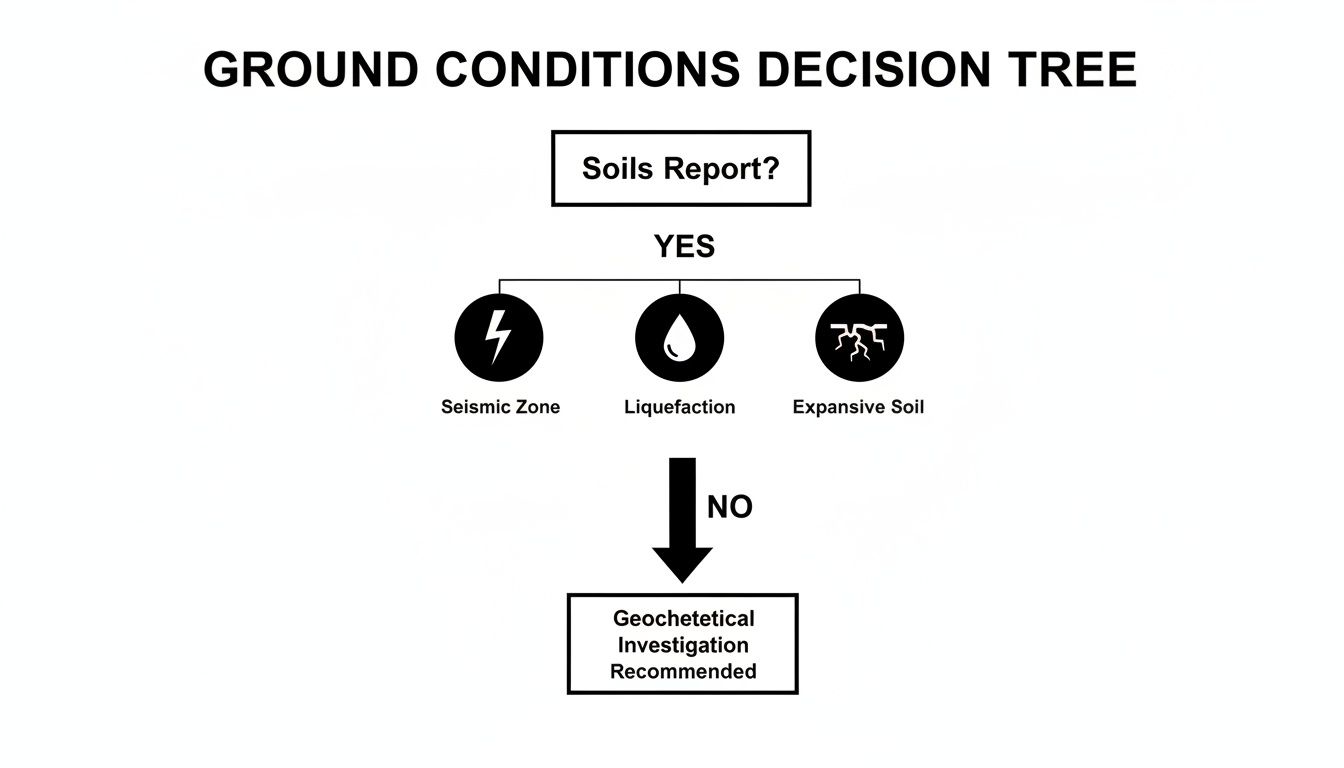
A geotechnical report, often called a soils report, is the answer to uncovering these hidden ground-level risks. This isn't just a good idea; for most ADU projects in Monterey County, it's a requirement. This detailed analysis, performed by a geotechnical engineer, is the essential blueprint for your foundation's success.
The report will tell you everything you need to know about what's going on beneath the surface, including:
- Soil Composition: It identifies the exact types of soil on your property, like expansive clay or loose sand.
- Soil Strength: This determines the load-bearing capacity of your ground—how much weight it can safely support.
- Water Table Level: The report pinpoints how close groundwater is to the surface, which affects drainage and foundation design.
- Seismic Hazards: It assesses risks like liquefaction potential and proximity to active faults.
This single document dictates your entire site preparation strategy. All of our professional excavation services in Monterey County are guided by these critical engineering insights.
Choosing The Right ADU Foundation For Your Lot
Once you have your geotechnical report, the next decision is picking the right foundation. This choice is a direct response to your site's geology, slope, and budget. Getting this right means your ADU will stand strong for decades.
You wouldn't put the same tires on a truck for a desert race as you would for driving on ice. The foundation for a flat, stable lot in Salinas will be completely different from one on a sloped, clay-heavy property in Carmel Valley.
What Is a Slab-On-Grade Foundation?
A slab-on-grade foundation is a single, thick layer of concrete poured directly onto a prepared ground pad. It acts like a raft for your house, designed to float on stable, level earth. For the right site, it’s often the most affordable and quickest option.
However, slab-on-grade foundations are only suited for flat lots with excellent soil stability. They are a "no-go" for sloped properties or areas with expansive clay soils, because as the ground moves, the "raft" can easily crack.
What Is a Raised Stem Wall Foundation?
A raised stem wall foundation gets the structure up off the ground. It starts with concrete footings buried below the frost line, with short "stem walls" built on top. This creates a crawl space underneath the ADU, a design that’s incredibly versatile and common on the Central Coast.
A raised foundation is the go-to solution for several challenges:
- Sloped Lots: The stem walls can be built to different heights to create a level platform on uneven ground.
- Expansive Soils: The crawl space gives the ground room to swell and shrink without putting direct stress on the ADU’s floor.
- Utility Access: Plumbing and electrical lines are easy to access for future maintenance in a crawl space.
When Are Pier Foundations Necessary?
For the most difficult sites, pier foundations offer a robust solution. Concrete columns go deep into the ground, punching through unstable upper layers to reach solid soil or bedrock. This transfers the ADU's weight to ground that can actually support it.
An advanced option is helical piers, which are giant steel screws drilled deep into the earth. They are a game-changer for lots with very poor soil, high liquefaction risk, or tight access where heavy equipment can’t get in.
How Do ADU Foundation Types Compare for Monterey County?
| Foundation Type | Best For | Cost Profile | Key Monterey Consideration |
|---|---|---|---|
| Slab-on-Grade | Flat lots, stable, non-expansive soils, budget-conscious projects. | $ (Lowest) | Only viable in areas like the Salinas Valley with predictable soil. Not for coastal or hillside lots. |
| Raised Stem Wall | Sloped lots, expansive clay soils, sites needing utility access. | $$ (Moderate) | The workhorse foundation for varied Central Coast terrain. Adapts well to Carmel Valley slopes. |
| Pier Foundation | Steep hillsides, very poor topsoil, sites needing deep support. | $$$ (High) | Ideal for Big Sur or other mountainous areas where bedrock provides the only stable anchor. |
| Helical Piers | Liquefaction zones, poor soil, limited site access, high-risk sites. | $$$$ (Highest) | A premium solution for challenging coastal lots in Monterey or Pacific Grove where soil stability is a major concern. |
How Do I Make The Right Choice For My Monterey Property?
The choice is always dictated by three key factors: your soils report, your site's grade, and your budget. This is where having an expert in your corner is non-negotiable.
A qualified team can interpret your soils report and recommend the most effective foundation. Check out our guide on what a foundation contractor in Monterey does to ensure a project succeeds.
Planning for Grading, Drainage, and Utilities
A perfectly poured foundation can still fail if it's constantly battling water. Proper site grading, smart drainage, and careful utility planning are the unsung heroes that protect your investment.
First-time builders often get laser-focused on the concrete, only to find that poor water management is eroding the soil or letting water seep inside. A successful build weaves these three elements together from the start.
What Is the Critical Role of Site Grading?
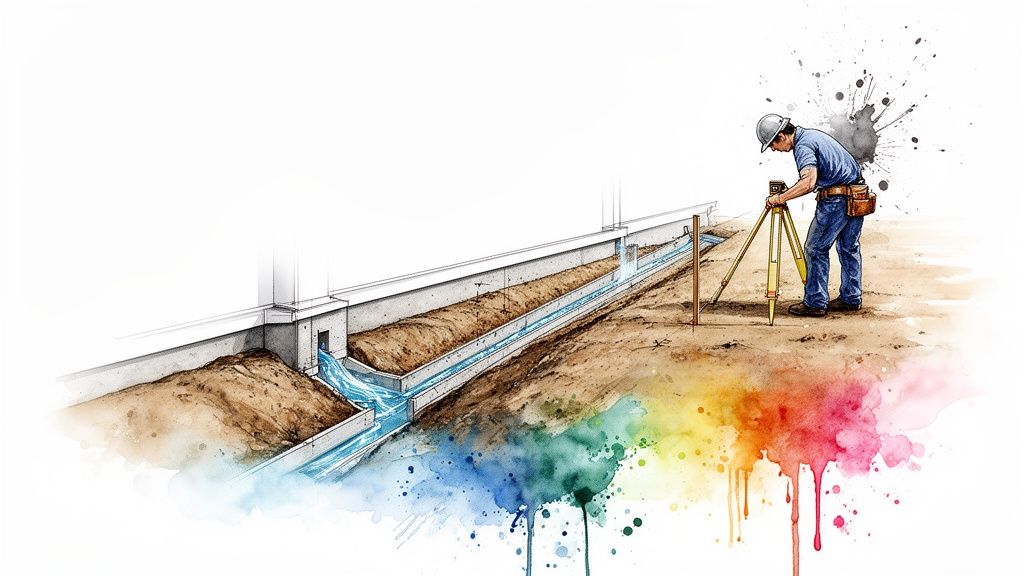
Site grading is sculpting the land around your ADU. The goal is to make sure every drop of rain flows away from your foundation, not toward it. Even a subtle slope can divert thousands of gallons of water during a Central Coast winter storm.
Without this, water will pool against the foundation, creating immense pressure. This moisture weakens concrete and causes expansive clay soils to swell—a recipe for lifting and cracking your foundation.
Why Do I Need an Effective Drainage System?
Grading is your first line of defense, but a solid drainage system is your essential backup. This is especially true on sloped properties or in areas with heavy clay soil.
- French Drains: A perforated pipe buried in a gravel-filled trench catches and redirects underground water.
- Catch Basins: Grated inlets in low spots capture surface water and funnel it away through pipes.
- Swales: Gentle, grass-lined channels slow down and guide runoff to prevent erosion.
Before you break ground on an ADU in the Central Coast, check if your city requires a soils report or stormwater mitigation plan. Many local municipalities now require on-site retention systems, which affects where and how your foundation can be built.
What About Locating and Preparing for Underground Utilities?
Before a single shovel hits the dirt, you have to know what’s buried beneath. Accidentally hitting a sewer, water, or electrical line is a dangerous, costly mistake.
The first move is always to call 811 to have public utility lines marked. After that, a skilled excavation contractor will map out the new trenches for your ADU's utilities, ensuring they are at the correct slope and depth.
Navigating Permits and Inspections Without Delays
For any ADU builder in Monterey County, the foundation phase is a make-or-break moment for your project timeline. It’s rarely the physical work that throws you off schedule—it’s the maze of permits and inspections.
Think of it like a series of checkpoints. Each one ensures your ADU's foundation is safe, stable, and built to code. An experienced contractor anticipates what each inspector is looking for and gets it right the first time.
What Are Common Pitfalls That Lead to Failed Inspections?
Even a tiny mistake during foundation prep can earn you a red tag from a city inspector, stopping your project cold. Common slip-ups include:
- Improper Footing Depth: Digging footings that don't reach stable soil is a huge red flag.
- Incorrect Rebar Placement: Steel rebar that gives concrete strength must be positioned perfectly to handle seismic forces.
- Inadequate Drainage Preparation: Inspectors are trained to spot a weak drainage plan from a mile away.
- Poor Soil Compaction: The ground under your foundation must be rock-solid.
What Is the Step-by-Step Permit and Inspection Checklist?
While specifics can differ between Monterey, Salinas, and Santa Cruz, the overall journey is predictable.
- Submit Geotechnical and Site Plans: Your soils report and detailed site plan are the first things the city will review. You can learn more in our guide explaining what a site plan is and who can help make one.
- Obtain Foundation & Grading Permits: Once plans are approved, you’ll get the official permits to start digging.
- Schedule the Pre-Pour Inspection: An official will visit your site after footings are dug and rebar is in place, but before concrete is poured.
- Complete the Pour and Curing: After you pass inspection, the concrete pour can happen.
- Final Grading & Drainage Inspection: There may be a final check to confirm the site’s grading and drainage systems match the approved plans.
A huge source of frustration for builders is waiting on permit reviews. A 2021 study by the California Air Resources Board found that permitting timelines for new construction projects can vary widely, with incomplete applications being a major cause of delays [CARB, 2021].
Budgeting for Your ADU Foundation Costs
Understanding the costs that go into your ADU foundation is a major concern for any builder in Monterey County. A clear, realistic budget is your best defense against sticker shock and project-killing delays.
The final price tag is shaped by your specific property. The biggest cost drivers are soil conditions, site accessibility, foundation type, and any extra engineering like retaining walls.
How Do I Break Down the Major Cost Variables?
To build an accurate budget, you have to look beyond just concrete and rebar. Key elements that determine your final foundation costs include:
- Geotechnical Report: This non-negotiable first step saves you exponentially more down the road by ensuring the design is correct.
- Foundation Type: A slab is the most budget-friendly, while raised stem walls and helical piers are a necessary investment for more difficult sites.
- Site Accessibility: A narrow driveway or a steep slope in Carmel can drive up labor and equipment costs.
- Engineered Retaining Walls: If your sloped lot needs retaining walls to create a stable building pad, this will be a substantial line item.
What Are the Hidden Costs of Foundation Work?
This is where many first-time builders get tripped up—the surprise costs not in the initial quote. An integrated site prep approach brings these expenses out into the open from the beginning.
These "hidden" costs often include:
- Permit and Inspection Fees: City and county fees can add up quickly.
- Utility Trenching and Hookups: Connecting water, sewer, and power requires significant excavation.
- Stormwater Management Systems: If your municipality requires on-site drainage solutions, this will impact your budget.
According to research, unexpected site conditions are one of the leading causes of construction budget overruns, sometimes increasing costs by as much as 15-20% [Project Management Institute, 2022]. When you partner with an expert who understands what Monterey ADU builders need to know about foundation work, every variable is accounted for.
Frequently Asked Questions About Monterey ADU Foundations
Do I really need a soils report for my ADU in Monterey County?
Almost certainly, yes. Most local municipalities now require a geotechnical (soils) report for any new structure. With our region's mix of coastal clay and sandy loam, this report is the only way to design a foundation that won't fail later.
How much does ADU foundation work typically cost in the Monterey area?
Foundation work is a significant chunk of the budget, usually landing between 10% and 20% of your total ADU cost. If you have a flat lot with good soil, a simple slab will keep you on the lower end. Sloped lots or sites with poor soil, retaining walls, and drainage systems can push costs toward the higher end.
What is the biggest mistake builders make with ADU foundations?
Hands down, the most common mistake is underestimating the site work. Too many people assume their general contractor can handle it all, but our local ground conditions demand specialized expertise in grading, drainage, and soil compaction. Cutting corners here leads to water damage, foundation settlement, and failed inspections.
Can I build an ADU on a sloped lot in Monterey?
You bet. Building on a slope is common here, but it requires a more robust foundation like a raised stem wall or a pier system. It almost always involves engineered retaining walls to create a flat, stable pad. The digging and grading are far more involved, so it's crucial to partner with a contractor who has a proven track record of successful hillside builds.
How long does the ADU foundation and site prep process take?
The timeline depends on the site, weather, and permit speed. For a straightforward job on a flat lot, expect excavation, grading, and the foundation pour to take about two to four weeks. If your project involves extensive earthwork or retaining walls, it could easily take longer.
Planning an ADU in Monterey, Salinas, or Santa Cruz? DW Excavation knows the regional codes, site conditions, and permit paths. We’ll help you build a solid foundation—literally and legally. Learn more at https://dw-excavation.com.